Check out the FAQ,Terms of Service & Disclaimers by clicking the
link. Please register
to be able to post. By viewing this site you are agreeing to our Terms of Service and Acknowledge our Disclaimers.
FluTrackers.com Inc. does not provide medical advice. Information on this web site is collected from various internet resources, and the FluTrackers board of directors makes no warranty to the safety, efficacy, correctness or completeness of the information posted on this site by any author or poster.
The information collated here is for instructional and/or discussion purposes only and is NOT intended to diagnose or treat any disease, illness, or other medical condition. Every individual reader or poster should seek advice from their personal physician/healthcare practitioner before considering or using any interventions that are discussed on this website.
By continuing to access this website you agree to consult your personal physican before using any interventions posted on this website, and you agree to hold harmless FluTrackers.com Inc., the board of directors, the members, and all authors and posters for any effects from use of any medication, supplement, vitamin or other substance, device, intervention, etc. mentioned in posts on this website, or other internet venues referenced in posts on this website.
We are not asking for any donations. Do not donate to any entity who says they are raising funds for us.
Announcement
Collapse
No announcement yet.
Iran War - Supply chain issue: Overland ports do not have capacity - "demands predictive intelligence rather than reactive tracking." - March 30, 2026
Iran War - Supply chain issue: Overland ports do not have capacity - "demands predictive intelligence rather than reactive tracking." - March 30, 2026
March 30, 2026
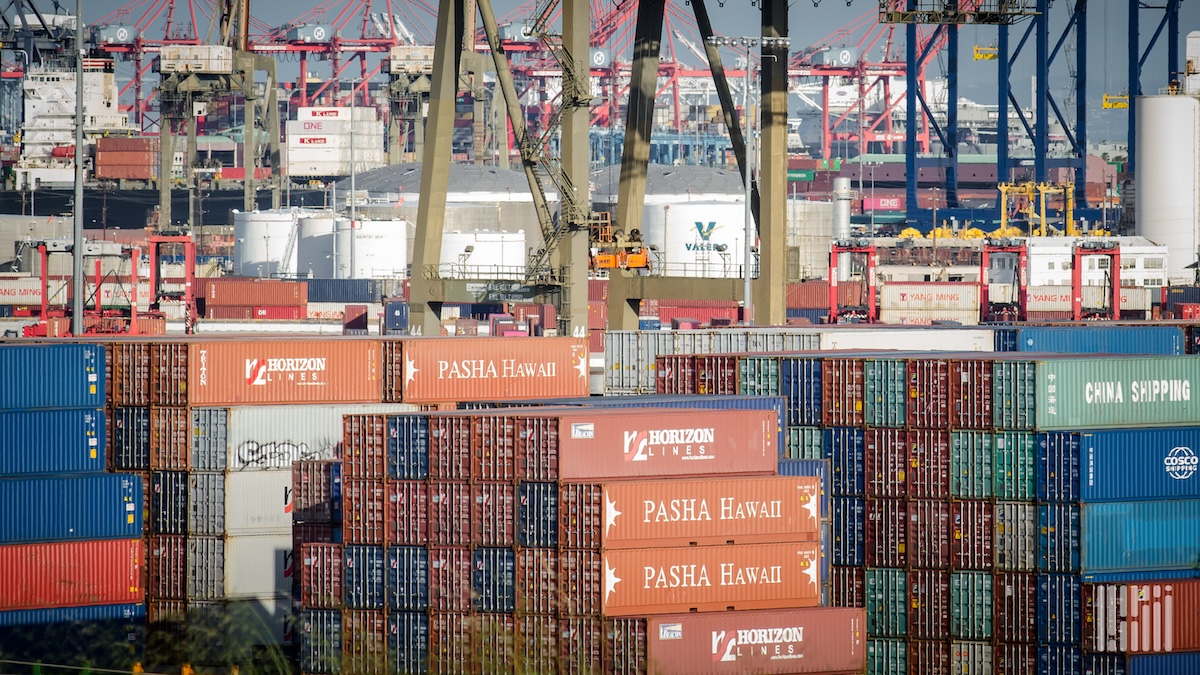
The 1 million TEU question: Do Gulf overland ports have the capacity?
Our analysis of approximately 35,000 vessel calls reveals that alternative ports with overland connections can absorb, at best, 62% of displaced Persian Gulf cargo. At their current average throughput, they cover just 48%. This structural deficit creates an unavoidable supply chain crisis that demands predictive intelligence rather than reactive tracking.
more....https://www.kpler.com/blog/the-1-mil...e-the-capacity
China expresses 'gratitude' after three ships transit Hormuz strait
Beijing expressed "gratitude" on Tuesday as it said three Chinese ships had transited the crucial Strait of Hormuz, which Iran has all but closed during the war in the Middle East.
snip
Cosco said on Wednesday it was resuming bookings for shipments from Asia to several Gulf countries, though without using routes that transit Hormuz.
The Shanghai-based firm had suspended bookings for services through the strait earlier in March due to the war.
more.....Source URL : China expresses 'gratitude' after three ships transit Hormuz strait | The Standard
Iran's parliament has passed legislation to formally impose transit fees on commercial vessels passing through the Strait of Hormuz, codifying into law a toll system that Iranian authorities had already been operating on an ad hoc basis since early March, according to the Revolutionary Guard-aligned Tasnim and Fars news agencies.
The bill, prepared by the Majlis Civil Affairs Committee, legally enshrines Tehran's "sovereignty, control and oversight" over the strait while creating a new stream of state revenue. Lawmaker Mohammadreza Rezaei Kouchi, the committee's chairman, framed the move in straightforward commercial terms.
"Parliament is pursuing a plan to formally codify Iran's sovereignty, control and oversight over the Strait of Hormuz, while also creating a source of revenue through the collection of fees," he was quoted as saying, adding that the corridor was no different from any other transit route: "The Strait of Hormuz is also a corridor. We ensure its security, and it is natural for ships and tankers to pay us duties."
The toll already in practice
The legislation gives formal legal grounding to an arrangement already under way on the water. Since mid-March, the Revolutionary Guard Corps enforced a de facto vetting and fee system through a controlled corridor near Iran's coast, between Qeshm and Larak islands. Ships seeking clearance had to provide their IMO number, cargo manifest, crew names, ownership details and destination to IRGC-connected intermediaries before receiving a route code and escort.
Bloomberg reported that some vessels were already paying as much as $2 million per voyage for passage, a figure confirmed on Iranian state television by lawmaker Alaeddin Boroujerdi, who said plainly: "Now, because war has costs, naturally, we must do this and take transit fees from ships passing through the Strait of Hormuz." No country, importer or ship operator has publicly acknowledged making such a payment, and details of individual arrangements remain undisclosed.
World Economic Forum The Strait of Hormuz crisis affects more than just oil. Here are 9 other commodities
April 1, 2026
War in the Middle East has caused significant damage to energy infrastructure and the near closure of the Hormuz Strait, driving oil prices up, but what about the region's other exports?
Beyond energy, the conflict is disrupting key non-oil commodities – like methanol, aluminium, sulfur and graphite – impacting global manufacturing and the green energy transition.
Disruptions to these industrial essentials are rapidly reshaping global supply chains – from fertilizers for future harvests to minerals driving high-tech industries. Here are nine at the centre of the shift.
Strait of Hormuz closure pushes Asia-US ocean rates up 29%
Sharp increases on major east-west routes: Analyst
Thursday, April 02, 2026
The effects of the Iran war are being felt across the global supply chain, as container rates rise sharply on vital headhaul trade routes including to the United States, an analyst said.
“Five weeks into the Strait of Hormuz closure and spot rates on every major east-west trade lane have risen sharply, showing this is a conflict with global repercussions for ocean supply chains,” said Peter Sand, Xeneta chief analyst. “No shipper is insulated from financial or operational risk. Far East to U.S. West Coast – a trade which transits the Pacific thousands of miles from the epicenter of conflict – has seen spot rates climb 29% since the end of February.”
Spot prices on services from the Far East to North Europe and Mediterranean – trades with direct exposure to the Middle East disruption – have climbed 31% and 30% since the end of February.
-snip-
Maersk (MAERSK-B.CO), the world’s second-largest container carrier, for the second time has asked the Federal Maritime Commission to waive the 30-day waiting period to implement emergency fuel surcharges. The agency in late March rejected an initial request from Maersk and other carriers; a spokesperson said the regulator would rule today on the latest request
Oil cargo prices surge as fears of supply shortage grip market
4/2/26
The price of crude cargoes for immediate delivery has soared to its highest level since 2008, as traders react to a possible escalation of the Iran war and concerns about shortages of oil. Dated Brent, the price of shipments bought and sold in the North Sea, on Thursday hit $141.36 per barrel, up from $128.46 a day earlier, according to S&P Global, a research group.
-snip-
Industry experts are increasingly focusing on the threat posed by shortages of crude and other petroleum products, including the effect it could have on the world economy. Oxford Economics said this week it estimates a six-month interruption of flows through the Strait of Hormuz would create a 13mn barrels per day gap in global oil supplies, triggering a worldwide recession. “That represents an unprecedented shortage of around 12 per cent of consumption, leading to widespread rationing concentrated in emerging economies, with significant hits to activity and supply chain disruption,” said the advisory group.

 Tweet
Tweet




Comment