Announcement

Collapse
No announcement yet.

Chile - To date more than 7,000 marine animals have died from H5N1 avian flu

Collapse
X
 
  • Filter
  • Time
  • Show
Clear All
new posts

  • Chile - To date more than 7,000 marine animals have died from H5N1 avian flu


    31.03.2023 / 20:36
    1,535 sea lions and 730 penguins have died from bird flu


    The Region of Arica and Parinacota, in the north, is the most affected, with 709 sea lions and 343 dead penguins, followed by Antofagasta, Tarapacá and Atacama. In addition, on Wednesday the Ministry of Health reported the first human case of bird flu in a 53-year-old man.

    ​​​​​​(EFE-CNN Chile) - Chile reported this Friday 1,535 sea lions and 730 Humboldt penguins dead to date from the avian influenza virus , especially in northern regions, although marine mammals have also been found dead from this disease in the center-south of the country.

    " Facts like the ones that are happening now have never happened in Chile ," warned the director of the Chilean National Fisheries and Aquaculture Service (Sernapesca), Soledad Tapia.
    The official pointed out that, although there are hundreds of dead mammals, the species most affected by avian influenza are wild birds, such as pelicans .
    ​​​​​​The region of Arica and Parinacota, in the north, is the most affected, with 709 sea lions and 343 dead penguins, followed by Antofagasta, Tarapacá and Atacama, all in the north.
    Dead marine animals of protected species have also been found in the Biobío region, some 500 kilometers south of the capital.
    ...
    ....​​​​​​
    They find more than 70 dead sea lions on Isla Santa María: "It could be attributed to bird flu"

    The National Fisheries and Aquaculture Service (Sernapesca) confirmed the finding of more than 70 dead sea lions on Isla Santa María, in the Biobío Region, and did not rule out that the cause could be due to avian flu ........we are concluding that the mortality we are witnessing could most likely be attributed to avian influenza on the island ."The mammals were found by neighbors on the coastal edges of the North and South ports of the island.....

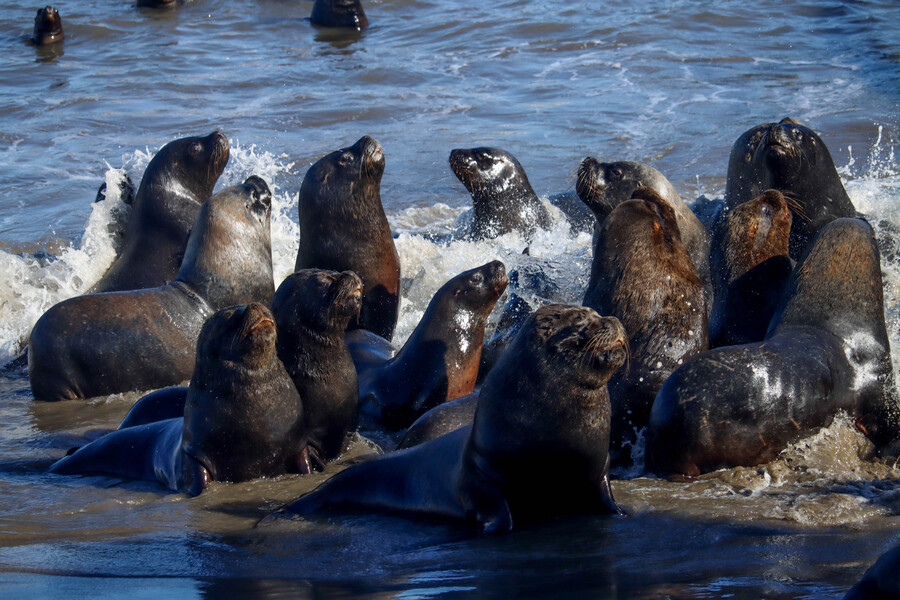
    La Región de Arica y Parinacota, en el norte, es la más afectada, con 709 lobos marinos y 343 pingüinos muertos, seguida de Antofagasta, Tarapacá y Atacama. Además, el miércoles el Ministerio de Salud notificó el primer caso en humanos de gripe aviar en un hombre de 53 años.

    CSI:WORLD http://swineflumagazine.blogspot.com/

    treyfish2004@yahoo.com

  • #2

    Friday March 31, 2023 | 18:55
    "It had never happened in Chile": 1,535 sea lions and 730 penguins killed by bird flu


    Posted by Francisco Solís
    The information is from Agencia EFE
    According to the official report delivered this Friday, 709 sea lions and 343 penguins have died in the Arica and Parinacota region, followed by Antofagasta, Tarapacá and Atacama, all in the north.
    Added to this are dead species in the Biobío.....

    ​​​​​​Chile reported this Friday 1,535 sea lions and 730 Humboldt penguins deceased to date, due to the influenza virus or avian flu.
    Most of the deceased specimens were registered in the northern regions of Chile, although the authorities report that marine mammals have also been found dead from this disease in the center-south of the country.
    "Acts like the ones that are happening now have never happened in Chile," warned the director of the Chilean National Fisheries and Aquaculture Service (Sernapesca), Soledad Tapia....It should be remembered that the first sea lion killed in Chile by bird flu was found in the north on February 15, and that two months later the first wild bird infected by the virus was registered in the country.https://www.biobiochile.cl/noticias/...pe-aviar.shtml
    CSI:WORLD http://swineflumagazine.blogspot.com/

    treyfish2004@yahoo.com

    Comment


    • #3


      What happens with the dead sea lions on Tocopilla beaches?: Sernapesca responded to this situation


      During these days they have caught at least 20 dead wolves in different phases of decomposition on the Tocopilla coastline

      Dead sea lions have been found in different parts of the Tocopilla coastline for weeks and have not yet been removed.
      What is going on with them? Who is in charge of getting them out of there? There are some doubts that remain, especially before the confirmation of the first case of Avian Influenza in Chile, belonging to a 53-year-old man from Tocopilla.
      This is because both dead birds and marine animals found on the coastline can transmit the H5N1 virus.


      Consulted in this regard from Sernapesca, its regional director (S) Pilar Irribarren, explained that "The National Fisheries Service receives the notice of mortalities on the beach and although it carries out the accompaniment in biosecurity measures, the municipality is in charge of the final disposal of mortalities that wash up on the beach. The most important thing is not to touch, not handle, and stay away from sick or dead marine animals.”


      In its figures, Sernapesca indicated that to date there are 2 sea lions and 2 Humboldt penguins confirmed with this virus in the region.
      In turn, 195 dead wolves and 3 stranded penguins have been recorded this year.
      Regarding this situation, the mayoress of Tocopilla, Ljubica Kurtovic, assured that "they called me from the Ministry of Health to deliver the confirmation of the first contagion with Avian Flu and I took the opportunity to raise the slowness of services such as SAG and Sernapesca and Health , specifically in charge of this situation, and from there the work of professionals and personnel in charge of the removal of dead sea lions on the coastal edge was recently activated in a more dynamic way”.

      Likewise, the communal authority emphasized that “unfortunately it always happens, that from the regional level they do not activate their protocols, resting the responsibility on the municipalities. Today (yesterday) I also received a call from the director of Sernapesca, who told me that this weekend the dead animals will finally be removed, with machinery and personnel trained for this task. The coordinations have already been made and indeed the final disposal will be the sanitary landfill (of Tocopilla), where they will be left in sanitary pits specially made for this work. The responsibility of the municipality lies in the final disposition, in no way could we expose municipal personnel for the removal of animals killed by contagion,

      Finally, the provincial presidential delegate of Tocopilla, Rachel Cortés, affirmed that "the wolves that are on the coasts of the Tocopilla commune hope to be removed this weekend and thus continue advancing in joint work with the municipality and different government agencies. to overcome the emergency.

      https://www.soychile.cl/antofagasta/...​​​​


      CSI:WORLD http://swineflumagazine.blogspot.com/

      treyfish2004@yahoo.com

      Comment


      • #4
        Chile is concerned about the increase in cases of bird flu in mammals, with hundreds of animals dead
        First modification:04/01/2023 - 03:51

        Text by:Andrés Triviño V.
        The South American region is on high alert due to an outbreak of avian influenza, which has already left a significant number of mammals and birds dead in Chile, a country in which a case of infection in a person was also reported. The authorities of the countries of the region have taken drastic measures due to these events in order to prevent its contagion from spreading further and affecting thousands of farmers. Chile has reported the death of 1,535 sea lions and 730 penguins to date due to the bird flu virus, mainly in the northern regions of the country, although it could be extended to the center-south of the territory.
        The health authorities have asked the population to avoid contact with unknown birds or mammals, even more so if they exhibit strange behavior. If so, they asked to notify the relevant authorities.
        "Something like what is happening now has never happened in Chile," warned Soledad Tapia, director of the Chilean National Fisheries and Aquaculture Service (Sernapesca). The official added that the most affected species are wild ones, such as pelicans.
        The first case of bird flu detected in Chile was on February 15 in a dead sea lion in the north of the country.
        But this is not the only country affected by the virus. In Peru, authorities reported the deaths of 3,492 sea lions and 63,000 birds in early March.
        There is peace of mind about transmission to humans
        Although the disease mainly affects wild birds and some mammalian species, its transmission is also possible to humans.
        Last Wednesday, the Chilean Ministry of Health reported the first contagion in a person. It is about a 53-year-old man who presented severe flu symptoms, of which until now it has not been possible to clarify how he contracted the virus, but it is under investigation, according to the Ministry.

        They added that the man is currently stable and that they carry out an epidemiological fence with the people who had contact with him before his diagnosis was confirmed.
        The authorities gave a piece of peace of mind assuring that there are no known cases of transmission from person to person.
        “It is very difficult for it to be transmissible from human to another, unlike Covid. There are various forms of transmission. We are facing a disease in which there is no record of contagion between people," said Andrea Albagli, Chile's Undersecretary of Health.....

        .https://www.france24.com/es/am%C3%A9...​​​​


        CSI:WORLD http://swineflumagazine.blogspot.com/

        treyfish2004@yahoo.com

        Comment


        • #6
          Government report referred above:


          SERNAPESCA delivers report of stranded marine animals dead due to Avian Influenza situation


          Friday March 31, 2023


          There are more than 2,270 specimens of common sea lions, Humboldt penguins and chungungos that have stranded dead on the coasts of our country during the first quarter of 2023, mainly in the north. The figure is 1,421% higher than the total number of strandings, corresponding to these species, registered throughout the year 2022.
          The National Fisheries and Aquaculture Service has reported a considerable increase in the strandings of dead marine animals on the Chilean coasts during the first quarter of 2023. In total, 1,535 specimens of sea lions, 730 Humboldt penguins and 8 chungungos are reported. that have stranded dead on the coasts of the central and northern macro-zones, the main affected regions being: Arica and Parinacota with 709 dead sea lions and 343 dead Humboldt penguins, the Tarapacá region with 195 dead sea lions, the Antofagasta region with 218 dead sea lions and the Atacama region with 226 dead Humboldt penguins.
          “During these three months of the year we recorded a historical number of dead stranded marine animals, corresponding to 2,273 specimens of these three species. The total number of these stranded animals dead for a full year in 2022 was 160, and in 2021 there were 129 dead specimens in total. This shows that we are clearly facing an anomalous situation, which we attribute to the phenomenon of highly pathogenic avian influenza, especially since the strandings in these months are concentrated in the northern zone," said Soledad Tapia, National Director of Sernapesca.
          In the context of the Avian Influenza emergency, work has been reinforced with other entities such as the Presidential Delegations, Regional Governments, SAG, Seremías, Municipalities and others, in order to support an active surveillance plan throughout the coastline with the in order to reduce the risks of viral circulation of said disease, through the detection, testing and final disposal of affected animals.
          The epidemiological situation of highly pathogenic avian influenza (HPAI) by H5 subtype of Eurasian lineage has continued to spread. There are 9 regions that have registered marine fauna protected by the Fisheries and Aquaculture Law with positivity for avian influenza, with cases from Arica to Biobío only excepting the Metropolitan and Ñuble regions.
          To date, a total of 29 specimens of marine animals confirmed as HPAI-positive have been counted, corresponding to 2 chungungos, 23 sea lions and 4 Humboldt penguins.
          It should be noted that SERNAPESCA is prioritizing assistance to the strandings of animals with symptoms associated with avian influenza. As for the disposal of the dead animals, it corresponds to the respective municipalities with the support of the National Fisheries and Aquaculture Service to safeguard the biosafety protocols.
          The service reiterated the emphatic call to people who are on the coastline not to touch or manipulate, keep their distance, and report in the event that a dead bird or marine animal is detected on the coastline or that shows signs such as: decay, coughing, breathing difficulties or muscle spasms. This includes not moving them, not returning them to the sea or burying them on beaches at your own expense.


          http://www.sernapesca.cl/noticias/se...de-influenza-0

          Comment


          • #7
            Sernapesca reports the death of more than seven thousand marine animals killed by bird flu throughout the country


            May 14, 2023

            More than 7,000 marine animals have died as a result of bird flu in the country since the virus first touched the Chilean coasts, said the National Fisheries Service (Sernapesca). The state body indicated that this figure demonstrates the seriousness of the health emergency, thus endorsing that cases continue to increase throughout the country. The supervisory body said that 11 regions have reported positive cases of avian influenza and that animals that are protected under the Fisheries and Aquaculture Law have died. Regarding the deaths, Sernapesca has identified that 5,860 sea lions, 1,148 Humboldt penguins, 24 chungungos, 16 porpoises and 12 Chilean dolphins have died on the coasts of the entire country. The regions where the virus has attacked the most are Arica and Parinacota, with 2,381 dead animals, Antofagasta with 1,308,
            https://publimicro.cl/sernapesca-rep...​​​​
            CSI:WORLD http://swineflumagazine.blogspot.com/

            treyfish2004@yahoo.com

            Comment


            • #8
              Government announcement -


              Sernapesca informs that there are more than seven thousand marine animals affected by Avian Influenza


              Friday May 12, 2023


              There are already 7,060 specimens of common sea lions, Humboldt penguins, chungungos and smaller cetaceans that have been stranded dead on the coasts of our country this year, mainly in the north.

              The epidemiological situation of highly pathogenic avian influenza (HPAI) by H5 subtype of Eurasian lineage has continued to spread. There are already 11 regions of the country that have registered marine fauna protected by the Fisheries and Aquaculture Law with positivity for avian influenza, with positive cases from Arica to Biobío plus the Los Lagos region

              To date, a total of 40 specimens of marine animals confirmed as HPAI-positive have been counted, corresponding to: 30 sea lions, 4 Humboldt penguins, 2 chungungos, 2 spiny porpoises and 2 Chilean dolphins.

              Sernapesca reported that they continue to register strandings of dead marine animals on the Chilean coasts. In total, 5,860 specimens of sea lions, 1,148 Humboldt penguins, 24 chungungos, 16 porpoises and 12 Chilean dolphins have already been reported. The northern macrozone concentrates the highest mortality of these animals, with the region of Arica and Parinacota leading the ranking with 2,381 dead marine animals, followed by Antofagasta with 1,308, Atacama with 1,015, Tarapacá with 861 and Coquimbo with 568. Meanwhile, In the southern zone, the Biobío region stands out with 386 dead marine animals, associated with the Avian Influenza contingency.

              In this context of the Avian Influenza emergency, work has been reinforced with other entities such as the Presidential Delegations, Regional Governments, SAG, Seremías, Municipalities and others, in order to support the active surveillance plan throughout the coastline with the in order to reduce the risks of viral circulation of said disease, through the detection, testing and final disposal of affected animals.

              In addition, this week the second call for the SERNAPESCA Scientific Advisory Committee was held in the context of the IAAP, where the biosafety service protocols were reviewed, in addition to making official the participation of the Ministry of Science, Technology, Knowledge and Innovation, who will carry out accompaniment and support for the development of future research within the framework of this contingency.

              The service reiterated the emphatic call to people who are on the coastline not to touch or handle marine animals stranded alive or dead, keep their distance and report to 800 320 032.


              Source: zhttp://www.sernapesca.cl/noticias/sernapesca-informa-que-van-mas-de-siete-mil-animales-marinos-afectados-por-influenza-aviar

              Comment


              • #9
                ARICA LEADS DEATHS FROM BIRD FLU IN CHILE: SERNAPESCA CADASTRE INDICATES

                According to Sernapesca cadastre at the national level
                Arica and Parinacota is the region where the most marine species have died, in Chile, as a result of the flu or avian influenza (H5N1), recording, between January and May 2023, the death of 1,794 sea lions; 394 penguins; 14 dolphins; 7 turtles; 4 dodgy; 6 porpoises and 1 sea elephant, totaling 2,220 species, consuming more than 60% of the population of common sea lions, according to Sernapesca statistics.
                At the national level, the estimated population of sea lions was 123,000 between the regions of Arica and Parinacota and Aysén, concentrating 50% in the southern zone, followed by 32% in the northern zone and 18% in the center, however, the cases of death of the species have been concentrated in the northern macrozone, mainly in our region.
                For this reason, the members of the Agriculture Commission of the Upper House, which is made up of Senator José Miguel Durana (UDI), agreed to send a letter to the Ministry of Finance to provide permanent financial resources to deal with the avian flu crisis after Analyze with the actors involved the effects of the virus in the sector.

                "The magnitude of the avian flu crisis in our region is really worrisome, which is why it is necessary to maintain vigilance and the work of the supervisory bodies, for the same reason, we are asking the government to allocate permanent resources to deal with this endemic in our fauna”, emphasized Senator Durana.
                He added that to prevent influenza from continuing too long in the area, all the actions carried out by the Agricultural and Livestock Service (SAG) with the other public organizations involved such as Sernapesca are key, in this case and the economic and academic support to investigate what these deaths will translate into in the ecosystem.

                Present at the Agriculture Commission were the Minister of Agriculture, Esteban Valenzuela; the head of the Livestock Protection Division of the Agricultural and Livestock Service (SAG), Carlos Orellana; the Undersecretary of Public Health, Andrea Albagli; and the director of the National Fisheries and Aquaculture Service (Sernapesca), María Soledad Tapia, who explained the measures taken by the different authorities.
                Meanwhile, the president of the Association of Egg Producers (ChileHuevos), Ignacio Correa; and the president of the Meat Exporters Association (ChileCarne), Juan Carlos Domínguez; they delved into the economic losses that the slaughter of birds has generated, advocating for measures, such as vaccination and compensation to affected producers.
                Minister Valenzuela and the representative of the SAG recognized that it is the biggest avian flu crisis in the history of Chile, which was supported with data provided by this body, Sernapesca and the Undersecretary of Public Health that is equivalent to:
                -1% of birds and 4% of egg production have been affected
                -44 species of birds have been infected (mainly pelicans and boobies)
                -Death of more than five thousand sea lions and one thousand one hundred penguins
                -A case has been detected in humans, a man in Antofagasta who is hospitalized in serious condition


                https://www.aricaldia.cl/arica-lider...​​​​
                CSI:WORLD http://swineflumagazine.blogspot.com/

                treyfish2004@yahoo.com

                Comment


                • #10
                  Source: https://www.latercera.com/nacional/n...ACT6MWFIYDK6M/

                  Marine species affected by avian influenza increase: Huillín tested positive in Magallanes
                  Daniela Silva
                  5 hours ago
                  Reading time: 2 minutes

                  To date, a total of 43 specimens of marine animals confirmed as positive in the country have been recorded. With this specimen, the two species of otters existing in Chile -the chungungo and huillín- have been affected by this virus.

                  As reported by Sernapesca this Thursday, a new marine species has tested positive for avian influenza, thus increasing the number of animals affected so far by this virus. It is the huillín, an animal also known as the river otter and which is currently listed as an endangered species by the International Union for Conservation of Nature.

                  As reported by Sernapesca, the epidemiological situation of highly pathogenic avian influenza (HPAI) by H5 subtype of Eurasian lineage continues to spread, and so far there are 12 regions of the country that have registered marine fauna protected by the Fisheries and Aquaculture Law with positivity to avian influenza, with positive cases from Arica to Biobío, as well as Los Lagos and recently, the Magallanes region.

                  To date, a total of 43 specimens of marine animals confirmed as HPAI-positive have been counted, corresponding to 32 sea lions, 4 Humboldt penguins, 2 Chilean dolphins, 2 chungungos, 2 spiny porpoises and 1 huillín.

                  Regarding the infected huillín, it was indicated, it is a specimen that ran aground on May 17 in the commune of Puerto Natales and whose sampling result was positive for Avian Influenza.

                  With this, the two existing species of otters in Chile (chungungo and huillín) have already been affected by Avian Influenza.

                  However, the figures increase considerably if the marine animals stranded dead in these weeks are considered. In total, to date, there are 7,654 specimens of sea lions, 1,186 Humboldt penguins, 25 chungungos, 19 porpoises, 12 Chilean dolphins and 1 dead stranded huillín on the country's coasts.

                  On the other hand, the Northern Macrozone concentrates the highest mortality of these animals, with the region of Arica and Parinacota leading the ranking, followed by Antofagasta, Atacama, Tarapacá and Coquimbo.

                  In this regard, the national director(s) of Sernapesca, Esteban Donoso indicated "by having a new species and confirmed region, the active surveillance protocols of the coastal edge are activated, coordinating the burial of stranded animals with the authorities in charge, thus seeking, prevent the spread of the virus.

                  In total, it was indicated, more than 250 dead stranded marine animals have been registered in the Atacama.

                  “During the past weekend, we have witnessed mass stranding events, associated with the avian influenza emergency and accentuated by the phenomenon of tidal waves, in different parts of the region, mainly on the coasts of Chañaral, where more than 227 have been registered. strandings of dead sea lions and a total of 45 Humboldt penguins in the area”, stated in this regard, Claudio Ramírez, regional director(s) of Sernapesca Atacama indicated that

                  Because of this, the region intensified surveillance work along the coastline, in addition to supporting the removal and burial work of dead marine animals. Along with this, the call to maintain precautions about not touching or approaching dead or sick marine animals and to report to SAG at 223451100 or Sernapesca at 800 320 032 is also reiterated.​

                  Comment

                  Working...
                  X