

 Tweet
Tweet
https://www.cidrap.umn.edu/childhood...icy-mar-5-2026
The State of US Vaccine Policy — Mar 5, 2026
Jess Steier, DrPH, Izzy Brandstetter Figueroa, MPH
Today at 4:11 p.m.
Childhood Vaccines
Adult (non-flu) Vaccines
Anti-science New lawsuits, new ACIP members, and a measles elimination review
pushed to November
Welcome to the third installment of our biweekly The State of U.S. Vaccine Policy series in partnership with CIDRAP. If you're just joining us, you can catch up on thesecond installment here. Two weeks ago, we said things were moving fast... and they certainly haven't slowed down! Since our last piece, 14 states have filed lawsuits, the CDC lost its two most senior officials in rapid succession, a surgeon general nominee couldn't bring herself to recommend the measles vaccine, and the meeting that would determine whether the U.S. has lost its measles elimination status has been pushed to after the midterms. Buckle up, and let’s discuss…
The PDF version is here.
Fifteen States (and a Governor) Sue
The biggest development since our last piece: a multistate lawsuit was officially filed on February 24th against the Trump administration. The lawsuit challenges the January 5th CDC Decision Memo that stripped seven childhood vaccines of their universally recommended status. They also challenge the legality of Health and Human Services (HHS) Secretary Robert F. Kennedy Jr.'s sweeping removal and subsequent appointments to the Advisory Committee on Immunization Practices (ACIP), the
expert federal panel that recommends which vaccines Americans should receive.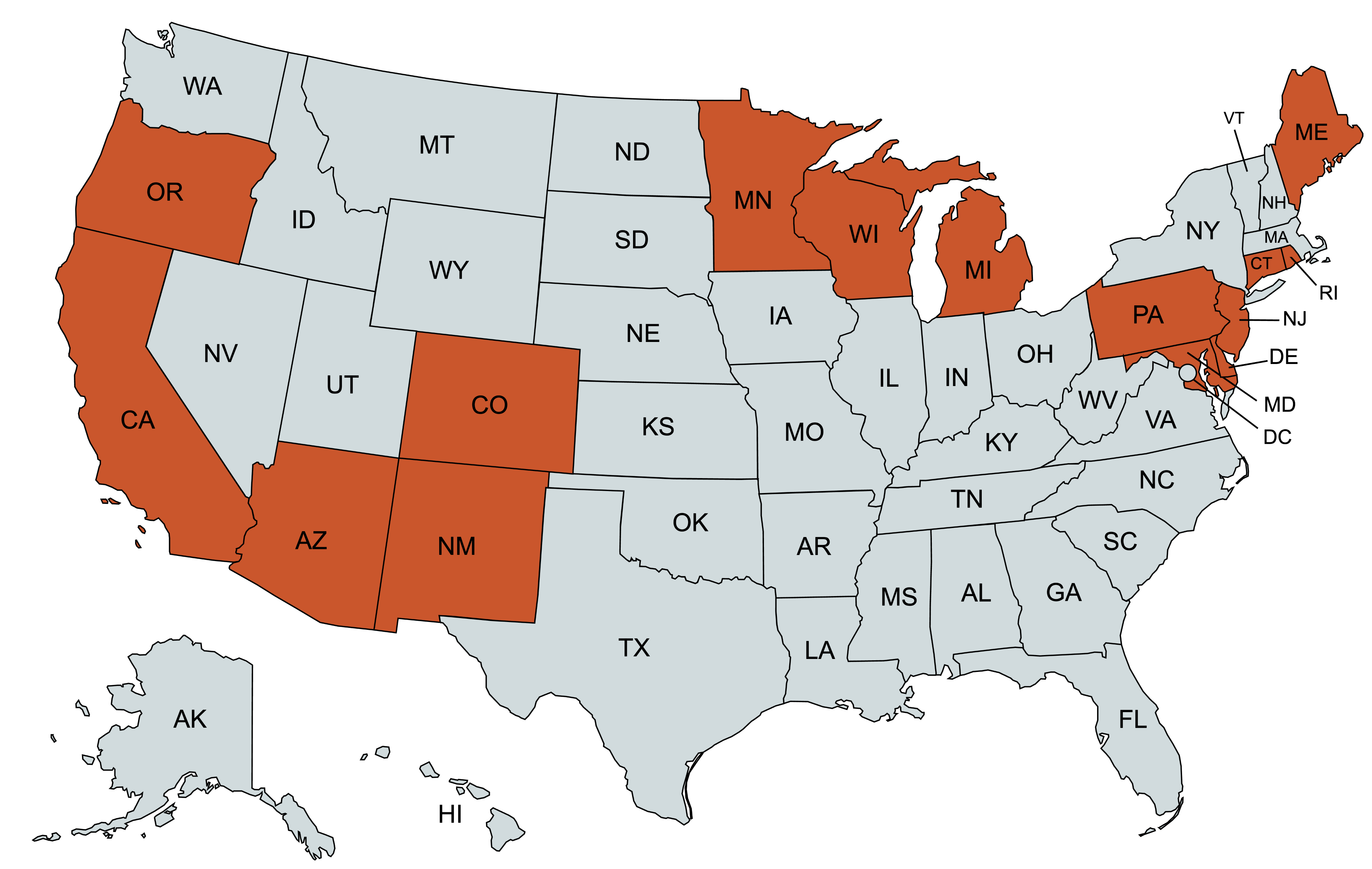 Image created by Unbiased Science
California and Arizona are co-leading the suit, joined by 14 other state attorneys and Governor Shapiro of Pennsylvania. In addition to California, Arizona, and Pennsylvania, the multi-state lawsuit includes Colorado, Connecticut, Delaware, Maine, Maryland, Michigan, Minnesota, New Jersey, New Mexico, Oregon, Rhode Island, and Wisconsin.
Oregon's Attorney General (AG) made a direct connection between the federal policy changes and his state's measles outbreak: "Just last week, our state health officials declared a measles outbreak, with most confirmed cases linked to unvaccinated individuals."
California's AG emphasized that the lawsuit is about protecting evidence-based policy: "Public health decisions must remain grounded in truth and facts."
This opens a second legal front separate from the American Academy of Pediatrics (AAP) v. Kennedy, which we'll get to next.
AAP v. Kennedy: CHD Denied, Ruling Expected Soon
We gave this lawsuit the deep dive in our last installment, but as a quick recap: the AAP filed a motion seeking a preliminary injunction on February 9th. (A preliminary injunction is a temporary court order that would delay the enforcement of the January 5th vaccine schedule changes and the upcoming ACIP meeting until a court can determine whether Kennedy's decision to fire all 17 original committee members and replace them was lawful in the first place.)
Since then, hearings were held on February 13th and March 4th. Both the AAP lawsuit and the multistate suit argue that the reconstituted ACIP violates the Federal Advisory Committee Act (FACA), which requires advisory committees to have balanced membership and to follow transparent appointment processes. Following yesterday's hearing, the judge gave the government until the end of the day on Monday, March 9th, to file its response. A decision on the preliminary injunction is expected as early as next week, and the judge has indicated he intends to rule before the March 18th ACIP meeting.
Then, Children's Health Defense (CHD)—the anti-vaccine organization Kennedy co-founded—filed an emergency motion to intervene, which created a delay.
The update: Judge Brian Murphy denied CHD's motion to intervene. The CHD is welcome to file a brief as amicus curiae (a "friend of the court" brief), but it cannot join as a party to the case. That clears the path for the judge to rule on the preliminary injunction, which could come any day now.
We're watching this closely. A ruling in the AAP's favor could reverse the January 5th schedule changes and halt the upcoming ACIP meeting while the case proceeds.
ACIP: New Appointees, a Troubling Agenda, and a Major Departure
The ACIP meeting, originally scheduled for late February, was rescheduled to March 18-19. On February 27th, Kennedy appointed two new physicians to the committee: Drs. Sean G. Downing and Angelina Farella. That brings total membership to 15 (there can be up to 19 voting members). As a reminder, Kennedy removed all 17 original ACIP members in June 2025 and has been building the committee back on his own terms ever since.
It's worth knowing who's being appointed. While less is publicly known about Downing, a Florida primary care physician, Farella, a Texas-based pediatrician, has repeatedly called to "#StopTheShots" on social media, baselessly claimed mRNA vaccines cause hepatitis in children, labeled the respiratory syncytial virus (RSV) vaccine an "utter failure," and is a member of America's Frontline Doctors, a group that gained prominence during the pandemic for promoting unproven COVID-19 treatments and opposing vaccine mandates. The Texas Medical Board reportedly attempted to sanction her in 2022. HHS called her "more than qualified."
As for what’s on the agenda for the upcoming March meeting, the committee plans to discuss COVID-19 vaccine injuries, long COVID, and changes to how ACIP makes its recommendations. Votes may be scheduled on all three. As a CIDRAP op-ed pointed out, this agenda is organized around safety concerns from early pandemic-era vaccines that are no longer even on the market, while the current formulations show no detectable safety signal. It's a fixation on historical grievances at the expense of present-day public health priorities.
And one more thing that hasn't gotten enough attention: ACOG (the American College of Obstetricians and Gynecologists) withdrew from ACIP. The primary professional voice for maternal and obstetric health no longer has a seat at the table where vaccine recommendations are made.
You can submit written public comments to ACIP. The docket is open now, and written comments must be received by March 12th. Registration is also open for oral comments at the upcoming meeting (March 18-19).
Personnel Chaos at the CDC
 Image created by Unbiased Science
The leadership situation at the CDC continues to deteriorate. Ralph Abraham, the principal deputy director and the agency's number two, resigned abruptly on February 23rd after less than three months on the job. This is the same official who said losing measles elimination status is "the cost of doing business." His departure came just days after Acting Director Jim O'Neill also left. That means the CDC's top two positions turned over within the same month. All references to Abraham were subsequently scrubbed from an internal CDC daily newsletter, in what staff described as an unusual move.
The broader picture is just as concerning. The CDC's workforce has been reduced by roughly a third in just over a year. Career scientists say their expertise has been sidelined. Longtime employees say they've been left in the dark about consequential vaccine decisions.
On February 18th, NIH Director Jay Bhattacharya was appointed to serve simultaneously as the CDC’s acting director. In a notable contrast to most of what we've been covering, Bhattacharya has been publicly endorsing vaccination, particularly the measles, mumps, and rubella (MMR) vaccine. That's worth watching. Under the Federal Vacancies Reform Act, open positions that require Senate confirmation can be filled on an acting basis
for 210 days from when the vacancy opens. They can’t appoint another acting director, but nominating a new candidate stops that 210-day clock, which officially runs out on March 25th.
Casey Means: Surgeon General Hearing
The surgeon general serves as the nation's top public health communicator, tasked with providing Americans with the best available scientific guidance on how to protect their health.)
The Senate HELP Committee—Health, Education, Labor and Pensions—is chaired by Senator Bill Cassidy of Louisiana. It is the same committee that approved RFK Jr.'s nomination to serve as HHS secretary in January of 2025.
Casey Means, President Trump’s nominee for surgeon general, appeared before the Senate HELP Committee on February 25th after her originally scheduled October hearing was postponed when she went into labor. (President Trump withdrew his prior pick, Janette Nesheiwat, after she misled on where she obtained her medical degree.) During the hearing, Means stopped short of endorsing specific vaccines, repeatedly defaulting to "patients should talk to their doctor" rather than offering direct recommendations. She would not endorse the flu vaccine's role in preventing serious disease. When Chairman Cassidy pressed her multiple times on whether she'd recommend the MMR vaccine, she gave a general statement of support but wouldn't commit to a direct recommendation.
She also refused to rule out a link between vaccines and autism, saying "we do not know, as a medical community, what causes autism" and that "we should not leave any stones unturned." (We do, in fact, know from extensive research that vaccines do not cause autism.)
What happens next? The Senate HELP Committee needs to decide whether it will approve Means’ nomination. If her nomination is approved, it moves on to the full Senate. Currently, Republicans hold a one-seat majority on the committee. If all Democrats oppose, it takes only one Republican to vote no, and her nomination won’t advance. Image created by Unbiased Science
Senator Collins from Maine and Senator Murkowski from Alaska have stated publicly that they are still on the fence. Senator Cassidy of Louisiana chairs the committee.Even if you don’t live in one of these states, if your senator sits on the HELP Committee, you can contact their office. A list of committee members and their contact information is available here.
Measles: The Numbers Keep Climbing
And the question of measles elimination status is getting harder to ignore. The Pan American Health Organization (PAHO), a regional body affiliated with the World Health Organization, was set to meet with a panel of international experts in April to review whether the U.S. would lose the elimination status it has held since 2000. The case for losing it is hard to argue against: there have already been 1,136 confirmed cases in 2026, half of the total for 2025 in just two months.
At the request of U.S. health officials, the PAHO meeting has now been postponed to November. HHS says it needs more time to analyze data. Meanwhile, multiple experts called the delay unnecessary, noting that the CDC has the capacity to complete this analysis far faster than in seven months. Of note, November is after the midterm elections.
This tracks with broader reporting that the administration may be actively distancing itself from vaccine politics ahead of November. Trump's own pollster found that Kennedy's moves to downsize the childhood vaccine schedule are broadly unpopular. A White House official recently summarized the new posture to Politico with striking bluntness: "I think we're largely done with vaccines." A Reuters/Ipsos poll found that 84% of Americans, including 81% of Republicans, believe childhood vaccines are safe—another 74% of Americans support school vaccine mandates. The American public is not where the administration assumed it was on this issue. But the damage from a year of policy changes doesn't undo itself just because the political winds shifted.
State-Level Action: Movement in Both Directions
Some states are stepping up to protect access to vaccines, and the bills are becoming more creative and comprehensive.
A note on context: vaccine-related bills get introduced every legislative session, and most of them die in committee. That's true this year, too. What's different is the level of coordination behind some of these efforts, and the reality that when bill language succeeds in one state, it can get copy-pasted into the next. That cuts both ways, for pro-vaccine and anti-vaccine legislation alike.
Oregon just passed Senate Bill 1598, which requires health insurance plans to continue covering scientifically proven vaccines at no out-of-pocket cost. The bill locks in vaccine coverage as defined by federal agencies as of June 30, 2025, and also allows Oregon's public health officer to recommend covered vaccines independently, creating a state-level backstop no matter what happens federally. It passed the House on March 3rd and is headed to Governor Tina Kotek's desk. This is the first pro-vaccine bill passed in Oregon in over a decade.
Colorado's Senate Bill 32 may be the most comprehensive pro-vaccine bill in the country. It would expand malpractice liability protections for vaccine providers, allow pharmacists to prescribe and administer vaccines, require insurance companies to cover the HPV vaccine, and make state immunization funding available to cover vaccine costs not subsidized by the federal government.
Washington introduced House Bill 2242, which would delink the state's immunization coverage statute from ACIP, ensuring Washingtonians maintain access to vaccines grounded in science regardless of what happens at the federal level.
New Hampshire's House voted down a bill that would have ended all vaccine mandates in the state.
But the organized push to weaken vaccine requirements is accelerating. As the Guardian reported this week, the Medical Freedom Act Coalition, a group of 15 organizations, including Kennedy-affiliated groups like CHD and Maha Action (run by Tony Lyons, Kennedy's longtime book publisher), is backing anti-mandate bills in at least 10 states and organizing supporters across 19 states. At least six of those states have active measles outbreaks. In hard-hit South Carolina, the coalition is actively fighting against a bill that would tighten MMR requirements for school entry.
Florida's Senate is advancing a bill (SB 1756) that would create a new "conscience" exemption allowing parents to opt their children out of school immunizations based on personal beliefs. It passed the Senate Rules Committee just yesterday and is now headed to the full Senate floor, despite two Republican senators voting against it. The bill also includes a provision allowing pharmacists to sell ivermectin over the counter without a prescription, with immunity from liability. Pediatricians aren't waiting to see how it plays out. Some are already stockpiling personal protective equipment and developing new protocols for exam rooms potentially contaminated with measles, which can linger in the air for up to 2 hours after an infected person leaves.
Kansas just introduced a medical freedom bill modeled on Idaho's legislation on March 2nd, with only four weeks left in its legislative session.
A Couple More Things Worth Flagging
We've been so focused on pediatric vaccines (for good reason), but vaccines are also critical for adults. The American College of Physicians now recommends that adults 75 and older receive one dose of the RSV vaccine, and that adults 60-74 consider it if they have conditions that increase their risk of serious illness. The Infectious Diseases Society of America also released new RSV guidance for immunocompromised adults, including organ transplant recipients and people undergoing cancer treatment.
Original members of the USPSTF (the U.S. Preventive Services Task Force) are warning that Kennedy may try to eliminate or delegitimize the task force, which helps determine which preventive services insurers must cover at no cost. The USPSTF has now had three consecutive meetings postponed, a pattern similar to what we saw with ACIP before the committee was overhauled.
What You Can Do
That's a lot. We know it can feel overwhelming to track everything happening at the state and federal levels, and we hope this series helps cut through some of the noise. If you want to take action, here are a few concrete ways to do that right now:
Stay curious,
Unbiased Science
This update is also posted on Unbiased Science's Substack page.
To receive these updates on the day they're published, subscribe to CIDRAP's free Daily News Headlines newsletter.
The State of US Vaccine Policy — Mar 5, 2026
Jess Steier, DrPH, Izzy Brandstetter Figueroa, MPH
Today at 4:11 p.m.
Childhood Vaccines
Adult (non-flu) Vaccines
Anti-science New lawsuits, new ACIP members, and a measles elimination review
pushed to November
Welcome to the third installment of our biweekly The State of U.S. Vaccine Policy series in partnership with CIDRAP. If you're just joining us, you can catch up on thesecond installment here. Two weeks ago, we said things were moving fast... and they certainly haven't slowed down! Since our last piece, 14 states have filed lawsuits, the CDC lost its two most senior officials in rapid succession, a surgeon general nominee couldn't bring herself to recommend the measles vaccine, and the meeting that would determine whether the U.S. has lost its measles elimination status has been pushed to after the midterms. Buckle up, and let’s discuss…
The PDF version is here.
Fifteen States (and a Governor) Sue
The biggest development since our last piece: a multistate lawsuit was officially filed on February 24th against the Trump administration. The lawsuit challenges the January 5th CDC Decision Memo that stripped seven childhood vaccines of their universally recommended status. They also challenge the legality of Health and Human Services (HHS) Secretary Robert F. Kennedy Jr.'s sweeping removal and subsequent appointments to the Advisory Committee on Immunization Practices (ACIP), the
expert federal panel that recommends which vaccines Americans should receive.
Image created by Unbiased ScienceCalifornia and Arizona are co-leading the suit, joined by 14 other state attorneys and Governor Shapiro of Pennsylvania. In addition to California, Arizona, and Pennsylvania, the multi-state lawsuit includes Colorado, Connecticut, Delaware, Maine, Maryland, Michigan, Minnesota, New Jersey, New Mexico, Oregon, Rhode Island, and Wisconsin.
Oregon's Attorney General (AG) made a direct connection between the federal policy changes and his state's measles outbreak: "Just last week, our state health officials declared a measles outbreak, with most confirmed cases linked to unvaccinated individuals."
California's AG emphasized that the lawsuit is about protecting evidence-based policy: "Public health decisions must remain grounded in truth and facts."
This opens a second legal front separate from the American Academy of Pediatrics (AAP) v. Kennedy, which we'll get to next.
AAP v. Kennedy: CHD Denied, Ruling Expected Soon
We gave this lawsuit the deep dive in our last installment, but as a quick recap: the AAP filed a motion seeking a preliminary injunction on February 9th. (A preliminary injunction is a temporary court order that would delay the enforcement of the January 5th vaccine schedule changes and the upcoming ACIP meeting until a court can determine whether Kennedy's decision to fire all 17 original committee members and replace them was lawful in the first place.)
Since then, hearings were held on February 13th and March 4th. Both the AAP lawsuit and the multistate suit argue that the reconstituted ACIP violates the Federal Advisory Committee Act (FACA), which requires advisory committees to have balanced membership and to follow transparent appointment processes. Following yesterday's hearing, the judge gave the government until the end of the day on Monday, March 9th, to file its response. A decision on the preliminary injunction is expected as early as next week, and the judge has indicated he intends to rule before the March 18th ACIP meeting.
Then, Children's Health Defense (CHD)—the anti-vaccine organization Kennedy co-founded—filed an emergency motion to intervene, which created a delay.
The update: Judge Brian Murphy denied CHD's motion to intervene. The CHD is welcome to file a brief as amicus curiae (a "friend of the court" brief), but it cannot join as a party to the case. That clears the path for the judge to rule on the preliminary injunction, which could come any day now.
We're watching this closely. A ruling in the AAP's favor could reverse the January 5th schedule changes and halt the upcoming ACIP meeting while the case proceeds.
ACIP: New Appointees, a Troubling Agenda, and a Major Departure
The ACIP meeting, originally scheduled for late February, was rescheduled to March 18-19. On February 27th, Kennedy appointed two new physicians to the committee: Drs. Sean G. Downing and Angelina Farella. That brings total membership to 15 (there can be up to 19 voting members). As a reminder, Kennedy removed all 17 original ACIP members in June 2025 and has been building the committee back on his own terms ever since.
It's worth knowing who's being appointed. While less is publicly known about Downing, a Florida primary care physician, Farella, a Texas-based pediatrician, has repeatedly called to "#StopTheShots" on social media, baselessly claimed mRNA vaccines cause hepatitis in children, labeled the respiratory syncytial virus (RSV) vaccine an "utter failure," and is a member of America's Frontline Doctors, a group that gained prominence during the pandemic for promoting unproven COVID-19 treatments and opposing vaccine mandates. The Texas Medical Board reportedly attempted to sanction her in 2022. HHS called her "more than qualified."
As for what’s on the agenda for the upcoming March meeting, the committee plans to discuss COVID-19 vaccine injuries, long COVID, and changes to how ACIP makes its recommendations. Votes may be scheduled on all three. As a CIDRAP op-ed pointed out, this agenda is organized around safety concerns from early pandemic-era vaccines that are no longer even on the market, while the current formulations show no detectable safety signal. It's a fixation on historical grievances at the expense of present-day public health priorities.
And one more thing that hasn't gotten enough attention: ACOG (the American College of Obstetricians and Gynecologists) withdrew from ACIP. The primary professional voice for maternal and obstetric health no longer has a seat at the table where vaccine recommendations are made.
You can submit written public comments to ACIP. The docket is open now, and written comments must be received by March 12th. Registration is also open for oral comments at the upcoming meeting (March 18-19).
Personnel Chaos at the CDC
Image created by Unbiased ScienceThe leadership situation at the CDC continues to deteriorate. Ralph Abraham, the principal deputy director and the agency's number two, resigned abruptly on February 23rd after less than three months on the job. This is the same official who said losing measles elimination status is "the cost of doing business." His departure came just days after Acting Director Jim O'Neill also left. That means the CDC's top two positions turned over within the same month. All references to Abraham were subsequently scrubbed from an internal CDC daily newsletter, in what staff described as an unusual move.
The broader picture is just as concerning. The CDC's workforce has been reduced by roughly a third in just over a year. Career scientists say their expertise has been sidelined. Longtime employees say they've been left in the dark about consequential vaccine decisions.
On February 18th, NIH Director Jay Bhattacharya was appointed to serve simultaneously as the CDC’s acting director. In a notable contrast to most of what we've been covering, Bhattacharya has been publicly endorsing vaccination, particularly the measles, mumps, and rubella (MMR) vaccine. That's worth watching. Under the Federal Vacancies Reform Act, open positions that require Senate confirmation can be filled on an acting basis
for 210 days from when the vacancy opens. They can’t appoint another acting director, but nominating a new candidate stops that 210-day clock, which officially runs out on March 25th.
Casey Means: Surgeon General Hearing
The surgeon general serves as the nation's top public health communicator, tasked with providing Americans with the best available scientific guidance on how to protect their health.)
The Senate HELP Committee—Health, Education, Labor and Pensions—is chaired by Senator Bill Cassidy of Louisiana. It is the same committee that approved RFK Jr.'s nomination to serve as HHS secretary in January of 2025.
Casey Means, President Trump’s nominee for surgeon general, appeared before the Senate HELP Committee on February 25th after her originally scheduled October hearing was postponed when she went into labor. (President Trump withdrew his prior pick, Janette Nesheiwat, after she misled on where she obtained her medical degree.) During the hearing, Means stopped short of endorsing specific vaccines, repeatedly defaulting to "patients should talk to their doctor" rather than offering direct recommendations. She would not endorse the flu vaccine's role in preventing serious disease. When Chairman Cassidy pressed her multiple times on whether she'd recommend the MMR vaccine, she gave a general statement of support but wouldn't commit to a direct recommendation.
She also refused to rule out a link between vaccines and autism, saying "we do not know, as a medical community, what causes autism" and that "we should not leave any stones unturned." (We do, in fact, know from extensive research that vaccines do not cause autism.)
What happens next? The Senate HELP Committee needs to decide whether it will approve Means’ nomination. If her nomination is approved, it moves on to the full Senate. Currently, Republicans hold a one-seat majority on the committee. If all Democrats oppose, it takes only one Republican to vote no, and her nomination won’t advance.
Image created by Unbiased ScienceSenator Collins from Maine and Senator Murkowski from Alaska have stated publicly that they are still on the fence. Senator Cassidy of Louisiana chairs the committee.Even if you don’t live in one of these states, if your senator sits on the HELP Committee, you can contact their office. A list of committee members and their contact information is available here.
Measles: The Numbers Keep Climbing
And the question of measles elimination status is getting harder to ignore. The Pan American Health Organization (PAHO), a regional body affiliated with the World Health Organization, was set to meet with a panel of international experts in April to review whether the U.S. would lose the elimination status it has held since 2000. The case for losing it is hard to argue against: there have already been 1,136 confirmed cases in 2026, half of the total for 2025 in just two months.
- The South Carolina outbreak alone accounts for almost 1,000 cases, making it the largest single outbreak in recent U.S. history, where 93% of patients were unvaccinated and 90% are children. In Spartanburg County, the epicenter of the outbreak, 89% of students have childhood vaccines, and at one school where measles was detected, only 21% of students were vaccinated—well below the 95% threshold needed for measles herd immunity.
- A new report from the Common Health Coalition and Yale School of Public Health projects that if vaccination rates decline by just 1% annually, the cost to the U.S. could reach $1.5 billion per year, with a cumulative $7.8 billion by 2030. This is not just a public health crisis. It's an economic one.
At the request of U.S. health officials, the PAHO meeting has now been postponed to November. HHS says it needs more time to analyze data. Meanwhile, multiple experts called the delay unnecessary, noting that the CDC has the capacity to complete this analysis far faster than in seven months. Of note, November is after the midterm elections.
This tracks with broader reporting that the administration may be actively distancing itself from vaccine politics ahead of November. Trump's own pollster found that Kennedy's moves to downsize the childhood vaccine schedule are broadly unpopular. A White House official recently summarized the new posture to Politico with striking bluntness: "I think we're largely done with vaccines." A Reuters/Ipsos poll found that 84% of Americans, including 81% of Republicans, believe childhood vaccines are safe—another 74% of Americans support school vaccine mandates. The American public is not where the administration assumed it was on this issue. But the damage from a year of policy changes doesn't undo itself just because the political winds shifted.
State-Level Action: Movement in Both Directions
Some states are stepping up to protect access to vaccines, and the bills are becoming more creative and comprehensive.
A note on context: vaccine-related bills get introduced every legislative session, and most of them die in committee. That's true this year, too. What's different is the level of coordination behind some of these efforts, and the reality that when bill language succeeds in one state, it can get copy-pasted into the next. That cuts both ways, for pro-vaccine and anti-vaccine legislation alike.
Oregon just passed Senate Bill 1598, which requires health insurance plans to continue covering scientifically proven vaccines at no out-of-pocket cost. The bill locks in vaccine coverage as defined by federal agencies as of June 30, 2025, and also allows Oregon's public health officer to recommend covered vaccines independently, creating a state-level backstop no matter what happens federally. It passed the House on March 3rd and is headed to Governor Tina Kotek's desk. This is the first pro-vaccine bill passed in Oregon in over a decade.
Colorado's Senate Bill 32 may be the most comprehensive pro-vaccine bill in the country. It would expand malpractice liability protections for vaccine providers, allow pharmacists to prescribe and administer vaccines, require insurance companies to cover the HPV vaccine, and make state immunization funding available to cover vaccine costs not subsidized by the federal government.
Washington introduced House Bill 2242, which would delink the state's immunization coverage statute from ACIP, ensuring Washingtonians maintain access to vaccines grounded in science regardless of what happens at the federal level.
New Hampshire's House voted down a bill that would have ended all vaccine mandates in the state.
But the organized push to weaken vaccine requirements is accelerating. As the Guardian reported this week, the Medical Freedom Act Coalition, a group of 15 organizations, including Kennedy-affiliated groups like CHD and Maha Action (run by Tony Lyons, Kennedy's longtime book publisher), is backing anti-mandate bills in at least 10 states and organizing supporters across 19 states. At least six of those states have active measles outbreaks. In hard-hit South Carolina, the coalition is actively fighting against a bill that would tighten MMR requirements for school entry.
Florida's Senate is advancing a bill (SB 1756) that would create a new "conscience" exemption allowing parents to opt their children out of school immunizations based on personal beliefs. It passed the Senate Rules Committee just yesterday and is now headed to the full Senate floor, despite two Republican senators voting against it. The bill also includes a provision allowing pharmacists to sell ivermectin over the counter without a prescription, with immunity from liability. Pediatricians aren't waiting to see how it plays out. Some are already stockpiling personal protective equipment and developing new protocols for exam rooms potentially contaminated with measles, which can linger in the air for up to 2 hours after an infected person leaves.
Kansas just introduced a medical freedom bill modeled on Idaho's legislation on March 2nd, with only four weeks left in its legislative session.
A Couple More Things Worth Flagging
We've been so focused on pediatric vaccines (for good reason), but vaccines are also critical for adults. The American College of Physicians now recommends that adults 75 and older receive one dose of the RSV vaccine, and that adults 60-74 consider it if they have conditions that increase their risk of serious illness. The Infectious Diseases Society of America also released new RSV guidance for immunocompromised adults, including organ transplant recipients and people undergoing cancer treatment.
Original members of the USPSTF (the U.S. Preventive Services Task Force) are warning that Kennedy may try to eliminate or delegitimize the task force, which helps determine which preventive services insurers must cover at no cost. The USPSTF has now had three consecutive meetings postponed, a pattern similar to what we saw with ACIP before the committee was overhauled.
What You Can Do
That's a lot. We know it can feel overwhelming to track everything happening at the state and federal levels, and we hope this series helps cut through some of the noise. If you want to take action, here are a few concrete ways to do that right now:
- Submit written public comments to ACIP. The public comment docket for the March 18-19 meeting is open now. Written comments must be received by March 12th. You can also register to deliver oral comments at the meeting itself.
- Contact your U.S. senators about the surgeon general nomination. The Senate HELP Committee will vote on whether to advance Casey Means' nomination. If your senator sits on the committee, let them know where you stand. You can find your senators and their contact information here. Specifically, Sens. Collins (ME) and Murkowski (AK) have publicly indicated they are undecided, and Sen. Cassidy (LA) chairs the HELP Committee.
- Reach out to your state legislators. Vaccine-related bills are moving in multiple states right now. You can find your state representatives and their contact information through OpenStates or your state legislature's website.
Stay curious,
Unbiased Science
This update is also posted on Unbiased Science's Substack page.
To receive these updates on the day they're published, subscribe to CIDRAP's free Daily News Headlines newsletter.