
 Tweet
Tweet
L.A. County Confirms H5 In Two Cats - Investigating 3 More Suspected Feline Cases
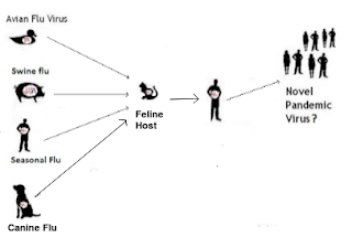
Cats As Potential Vectors/Mixing Vessels for Novel Flu
#18,496
Eight days ago, in California: LA County Health Dept - Suspected H5 Bird Flu Detected in Los Angeles County Cats That Consumed Recalled Raw Milk, we saw suspicions raised over the deaths of two cats after they consumed raw milk in Southern California.
Late yesterday, those suspicions were confirmed, after lab results came back positive for H5 influenza. At the same time, LA county announced they were investigating 3 more suspected feline infections in another household (potentially linked to raw meat consumption).
Since June we've seen nearly 60 domestic cats confirmed by the USDA to have died after contracting H5N1, although the actual number is likely much higher. Cats are particularly susceptible to H5 influenza, often with severe - or fatal- results (see A Brief History Of Avian Influenza In Cats).
While rare, cats have also been shown capable of transmitting avian flu (H7N2) to humans (see Preprint: Avian Influenza Virus Infections in Felines: A Systematic Review of Two Decades of Literature) raising concerns over their potential role in spreading the virus, or affecting its evolution.
We've a lengthy update from LA County, which describes their findings, their current investigation, and their advice to the public. I'll have a postscript after the break.
For Immediate Release:
December 18, 2024
The Los Angeles County Department of Public Health has confirmed two cases of H5 bird flu in cats that consumed recalled raw milk from Raw Farm, LLC. In addition, Public Health is investigating three other possible cases of H5 bird flu in three cats from a different household.
The confirmed two infected indoor cats from one household consumed raw milk linked to a recall of raw milk and cream products prior to onset of symptoms, which included . lack of appetite, fever and neurologic signs. The infected cats died after severe worsening of their illness, and subsequently tested positive for Influenza A, a rare result in cats. Public
Health received the results of confirmatory testing, which confirmed the infection of H5 bird flu. Additional pets in the home are under quarantine.
Public Health is now investigating additional possible cases of H5 bird flu in three cats from a different household. One cat has tested positive for Influenza A, a rare result in cats. Two other cats, which have died after worsening respiratory illness, are presumed to have also been positive for Influenza A. Public Health is awaiting confirmatory testing. These cats were not known to be exposed to raw milk, however public health is investigating other possible sources of infection, including raw meat.
The nationwide H5 bird flu outbreak has seen other cats infected with the virus after consuming infected raw milk.
People who had direct contact with the cats are monitoring for symptoms and have been offered antiviral prophylaxis. There have been no human cases of bird flu associated with exposure to these cats yet identified. The investigation is ongoing.
Although human cases of bird flu are rare and the risk to residents remains low, this detection of H5 bird flu in cats who consumed raw milk underscores the importance of being proactive about preventing ongoing transmission of the virus.
“The risk of H5 bird flu remains low in Los Angeles County, but these confirmed cases of the virus in pet cats are a reminder that consuming raw dairy and meat products can lead to severe illness in cats," said Dr. Barbara Ferrer, Ph.D., M.P.H., M.Ed., Director of the Los Angeles County Department of Public Health. “To avoid the spread of disease, including H5 bird flu, we strongly encourage residents and their pets to avoid raw dairy and undercooked meat products, limit contact with sick or dead animals, report sick or dead birds and keep pets or poultry away from wild animals and birds.”
Cats may be exposed to H5 bird flu by consuming infected birds or other animals, being in environments contaminated with the virus, and consuming unpasteurized milk from infected cows. Cats infected with H5 bird flu may develop severe illness that can include fever and neurologic signs, and that can rapidly progress to death. Transmission of the H5 bird flu virus from mammal to mammal can occur. Cats have transmitted another influenza strain to humans, but there have been no known cases to date of H5 bird flu transmitted from cats to humans as part of this nationwide H5 bird flu outbreak.
Raw milk, which is milk that has not been pasteurized, can carry harmful germs including influenza. These germs can present serious health risks to you, your family, and your pets. Anyone can become sick from drinking raw milk or consuming raw milk products. The people at the highest risk for severe illness include people who are pregnant, adults 65 years and older, children younger than 5 years, and people with weakened immune systems.
Public Health continues to strongly encourage residents to avoid consuming raw milk and to not feed it to their pets; this includes frozen raw milk products since freezing does not eliminate harmful germs that can cause illness. Pasteurized milk remains safe to drink.
Symptoms of H5 bird flu infection in humans include eye redness or discharge, cough, sore throat, runny or stuffy nose, diarrhea, vomiting, muscle or body aches, headaches, fatigue, trouble breathing and fever.
Anyone who has consumed these specific recalled raw milk products and is experiencing symptoms should immediately contact their health care provider or local health department.
Samples from birds, cats, and wild mammals in LA County continue to be tested for H5 bird flu at our Public Health Laboratory. In addition, the Public Health Laboratory routinely tests clinical specimens from humans for H5 bird flu as part of ongoing surveillance.
Best Practices to Reduce Risk for You and Your Pets
While the current risk of transmission of H5 bird flu to LA County residents and pets remains low, Public Health encourages these best practices:
· Avoid Raw Dairy and Undercooked Meat Products: Do not drink raw milk or eat raw cheeses and undercooked meat products. Do not feed these to your pets. Raw milk, even from healthy cows, may be contaminated with harmful germs that can make you and your pets very sick. Freezing raw milk does not eliminate the harmful germs that may be in the product.
· Limit Contact with Animals: Avoid unprotected contact with sick or dead animals or birds or any materials contaminated with bird feces. Avoid handling wild birds and observe them only from a distance. If you have to handle wild birds, even if they appear healthy, wear a well-fitting mask and gloves, and practice good hand hygiene, as some birds may carry the virus without showing symptoms.
· Report sick or dead birds: Contact your local animal control agency if you see sick or dead birds. Symptoms can vary; infected birds or animals may be unable to fly, have seizures, have difficulty walking or be found dead.
· Protect pets or poultry: Keep pets or poultry away from wild animals and birds. Ensure that wild birds cannot defecate into areas holding or housing pet birds or poultry.
· Remove Bird Feeders and Baths: Take down bird feeders and communal bird baths to reduce the risk of the virus spreading from bird-to-bird.
· Get a Seasonal Flu Vaccine: People should receive a seasonal flu vaccine. While this vaccine does not prevent avian influenza infection, it can reduce the risk of getting sick with human and bird flu viruses at the same time.
For questions or to find a nearby clinic or doctor, residents can call the Public Health InfoLine at 833-540-0473. Open every day from 8 a.m. to 8 p.m.
For more information, visit our websites:
Avian flu in animals: publichealth.lacounty.gov/vet/HPAI.htm
Avian flu in humans: ph.lacounty.gov/acd/diseases/h5n1.htm
Ten days ago, in Emerg. Microbes & Inf.: Marked Neurotropism and Potential Adaptation of H5N1 Clade 2.3.4.4.b Virus in Naturally Infected Domestic Cats, we looked at a report on the HPAI H5 infection of a house full of domestic cats in South Dakota last April.
Ten cats died, many with severe neurological symptoms, but only two were ever tested. As a result, 80% of the cats in that incident were not added to the USDA's list. It is likely that the majority of feline H5 infections across the country are never reported or confirmed.
Isolates from the two cats that were tested showed signs of viral adaptation to a mammalian host. The authors wrote:
Cat H5N1 genomes had unique mutations, including T143A in haemagglutinin, known to affect infectivity and immune evasion, and two novel mutations in PA protein (F314L, L342Q) that may affect polymerase activity and virulence, suggesting potential virus adaptation. Dead cats showed systemic infection with lesions and viral antigens in multiple organs. Higher viral RNA and antigen in the brain indicated pronounced neurotropism.
While the virus still lacks the ability to transmit efficiently from human-to-human, every mammalian infection is another opportunity for the virus to crack that code.
Although the CDC continues to rank the risk to general public from avian flu as low, they do provide very specific guidance to pet owners on how to limit their risk of infection from the virus (see What Causes Bird Flu in Pets and Other Animals).
And given the escalating amount of HPAI virus being reported in wild birds, poultry, and livestock across the country, it is advice well worth heeding.
https://afludiary.blogspot.com/2024/12/la-county-confirms-h5-in-two-cats.html
Cats As Potential Vectors/Mixing Vessels for Novel Flu
#18,496
Eight days ago, in California: LA County Health Dept - Suspected H5 Bird Flu Detected in Los Angeles County Cats That Consumed Recalled Raw Milk, we saw suspicions raised over the deaths of two cats after they consumed raw milk in Southern California.
Late yesterday, those suspicions were confirmed, after lab results came back positive for H5 influenza. At the same time, LA county announced they were investigating 3 more suspected feline infections in another household (potentially linked to raw meat consumption).
Since June we've seen nearly 60 domestic cats confirmed by the USDA to have died after contracting H5N1, although the actual number is likely much higher. Cats are particularly susceptible to H5 influenza, often with severe - or fatal- results (see A Brief History Of Avian Influenza In Cats).
While rare, cats have also been shown capable of transmitting avian flu (H7N2) to humans (see Preprint: Avian Influenza Virus Infections in Felines: A Systematic Review of Two Decades of Literature) raising concerns over their potential role in spreading the virus, or affecting its evolution.
We've a lengthy update from LA County, which describes their findings, their current investigation, and their advice to the public. I'll have a postscript after the break.
For Immediate Release:
December 18, 2024
The Los Angeles County Department of Public Health has confirmed two cases of H5 bird flu in cats that consumed recalled raw milk from Raw Farm, LLC. In addition, Public Health is investigating three other possible cases of H5 bird flu in three cats from a different household.
The confirmed two infected indoor cats from one household consumed raw milk linked to a recall of raw milk and cream products prior to onset of symptoms, which included . lack of appetite, fever and neurologic signs. The infected cats died after severe worsening of their illness, and subsequently tested positive for Influenza A, a rare result in cats. Public
Health received the results of confirmatory testing, which confirmed the infection of H5 bird flu. Additional pets in the home are under quarantine.
Public Health is now investigating additional possible cases of H5 bird flu in three cats from a different household. One cat has tested positive for Influenza A, a rare result in cats. Two other cats, which have died after worsening respiratory illness, are presumed to have also been positive for Influenza A. Public Health is awaiting confirmatory testing. These cats were not known to be exposed to raw milk, however public health is investigating other possible sources of infection, including raw meat.
The nationwide H5 bird flu outbreak has seen other cats infected with the virus after consuming infected raw milk.
People who had direct contact with the cats are monitoring for symptoms and have been offered antiviral prophylaxis. There have been no human cases of bird flu associated with exposure to these cats yet identified. The investigation is ongoing.
Although human cases of bird flu are rare and the risk to residents remains low, this detection of H5 bird flu in cats who consumed raw milk underscores the importance of being proactive about preventing ongoing transmission of the virus.
“The risk of H5 bird flu remains low in Los Angeles County, but these confirmed cases of the virus in pet cats are a reminder that consuming raw dairy and meat products can lead to severe illness in cats," said Dr. Barbara Ferrer, Ph.D., M.P.H., M.Ed., Director of the Los Angeles County Department of Public Health. “To avoid the spread of disease, including H5 bird flu, we strongly encourage residents and their pets to avoid raw dairy and undercooked meat products, limit contact with sick or dead animals, report sick or dead birds and keep pets or poultry away from wild animals and birds.”
Cats may be exposed to H5 bird flu by consuming infected birds or other animals, being in environments contaminated with the virus, and consuming unpasteurized milk from infected cows. Cats infected with H5 bird flu may develop severe illness that can include fever and neurologic signs, and that can rapidly progress to death. Transmission of the H5 bird flu virus from mammal to mammal can occur. Cats have transmitted another influenza strain to humans, but there have been no known cases to date of H5 bird flu transmitted from cats to humans as part of this nationwide H5 bird flu outbreak.
Raw milk, which is milk that has not been pasteurized, can carry harmful germs including influenza. These germs can present serious health risks to you, your family, and your pets. Anyone can become sick from drinking raw milk or consuming raw milk products. The people at the highest risk for severe illness include people who are pregnant, adults 65 years and older, children younger than 5 years, and people with weakened immune systems.
Public Health continues to strongly encourage residents to avoid consuming raw milk and to not feed it to their pets; this includes frozen raw milk products since freezing does not eliminate harmful germs that can cause illness. Pasteurized milk remains safe to drink.
Symptoms of H5 bird flu infection in humans include eye redness or discharge, cough, sore throat, runny or stuffy nose, diarrhea, vomiting, muscle or body aches, headaches, fatigue, trouble breathing and fever.
Anyone who has consumed these specific recalled raw milk products and is experiencing symptoms should immediately contact their health care provider or local health department.
Samples from birds, cats, and wild mammals in LA County continue to be tested for H5 bird flu at our Public Health Laboratory. In addition, the Public Health Laboratory routinely tests clinical specimens from humans for H5 bird flu as part of ongoing surveillance.
Best Practices to Reduce Risk for You and Your Pets
While the current risk of transmission of H5 bird flu to LA County residents and pets remains low, Public Health encourages these best practices:
· Avoid Raw Dairy and Undercooked Meat Products: Do not drink raw milk or eat raw cheeses and undercooked meat products. Do not feed these to your pets. Raw milk, even from healthy cows, may be contaminated with harmful germs that can make you and your pets very sick. Freezing raw milk does not eliminate the harmful germs that may be in the product.
· Limit Contact with Animals: Avoid unprotected contact with sick or dead animals or birds or any materials contaminated with bird feces. Avoid handling wild birds and observe them only from a distance. If you have to handle wild birds, even if they appear healthy, wear a well-fitting mask and gloves, and practice good hand hygiene, as some birds may carry the virus without showing symptoms.
· Report sick or dead birds: Contact your local animal control agency if you see sick or dead birds. Symptoms can vary; infected birds or animals may be unable to fly, have seizures, have difficulty walking or be found dead.
· Protect pets or poultry: Keep pets or poultry away from wild animals and birds. Ensure that wild birds cannot defecate into areas holding or housing pet birds or poultry.
· Remove Bird Feeders and Baths: Take down bird feeders and communal bird baths to reduce the risk of the virus spreading from bird-to-bird.
· Get a Seasonal Flu Vaccine: People should receive a seasonal flu vaccine. While this vaccine does not prevent avian influenza infection, it can reduce the risk of getting sick with human and bird flu viruses at the same time.
For questions or to find a nearby clinic or doctor, residents can call the Public Health InfoLine at 833-540-0473. Open every day from 8 a.m. to 8 p.m.
For more information, visit our websites:
Avian flu in animals: publichealth.lacounty.gov/vet/HPAI.htm
Avian flu in humans: ph.lacounty.gov/acd/diseases/h5n1.htm
Ten days ago, in Emerg. Microbes & Inf.: Marked Neurotropism and Potential Adaptation of H5N1 Clade 2.3.4.4.b Virus in Naturally Infected Domestic Cats, we looked at a report on the HPAI H5 infection of a house full of domestic cats in South Dakota last April.
Ten cats died, many with severe neurological symptoms, but only two were ever tested. As a result, 80% of the cats in that incident were not added to the USDA's list. It is likely that the majority of feline H5 infections across the country are never reported or confirmed.
Isolates from the two cats that were tested showed signs of viral adaptation to a mammalian host. The authors wrote:
Cat H5N1 genomes had unique mutations, including T143A in haemagglutinin, known to affect infectivity and immune evasion, and two novel mutations in PA protein (F314L, L342Q) that may affect polymerase activity and virulence, suggesting potential virus adaptation. Dead cats showed systemic infection with lesions and viral antigens in multiple organs. Higher viral RNA and antigen in the brain indicated pronounced neurotropism.
While the virus still lacks the ability to transmit efficiently from human-to-human, every mammalian infection is another opportunity for the virus to crack that code.
Although the CDC continues to rank the risk to general public from avian flu as low, they do provide very specific guidance to pet owners on how to limit their risk of infection from the virus (see What Causes Bird Flu in Pets and Other Animals).
And given the escalating amount of HPAI virus being reported in wild birds, poultry, and livestock across the country, it is advice well worth heeding.
https://afludiary.blogspot.com/2024/12/la-county-confirms-h5-in-two-cats.html


Comment