Announcement

Collapse
No announcement yet.

DRC humanitarian crisis 'world's most neglected', says UN

Collapse
X
 
  • Filter
  • Time
  • Show
Clear All
new posts

  • #31
    Translation Google

    South Kivu: Health alert due to measles, cholera and Mpox

    Published on Wed, 05/11/2025 - 11:14 | Modified on Wed, 05/11/2025 - 11:14

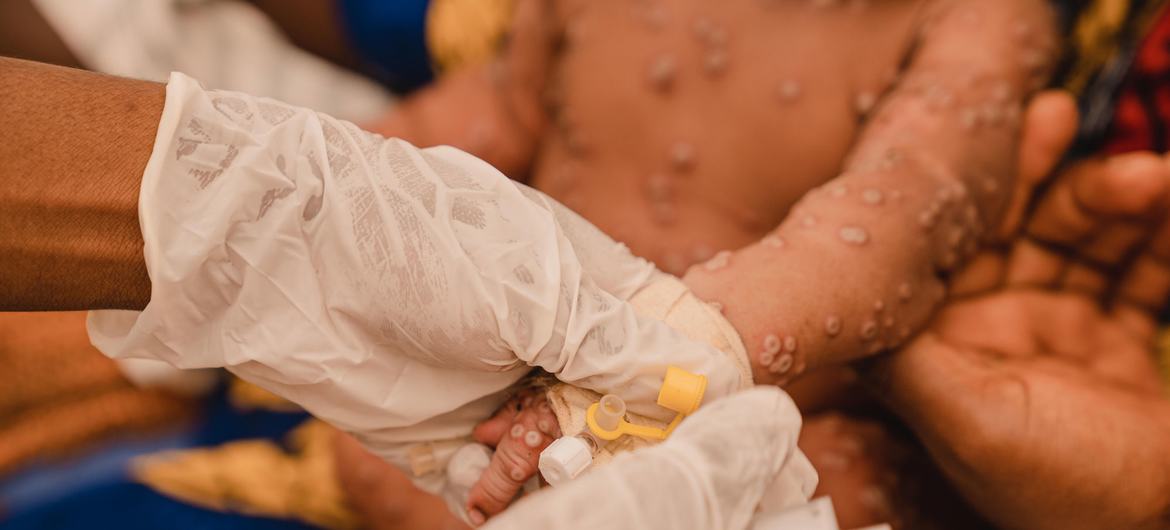
    South Kivu is facing a critical epidemiological situation, marked by the simultaneous resurgence of three major infectious diseases: measles, cholera, and Mpox (monkeypox). This was announced on Wednesday, November 5th, by the provincial chief medical officer of health, Dr. Aimé Alengo Odudu, who painted an alarming picture of the situation.

    According to data compiled between the 1st and 43rd weeks of 2025, the province recorded:

    7,961 cases of measles and 164 deaths, representing a case fatality rate of 2.06% in 21 health zones
    19,011 cases of Mpox and 17 deaths, representing a case fatality rate of 0.69% in 34 health zones
    10,900 cases of cholera and 75 deaths, representing a case fatality rate of 0.69% in 16 health zones

    A new threat: polio

    Dr. Alengo also warned of an emerging polio epidemic, confirmed by laboratory testing. The province is now classified as high-risk, and health authorities are preparing a vaccination response in a context of war, where several areas of the province, including the city of Bukavu, are under the control of the M23-AFC rebellion.

    "The big challenge is care. There is a real problem with the availability of medicines, especially for children under 5. Even organizing responses is becoming difficult in the current context," he said.

    A call to action

    Faced with this triple health crisis, provincial authorities are calling for the urgent mobilization of humanitarian and technical partners to:

    Strengthening response capacities,
    Supplying healthcare facilities with essential medicines,
    Protecting the most vulnerable populations, especially children.

    The situation in South Kivu illustrates the growing public health challenges in areas affected by insecurity, population displacement and a lack of medical resources.
    Le Sud-Kivu est confronté à une situation épidémiologique critique, marquée par la résurgence simultanée de trois maladies infectieuses majeures : la rougeole, le choléra et le Mpox (variole du singe). C’est ce qu’a annoncé, ce mercredi5 novembre, le médecin chef de division provinciale de la santé, Dr Aimé Alengo Odudu, qui dresse un bilan alarmant de la situation.

    Comment


    • #32
      Click image for larger version  Name:	image.png Views:	1 Size:	4.9 KB ID:	1026525

      Congolese refugees in Burundi in dire need of support


      Press Release 23 December 2025
      • More than 88,000 refugees have fled to Burundi, facing dire living conditions and limited access to basic needs.
      • There is a high risk of epidemic diseases, including cholera, measles and malaria.
      • Overwhelming needs require immediate mobilisation to provide vital healthcare and essential support.

      Bujumbura - According to the UN Refugee Agency (UNHCR), more than 88,000 refugees have fled to Burundi since the recent escalation of violence in South Kivu province, in the Democratic Republic of Congo. People face dire living conditions in the camps, with limited access to clean water, food, hygiene and basic needs, as people kept arriving during the last days. Médecins Sans Frontières (MSF) is expanding its emergency response and warns about the risk of the spread of epidemic diseases such as cholera and measles, and a catastrophic increase in malaria cases among people made vulnerable in the midst of this crisis.

      “The camp is saturated, you can see a few families sharing the same tent, and the ground is covered in mud,” says Zakari Moluh, MSF project coordinator describing the situation in the Ndava site in Cibitoke, northwest of Burundi. “We see people holding two-litre water bottles and this is all they have to cover their water needs; food is almost unavailable. We fear a worsening of the health and humanitarian situation.”


      ...

      Comment


      • #33
        Click image for larger version

Name:	image.png
Views:	76
Size:	4.4 KB
ID:	1026599

        Translation Google

        Democratic Republic of Congo: Save the Children, thousands of families fleeing conflict in Burundi without food or shelter, and children without an education.

        published on
        December 29, 2025

        Since 6 December, more than 84,000 people from South Kivu have crossed the border into Burundi to escape fighting and bombing, bringing the total number of Congolese refugees and asylum seekers in the country to more than 200,000 [1] .

        Many families faced a perilous journey on foot, lasting three or four days, sleeping in the open and crossing swollen rivers, before arriving exhausted and dehydrated at overcrowded transit centers, which offer temporary shelter before being transferred to more permanent facilities.

        The severe shortage of food, drinking water, sanitation, housing, and healthcare in transit centers exposes children to the risk of outbreaks of potentially fatal diseases such as cholera. Boys and girls have also been forced to drop out of school. On December 17, the Government of Burundi declared a state of emergency.

        Rosine*, a mother of seven, fled with her husband, children, and younger sister. She says she was caught in the bombings in her village. “The bombs started falling on our village. They killed many people. My neighbor's house was hit, and many people died in the explosion. We counted 30 victims.” When the violence escalated, Rosine's family fled in panic, leaving behind their business, their belongings, and her injured mother. “We left my mother in Congo. She had an accident shortly before the conflict and couldn't run. We don't know if she's alive or dead.” But the journey to safety was perilous. To reach Burundi, the family had to cross a swollen river. “The water reached my chest. If it hadn't been for my husband, we wouldn't have made it. One of my little girls was swept away by the current, but fortunately my husband and other men managed to save her.”

        Now, in the transit center, Rosine* says hunger is their daily challenge. “My children only eat once a day. Sometimes they don't eat at all because we don't have water to cook with. The tent is small, it floods when it rains, and the children sleep on the floor. We're suffering a lot.” Save the Children emphasizes that women and children are the hardest hit, arriving exhausted and severely traumatized. As Rosine* explains, her children are still terrified by the sound of explosions. “The sound of gunshots and bombs terrified them. Even today, when something falls, they get scared and think the bombing has started again.”

        Children in transit centers say they've had to interrupt their studies. Tina*, 9, who fled with her mother Lucia* and four siblings, dreams of returning to school: "I went to school, I was in third grade. I love studying. When the shooting started, I was so scared. I didn't take my books when we escaped. I want to continue studying and become a doctor.
        There's no food here and it's too cold. The last time I ate was yesterday."

        His mother, Lucia*, who walked for three days with her children to reach Burundi, fears for their livelihood. "We slept along the road, in the rain, with nothing to cover ourselves with. My children are getting sick from the cold, the rain, and because they don't eat enough."

        “Children fleeing the conflict in the DRC are paying the highest price of the violence. They arrive in Burundi traumatized, hungry, and exhausted. Many have witnessed the killings, lost family members, and dropped out of school overnight. Now families urgently need food, clean water, safe shelter, healthcare, and child-friendly spaces to help their youngest children overcome the trauma of their experiences. Without immediate additional funding, we risk being unable to help the boys and girls who have already lost so much. The international community must act now to protect them as they flee the conflict and ensure they are not forgotten,” said Geoffrey Kirenga, Chief of Mission in Burundi for Save the Children, the international organization that for over 100 years has fought to save girls and boys at risk and guarantee them a future.

        Save the Children, along with other humanitarian organizations, is providing support to families. The agency is distributing hygiene and personal care items, including kitenges (cloth sheets that can be used for clothes or sheets), underwear, soap, and feminine hygiene kits for girls, pregnant women, mothers with young children, and elderly women. Unfortunately, needs far exceed available resources. The Government of Burundi has launched an appeal with the UN and partners to raise over $33 million to provide humanitarian aid to 90,000 new arrivals over the past four months, but only 10% of this amount has been raised so far.

        Save the Children is calling on the international community and donors to urgently increase funding to meet the essential needs of children and families displaced by the ongoing conflict in eastern DRC.

        Save the Children has been working in Burundi since 2016, providing child protection services, prevention and response to gender-based violence, health, child rights governance, and education. Our team in Burundi supports thousands of displaced children and their families.


        *Names have been changed to protect anonymity.
        ...

        Comment


        • #34
          Translation Google

          DRC: 14 health facilities closed after two deadly ADF attacks in Mambasa

          ACTUALITE.CD
          Health
          Wednesday, March 25, 2026 - 11:06

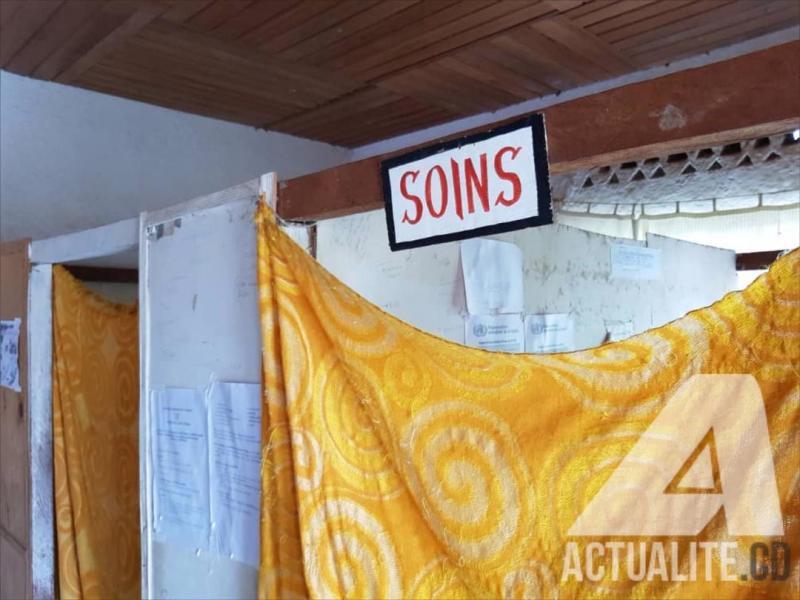
          At least 14 health facilities abruptly suspended operations in Mambasa, Ituri province, following the double attack by Islamist militants from the Allied Democratic Forces (ADF) between March 11 and 16, 2026, in Muchacha and Babesua. The chief medical officer of the Nia-Nia health zone, Dr. Joseph Pemanakue, warned on Tuesday of a health crisis affecting the Badengaido and Bafwakoa health areas.

          In Mabovu, Penge, and Muchacha, no health facilities are currently functioning. Healthcare workers and their patients fled to Badengaido during the initial attack in Muchacha. The attack a few days later in Babesua village worsened the situation. The health facilities in Badengaido also closed, and staff sought refuge in Nia-Nia.

          “In Badengaido, some staff were able to resist, but after the attack on Babesua, the facilities closed, even the Badengaido health center. One assistant had stayed there to provide urgent care at the health center, but all the others fled. Even the Bafwakoa health area, which is next door, was also emptied, as was the Babeke health post,” Dr. Pemanakue explained to ACTUALITE.CD.

          In Nia-Nia, the number of patients is exploding. The health center has registered more than 90 new patients. "When the population moved, there were many accidents. When people move, disease always moves with them. That's why, at our health facilities here in Nia-Nia, there has been an influx of patients who don't even have the means to pay for treatment," said the chief medical officer of the area.

          According to him, cases of accidents, malaria, typhoid fever, waterborne diseases, and cesarean deliveries have increased in the last ten days. The chief medical officer for the area also indicates that some patients are sleeping outdoors.

          The doctor also mentioned talks with MSF based in Kisangani. "They need security assurances so they can come and assess the situation before their intervention," he said, adding that he had already identified priority needs, including medication.

          The attacks by Muchacha and Babesua left more than 30 people dead in Mambasa. Others remain missing to this day.

          Gaston Mukendi, in Kisangani

          Au moins 14 structures sanitaires ont interrompu brusquement les activités à Mambasa, dans la province de l'Ituri, après la double attaque des islamistes des Forces démocratiques alliées (ADF) entre le 11 et le

          Comment

          Working...
          X