Check out the FAQ,Terms of Service & Disclaimers by clicking the
link. Please register
to be able to post. By viewing this site you are agreeing to our Terms of Service and Acknowledge our Disclaimers.
FluTrackers.com Inc. does not provide medical advice. Information on this web site is collected from various internet resources, and the FluTrackers board of directors makes no warranty to the safety, efficacy, correctness or completeness of the information posted on this site by any author or poster.
The information collated here is for instructional and/or discussion purposes only and is NOT intended to diagnose or treat any disease, illness, or other medical condition. Every individual reader or poster should seek advice from their personal physician/healthcare practitioner before considering or using any interventions that are discussed on this website.
By continuing to access this website you agree to consult your personal physican before using any interventions posted on this website, and you agree to hold harmless FluTrackers.com Inc., the board of directors, the members, and all authors and posters for any effects from use of any medication, supplement, vitamin or other substance, device, intervention, etc. mentioned in posts on this website, or other internet venues referenced in posts on this website.
We are not asking for any donations. Do not donate to any entity who says they are raising funds for us.
Announcement
Collapse
No announcement yet.
US FDA: Components of Extraneous Virus Detected in Rotarix Vaccine; No Known Safety Risk (Porcine Circovirus 1 (PCV1) DNA fragments)
US FDA: Components of Extraneous Virus Detected in Rotarix Vaccine; No Known Safety Risk (Porcine Circovirus 1 (PCV1) DNA fragments)
I'm not sure if this thread is just for flu vaccines or vaccines in general, so I apologize if this is posted incorrectly. Just wondering if any one knows anything further on this? http://www.cnn.com/2010/HEALTH/03/22....html?hpt=Sbin
Last edited by mfstockbridge; March 22, 2010, 10:28 PM.
Reason: typo
The Food and Drug Administration recommended Monday that doctors temporarily stop using GlaxoSmithKline PLC's Rotarix child vaccine after a virus was found in the product.
The agency said it needed to learn more about parts of an extraneous virus that was found in the vaccine. The FDA said there's currently no evidence of a safety risk associated with the vaccine.
"There is no evidence...that this poses any health risk," FDA Commissioner Margaret Hamburg said in a conference call with reporters. "We're simply asking that there be a pause in its use."
She also said Rotarix has a significant track record of being safe.
Rotarix, approved for use in the U.S. in 2008, is typically given to babies at two and four months of age and is designed to help protect infants from a gastrointestinal illness caused by rotavirus.
#2: "parts of an extraneous virus that was found in the vaccine"
it seems that historicaly some vacc./etc. producers had various episodes of contamination (even with dangerous bio/chem supstances), many times discovered after delivering the product only
so there are obviously an quality control problem there
some than blame part of the population for retracting from vacc./etc. ...
"Vaccine Excipient & Media Summary, Part 2 Excipients Included in U.S. Vaccines, by Vaccine
Includes vaccine ingredients (e.g., adjuvants and preservatives) as well as substances used during the manufacturing process,
including vaccine-production media, that are removed from the final product and present only in trace quantities.
In addition to the substances listed, most vaccines contain Sodium Chloride (table salt)."
FDA NEWS RELEASE
For Immediate Release: March 22, 2010
Media Inquiries: Shelly Burgess, 301-796-4651; shelly.burgess@fda.hhs.gov
Consumer Inquiries: 888-INFO-FDA
Components of Extraneous Virus Detected in Rotarix Vaccine; No Known Safety Risk
FDA Recommends Clinicians Temporarily Suspend Use of Vaccine as Agency Learns More
FDA is recommending that healthcare practitioners temporarily suspend use of the Rotarix vaccine for rotavirus immunization in the United States while the agency learns more about components of an extraneous virus detected in the vaccine.
There is no evidence at this time that this finding poses a safety risk.
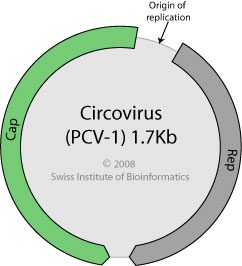
The agency recently became aware that an independent U.S. academic research team, using a novel technique, has found DNA from porcine circovirus 1 (PCV1) in Rotarix, which is manufactured by GlaxoSmithKline. PCV1 is not known to cause illness in humans or other animals. In addition, Rotarix has been studied extensively, before and after approval, and found to have an excellent safety record.
Follow-up tests by GlaxoSmithKline and FDA scientists confirmed the academic team?s findings and confirmed that viral components have been present since the early stages of the vaccine?s development, including during clinical studies. Preliminary testing by both the academic researchers and FDA scientists of another licensed vaccine against rotavirus infection, RotaTeq, has not detected components of PCV1.
"We are making clinicians aware of information recently received by FDA about the Rotarix vaccine,? said Dr. Margaret A. Hamburg, Commissioner for Food and Drugs. ?There is no evidence at this time that there is a safety concern. FDA is recommending that clinicians temporarily suspend use of Rotarix until we can learn more about the situation. We will keep the public and the clinical community updated on our findings.?
Rotarix and RotaTeq are given by mouth to young infants to prevent rotavirus disease, which can cause severe diarrhea and dehydration and is estimated to be responsible for the deaths of more than 500,000 infants around the world each year, primarily in low- and middle-income countries. Before the introduction of a rotavirus vaccine, rotavirus resulted in more than 50,000 hospitalizations and several dozen deaths in the United States each year. FDA licensed RotaTeq in 2006 and Rotarix in 2008. Most children vaccinated in the United States received RotaTeq.
?In many countries, rotavirus causes so much severe illness and death that the known benefits of continued use of Rotarix far outweigh any theoretical risk of harm from the vaccine,? said Dr. Thomas Frieden, Director of the Centers for Disease Control and Prevention. ?We anticipate that many countries will decide to continue vaccinating with Rotarix while more information becomes known.?
FDA will continue to gather more information about the PCV1 components in Rotarix, including whether intact virus, as opposed to DNA fragments, is present. The agency is assessing current vaccine testing methods. In four to six weeks, FDA will convene an expert advisory committee and make additional recommendations on the use of rotavirus vaccines.
FDA will provide updates to patients, providers, and the general public as more information becomes available. The agency will also continue to communicate with the World Health Organization and counterpart regulatory agencies in other countries.
Re: US FDA: Components of Extraneous Virus Detected in Rotarix Vaccine; No Known Safety Risk (Porcine Circovirus 1 (PCV1) DNA fragments)
#4: ... no evidence at this time ...
I expect (P.S.: in a sense of "don't want")nothingmore into, than the control bodies cleared declared components from an whatsoever safe proclamed vaccine ...
so without any other active biological components other than the strictly needed one
___
I remember the initial negations about the previous years Austrian located viral-mix episode (animal related)
___
"Vaccine Excipient & Media Summary, Part 2 Excipients Included in U.S. Vaccines, by Vaccine
Includes vaccine ingredients (e.g., adjuvants and preservatives) as well as substances used during the manufacturing process, including vaccine-production media, that are removed from the final product and present only in trace quantities.
In addition to the substances listed, most vaccines contain Sodium Chloride (table salt)." Rotavirus (Rotarix)
The US Food and Drug Administration has recommended that administration of the Rotarix vaccine, which protects against rotavirus infection, be suspended. Th ...
Archive Number 20100322.0914
Published Date 22-MAR-2010
Subject PRO/AH/EDR> Rotavirus vaccine - USA: extraneous virus
ROTAVIRUS VACCINE - UNITED STATES OF AMERICA: EXTRANEOUS VIRUS
************************************************** ************
A ProMED-mail post
<http://www.promedmail.org>
ProMED-mail is a program of the
International Society for Infectious Diseases
<http://www.isid.org>
Date: Mon 22 Mar 2010
Source: U.S. Food and Drug Administration (FDA), News Release [edited]
<http://www.fda.gov/NewsEvents/Newsroom/PressAnnouncements/ucm205625.htm>
Components of Extraneous Virus Detected in Rotarix Vaccine; No Known
Safety Risk
FDA Recommends Clinicians Temporarily Suspend Use of Vaccine as
Agency Learns More
----------------------------------------------------------------------------------
The US Food and Drug Administration (FDA) is recommending that health
care practitioners temporarily suspend use of the Rotarix vaccine for
rotavirus immunization in the United States while the agency learns
more about components of an extraneous virus detected in the vaccine.
There is no evidence at this time that this finding poses a safety
risk.
The agency recently became aware that an independent U.S. academic
research team, using a novel technique, has found DNA from porcine
circovirus 1 (PCV1) in Rotarix [vaccine], which is manufactured by
GlaxoSmithKline. PCV1 is not known to cause illness in humans or
other animals. In addition, Rotarix has been studied extensively,
before and after approval, and found to have an excellent safety
record.
Follow-up tests by GlaxoSmithKline and FDA scientists confirmed the
academic team's findings and confirmed that viral components have
been present since the early stages of the vaccine's development,
including during clinical studies. Preliminary testing by both the
academic researchers and FDA scientists of another licensed vaccine
against rotavirus infection, RotaTeq, has not detected components of
PCV1.
"We are making clinicians aware of information recently received by
FDA about the Rotarix vaccine," said Dr. Margaret A. Hamburg,
Commissioner for Food and Drugs. "There is no evidence at this time
that there is a safety concern. The FDA is recommending that
clinicians temporarily suspend use of Rotarix until we can learn more
about the situation. We will keep the public and the clinical
community updated on our findings."
Rotarix and RotaTeq are given by mouth to young infants to prevent
rotavirus disease, which can cause severe diarrhea and dehydration
and is estimated to be responsible for the deaths of more than 500
000 infants around the world each year, primarily in low- and
middle-income countries. Before the introduction of a rotavirus
vaccine, rotavirus resulted in more than 50 000 hospitalizations and
several dozen deaths in the United States each year. The FDA licensed
RotaTeq in 2006 and Rotarix in 2008. Most children vaccinated in the
United States received RotaTeq.
"In many countries, rotavirus causes so much severe illness and death
that the known benefits of continued use of Rotarix far outweigh any
theoretical risk of harm from the vaccine," said Dr. Thomas Frieden,
Director of the Centers for Disease Control and Prevention. "We
anticipate that many countries will decide to continue vaccinating
with Rotarix while more information becomes known."
The FDA will continue to gather more information about the PCV1
components in Rotarix, including whether intact virus, as opposed to
DNA fragments, is present. The agency is assessing current vaccine
testing methods. In 4 to 6 weeks, the FDA will convene an expert
advisory committee and make additional recommendations on the use of
rotavirus vaccines.
The FDA will provide updates to patients, providers, and the general
public as more information becomes available. The agency will also
continue to communicate with the World Health Organization and
counterpart regulatory agencies in other countries.
For more information visit FDA's Update on Rotarix Vaccine1 page
<http://www.fda.gov/NewsEvents/PublicHealthFocus/ucm205585.htm>
[Rotarix is one of 2 live-attenuated viral vaccines licensed to
prevent rotavirus disease, which can cause severe diarrhea and
dehydration in young infants. Rotarix vaccine is a live-attenuated
human rotavirus. It causes a slight infection that typically produces
no symptoms, but creates immunity against rotavirus. Rotarix is sold
in the United States as a powder that is to be dissolved in a liquid
that comes with the vaccine in a pre-filled oral applicator. The
vaccination series consists of 2 1-mL doses administered by mouth.
The 1st dose can be given beginning at 6 weeks of age and the 2nd at
least 4 weeks after the 1st dose, but before the child reaches 24
weeks of age.
Rotarix was developed from a live, attenuated form of a rotavirus
that was originally isolated from a child at Cincinnati Children's
Hospital. GlaxoSmithKline took over development of the vaccine and
conducted clinical trials in the United States and overseas. Clinical
trials conducted in 17 countries have shown the vaccine to be more
than 80 percent effective in preventing severe gastrointestinal
disease caused by rotavirus.
The data submitted to the FDA to support the safety of Rotarix
included results from 8 clinical studies that evaluated a total of 71
209 infants who received Rotarix (N = 36 755) or placebo (N =
34,454). The most common adverse reactions reported during clinical
trials for Rotarix were fussiness, irritability, cough, runny nose,
fever, loss of appetite and vomiting. FDA concluded that the
available data supported the safety of the vaccine. In addition to
the FDA, the European Medicines Agency and numerous other foreign
regulatory authorities have licensed Rotarix. The vaccine is now
licensed in 114 countries.
Live attenuated viruses in general are derived and propagated in
cultured cells and must be carefully controlled during development to
prevent contamination by adventitious agents. Furthermore live
attenuated vaccines are not subjected to inactivation prior to
administration. In the present case unspecified components of an an
unrelated viral agent, porcine circovirus type 1 have been detected
in the final rotavirus vaccine. It is not known at present at what
stage in the process of development and production of this vaccine
the adventitious agent was introduced. Porcine circovirus 1, the
contaminant of the Rotarix vaccine, is a small DNA-containing virus
probably restricted to its natural host the pig and propagated by
fecal-oral transmission in pigs. Human rotavirus is a RNA virus with
a genome comprised of 11 double-stranded RNA sub-units. There is no
immunological or genetic relationship between these 2 infectious
agents. - Mod.CP]
Re: US FDA: Components of Extraneous Virus Detected in Rotarix Vaccine; No Known Safety Risk (Porcine Circovirus 1 (PCV1) DNA fragments)
#7: "Live attenuated viruses in general are derived and propagated in cultured cells and must be carefully controlledduring developmentto
prevent contamination by adventitious agents."
too much relaxed quality control of animal derivates in the first place
need of more stringent and redundant pre-delivery production facilities quality controls laws (why the same sci. branch didn't demand it more stringent?)
otherwise it will be always this way, first on the market, than detected and recalled later only
Protocol
Nature Protocols 3, 1981 - 1989 (2008)
Published online: 4 December 2008 | <abbr title="Digital Object Identifier">doi</abbr>:10.1038/nprot.2008.190
Subject Category: Cell and tissue culture
Cryopreservation and banking of mammalian cell lines
Glyn N Stacey<sup>1</sup> & John R Masters<sup>2</sup>
<hr class="separator"> Abstract
This protocol describes the principles and methods used for the preparation of cryopreserved cell stocks. Following these procedures will ensure the availability of reproducible cultures for use within a single laboratory at different times and for different collaborating laboratories. Although the basic principle is simple, each cell line has characteristics that must to be borne in mind when establishing and testing such stocks. The key requirements are reliable methods for culture, cryopreservation, characterization and quality control.
<hr class="separator"> To read this story in full you will need to login or make a payment (see right).
___
___
Overview of a quality assurance/quality control compliance program consistent with FDA regulations and policies for somatic cell and gene therapies: a four year experience


 Tweet
Tweet
 US FDA: Components of Extraneous Virus Detected in Rotarix Vaccine; No Known Safety Risk (Porcine Circovirus 1 (PCV1) DNA fragments)



Comment