
 Tweet
Tweet
One in three children admitted in Spain for influenza A were healthy
Married presents a report on the H1N1 virus in the pediatric intensive care units
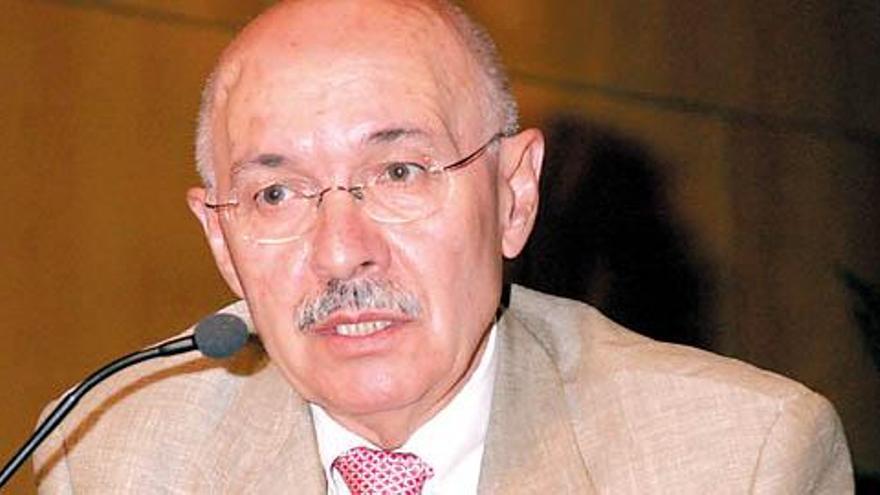
Dr. Juan Casado, in the ASP conference held in Maspalomas. LP / DLP
LAS PALMAS DE GRAN CANARIA One in three children admitted with influenza A in the pediatric intensive care services in Spanish hospitals had no previous pathologies, 37% were under two years, and 75% required respirator after suffering acute respiratory failure. These are some of the conclusions of the multicenter study of severe cases of influenza A in the pediatric population of the country involving 31 pediatric intensive care units of 31 Spanish hospitals.
The report was released yesterday by Dr. Juan Casado, Chief of Pediatric Intensive Care Hospital Infantil Universitario Ni?o Jes?s in Madrid in the 59th Congress of the Spanish Association of Pediatrics held at the Palacio de Congresos de Maspalomas.
"Only 14 months ago we knew nothing of influenza A. The first case appeared in the world was in Mexico in late April 2009 and in Spain two months later in June. We saw that it was produced by a strain to then unknown, which is called H1N1 and initially produced a very high mortality (41%).
Pediatricians who are dedicated to intensive care, we care about the news coming from the U.S., Mexico and Argentina and started a study to explore this new flu, more ill who, who died and who did not, treatment ...", reported Dr. Casado.
In the 31 pediatric intensive care units in Spain, admitted a total of 198 patients. The first admission occurred on June 23, 2009 and last December 19 as the specialist said, noting as significant fact that half of patients admitted to an interval of just four weeks. "It was an epidemic that scared us. 50% entered between 22 October and 19 November in Spain in Intensive Care" qualified the specialist.
Of the 198 patients admitted, a total of 69 (34%) were children who had no previous illness, healthy children, "which was contradicted by the data arriving from other countries," said Juan Casado, noting that the average age of these patients was 5.6 years. "The youngest was a few days old and the largest 18, however, 37%, approximately one in three had less than two years and three of every four children needed a breather because they had acute respiratory failure and these patients gave us hard work. "
As for mortality rates Casado said that 23 children died from influenza A, although most of the deceased had a prior hematologic disease or cancer.
"The study shows that the H1N1 virus affects not only children with prior neurological disease, heart or lung disease, but healthy children (March 1). It is also a very serious disease with high mortality rate on especially in children with oncologic or hematologic disease after whose risk is 8.6 points higher, "he said.
Finally, Dr. Casado said he sees no need for mass vaccination. "Our study does not speak of vaccination, only that it is a very serious disease, and if an epidemic reappeared we should be very prepared for the treatment of these patients