Announcement

Collapse
No announcement yet.

Switzerland: 2024-2026 Avian flu in wild birds

Collapse
X
 
  • Filter
  • Time
  • Show
Clear All
new posts

  • Switzerland: 2024-2026 Avian flu in wild birds

    Source: https://www.nau.ch/news/schweiz/voge...aison-66861602


    Bird flu: Switzerland reports first case in new season
    Bird flu has reached Switzerland this season. One case has been reported in the canton of Uri.​
    Article by Riccardo Schmidlin, Keystone-SDA
    On November 13, 2024 - 10:46

    On Monday, the bird flu virus H5N1 was detected in a dead swan in the canton of Uri . The Uri canton's laboratory announced this today, Wednesday.

    The swan was found in the Reuss delta area. This is the first sighting in Switzerland this season...


  • #2
    Click image for larger version

Name:	image.png
Views:	154
Size:	85.0 KB
ID:	1000399https://wahis.woah.org/#/in-review/6018

    Comment


    • #3
      Translation Google

      The bird flu virus has arrived in French-speaking Switzerland

      Present in central and eastern Switzerland, the disease is also in French-speaking Switzerland: a dead swan was found near Lake Bienne.

      13.01.2025, 16:58

      Already in central and eastern Switzerland since the end of last year, the bird flu virus is approaching French-speaking Switzerland. A swan was found dead in the Port lock, at the exit of Lake Biel.

      The bird flu virus has now been detected in the canton of Bern, as of 9 January, the Bernese Environment Agency has announced. At the end of 2024, the virus had already been detected in some wild birds in the Uri Reuss delta and in the Lake Constance region in the cantons of Thurgau and Schaffhausen.


      The Confederation has adapted the ordinance on measures against the spread of the virus. The observation zone now includes not only the banks of Lake Constance and part of the Rhine, but also the riverside areas of the large lakes and rivers of the Swiss Plateau. Poultry farmers have been called upon to comply with the preventive measures. (jah/ats)

      Comment


      • #4
        Click image for larger version

Name:	image.png
Views:	116
Size:	62.4 KB
ID:	1007722
        Vaud
        /https://en.wikipedia.org/wiki/Vaud
        -----------------------------------
        Translation Google


        Preventive measures in the face of a case of bird flu in Gros-de-Vaud

        Press release
        Published on February 14, 2025


        As part of the surveillance for avian flu, the presence of the virus was detected in a water bird found dead in Gros-de-Vaud. In order to prevent the transmission of the disease to domestic poultry, the cantonal veterinarian is taking preventive measures on farms located near the site of discovery.

        A sample taken from a dead pochard found near a body of water in the municipality of Bavois, gave positive results for avian influenza. In accordance with the Ordinance of the Federal Office for Food Safety and Veterinary Affairs establishing measures to prevent the spread of avian influenza, the cantonal veterinarian orders a control region of 1 km around the site of discovery and an observation region of 3 km adjacent to the control region. In these regions, specific protective measures must be taken by poultry keepers.

        Thus, keepers located within the 1 km perimeter must now house their chickens, ducks, geese and other domestic poultry so that they do not have contact with wild birds. This implies that domestic birds can only go out in outdoor areas equipped with nets or other fencing to prevent the intrusion of wild birds. Otherwise, the animals must be kept indoors. Ducks, geese and flightless birds must also be kept separately from chickens. These measures also apply to keepers of 50 or more poultry located in the observation zone, while they are strongly recommended for flocks of fewer than 50 individuals.

        It is recalled that in all regions of the canton, suspicious symptoms (acute respiratory symptoms, reduced laying performance, feed or water consumption) as well as any increased mortality observed in domestic poultry must be reported by the owner to a veterinarian. In addition, if wild birds are found dead or sick, these must be reported to the Wildlife-Nature Police inspectors or to the Cantonal Police. For usual hygiene reasons, you must refrain from touching them and refrain from taking them to a care center.
        State of Vaud Information and Communication Office


        https://www.vd.ch/actualites/communi...e-gros-de-vaud

        Comment


        • #5
          Click image for larger version

Name:	image.png
Views:	75
Size:	38.0 KB
ID:	1022561
          /https://en.wikipedia.org/wiki/Canton_of_Bern
          -----------------------------------------------------------------------------------------
          Translation Google

          Press release Published on November 6, 2025

          Bird flu: a wild bird affected in the canton of Bern

          Bern, November 6, 2025 — On November 4, 2025, the avian influenza virus, already widespread in Europe, was detected in a wild bird (greylag goose) in the municipality of Vinelz (BE). To prevent the virus from spreading, the Federal Food Safety and Veterinary Office (FSVO) has issued an ordinance that enters into force today, November 6, 2025. It will be applicable until the end of March 2026. The FSVO calls on all poultry owners to systematically implement the prescribed prevention and biosecurity measures.

          Following the emergence of several outbreaks of avian influenza in wild birds in recent weeks in Europe, and particularly in Germany, the confirmed case in Switzerland on November 4, 2025, comes as no surprise. Consequently, the new ordinance issued by the Federal Food Safety and Veterinary Office (FSVO) establishes observation zones, currently extending over a three-kilometer-wide strip along the shores of Lake Biel (including the Thielle Canal), Lake Murten, and Lake Neuchâtel (including the Broye Canal). Within these zones, poultry farms are required to implement specific protective and hygiene measures to prevent the spread of the virus and avoid any contact between wild birds and domestic poultry.

          Measures applicable in the observation regions

          Specific protection and hygiene measures are in place in the observation areas to prevent the spread of the virus. Owners of 50 or more poultry must ensure their animals have no contact with wild birds and implement the biosecurity measures outlined in the ordinance, such as keeping chickens, ducks, geese, and flightless birds separate, limiting access to the poultry house, and maintaining hygiene standards there.

          Early detection and hygiene are crucial.

          All poultry owners should be vigilant for signs of contamination and, if any is suspected, immediately inform a veterinarian. The disease can manifest as respiratory problems, swelling of the head, a significant decrease in egg production, the laying of shell-less or very thin-shelled eggs, and an increased mortality rate. Animals are often listless or lethargic; in waterfowl, the symptoms may go unnoticed.

          Consistent adherence to biosecurity measures throughout the country remains the most effective way to protect against avian influenza. Even outside affected areas, hygiene measures must be followed, and all poultry owners, including those keeping poultry as a hobby, must register their animals with the cantonal veterinary authorities.

          Do not touch any wild birds found dead

          The public is asked not to touch dead or sick wild birds and to report them to the game warden, the police or the cantonal veterinary service.

          Transmission of avian influenza to humans is extremely rare and has so far only been observed in isolated cases following close, unprotected contact with infected poultry. Poultry products, such as chicken meat and eggs, can be consumed without concern.

          The FSVO's urgent order enters into force on November 6, 2025 and will be effective until March 31, 2026.


          ...

          Comment


          • #6
            Click image for larger version

Name:	image.png
Views:	66
Size:	165.6 KB
ID:	1022577https://wahis.woah.org/#/in-review/6985

            Comment


            • #7
              Click image for larger version

Name:	image.png
Views:	61
Size:	38.1 KB
ID:	1023153
              /https://en.wikipedia.org/wiki/M%C3%A4nnedorf
              -----------------------------------------------------------------------------------------
              Translation Google

              Press release Published on November 13, 2025

              Bird flu: new case confirmed in the canton of Zurich

              Bern, November 13, 2025 — On November 12, 2025, the avian influenza virus was detected in a greylag goose in Männedorf, Canton of Zurich. This new case, found outside the currently restricted zones, comes just days after the first infected wild bird was detected in the Canton of Bern. To prevent the spread of the virus, the Federal Food Safety and Veterinary Office (FSVO) has amended its ordinance of November 6, 2025, accordingly and defined new observation zones where protective measures are mandatory. The amended ordinance will remain in effect until March 31, 2026. The FSVO urges all poultry owners to systematically implement the prescribed prevention and biosecurity measures.

              Following the detection of the first case of avian influenza on November 4 in the canton of Bern, the virus was confirmed again on November 12 in a greylag goose in Männedorf, in the canton of Zurich. To prevent the spread of the virus and avoid any contact between wild birds and domestic poultry, the emergency ordinance issued by the Federal Food Safety and Veterinary Office (FSVO) establishes additional observation zones along the shores of lakes and major waterways on the Swiss Plateau. In these zones, poultry farms must implement strict protective and hygiene measures.

              Protection of livestock in observation areas

              Poultry owners in observation areas must implement biosecurity measures. These measures aim to prevent any contact between domestic poultry and wild birds and to stop the spread of the virus. Poultry must be kept in a way that excludes any contact with wild birds, different species (chickens, ducks, geese, flightless birds) must be kept separately, and access to poultry houses must be limited and subject to strict hygiene rules.

              Poultry farmers are on the front line for vigilance and biosecurity.

              Poultry owners are urged to closely monitor their animals. If any suspicious symptoms appear, such as respiratory distress, head swelling, a significant decrease in egg production, thin-shelled or missing eggs, lethargy, or increased mortality, they should contact a veterinarian immediately. In waterfowl, signs may be subtle; therefore, vigilance remains essential.

              This new case does not change the overall risk assessment; strict adherence to biosecurity measures nationwide remains the most effective way to protect oneself. Even outside of observation zones, all poultry owners, including those keeping birds as a hobby, must implement the recommended hygiene measures and register their animals with the cantonal veterinary authorities.


              Dead wild birds: report without touching

              The public is asked not to touch dead or sick wild birds and to report them to the game warden, the police, or the cantonal veterinary service.

              Transmission of avian influenza to humans is extremely rare and has so far only been observed in isolated cases following close, unprotected contact with infected poultry. Poultry products, such as chicken meat and eggs, can be consumed without concern.

              Bird flu
              Poultry diseases
              Ordinance of the Federal Food Safety and Veterinary Office (FSVO) establishing measures to prevent the spread of avian influenza


              https://www.news.admin.ch/fr/newnsb/..._lCLLMjQ_BCu2U

              Comment


              • #8
                Click image for larger version

Name:	image.png
Views:	53
Size:	73.7 KB
ID:	1023716
                /https://fr.wikipedia.org/wiki/Canton_de_Thurgovie
                -------------------------------------------------------------------------------------------------------

                Translation Google

                Bird flu has now also reached the canton of Thurgau.

                November 18, 2025

                The H5N1 avian influenza virus was detected in a swan found dead on the shore of Lake Constance between Ermatingen and Salenstein. The veterinary office of the canton of Thurgau has therefore declared the area encompassing the municipalities of Ermatingen and Salenstein an animal disease control zone. Within this zone, enhanced preventative measures are in place for all poultry farms to prevent the further introduction and spread of the virus. There is no danger to the general public.

                Last week, the highly pathogenic form of avian influenza H5N1 (bird flu) was detected in a greylag goose in Männedorf on the shore of Lake Zurich. Following an initial case in a dead greylag goose in the canton of Bern, this was the second confirmed case in wild birds in Switzerland this season. Due to this situation, the Federal Food Safety and Veterinary Office (FSVO) has declared all shores of lakes and major rivers in the Swiss Plateau – including a three-kilometer-wide strip along the banks of the Rhine and Lake Constance – a surveillance zone and issued a corresponding ordinance. This ordinance remains in effect.

                Last Friday, a dead swan was found between Ermatingen and Salenstein. Testing revealed that it was infected with the avian influenza virus. Therefore, the Veterinary Office of the Canton of Thurgau has declared the area encompassing the municipalities of Ermatingen and Salenstein an animal disease control zone. Stricter preventative measures are in place within this zone to prevent the introduction and spread of the virus. Poultry farmers must ensure, in particular, that their poultry does not come into contact with wild birds and that appropriate hygiene measures are implemented to protect the poultry as effectively as possible from infection. Any suspicious changes in the animals must be reported to a veterinarian immediately. There are approximately 30 poultry farms within the control zone. The affected poultry farmers will be contacted and informed directly by the Veterinary Office. There is still no danger to the general public. Eggs and poultry meat can be consumed without concern.

                It is generally recommended not to touch sick or dead wild birds and to report them to the veterinary office along with the exact location where they were found, so that the carcass can be sampled if necessary and then disposed of properly.


                Registration requirement for poultry farms

                Since January 1, 2010, registration of poultry farms has been mandatory. This applies to both private and commercial poultry farms, regardless of the number of animals kept. In the canton of Thurgau, poultry farms must be registered with the agricultural office by email at tvd-koordination@tg.ch or online at www.landwirtschaftsamt.tg.ch .

                Further information and recommendations on the protection of domestic poultry can be found on the BLV website at www.blv.admin.ch .


                https://www.tg.ch/news.html/485/news/76665

                Comment


                • #9
                  Translation Google

                  Press release Published on November 21, 2025

                  Bird flu: prevention measures extended to all of Switzerland

                  Bern, November 21, 2025 — Following the detection of avian influenza in ducks and a swan in the Wil (SG) municipal pond on November 21, 2025, and given the widespread circulation of the virus in Europe, the Federal Food Safety and Veterinary Office (FSVO) is strengthening prevention measures. In consultation with the cantons, it is ordering preventive control measures applicable throughout Switzerland. The aim is to prevent the spread of the disease and protect poultry farms. The FSVO calls on all poultry owners to systematically implement the prescribed prevention and biosecurity measures.
                  The amended ordinance will enter into force on November 25, 2025, and will remain applicable until March 31, 2026.


                  Since the beginning of November 2025, several wild birds have tested positive for highly pathogenic avian influenza in Switzerland. The case detected on November 21, 2025, in the municipal pond in Wil (SG) is part of this series, but has an important distinction: the ducks and swan involved are not migratory birds, but are permanent residents of the pond. This situation, unlike previously observed cases, also occurs at a time when the virus is circulating intensely in Europe, particularly among migratory species currently present in Switzerland. In this unfavorable epidemiological context, the Federal Food Safety and Veterinary Office (FSVO) is strengthening prevention measures by amending its ordinance of November 6, 2025, which will come into effect on Tuesday, November 25, 2025. The observation area is being extended to the entire country, and uniform protection requirements now apply to all poultry owners in Switzerland. The goal is to avoid any contact between wild birds and domestic poultry, in order to reduce the risk of introducing the virus into farms.

                  Protective measures applicable to all poultry owners

                  Upon entry into force of the amendments to the ordinance, all poultry owners, including those keeping poultry as a hobby, will have to apply the following measures:
                  • Poultry should only be allowed outside in areas protected from access by wild birds. Where this is not possible, feeding and watering areas must be designed to be inaccessible to wild birds (e.g., using netting or roofing).
                  • Avoid contact between species: chickens, ducks, geese and flightless birds should be kept separately.
                  • Implement strict biosecurity measures: limit access to chicken coops, wear shoes and clothing reserved for livestock farming, wash and disinfect hands before entering, hygiene airlock if possible.
                  • Minimize unnecessary visits and travel to farms.
                  Poultry markets, exhibitions, and other gatherings will be subject to restrictions for the duration of the ordinance. Subsidies for particularly animal-friendly housing systems and regular outdoor access will continue to be granted, provided all applicable regulations are met. The designation "free-range farming" may continue to be used.

                  The requirement to register poultry farms with the cantonal veterinary authorities remains in effect and also applies to small flocks kept as a hobby.


                  Increased vigilance and early detection across the country

                  Poultry owners play a crucial role in the early detection of the disease. They must carefully observe their animals and, if any suspicious signs are present, immediately contact a veterinarian. Respiratory problems, swelling of the head, a significant decrease in egg production, shell-less or very thin-shelled eggs, marked lethargy, or increased mortality can all be signs of infection. In waterfowl, symptoms may be subtle or even absent, making vigilance all the more important.

                  Avian influenza is a highly contagious epizootic disease subject to mandatory reporting. In the event of a well-founded suspicion or confirmation, strict control measures are taken by the competent authorities, in accordance with the Epizootic Diseases Ordinance, to prevent the spread of the disease.


                  Do not touch any wild birds found dead

                  The public is asked not to touch dead or sick wild birds. Any birds found should be reported to the game warden, the police, or the cantonal veterinary service, who will collect them and, if necessary, arrange for the required tests. This monitoring of wild birds allows for the rapid detection of any potential spread of the virus in Switzerland and the adjustment of measures if necessary.

                  Transmission of avian influenza to humans is extremely rare and has so far only been observed in isolated cases following close, unprotected contact with infected poultry. Poultry products, such as chicken meat and eggs, can be consumed without concern.

                  By strengthening biosecurity measures in a coordinated manner throughout the country and remaining vigilant, poultry farmers, cantonal authorities, and the Federal Food Safety and Veterinary Office (FSVO) are working together to protect animal health and sustainably limit the impact of avian influenza in Switzerland.


                  Bird flu
                  Poultry diseases
                  Prescription

                  ...


                  Comment


                  • #10
                    Translation Google
                    Bird flu: first confirmed case in the canton of Fribourg

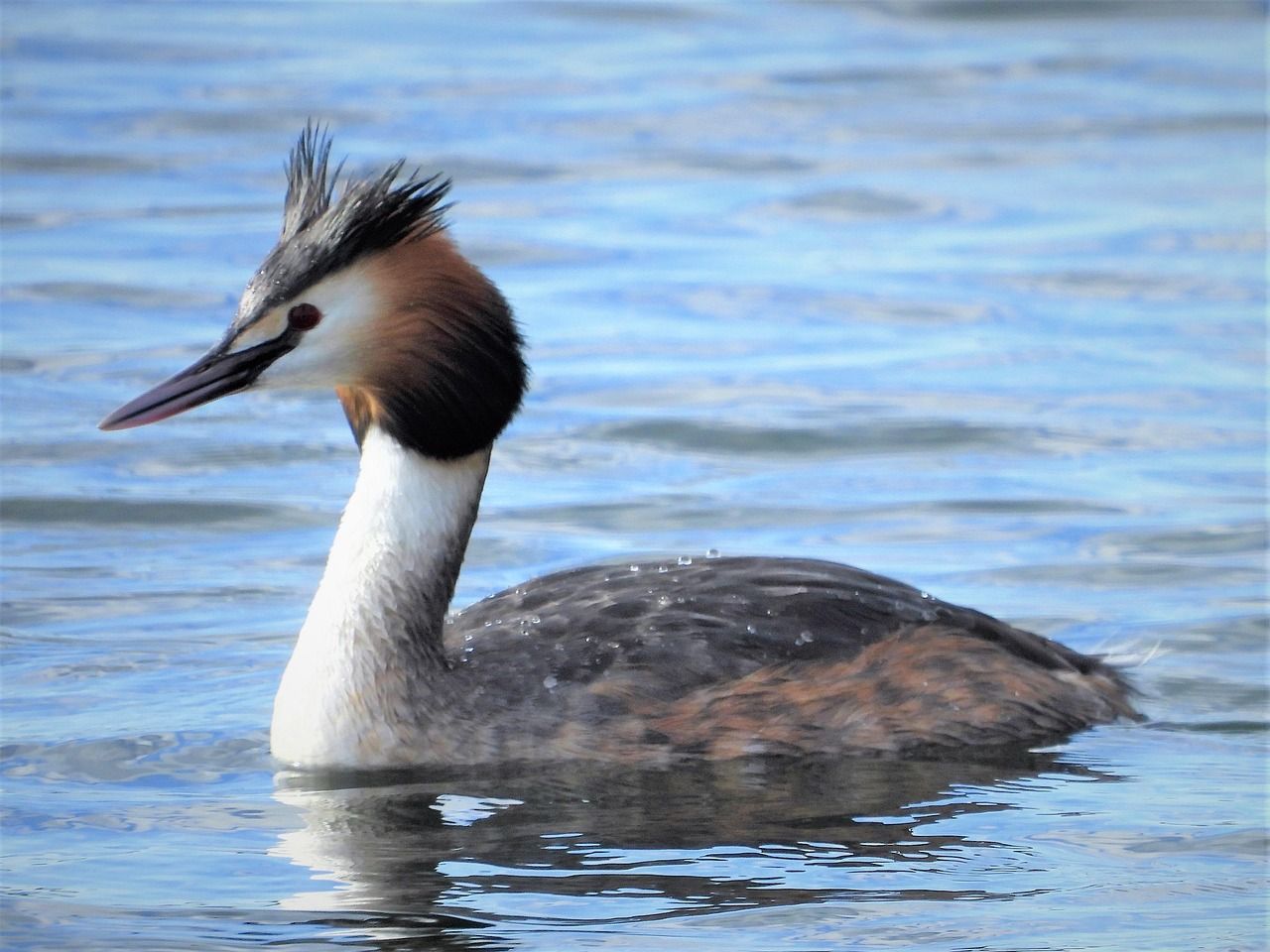
                    On December 3, 2025, the avian influenza virus was detected in a great crested grebe discovered in Grengspitz.

                    Published on December 3, 2025 - 12:16 PM


                    Click image for larger version  Name:	image.png Views:	1 Size:	611.5 KB ID:	1024810
                    Bird flu in a great crested grebe © Pixabay

                    On December 3, 2025, a great crested grebe was detected in Grengspitz. In accordance with Articles 7 and 8 of the FSVO HPAI Ordinance , the SAAV (Federal Veterinary and Food Safety Authority) has established a 1 km control zone around the location of the discovery. The SAAV urges all poultry owners to systematically implement the prescribed prevention and biosecurity measures.

                    Measures

                    In observation areas, owners of 50 or more birds, including at least one animal belonging to the order Galliformes, Anseriformes (geese, ducks, swans), or Struthioniformes (ostriches), must take the following measures . For hobbyists keeping fewer than 50 birds, these measures are strongly recommended:
                    • They restrict the outing of domestic poultry to the enclosed outdoor climate area.
                    • They ensure that, in the outdoor climate area, feeding and watering sites are not accessible to wild birds, and that exit areas and ponds are protected against the intrusion of wild birds by fences or nets with a mesh size not exceeding 4 cm .
                    • They keep domestic poultry in an enclosed chicken coop or other enclosed holding system that is not accessible to wild birds.
                    Reminder to the public

                    We remind you that any discovery of carcasses of gulls, terns, and other wading birds must be reported to the local game warden. Walkers are advised not to handle the animals. The following link provides contact information for game wardens by sector: game wardens .
                    Anyone who keeps poultry (even as a hobby) must report without delay to Grangeneuve, Agriculture section (registration obligation).

                    For more information:

                    Le 3 décembre 2025, le virus de la grippe aviaire a été détecté chez un grèbe huppé découvert à Grengspitz.


                    Comment


                    • #11
                      Click image for larger version  Name:	image.png Views:	1 Size:	37.8 KB ID:	1025902
                      /https://en.wikipedia.org/wiki/Yvorne
                      -----------------------------------------------------------------------------------------

                      Click image for larger version  Name:	image.png Views:	1 Size:	5.3 KB ID:	1025901
                      Translation Google


                      Press release

                      Published on December 17, 2025

                      Local strengthening of measures against avian flu following the discovery of dead swans in the Chablais region

                      Three swans were found dead last Saturday in the municipality of Yvorne. Tests confirmed the presence of the highly pathogenic avian influenza virus. This event occurs within the context of the active circulation of the virus in Switzerland and Europe.

                      Since November 25, 2025, the Federal Office for Food Safety and Veterinary Affairs (FSVO) has extended the observation zone to the entire Swiss territory and ordered preventive measures applicable to holdings of 50 or more poultry. These measures aim to prevent any contact between domestic poultry and wild birds.

                      In practice, poultry may only be kept in outdoor areas protected by netting, wire mesh, or other devices that prevent the intrusion of wild birds. Otherwise, the animals must be kept indoors. Ducks, geese, and flightless birds must also be kept separately from chickens, and strict biosecurity measures must be implemented before any entry into poultry housing facilities.

                      Following the discovery of three swans with avian influenza at the edge of the Versvey pond in Yvorne, the cantonal veterinarian has ordered a strengthening of local measures by the immediate establishment of a 1 km control zone around the affected site. Within this zone, the aforementioned preventative measures also apply to flocks of fewer than 50 poultry.

                      It is reminded that, throughout the canton, poultry owners are urged to exercise increased vigilance. Any suspicious symptoms in domestic poultry, such as acute respiratory distress, decreased egg production, reduced feed or water consumption, as well as any increase in mortality, must be reported immediately by the owner to a veterinarian.

                      Wild birds found dead or sick by the public should be reported to the Wildlife Police or the Cantonal Police. For hygiene reasons, they should not be touched and should not be taken to a wildlife rehabilitation center.

                      Transmission of avian influenza to humans remains extremely rare. Poultry products, such as meat and eggs, are safe to consume.
                      The cantonal authorities are closely monitoring the situation, in close collaboration with the FSVO, and are adapting measures as necessary to protect animal health and prevent the spread of the disease.

                      Information and Communication Office of the State of Vaud

                      https://www.vd.ch/actualites/communi...ns-le-chablais


                      Comment


                      • #12
                        Click image for larger version

Name:	image.png
Views:	33
Size:	188.6 KB
ID:	1027202Click image for larger version

Name:	image.png
Views:	34
Size:	50.9 KB
ID:	1027203​wahis.woah.org/#/in-review/6985

                        Comment


                        • #13
                          Translation Google

                          Press release Published on March 30, 2026

                          Bird flu: measures to be lifted from April 1, 2026

                          Bern, March 30, 2026 — The Federal Food Safety and Veterinary Office (FSVO) is lifting the measures taken to prevent the spread of avian influenza. No further cases of the disease have been detected in wild birds in Switzerland since mid-February; moreover, the annual migration of wild birds is largely complete, which reduces the risk of avian influenza cases in the country. The FSVO will continue to monitor the situation in Switzerland and Europe. Poultry farmers can also contribute to the early detection of any potential spread of the virus.

                          In November 2025, the Federal Food Safety and Veterinary Office (FSVO) strengthened preventive measures against avian influenza following several detections of the highly contagious virus in wild birds in Switzerland and due to its widespread circulation in Europe. It initially defined local observation zones before extending the observation zone to the entire country on November 25, 2025.

                          The mandated protective measures aimed to prevent contact between wild birds and domestic poultry, thereby reducing the risk of introducing the virus onto farms. These measures included restricting outdoor access to areas protected from wild birds, keeping different poultry species separately, and strengthening biosecurity requirements on farms. Restrictions also applied to poultry markets and exhibitions.


                          The threat is receding.

                          Since mid-February, no further cases of avian influenza have been confirmed in wild birds in Switzerland. While the avian influenza virus remains present in Europe, the number of cases is declining. The likelihood of migratory birds introducing it into Switzerland is also decreasing, as most have now reached their summer breeding grounds. Furthermore, the breeding season has begun for many birds, and they are therefore remaining in specific areas, which also reduces the risk of the virus spreading. For all these reasons, the Federal Food Safety and Veterinary Office (FSVO) is lifting the preventive measures it had previously implemented, effective April 1, 2026. Should the situation worsen again, the FSVO may, if necessary, order appropriate protective measures at any time.

                          Vigilance remains essential.

                          Poultry owners play a crucial role in the early detection of the disease. They must carefully observe their animals and, if any suspicious signs are present, contact their veterinarian immediately. The infection can be characterized by respiratory problems, swelling of the head, a significant decrease in egg production, shell-less or very thin-shelled eggs, marked lethargy, or increased mortality.

                          Every poultry owner is required to register with the veterinary authority in their canton. This obligation applies regardless of the epizootic situation and also to hobby breeders. Registration allows the authorities to quickly provide information in the event of an epizootic and to implement the necessary measures in a targeted manner.


                          Do not touch any wild birds found dead

                          The public is asked not to touch dead or sick wild birds. Birds found dead should be reported to the game warden, the police, or the cantonal veterinary service, who will collect them and, if necessary, arrange for the required tests. This monitoring of wild birds allows for the rapid detection of any potential spread of the virus in Switzerland and for intervention if the situation warrants it.

                          Transmission of the avian influenza virus to humans is extremely rare. It has so far only been observed in people directly exposed to infected poultry, particularly in the absence of appropriate protective measures.


                          ...


                          Comment

                          Working...
                          X