
 Tweet
Tweet
bump this
-
-
Finland - Influenza A viruses of high pathogenicity (Inf. with) (non-poultry including wild birds) (2017-) - Follow up report 31
GENERAL INFORMATION
COUNTRY/TERRITORY OR ZONE
ZONE
ANIMAL TYPE
TERRESTRIAL
DISEASE CATEGORY
Listed disease
EVENT ID
5119
DISEASE
Influenza A viruses of high pathogenicity (Inf. with) (non-poultry including wild birds) (2017-)
CAUSAL AGENT
Highly pathogenic avian influenza virus
GENOTYPE / SEROTYPE / SUBTYPE
H5N1
START DATE
2023/06/30
REASON FOR NOTIFICATION
Unusual host species
DATE OF LAST OCCURRENCE - CONFIRMATION DATE
2023/07/13
EVENT STATUS
On-going
END DATE - SELF-DECLARATION
NO REPORT INFORMATION
REPORT NUMBER
Follow-up report 31
REPORT ID
FUR_165660
REPORT REFERENCE- REPORT DATE
2024/02/15
REPORT STATUS
Validated
NO EVOLUTION REPORT
EPIDEMIOLOGY
SOURCE OF EVENT OR ORIGIN OF INFECTION- Unknown or inconclusive
Note: previously published precise location data of the outbreaks was changed to approximate in follow-up report 3 to insure privacy of the farmers. Follow-up report on 24.8.2023: Several HPAI H5N1 outbreaks on fur farms raising arctic foxes, silver foxes, American minks and raccoon dogs have been detected. Wild birds are currently considered the most likely source of the infection, based on epidemiological investigations and sequencing of the viruses. The competent authority has imposed restrictive orders on infected fur animal farms. All minks from the infected farms are culled. Other fur animals from infected farms are culled based on the decisions that are made on a case-by-case basis and do not necessarily apply to all animals on the farm. In addition, samples are taken from infected farms to monitor the course of the epidemic. If the virus is detected, the culling will continue. Veterinary authorities are working in tight collaboration with the public health authority. Improved biosecurity measures and use of personal protection equipment on fur farms are encouraged. Follow-up report on 5.10.2023: Starting from 11 September 2023, a new culling policy has been adopted and all animals on HPAI virus-positive farms, including foxes and common raccoon dogs, are culled. Note on 30/11/2023: Outbreak OB_127861 - 49 - UUSIKAARLEPYY previously reported was deleted in follow-up report No. 20 after further testing confirmed that it was negative. Note on 22/12/2023: After further data received from the country, the number of susceptible animals was lowered in the following outbreaks: ob_127504/35, ob_127506/36, ob_127508/38, ob_127512/42 and ob_127881/56.
QUANTITATIVE DATA SUMMARY
MEASURING UNIT
Animal
SpeciesSusceptibleCasesDeathsKilled and Disposed ofSlaughtered/ Killed for commercial useVaccinated Otter (WILD)NEW------TOTAL-22--- Eurasian Lynx (WILD)NEW------TOTAL-11--- Sable (WILD)NEW------TOTAL250--25000 American Mink (WILD)NEW---400000TOTAL1244803638363011185000 Raccoon dog (WILD)NEW---350000TOTAL2049026212046900 Arctic Fox (WILD)NEW---933500TOTAL303116110211089326970600 Red Fox (WILD)NEW---32000TOTAL237192872822225200 All speciesNEW---1715500TOTAL472055149751482942452700
DIAGNOSTIC DETAILS
CLINICAL SIGNS
YES
METHOD OF DIAGNOSTIC
Diagnostic testhttps://wahis.woah.org/#/in-review/5119Haemagglutination inhibition assay for antibody detection (Ab HI) Finnish Food Authority Red Fox,American Mink,Raccoon dog,Arctic Fox 44 2023/10/05 2023/12/21 Positive Enzyme-linked immunosorbent assay (ELISA) Finnish Food Authority Arctic Fox,Red Fox,American Mink,Raccoon dog 44 2023/09/18 2023/12/20 Positive Gene sequencing Finnish Food Authority Arctic Fox,Raccoon dog,Red Fox,American Mink,Eurasian Lynx,Otter 31 2023/07/13 2023/11/10 Positive Reverse transcription-polymerase chain reaction (RT-PCR) Finnish Food Authority Arctic Fox,Red Fox,American Mink,Raccoon dog,Otter,Eurasian Lynx 30 2023/07/12 2023/11/10 Positive Real-time reverse transcription polymerase chain reaction (rRT-PCR) Finnish Food Authority Arctic Fox,Red Fox,American Mink,Otter,Eurasian Lynx,Raccoon dog 31 2023/07/12 2023/11/09 Positive Comment
-
Finland - Influenza A viruses of high pathogenicity (Inf. with) (non-poultry including wild birds) (2017-) - Follow up report 37
GENERAL INFORMATION
COUNTRY/TERRITORY OR ZONE
ZONE
ANIMAL TYPE
TERRESTRIAL
DISEASE CATEGORY
Listed disease
EVENT ID
5119
DISEASE
Influenza A viruses of high pathogenicity (Inf. with) (non-poultry including wild birds) (2017-)
CAUSAL AGENT
Highly pathogenic avian influenza virus
GENOTYPE / SEROTYPE / SUBTYPE
H5N1
START DATE
2023/06/30
REASON FOR NOTIFICATION
Unusual host species
DATE OF LAST OCCURRENCE- CONFIRMATION DATE
2023/07/13
EVENT STATUS
On-going
END DATE- SELF-DECLARATION
NO REPORT INFORMATION
REPORT NUMBER
Follow-up report 37
REPORT ID
FUR_166706
REPORT REFERENCE- REPORT DATE
2024/03/28
REPORT STATUS
Validated
NO EVOLUTION REPORT
EPIDEMIOLOGY
SOURCE OF EVENT OR ORIGIN OF INFECTION- Unknown or inconclusive
Note: previously published precise location data of the outbreaks was changed to approximate in follow-up report 3 to insure privacy of the farmers. Follow-up report on 24.8.2023: Several HPAI H5N1 outbreaks on fur farms raising arctic foxes, silver foxes, American minks and raccoon dogs have been detected. Wild birds are currently considered the most likely source of the infection, based on epidemiological investigations and sequencing of the viruses. The competent authority has imposed restrictive orders on infected fur animal farms. All minks from the infected farms are culled. Other fur animals from infected farms are culled based on the decisions that are made on a case-by-case basis and do not necessarily apply to all animals on the farm. In addition, samples are taken from infected farms to monitor the course of the epidemic. If the virus is detected, the culling will continue. Veterinary authorities are working in tight collaboration with the public health authority. Improved biosecurity measures and use of personal protection equipment on fur farms are encouraged. Follow-up report on 5.10.2023: Starting from 11 September 2023, a new culling policy has been adopted and all animals on HPAI virus-positive farms, including foxes and common raccoon dogs, are culled. Note on 30/11/2023: Outbreak OB_127861 - 49 - UUSIKAARLEPYY previously reported was deleted in follow-up report No. 20 after further testing confirmed that it was negative. Note on 22/12/2023: After further data received from the country, the number of susceptible animals was lowered in the following outbreaks: ob_127504/35, ob_127506/36, ob_127508/38, ob_127512/42 and ob_127881/56.
QUANTITATIVE DATA SUMMARY
MEASURING UNIT
Animal
SpeciesSusceptibleCasesDeathsKilled and Disposed ofSlaughtered/ Killed for commercial useVaccinated Otter (WILD)NEW------TOTAL-22--- Eurasian Lynx (WILD)NEW------TOTAL-11--- Sable (WILD)NEW------TOTAL250--25000 American Mink (WILD)NEW---900000TOTAL1244803638363012085000 Raccoon dog (WILD)NEW------TOTAL2049026212046900 Arctic Fox (WILD)NEW---1032000TOTAL303116110211089328002600 Red Fox (WILD)NEW---118500TOTAL237192872822343700 All speciesNEW---2050500TOTAL472055149751482944503200
DIAGNOSTIC DETAILS
CLINICAL SIGNS
YES
METHOD OF DIAGNOSTIC
Diagnostic testhttps://wahis.woah.org/#/in-review/5119Haemagglutination inhibition assay for antibody detection (Ab HI) Finnish Food Authority Red Fox,American Mink,Arctic Fox,Raccoon dog 44 2023/10/05 2023/12/21 Positive Enzyme-linked immunosorbent assay (ELISA) Finnish Food Authority American Mink,Raccoon dog,Arctic Fox,Red Fox 44 2023/09/18 2023/12/20 Positive Gene sequencing Finnish Food Authority Red Fox,Raccoon dog,Arctic Fox,Otter,American Mink,Eurasian Lynx 31 2023/07/13 2023/11/10 Positive Reverse transcription-polymerase chain reaction (RT-PCR) Finnish Food Authority Arctic Fox,Otter,American Mink,Eurasian Lynx,Raccoon dog,Red Fox 30 2023/07/12 2023/11/10 Positive Real-time reverse transcription polymerase chain reaction (rRT-PCR) Finnish Food Authority Arctic Fox,American Mink,Raccoon dog,Otter,Red Fox,Eurasian Lynx 31 2023/07/12 2023/11/09 Positive Comment
-
bump this
Comment
-
https://wahis.woah.org/#/in-review/6956
Comment
-
/https://en.wikipedia.org/wiki/Helsinki
----------------------------------------------------------------------------------------------
Avian influenza found in waterfowl in Helsinki
Wild birds infected with H5N1 avian influenza have been found in Helsinki. The risk of human infection is low, but contact with bird secretions and dead birds should be avoided. Poultry owners are advised to protect their birds from contact with wild birds.
Published 26.1.2026 9:55 Updated 26.1.2026 14:34
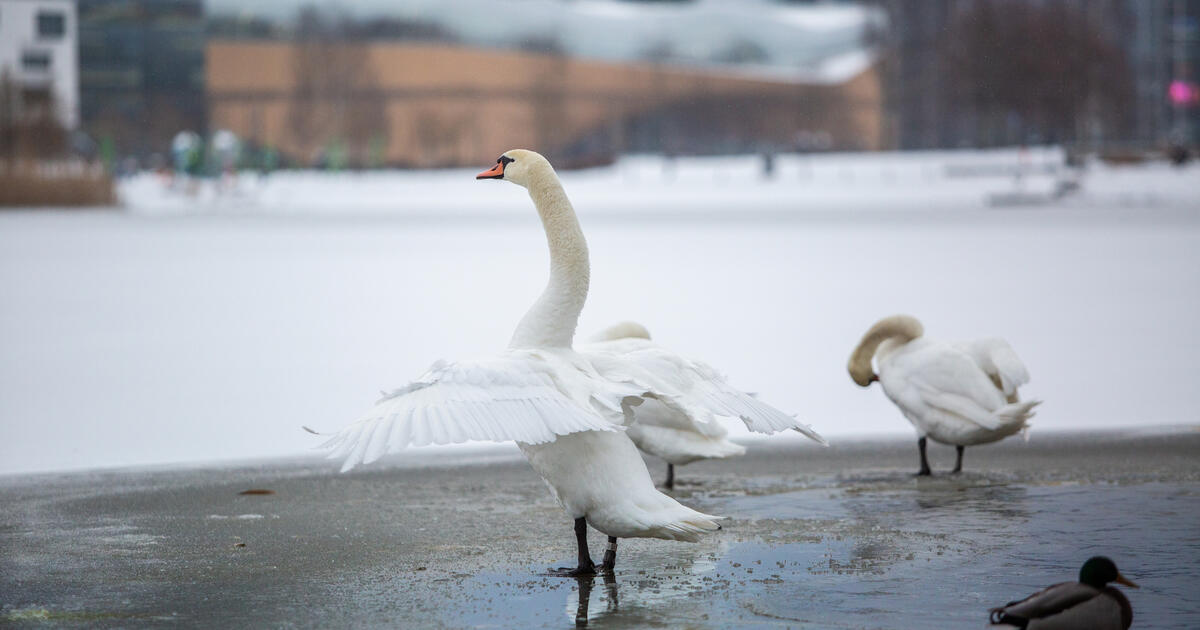
Birds infected with avian influenza have been found in Kallio, Helsinki in January. The disease has been confirmed in one Mute Swan and three Canada geese.
A symptomatic swan in Tokoinranta was taken to the Korkeasaari Zoo’s wildlife hospital to be euthanised, and the other birds were found dead in Eläintarhanlahti Bay.
The virus has been confirmed as H5N1 strain of avian influenza, causing high mortality in wild birds and poultry. The risk of human infection from H5N1 avian influenza is low.
Restrictions on keeping poultry outdoors due to avian influenza
To prevent the spread of the avian influenza virus, Finland has an annual ban on keeping poultry outdoors from 8 February to 31 May. During this period, poultry and other birds must be protected from contact with wild birds. Although this ban is not yet in force for this year, bird keepers are now urged to exercise special caution.
During the ban on keeping birds outdoors, birds must be kept indoors or their outdoor area must be protected with a sufficiently dense net. Keeping birds outdoors in Helsinki must be reported to the supervising veterinarian of the City of Helsinki’s Environmental Services. Poultry farmers should also closely follow information on the avian influenza situation provided by the Finnish Food Authority.
The aim of this regulation is to prevent contact between poultry and wild waterfowl, as waterfowl may carry avian influenza. The virus can be transmitted from wild birds to poultry if the birds are in direct or indirect contact with each other. The ban of keeping birds outdoors does not apply to free flights of pigeons, zoos or permanent animal exhibitions.
Poultry farms in the Helsinki Metropolitan Area are small hobby farms, most of which keep birds only in summer. The last review of the poultry sites was carried out about a year ago, and known poultry keepers were then informed of the restrictions on keeping birds outdoors.
There are no large poultry farms in Helsinki, such as broiler or turkey farms or large egg farms with laying hens.
Mass mortalities of birds to be reported
Symptoms of avian influenza in poultry and mass mortalities of wild birds in Helsinki must be reported to the City’s supervising veterinarian. The supervising veterinarian is available on weekdays 8.15–16.00 ( kymp.elainsuojelu@hel.fi(Link opens default mail program) , tel. +358 9 310 320 76 and +358 9 310 209 43)
Outside office hours, the report may be submitted to the Rescue Department or the state veterinarian on duty.
A mass mortality of birds is considered to occur if there are at least five dead waterfowl or ten other dead birds in the same area. You should avoid touching dead birds without gloves.
Winter feeding of wild birds continues at Tokoinranta
The City of Helsinki organises winter feeding for birds at Tokoinranta in Kallio. Feeding will continue to ensure the birds' nutrition, and the avian flu situation will not lead to any changes in feeding. Winter feeding of birds reduces the risk of birds spreading the disease to other areas.
Avian influenza is spread through bird secretions
Birds spread the disease in their droppings and secretions. Due to this, you need to change your shoes and clothes and wash your hands carefully when entering henhouses.
The currently circulating H5N1 avian influenza virus has not been found to have caused any human infections in Finland. Avian influenza viruses are poorly transmissible to humans, and infection usually requires close contact with infected wild birds, poultry or their excrement.
Avian influenza is not transmitted to humans through food, eggs and poultry, as long as the food is prepared and cooked properly.
Transmission of avian influenza to pets is very rare. However, cats and dogs should be kept away from sick and dead wild birds in an area where avian influenza has been confirmed. Avoid walking dogs in areas visibly contaminated with bird droppings.
Comment
-
wahis.woah.org/#/in-review/7401
Comment

Comment