
 Tweet
Tweet
bump this
-
-
bump this
Comment
-
Translation Google
Belgium: an outbreak of avian flu detected near the French border
By Sudouest.fr with AFP
Published on 01/12/2023 at 6:19 p.m.
The last infection in a poultry farm in Belgium dates back to last February
An outbreak of avian flu has been detected on a farm in the north-west of Belgium, near the border with France, Belgian authorities announced on Friday as the virus is currently circulating in Europe. This outbreak was detected on a farm in Diksmuide, West Flanders. “In order to avoid any further spread of the virus, and in accordance with European and Belgian legislation, the poultry still present are euthanized,” said the Federal Agency for the Safety of the Food Chain (Afsca) in a press release.

-------------------------------------------------------------
Press release (01/12/2023)
H5 avian flu: Avian flu observed again in our country - Infection with the highly pathogenic variant confirmed on a farm in DiksmuideAn outbreak of highly pathogenic avian flu was observed on a farm in Diksmuide (province of West Flanders). In order to avoid any further spread of the virus, and in accordance with European and Belgian legislation, the poultry still present are euthanized. A 3 km protection zone, as well as a 10 km surveillance zone, are established around the outbreak.
In these areas, strict biosecurity measures are imposed. Within the 10 km zone, all poultry keepers (including individuals and amateur breeders) have an obligation to protect their animals. In the 3 km zone, this obligation applies to both birds and poultry. Anyone detecting signs of illness among their poultry or birds should consult a veterinarian.
All measures can be consulted on the AFSCA website: https://www.favv-afsca.be/professionnels/productionanimale/santeanimale/grippeaviaire/mesures.asp
Belgium and avian flu
Although no infected wild birds have been found in our country in the last two months and the last infection in a poultry farm was in February this year, this finding is not surprising. Developments in recent weeks in neighboring countries, where again relatively few infected wild birds have been found but where several outbreaks have recently been identified in poultry farms, show that the virus is still circulating in the north-west of Europe.
The confirmation of the highly pathogenic nature of this outbreak of avian flu by Sciensano (national reference laboratory) also means that Belgium loses its status as a free country at international level.
What can you do as a poultry and bird keeper?
Although it is no longer mandatory, we advise people who have poultry and/or birds to protect their animals as much as possible. To do this, simply cover the henhouse with nets as a preventative measure to avoid any contact with wild birds.
It is always obligatory to feed animals indoors and water them preferably under cover.
When breeders notice an increase in mortality, or any other disease-related symptoms, they should contact their veterinarian immediately.
Have you found a sick or dead bird? Let us know !
If you find a dead or sick bird on a walk or in your neighborhood, do not touch it and report it via our free number 0800/99 777 . The animal will be taken care of and examined.
What is the bird flu virus?
Avian Influenza (AI) or bird flu is a highly contagious viral disease to which all bird species are likely susceptible. There is no scientific indication that this H5 virus is also dangerous for humans. The nature of the symptoms and the course of the disease depend on the pathogenic nature of the viral strain, the affected animal, the environment and other possible infections. Contamination can occur through direct contact with sick animals or through exposure to contaminated materials, such as droppings or dirty crates. Indirect contamination is also possible through the air, but over relatively short distances.
The FASFC and animal health
While the FASFC is known for its controls across the entire food chain, the Agency is also responsible for preventing and combating regulated animal diseases. Regarding avian flu, the Agency works in close collaboration with regional authorities and Sciensano.
The FASFC has launched an awareness campaign explaining in more detail the disease and how to apply the measures correctly, you will find more information via this website .
Comment
-
Belgium - High pathogenicity avian influenza viruses (poultry) (Inf. with) - Immediate notification
GENERAL INFORMATION
COUNTRY/TERRITORY OR ZONE
ZONE
ANIMAL TYPE
TERRESTRIAL
DISEASE CATEGORY
Listed disease
EVENT ID
5375
DISEASE
High pathogenicity avian influenza viruses (poultry) (Inf. with)
CAUSAL AGENT
Highly pathogenic avian influenza virus
GENOTYPE / SEROTYPE / SUBTYPE
H5N1
START DATE
2023/11/30
REASON FOR NOTIFICATION
Recurrence of an eradicated disease
DATE OF LAST OCCURRENCE
2023/02/24
CONFIRMATION DATE
2023/12/01
EVENT STATUS
On-going
END DATE - SELF-DECLARATION
NO REPORT INFORMATION
REPORT NUMBER
Immediate notification
REPORT ID
IN_164197
REPORT REFERENCE - REPORT DATE
2023/12/01
REPORT STATUS
Validated
NO EVOLUTION REPORT
EPIDEMIOLOGY
SOURCE OF EVENT OR ORIGIN OF INFECTION- Contact with wild species
No epidemiological comment
QUANTITATIVE DATA SUMMARY
MEASURING UNIT
Animal
SpeciesSusceptibleCasesDeathsKilled and Disposed ofSlaughtered/ Killed for commercial useVaccinated Birds (DOMESTIC)NEW2010095952000500TOTAL2010095952000500
DIAGNOSTIC DETAILS
CLINICAL SIGNS
YES
METHOD OF DIAGNOSTIC
Diagnostic testhttps://wahis.woah.org/#/in-review/5375Gene sequencing Sciensano Birds 1 2023/12/01 2023/12/01 Positive Reverse transcription-polymerase chain reaction (RT-PCR) Sciensano Birds 1 2023/11/30 2023/11/30 Positive Comment
-
Source: https://www.reuters.com/world/europe...er-2023-12-04/
Belgium reports bird flu outbreak on farm near French border
Reuters
December 4, 20234:42 AM ESTUpdated 12 hours ago
PARIS, Dec 4 (Reuters) - Belgium has reported an outbreak of highly pathogenic H5N1 avian influenza, commonly called bird flu, on a poultry farm in the northwestern part of the country, the World Organisation for Animal Health (WOAH) said on Monday.
The outbreak, which would be the first this season, was detected in Diksmuide, not far from France. It killed 95 birds and led to the slaughter of the rest of the flock of 20,100 poultry, the Paris-based body said, quoting information from Belgian authorities.
Comment
-
Belgium - High pathogenicity avian influenza viruses (poultry) (Inf. with) - Follow up report 1
GENERAL INFORMATION
COUNTRY/TERRITORY OR ZONE
ZONE
ANIMAL TYPE
TERRESTRIAL
DISEASE CATEGORY
Listed disease
EVENT ID
5375
DISEASE
High pathogenicity avian influenza viruses (poultry) (Inf. with)
CAUSAL AGENT
Highly pathogenic avian influenza virus
GENOTYPE / SEROTYPE / SUBTYPE
H5N1
START DATE
2023/11/30
REASON FOR NOTIFICATION
Recurrence of an eradicated disease
DATE OF LAST OCCURRENCE
2023/02/24
CONFIRMATION DATE
2023/12/01
EVENT STATUS
On-going
END DATE - SELF-DECLARATION
NO REPORT INFORMATION
REPORT NUMBER
Follow-up report 1
REPORT ID
FUR_164349
REPORT REFERENCE - REPORT DATE
2023/12/11
REPORT STATUS
Validated
NO EVOLUTION REPORT
EPIDEMIOLOGY
SOURCE OF EVENT OR ORIGIN OF INFECTION- Contact with wild species
No epidemiological comment
QUANTITATIVE DATA SUMMARY
MEASURING UNIT
Animal
SpeciesSusceptibleCasesDeathsKilled and Disposed ofSlaughtered/ Killed for commercial useVaccinated Birds (DOMESTIC)NEW246441001002454400TOTAL44744195195445 4900
DIAGNOSTIC DETAILS
CLINICAL SIGNS
YES
METHOD OF DIAGNOSTIC
Diagnostic testhttps://wahis.woah.org/#/in-review/5375Reverse transcription-polymerase chain reaction (RT-PCR) Sciensano Birds 2 2023/11/30 2023/12/07 Positive Gene sequencing Sciensano Birds 2 2023/12/01 2023/12/08 Positive Comment
-
Translation Google
Interactive map of highly pathogenic H5N1 / H5N x avian influenza cases in Belgium since 1/10/2021.

Cases of highly pathogenic H5N1 / H5N x avian influenza in Belgium since 1/10/2023.
Updated: 12/20/2023.

The map above shows all detections of the highly pathogenic H5N1 / H5N x avian influenza virus in Belgium from October 1, 2023. The following are mentioned:- wild birds: circles
- domestic poultry farming: triangles
- mammals: squares
During the 2022-2023 avian influenza season, 13 professional keepers, 19 amateur keepers, 250 wild birds, 18 wild mammals and 1 wildlife park in Belgium were diagnosed with highly pathogenic avian influenza ( HPAI ) H5 . These figures indicate high infection pressure in wildlife and therefore risky conditions for the industry.
Furthermore, like last year, a number of wild birds tested positive in Belgium and Europe during the summer, confirming that the virus currently circulating is no longer seasonal, but it nestles in the wild bird population. However, the number of weekly positive cases decreased from August 2023 before falling to zero at the start of the 2023-2024 season. No new cases were identified in October and November 2023, which is markedly different from the start of the previous season (2022-2023), which saw a new wave of infections during the autumn months.
On December 1, 2023, a first outbreak of HPAI - H5N1 in a professional poultry farm was confirmed by the national reference laboratory ( NRL ) of Sciensano.
This reintroduction confirms the persistence of the risk and underlines the need to maintain a very high level of vigilance and biosecurity in the Belgian poultry industry.
Following a second detection of the virus in the sector, the competent minister reintroduced the nationwide caging requirement for professional poultry. On December 11, the first wild bird of the season, a curlew (Numenius arquata), tested positive for highly pathogenic avian influenza. The NRL collaborates with regional (Flanders ANB , Wallonia SPW and Brussels LB ) and federal ( AFSCA ) authorities to collect sick and dead birds for investigation purposes in order to constantly monitor the situation on the ground.The NRL avian flu de Sciensano is carrying out other characterizations of these viruses. This involves, in particular, isolating the virus, determining its complete genome and setting up pathogenicity studies. The NRL thus evaluates the evolution of the virus, the risks for birds and the level of adaptation to mammals.
For the first outbreak in poultry, it was demonstrated that the virus belonged to a very recent new genotype, “ DG ”, associated with two other strains isolated from poultry in Germany (November). This genotype has the same composition as the “ AB ” genotype , except for the PB2 and PA gene segments . The “ AB ” genotype has been detected most frequently in neighboring European countries since the start of the new season.
The European Center for Disease Prevention and Control ( ECDC ) considers the risk of transmission to humans to be low for the entire European population. The risk for occupationally exposed groups, such as veterinarians, is considered to be low. low to medium. It is therefore recommended to wear protective equipment such as gloves and a mask when handling sick or dead birds. If you experience flu symptoms after being in contact with sick or dead birds, it is best to consult your doctor, mentioning this contact.
Comment
-
Press release (12/26/2023)
H5 avian flu: Infection with the highly pathogenic variant confirmed in a farm in Alveringem
An outbreak of highly pathogenic avian flu was observed on a turkey farm in Alveringem (province of West Flanders). In order to avoid any further spread of the virus, and in accordance with European and Belgian legislation, the poultry still present are euthanized. A 3 km protection zone, as well as a 10 km surveillance zone, are established around the outbreak. The surveillance zone partly overlaps with the surveillance zones of Diksmuide and Warhem .
In these areas, strict biosecurity measures are imposed. Within the 10 km zone, all poultry keepers (including individuals and amateur breeders) have an obligation to protect their animals. In the 3 km zone, this obligation applies to both birds and poultry. Anyone detecting signs of illness among their poultry or birds should consult a veterinarian.
...
Reminder: the confinement obligation for registered poultry farms is again in force since December 9, 2023
After more than five months of relative calm, the epidemiological situation has again evolved unfavorably. The Minister of Agriculture David Clarinval has therefore reintroduced the obligation of confinement of poultry - excluding ratites - for all professional and amateur keepers from Saturday December 9 . These include all commercial establishments as well as recreational animal owners registered in Sanitel. Animals must be kept indoors or placed under nets.
What can you do as a private poultry and bird keeper?
Although it is not obligatory, we also advise private owners of poultry and/or birds to protect their animals as much as possible. To do this, simply cover the henhouse with nets as a preventative measure to avoid any contact with wild birds. It is obligatory to feed and water animals indoors .
When breeders notice an increase in mortality, or any other disease-related symptoms, they should contact their veterinarian immediately.
Have you found a sick or dead bird? Let us know !
If you find a dead or sick bird on a walk or in your neighborhood, do not touch it and report it via our free number 0800/99 777 . The animal will be taken care of and examined.
What is the bird flu virus?
Avian Influenza (AI) or avian flu is a highly contagious viral disease to which all bird species are likely susceptible. There is no scientific indication that this H5 virus is also dangerous for humans. The nature of the symptoms and the course of the disease depend on the pathogenic nature of the viral strain, the affected animal, the environment and other possible infections. Contamination can occur through direct contact with sick animals or through exposure to contaminated materials, such as droppings or dirty crates. Indirect contamination is also possible through the air, but over relatively short distances.
...
https://www.favv-afsca.be/professionnels/publications/presse/2023/2023-12-26.aspComment
-
Belgium - High pathogenicity avian influenza viruses (poultry) (Inf. with) - Follow up report 2
GENERAL INFORMATION
COUNTRY/TERRITORY OR ZONE
ZONE
ANIMAL TYPE
TERRESTRIAL
DISEASE CATEGORY
Listed disease
EVENT ID
5375
DISEASE
High pathogenicity avian influenza viruses (poultry) (Inf. with)
CAUSAL AGENT
Highly pathogenic avian influenza virus
GENOTYPE / SEROTYPE / SUBTYPE
H5N1
START DATE
2023/11/30
REASON FOR NOTIFICATION
Recurrence of an eradicated disease
DATE OF LAST OCCURRENCE
2023/02/24
CONFIRMATION DATE
2023/12/01
EVENT STATUS
On-going
END DATE - SELF-DECLARATION
NO REPORT INFORMATION
REPORT NUMBER
Follow-up report 2
REPORT ID
FUR_164712
REPORT REFERENCE - REPORT DATE
2023/12/28
REPORT STATUS
Validated
NO EVOLUTION REPORT
EPIDEMIOLOGY
SOURCE OF EVENT OR ORIGIN OF INFECTION- Contact with wild species
No epidemiological comment
QUANTITATIVE DATA SUMMARY
MEASURING UNIT
Animal
SpeciesSusceptibleCasesDeathsKilled and Disposed ofSlaughtered/ Killed for commercial useVaccinated Birds (DOMESTIC)NEW252091801802502900TOTAL69953375375695 7800
DIAGNOSTIC DETAILS
CLINICAL SIGNS
YES
METHOD OF DIAGNOSTIC
Diagnostic testhttps://wahis.woah.org/#/in-review/5375Gene sequencing Sciensano Birds 2 2023/12/01 2023/12/26 Positive Reverse transcription-polymerase chain reaction (RT-PCR) Sciensano Birds 2 2023/11/30 2023/12/25 Positive Comment
-
Translation Google
New case of avian flu detected in Furnes, the 4th in Flanders in December
1 hour ago
By the editorial team with Belga
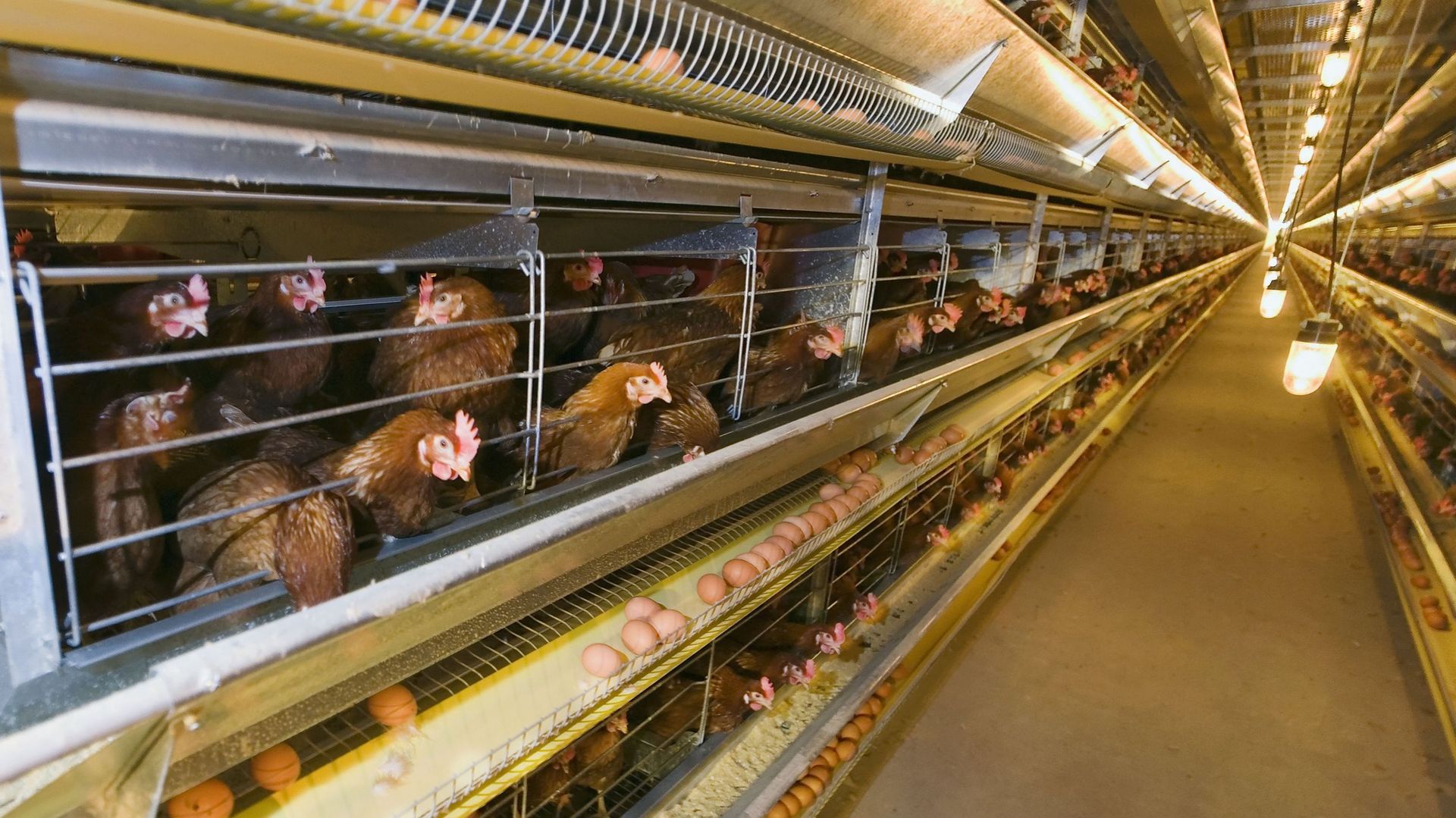
An outbreak of highly pathogenic avian flu has been observed on a poultry farm in Furnes (West Flanders), announces the Federal Agency for the Safety of the Food Chain (Afsca) in a press release. Poultry still present on the farm concerned are euthanized.
This is the fourth case of infection detected in West Flanders this month. On December 1, a first case was discovered in Diksmuide . A second case was detected a week later on a farm located in the protection zone established following the first contamination. Last Tuesday, it was in Alveringem that a third case was detected.
Since December 9, the confinement obligation for registered poultry farms has been in force again.
A 3 km protection zone, as well as a 10 km surveillance zone, are established around the new outbreak. The new surveillance zone largely overlaps with the previous surveillance zones of Warhem and Alveringem.
....
-------------------------------------------
Press release (12/29/2023)
H5 avian flu: Infection with the highly pathogenic variant confirmed in a farm in Furnes
An outbreak of highly pathogenic avian flu was observed on a poultry farm in Furnes (West Flanders). In order to avoid any further spread of the virus, and in accordance with European and Belgian legislation, the poultry still present are euthanized. A 3 km protection zone, as well as a 10 km surveillance zone, are established around the outbreak. The surveillance zone largely overlaps with the surveillance zones of Warhem and Alveringem .
In these areas, strict biosecurity measures are imposed. Within the 10 km zone, all poultry keepers (including individuals and amateur breeders) have an obligation to protect their animals. In the 3 km zone, this obligation applies to both birds and poultry. Anyone detecting signs of illness among their poultry or birds should consult a veterinarian.
...
Comment
-
Belgium - High pathogenicity avian influenza viruses (poultry) (Inf. with) - Follow up report 3
GENERAL INFORMATION
COUNTRY/TERRITORY OR ZONE
ZONE
ANIMAL TYPE
TERRESTRIAL
DISEASE CATEGORY
Listed disease
EVENT ID
5375
DISEASE
High pathogenicity avian influenza viruses (poultry) (Inf. with)
CAUSAL AGENT
Highly pathogenic avian influenza virus
GENOTYPE / SEROTYPE / SUBTYPE
H5N1
START DATE
2023/11/30
REASON FOR NOTIFICATION
Recurrence of an eradicated disease
DATE OF LAST OCCURRENCE
2023/02/24
CONFIRMATION DATE
2023/12/01
EVENT STATUS
On-going
END DATE - SELF-DECLARATION
NO REPORT INFORMATION
REPORT NUMBER
Follow-up report 3
REPORT ID
FUR_164760
REPORT REFERENCE - REPORT DATE
2024/01/02
REPORT STATUS
Validated
NO EVOLUTION REPORT
EPIDEMIOLOGY
SOURCE OF EVENT OR ORIGIN OF INFECTION- Contact with wild species
No epidemiological comment
QUANTITATIVE DATA SUMMARY
MEASURING UNIT
Animal
SpeciesSusceptibleCasesDeathsKilled and Disposed ofSlaughtered/ Killed for commercial useVaccinated Birds (DOMESTIC)NEW3344170703337100TOTAL1033944454451029 4900
DIAGNOSTIC DETAILS
CLINICAL SIGNS
YES
METHOD OF DIAGNOSTIC
Diagnostic testhttps://wahis.woah.org/#/in-review/5375Gene sequencing Sciensano Birds 4 2023/12/01 2023/12/29 Positive Reverse transcription-polymerase chain reaction (RT-PCR) Sciensano Birds 4 2023/11/30 2023/12/28 Positive Comment
-
Translation Google
Avian flu: thirteen countries impose a total or partial embargo on the importation of Belgian poultry
7 hours ago
By the editorial team with Belga
Thirteen countries, including China, Japan and Russia, have imposed a partial embargo on the import of Belgian poultry following cases of avian flu in our country . This is what emerges from an investigation carried out by the Federal Agency for the Safety of the Food Chain (Afsca), the conclusions of which were revealed on Wednesday.
Five countries (South Africa, China, Cuba, Singapore and Taiwan) have imposed a strict embargo on all poultry coming from Belgian territory. Eight other countries and regions have decided on a partial embargo, only banning imports from certain Belgian regions, where cases of avian flu have been detected.
A retaliatory measure?
These are Hong Kong, Iraqi Kurdistan, Japan, Kazakhstan, Mexico, Russia, Saudi Arabia and Turkey.
It is possible that other countries or regions have restricted imports from Belgium, for example by refusing to grant import licenses. Avian flu type H5 was detected in four places in Belgium this winter. A screening obligation for poultry, originating from professional or amateur breeding, was imposed on December 9. Avian Influenza (AI) or avian flu is a highly contagious viral disease to which all bird species are likely susceptible. There is no scientific indication that this H5 virus is also dangerous for humans.
Comment


Comment