
 Tweet
Tweet
Translation Google
"A massive and abnormal phenomenon": in Brittany, thousands of puffins, victims of storms, are washing up on the coastline
Maël Prévost
Published onWednesday, February 18, 2026 at 7:47 AM
More than 8,000 puffins have been found dead or weakened on Atlantic beaches since the beginning of February, particularly in Brittany. Storms and a depletion of fish stocks explain this exceptional mortality rate.
"This is truly a massive phenomenon, one we're not used to and which is really abnormal ," warns Guillaume Bruneau, administrator of the League for the Protection of Birds (LPO) in Brittany, this Wednesday, February 18, on ICI Breizh Izel. Since the beginning of February, 8,000 puffins have been found dead or weakened on the beaches of the French Atlantic coast , he explains. This record number is worrying the LPO volunteers.
Guillaume Bruneau is also the association's coordinator in Quiberon (Morbihan). In the bay, the situation is particularly worrying: "In our area, we've found more than 500 carcasses and only three birds still alive ." These birds, accustomed to Atlantic winters, are suffering from successive storms and heavy swells. The waves limit their access to the small fish they feed on. None of
About a hundred couples remain in Sept-Îles
Other seabirds, such as guillemots and penguins, are also found on our coasts, but in smaller numbers: "This winter, the numbers remain within the norm ," explains Guillaume Bruneau. Puffins are therefore the most affected birds, even though the species is already vulnerable, impacted by pollution, climate change, and accidental capture.
Despite the scale of this phenomenon, the species is not globally threatened: "This episode will not jeopardize the species' survival within its range ." However, some French colonies, such as those on the Sept-Îles archipelago, have already declined significantly, with only about a hundred pairs remaining .
What should I do if I find a bird in distress on the coast?
To help a weakened puffin on the beach, the LPO (League for the Protection of Birds) offers some advice: "Place the bird in a cardboard box in a quiet, dark room, without giving it anything to eat, and contact the nearest wildlife rehabilitation center or the SOS Wildlife Distress hotline (02.57.63.13.13) . " In Brittany, the LPO coordinates this human chain to rescue and transport the birds to specialized centers.

-------------------------------------------------------------------------------
Mass stranding of Atlantic puffins on the coast
The Atlantic coastline is currently experiencing a significant stranding of seabirds, particularly Atlantic puffins
Published on Tuesday, February 17, 2026

Mass stranding of Atlantic puffins on the coast
The Atlantic coastline is currently experiencing a significant stranding of seabirds, particularly Atlantic puffins.
This phenomenon is likely linked to a series of winter storms that have weakened the birds to the point of death.
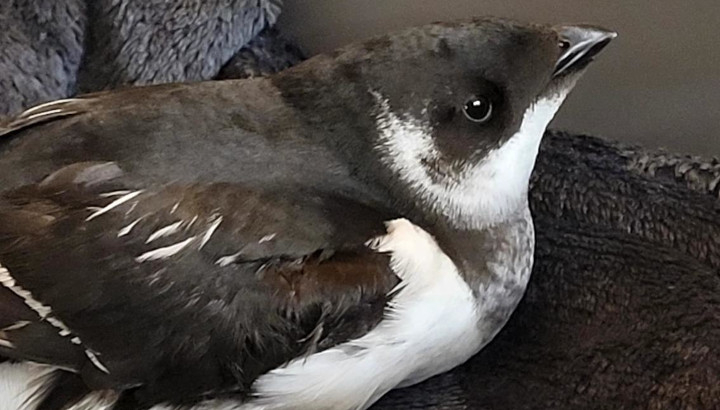
The surviving birds are malnourished and hypothermic.
The LPO coordinates and manages the network for monitoring seabird strandings on the Atlantic coast.
This information is particularly important for understanding the population dynamics of seabirds in France, but also at the European level. Wildlife rehabilitation centers are mobilized to care for surviving birds.
Municipal agents are already fully mobilized on our 15 km of coastline to assess and record strandings, rescue weakened animals and organize the collection of carcasses.
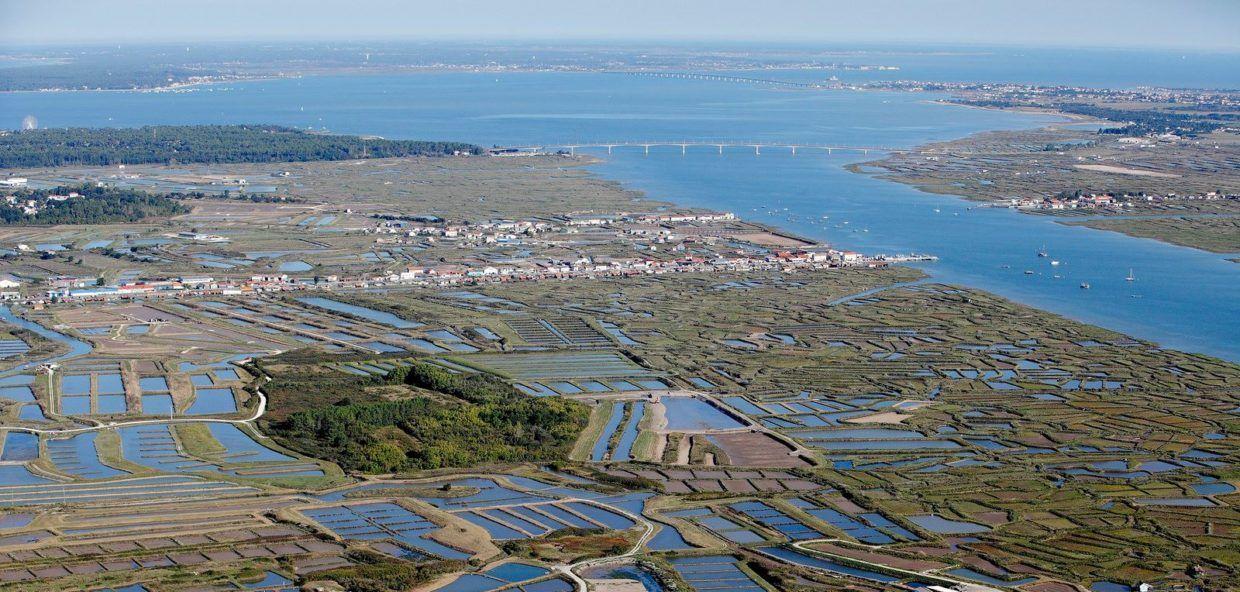
What should we do if we find Atlantic puffins on our Trembladais coastline?
Dead bird:
"A massive and abnormal phenomenon": in Brittany, thousands of puffins, victims of storms, are washing up on the coastline
Maël Prévost
Published onWednesday, February 18, 2026 at 7:47 AM
More than 8,000 puffins have been found dead or weakened on Atlantic beaches since the beginning of February, particularly in Brittany. Storms and a depletion of fish stocks explain this exceptional mortality rate.
"This is truly a massive phenomenon, one we're not used to and which is really abnormal ," warns Guillaume Bruneau, administrator of the League for the Protection of Birds (LPO) in Brittany, this Wednesday, February 18, on ICI Breizh Izel. Since the beginning of February, 8,000 puffins have been found dead or weakened on the beaches of the French Atlantic coast , he explains. This record number is worrying the LPO volunteers.
Guillaume Bruneau is also the association's coordinator in Quiberon (Morbihan). In the bay, the situation is particularly worrying: "In our area, we've found more than 500 carcasses and only three birds still alive ." These birds, accustomed to Atlantic winters, are suffering from successive storms and heavy swells. The waves limit their access to the small fish they feed on. None of
About a hundred couples remain in Sept-Îles
Other seabirds, such as guillemots and penguins, are also found on our coasts, but in smaller numbers: "This winter, the numbers remain within the norm ," explains Guillaume Bruneau. Puffins are therefore the most affected birds, even though the species is already vulnerable, impacted by pollution, climate change, and accidental capture.
Despite the scale of this phenomenon, the species is not globally threatened: "This episode will not jeopardize the species' survival within its range ." However, some French colonies, such as those on the Sept-Îles archipelago, have already declined significantly, with only about a hundred pairs remaining .
What should I do if I find a bird in distress on the coast?
To help a weakened puffin on the beach, the LPO (League for the Protection of Birds) offers some advice: "Place the bird in a cardboard box in a quiet, dark room, without giving it anything to eat, and contact the nearest wildlife rehabilitation center or the SOS Wildlife Distress hotline (02.57.63.13.13) . " In Brittany, the LPO coordinates this human chain to rescue and transport the birds to specialized centers.
-------------------------------------------------------------------------------
Mass stranding of Atlantic puffins on the coast
The Atlantic coastline is currently experiencing a significant stranding of seabirds, particularly Atlantic puffins
Published on Tuesday, February 17, 2026
Mass stranding of Atlantic puffins on the coast
The Atlantic coastline is currently experiencing a significant stranding of seabirds, particularly Atlantic puffins.
This phenomenon is likely linked to a series of winter storms that have weakened the birds to the point of death.
The surviving birds are malnourished and hypothermic.
The LPO coordinates and manages the network for monitoring seabird strandings on the Atlantic coast.
This information is particularly important for understanding the population dynamics of seabirds in France, but also at the European level. Wildlife rehabilitation centers are mobilized to care for surviving birds.
Municipal agents are already fully mobilized on our 15 km of coastline to assess and record strandings, rescue weakened animals and organize the collection of carcasses.
What should we do if we find Atlantic puffins on our Trembladais coastline?
Dead bird:
- Do not handle it (health risk related to avian flu).
- Check if he is carrying any scientific equipment (metal ring, GLS, GPS). Note the information written on it.
- You can report it to the town hall at 05.46.36.99.00. Municipal agents will take care of collecting the individuals as soon as possible with the necessary precautions.
- You can also report it via the ICAO application to contribute to the census: https://icao.seo.org/fr/inscription
- Approach it from the seaward side to avoid pushing it back into the water. Protect yourself with gloves. Catch it as gently as possible with a thick cloth, making sure to keep its wings close to its body and cover its head.
- Place it in a cardboard box in a quiet place, without water or food.
- Note the ring numbers, take a photo and contact a care center quickly:
- The Bird Marsh: 05.46.75.37.54
- LPO in Charente-Maritime: 05.46.82.12.34
Comment