
 Tweet
Tweet
Source: http://www.cdc.gov/zika/transmission...nsmission.html
Zika and Sexual Transmission
Additional Guidance
Basics of Zika Virus and Sex
What We Do Not Know
There are some things we still do not know about Zika and sex.
How to Prevent Sexual Transmission of Zika
Couples Who Are Pregnant
Pregnant couples with male partners who live in or travel to areas with Zika should take steps to protect their pregnancy. A man who has Zika can pass it to his pregnant partner during sex, even if he does not have symptoms at the time or his symptoms have gone away.
Because Zika can cause birth defects, these couples should
Pregnant couples who are concerned that the male partner may have or had Zika should tell their healthcare provider immediately about:
Men or women who live in or travel to an area with Zika who are concerned about trying to get pregnant should talk to their healthcare provider. Learn more here.
Others Concerned About the Sexual Transmission of Zika
Anyone concerned about the sexual transmission of Zika and not concerned about pregnancy can consider using a condom every time they have vaginal, anal, and oral (mouth-to-penis) sex or not have sex. To be effective, condoms must be used correctly from start to finish, every time during sex.
For couples with a male partner who has traveled to an area with Zika
Sexual Transmission and Testing

Zika and Sex: Information for men with pregnant partners living in areas with Zika
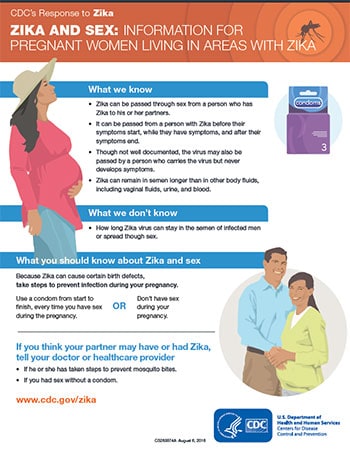
Zika and Sex: Information for pregnant women living in areas with Zika
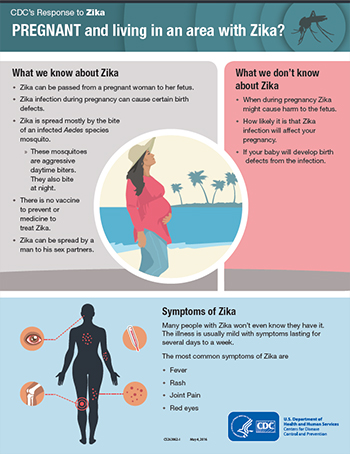
Pregnant and living in an area with Zika?
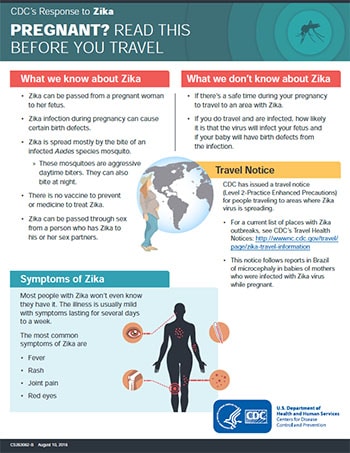
Pregnant? Read this before you travel
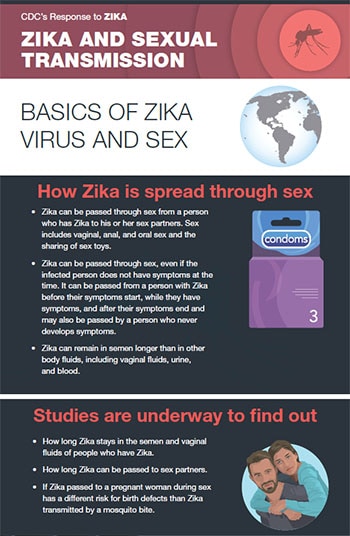
Zika and Sexual Transmisssion: What we know and what we don?t know
Zika and Sexual Transmission
Additional Guidance
- Interim Guidance for Prevention of Sexual Transmission of Zika Virus
- QA for Healthcare Providers: Sexual Transmission of Zika
Basics of Zika Virus and Sex
- A man with Zika virus can pass it to his female or male sex partners.
- In the known cases, men had symptoms. Zika can be passed before symptoms start, while he has symptoms, and after his symptoms end.
- Men without symptoms may be able to pass the virus to their sex partners, but CDC doesn?t have reports of this.
- In the known cases, the men had vaginal, anal, or oral (mouth-to-penis) sex without a condom.
- Zika virus can stay in semen longer than in blood, but we don?t know exactly how long Zika stays in semen.
- Condoms can reduce the chance of getting Zika from sex if used correctly from start to finish, every time you have vaginal, anal, or oral (mouth-to-penis) sex.
- Not having sex can eliminate your risk of getting Zika from sex.
- A man with Zika virus can pass it to his female or male sex partners.
- Using condoms or delaying sex can reduce the risk of getting Zika from sex.
- The length of time to consider using condoms or delaying sex depends on your situation and concerns.
What We Do Not Know
There are some things we still do not know about Zika and sex.
- We don?t know if men with Zika who never develop symptoms have the virus in their semen or if they can pass Zika through sex.
- We don?t know if a woman with Zika can pass the virus to her sex partners.
- We don?t know if Zika can be passed through vaginal fluids during vaginal or oral (mouth-to-vagina) sex.
- We don?t know if Zika can be passed through saliva during kissing.
How to Prevent Sexual Transmission of Zika
Couples Who Are Pregnant
Pregnant couples with male partners who live in or travel to areas with Zika should take steps to protect their pregnancy. A man who has Zika can pass it to his pregnant partner during sex, even if he does not have symptoms at the time or his symptoms have gone away.
Because Zika can cause birth defects, these couples should
- Use a condom every time they have sex or not have sex during the pregnancy. To be effective, condoms must be used correctly from start to finish, every time they have sex. This includes vaginal, anal, and oral (mouth-to-penis) sex.
- Take steps to prevent mosquito bites while in an area with Zika. This protects the couple and prevents further spread of the virus.
- Even if they do not feel sick, travelers returning to the United States from an area with Zika should take steps to prevent mosquito bites for 3 weeks so they do not pass Zika to uninfected mosquitoes.
Pregnant couples who are concerned that the male partner may have or had Zika should tell their healthcare provider immediately about:
- His travel history
- How long he stayed
- If he took steps to prevent mosquito bites
- If they had sex without a condom
Men or women who live in or travel to an area with Zika who are concerned about trying to get pregnant should talk to their healthcare provider. Learn more here.
Others Concerned About the Sexual Transmission of Zika
Anyone concerned about the sexual transmission of Zika and not concerned about pregnancy can consider using a condom every time they have vaginal, anal, and oral (mouth-to-penis) sex or not have sex. To be effective, condoms must be used correctly from start to finish, every time during sex.
For couples with a male partner who has traveled to an area with Zika
- If the male partner has been diagnosed with Zika or has (or had) symptoms, the couple should consider using condoms or not having sex for at least 6 months after symptoms begin.
- If the male partner does not develop symptoms, the couple should consider using condoms or not having sex for at least 8 weeks after the man returns.
- If the male partner has been diagnosed with Zika or has (or had) symptoms, the couple should consider using condoms or not having sex for at least 6 months after symptoms begin.
- If the male partner has never developed symptoms, the couple should consider using condoms or not having sex while there is Zika in the area.
- It is not known if a woman can pass Zika to her sex partners.
- These couples can also consider using condoms or not having sex.
- The mild nature of the illness for many people*
- Plans for pregnancy (if appropriate)
- Access to condoms and other contraception
- Desire for intimacy, including willingness to use condoms or not have sex
- Ability to use condoms or not have sex
Sexual Transmission and Testing
- CDC recommends Zika virus testing for people who may have been exposed to Zika through sex and who have Zika symptoms.
- A pregnant woman with possible exposure to Zika virus from sex should be tested if either she or her male partner develops symptoms of Zika.
- Testing blood, semen, or urine is not recommended to determine how likely a man is to pass Zika virus through sex. This is because there is still a lot we don?t know about the virus and how to interpret test results. Available tests may not accurately identify the presence of Zika or a man?s risk of passing it on.
- As we learn more and as tests improve, these tests may become more helpful for determining a man?s risk of passing Zika through sex.
Zika and Sex: Information for men with pregnant partners living in areas with Zika
Zika and Sex: Information for pregnant women living in areas with Zika
Pregnant and living in an area with Zika?
Pregnant? Read this before you travel
Zika and Sexual Transmisssion: What we know and what we don?t know

Comment