Announcement

Collapse
No announcement yet.

California - Death Cap mushrooms linked to 4 deaths, at least 4 liver transplants and 47 hospitalizations

Collapse
X
 
  • Filter
  • Time
  • Show
Clear All
new posts

  • California - Death Cap mushrooms linked to 4 deaths, at least 4 liver transplants and 47 hospitalizations

    Source: https://abc30.com/amp/post/californi...reak/18258135/

    1 killed, more than 20 poisoned by death cap mushrooms in California, officials say
    "Death cap mushrooms contain potentially deadly toxins that can lead to liver failure."
    Sunday, December 7, 2025 12:47PM PT​

    SAN FRANCISCO -- California officials are warning foragers after an outbreak of poisoning linked to wild mushrooms that has killed one adult and caused severe liver damage in several patients, including children.

    The state poison control system has identified 21 cases of amatoxin poisoning, likely caused by death cap mushrooms, the health department said Friday. The toxic wild mushrooms are often mistaken for edible ones because of their appearance and taste.

    "Death cap mushrooms contain potentially deadly toxins that can lead to liver failure," Erica Pan, director of the California Department of Public Health, said in a statement. "Because the death cap can easily be mistaken for edible safe mushrooms, we advise the public not to forage for wild mushrooms at all during this high-risk season."

    One adult has died and several patients have required intensive care, including at least one who might need a liver transplant.​..

  • #2
    Outbreak of Potentially Deadly Amatoxin Poisoning Linked to the Consumption of Wild, Foraged Mushrooms ​


    December 5, 2025

    NR25-023

    State advises public not to forage for wild mushrooms during this high-risk season

    What You Need to Know: An outbreak of serious illness associated with eating foraged wild mushrooms has been reported. CDPH is urging individuals to avoid foraging for and eating wild mushrooms while risk of amatoxin poisoning is high.

    SACRAMENTO – The California Department of Public Health (CDPH) is issuing an urgent advisory following a recent outbreak of amatoxin poisoning linked to the consumption of wild, foraged mushrooms. Confirmed cases have resulted in severe liver damage in both pediatric and adult patients, including one adult fatality. As of December 5, 2025, 21 cases have been identified by the California Poison Control System (CPCS), with significant clusters reported in the Monterey and San Francisco Bay Areas, although there is risk statewide.

    “Death cap mushrooms contain potentially deadly toxins that can lead to liver failure, said Dr. Erica Pan, CDPH Director and State Public Health Officer. “Because the death cap can easily be mistaken for edible safe mushrooms, we advise the public not to forage for wild mushrooms at all during this high-risk season.”


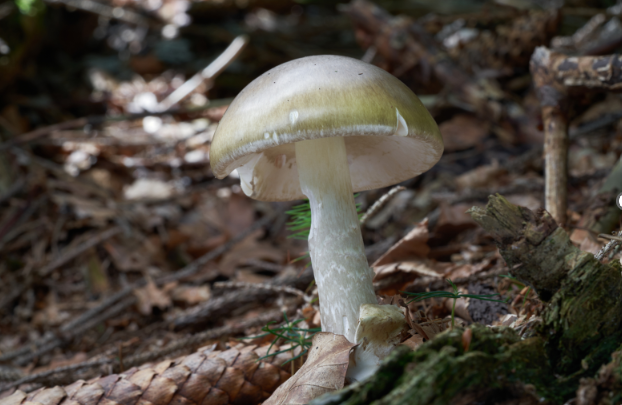
    Toxic: Death Cap Mushroom (Amanita Phalloides)

    Toxic mushrooms, such as the death cap (Amanita phalloides), can easily be mistaken for safe, edible mushrooms due to their similar appearance and taste. Consuming these mushrooms can lead to severe poisoning. Cooking, boiling, drying, or freezing these mushrooms does NOT make them safe to eat.

    Healthcare providers should be aware of the potential for toxicity following wild mushroom ingestion. Initial symptoms, such as watery diarrhea, nausea, vomiting, abdominal pain, and dehydration can occur within 6 to 24 hours following ingestion of these toxic mushrooms and usually go away within a day. However, this brief improvement can be deceptive, as patients may still develop serious to fatal liver damage within 48 to 96 hours after eating the mushrooms. Healthcare providers are advised to contact the California Poison Control System at 1-800-222-1222 for guidance on diagnosing and treating patients with suspected mushroom poisoning.

    ​Between mid-November and early December 2025, the California Poison Control System identified twenty-one cases of toxic mushroom poisoning (likely death cap mushrooms, Amanita phalloides). Several patients have required intensive care, with at least one individual potentially needing a liver transplant. One adult fatality has also been reported to date. The California Poison Control System is closely monitoring the increase in calls related to hospitalizations of individuals who have consumed toxic foraged wild mushrooms. The California Poison Control System is also providing guidance to health care providers treating patients with toxic mushroom poisoning.

    Death cap mushrooms are found in many parts of California, particularly near oaks and other hardwood trees, including pine trees. Rain events in the fall and winter months create ideal conditions for their growth. Given the grave risk posed by consuming these toxic mushrooms, CDPH strongly advises the public to avoid foraging wild mushrooms and to only consume mushrooms purchased from reputable stores or known commercial sources.

    For more information, please contact the California Poison Control System or visit the CDPH website.


    Comment


    • #3
      California Dept. of Public Health
      FOR IMMEDIATE RELEASE

      January 14, 2026

      via email


      Death Cap Mushrooms Linked to Three Deaths, Three Liver Transplants and 35 Hospitalizations

      Wet Weather Spurs Mushroom Growth and Mushroom Foraging with Fatal Results
      What You Need to Know: Recent rain contributed to widespread growth of Death Cap mushrooms in California. CDPH is again urging Californians not to pick or eat wild mushrooms as the risk of potentially deadly amatoxin poisoning is high. Since Death Cap mushrooms are easily confused for safe-to-eat, lookalike mushrooms, all mushroom foraging should be avoided.


      As of January 6, 35 cases, including three adult fatalities and three liver transplants, have been linked to the ongoing outbreak.
      SACRAMENTO – The California Department of Public Health (CDPH) is issuing an update to its December 5 health advisory as an outbreak of amatoxin poisoning continues across California. This outbreak is linked to the consumption of wild, foraged mushrooms and has caused severe liver damage in both children and adults, resulting in three adult deaths and three liver transplants to date. CDPH urges Californians not to pick or eat wild mushrooms.

      Between November 18 and January 6, the California Poison Control System (CPCS) has identified 35 hospitalized cases across Northern California and the Central Coast, spanning regions from Sonoma to San Luis Obispo. Affected individuals range in age from 19 months to 67 years and include family groups and individual cases. Medical treatment for amatoxin poisoning has been provided in the following counties: Alameda, Contra Costa, Monterey, San Francisco, San Luis Obispo, San Mateo, Santa Clara, Santa Cruz and Sonoma. Most cases are in the Monterey and San Francisco Bay Area, though Death Cap mushrooms can be found across the state, particularly adjacent to oaks, other hardwoods and some pines.


      Information provided by some affected individuals indicates that Death Cap mushrooms were collected from various locations across Northern California and the Central Coast regions, including, county, city and national park lands.

      What CDPH is Doing:

      CDPH continues to coordinate with CPCS and public health partners on case investigation, tracking, and developing outreach and education materials. CDPH has released public service announcements (PSAs) in three languages: English, Spanish, and Mixteco (with assistance from the San Luis Obispo Health Agency). These PSAs warn the public about the risks of mushroom foraging, or mushroom hunting, during this high-risk season when Death Cap mushrooms are abundant. Additionally, CDPH has developed poisonous mushroom webpages in English and Spanish; a PDF in Chinese that provides important health information; flyers in English, Spanish and Chinese; and, updated outbreak details and additional education resources.

      What Californians Can Do:
      • Avoid picking and eating wild mushrooms during this high-risk season when Death Cap mushrooms are abundant. Death Cap mushrooms are still poisonous even after cooking, boiling, freezing or drying.
      • Purchase mushrooms from trusted grocery stores and retailers and exercise caution when buying mushrooms from street vendors.
      • Keep children and pets away from wild mushrooms.
      • Seek help immediately if you or someone you know has eaten a poisonous mushroom. Contact the CPCS hotline: 1-800-222-1222. Do not wait for symptoms to appear. Treatment is more difficult once symptoms start.
      • Initial symptoms, such as watery diarrhea, nausea, vomiting, abdominal pain, and dehydration can occur within 6 to 24 hours following ingestion of these toxic mushrooms and usually go away within a day. However, this brief improvement can be deceptive, as patients may still develop serious to fatal liver damage within 48 to 96 hours after eating the mushrooms.

      What Public Health Professionals Can Do:
      • Advise residents to avoid picking and eating wild mushrooms during this high-risk season when Death Cap mushrooms are abundant. Share educational materials on Death Cap mushrooms with your communities.
      • Assess whether Death Cap mushrooms are blooming in your local area. Regional and local mycological societies such as the North American Mycological Association, may be useful resources.
      • Work with local partners to reduce exposure by posting advisories in public spaces where these mushrooms may be found, including in county and city parks, and coordinate with veterinarians and animal health services.

      For the latest information on wild mushroom related poisonings, please visit California Poison Control System or CDPH Poisonous Wild Mushrooms (go.cdph.ca.gov/PoisonMushrooms) also available in Spanish at CDPH Hongos Silvestres Venenosos (go.cdph.ca.gov/HongosVenenosos).


      media@cdph.ca.gov

      Comment


      • #4
        Source: https://www.cbsnews.com/sacramento/n...rnia-outbreak/


        Sacramento County reports 4 mushroom poisoning cases amid statewide outbreak
        By Cecilio Padilla

        January 22, 2026 / 11:05 AM PST / CBS Sacramento
        Add CBS News on Google

        Public health officials are urging Californians to stop foraging for mushrooms as dangerous fungi continue to grow following recent wet weather.

        On Thursday, Sacramento County Public Health announced that they had recently confirmed four cases of amatoxin poisoning. The cases can be traced to people accidentally eating Death Cap or Western Destroying Angel mushrooms.​..

        Comment


        • #5
          State of California—Health and Human Services Agency
          California Department of Public Health


          To: Healthcare Providers
          Outbreak of Severe Illness and Deaths Linked to Ingestion of Poisonous Wild Mushrooms – May 2026 Update
          5/14/2026​

          Key Messages
          • As an update to the January 2026 Health Advisory describing an increase in mushroom poisoning cases identified in the Northern California and Central Coast regions, the California Department of Public Health (CDPH) and the California Poison Control System (CPCS) are alerting health care providers of a recent resurgence in poisoning cases associated with consumption of amatoxin-containing mushrooms in the Northern California and Central Coast regions.
          • As of May 11, 2026, 47 cases have been reported to CPCS, with severe illnesses resulting in four deaths and at least four liver transplants (Figure 1). Eight cases have been reported in the last four weeks (with four of the eight reported in the last week), in a time frame past the normal peak season. This greatly exceeds the typical report of less than 5 cases of mushroom poisonings each year in California. Since November 2026, hospitals across 12 counties have provided treatment to patients with poisoning symptoms (Figure 2). Death Cap and Western Destroying Angel mushrooms have reportedly been collected in a wide variety of locations including city, county, and national park areas across the Northern California and Central Coast regions beyond the initial clusters identified in the Monterey and San Francisco Bay areas.
          • Health care providers should consider mushroom poisoning as a differential diagnosis in patients presenting with recent or active gastrointestinal symptoms or elevation of liver enzymes. Ask patients about possible consumption of foraged mushrooms; Death Cap and Western Destroying Angel mushrooms can be mistaken for several edible mushroom varieties at different stages of growth. Contact California Poison Control System at 1-800-222-1222 for guidance on diagnosing and treating patients with suspected mushroom poisoning and to report cases. CDPH can assist with rapid amatoxin detection in the urine of patients as well as laboratory analyses of mushroom specimens – contact the CDPH Laboratory Response Network's CT Training and Outreach Coordinator, Terri Jackson at (530) 304-7439 or Terri.Jackson@cdph.ca.gov​.
          • CDPH and CPCS have developed materials in multiple languages to support outreach and education on amatoxin-containing mushrooms. CDPH has also developed a dashboard to provide updated information on the outbreak including a case definition, an epidemic histogram of the outbreak, and selected case characteristics.
          Back​​ground

          Amatoxin-containing mushrooms are unexpectedly blooming beyond normal seasonal expectations across parts of Northern California, Central Coast California, and Southern California following recent spring rains. While Western Destroying Angels typically bloom into spring, the Death Caps typically decline by late winter. However, abnormal environmental conditions such as the continued rains in recent weeks, are likely contributing to the unusually robust resurgence of these poisonous mush​​rooms in the late spring. Because they closely resemble several edible mushroom varieties at different stages of growth, even individuals with foraging experience have encountered difficulty distinguishing them from safe-to-eat varieties. Both Death Cap and Western Destroying Angel mushrooms contain potentially deadly amatoxins that are not removed by boiling, cooking or drying the mushrooms before consumption. CDPH is urging individuals to avoid picking and eating wild mushrooms while risk of potentially deadly amatoxin poisoning is high.

          Amatoxin poisoning from accidental consumption of these toxic mushrooms in this ongoing outbreak has led to unprecedented numbers of serious illnesses and deaths, with four adult fatalities and four liver transplants to date. Eight cases have been reported in the last four weeks (with four of the eight reported in the last week), in a time frame past the normal peak season. In a typical year fewer than 5 cases are reported (Albertson et al., 2023). In total between November 18, 2025, and May 11, 2026, California Poison Control System (CPCS) identified 47 cases in a stretch of Northern California and the Central Coast ranging from Humboldt to San​​ Luis Obispo and east to Sacramento and Yuba Counties (Figures 1 and 2 below). Though most clusters have been reported in the Monterey and San Francisco Bay Areas, there is risk statewide. Medical treatment for patients with amatoxin poisoning has been provided in the following counties: Alameda, Contra Costa, Humboldt, Monterey, Sacramento, San Francisco, San Luis Obispo, San Mateo, Santa Clara, Santa Cruz, Sonoma, and Yuba counties (Figure 2 below).

          The 47 known amatoxin poisoning cases range in age from 19 months to 84 years, with both linked cases (family groups) and individual cases. Affected individuals are known to speak Spanish, Mam (indigenous Mayan language) , Mixteco (indigenous language in Mexico), Mandarin Chinese, Ukrainian, Russian, and English highlighting the need for mu​​ltilingual outreach. Among those who reported a preferred language, the majority identified Spanish as their preferred language. Two affected individuals were unhoused.

          Amatoxin-containing mushrooms (Death Caps and/or Western Destroying Angels) have been foraged in locations that range from neighborhoods and local parks to regional parks and recreation spaces, nature preserves, and at least one national park. Both types of poisonous mushrooms grow on the ground in relationship with tree root systems. Death Caps, an invasive species in California, can be found adjacent to many types of trees, especially oaks, but have been found among pines while t​​he California native Western Destroying Angels are typically found adjacent to oaks. As information about specific locations associated with new cases and/or reported sightings becomes available, CDPH is sharing details with local health jurisdictions and parks and recreational contacts in those areas.

          CDPH is continuing to coordinate with CPCS and public health partners on case investigation and tracking as well as outreach and education. In response to the ongoing outbreak of severe illness​​es associated with the consumption of amatoxin-containing mushrooms, CDPH has developed information materials including a multi-language warning poster and warning flyers in nine languages as well as three public service announcements (PSAs)—one in English, one in Spanish, and one in Mixteco (with assistance from the County of San Luis Obispo Health Agency). These PSAs warn the public about the risks of mushroom hunting during this high-risk season with abundant Death Cap mushrooms. CDPH has also developed webpages in English and Spanish on poisonous mushrooms. The webpages now include updated information on the current case count, timeframe, counties with hospitalizations, and the languages among those affected for the outbreak. Additionally, the webpage includes a data dashboard link for public health professionals that provides updated information including a case definition, an epidemic histogram of the outbreak, and selected case characteristics. Recommenda​​​tions

          Med​​ical Professionals
          • Any patient who presents with recent or active gastrointestinal symptoms or elevation of liver enzymes should be asked about possible consumption of foraged wild mushrooms, including unknown mushrooms or any mushrooms that could potentially have been Death Cap and/or Western Destroying Angel mushrooms. If any remaining specimen or photos of the mushrooms are available, CDPH can assist with potential identification; even information about what mushroom the patient believed they were eating can be informative. Consumption of foraged wild mushrooms in this high-risk season warrants careful evaluation for amatoxin poisoning and consideration for hospital admission.
          • Remind patients to avoid mushroom hunting/foraging while risk of amatoxin poisoning is high.
          • Continue to follow guidance in the initial December 5, 2025 health advisory for treatment of potential amatoxin poisoning cases. Obtain early consultation with a medical toxicologist with expertise in managing patients with mushroom poisoning. Contact CPCS (1-800-222-1222) to report cases of illness after consumption of amatoxin-containing mushrooms and/or for advice on medical management of these patients.
          • Testing: CDPH has been able to assist with rapid amatoxin detection in the urine in some recent cases and can also assist with laboratory analyses of mushroom specimens – contact the CDPH Laboratory Response Network's CT Training and Outreach Coordinator, Terri Jackson at (530) 304-7439 or Terri.Jackson@cdph.ca.gov.
          Public Health Professionals
          • Continue to evaluate the risk level in your area – it may change over time, especially with rain events, such as the recent late spring rains. Regional and local mycological societies can be useful resources. See https://bayareamushrooms.org/california_clubs.html and https://namyco.org/clubs/for directories of such organizations.
          • Continue to advise residents to avoid picking and eating wild mushrooms while risk of amatoxin poisoning is high. Share educational materials on Death Cap and Western Destroying Angel mushrooms with communities.
          • Continue to work with local partners to identify and report cases and minimize exposure. Consider coordination with local healthcare systems, and community groups who have a cultural tradition of foraging food from their environments, outreach to foraging groups, coordination with veterinarians and animal health services, as well as coordination with parks departments to post advisories in public spaces where these mushrooms may be found.
          Californ​ians
          • Avoid picking and eating wild mushrooms or eating food prepared with wild mushrooms while risk of amatoxin poisoning is high. If you do participate in “mushroom hunting" or foraging, rely on local expert knowledge for identification rather than apps or websites. Foragers are encouraged to document mushrooms consumed with informative photos and location information.
          • Buy mushrooms from trusted grocery stores and retailers. Take care when buying mushrooms from street vendors.
          • Keep pets away from wild mushrooms – animals can be poisoned too. There have been several reports of dog deaths related to amatoxin poisoning during this outbreak.
          • Seek help immediately, if you or someone you know has eaten a poisonous mushroom. Do not wait for symptoms to appear. Treatment is more difficult once symptoms start.
          Reso​urces

          CDPH has developed materials in multiple languages to support amatoxin-containing mushroom education and outreach efforts, including:

          continued: https://www.cdph.ca.gov/Programs/OPA...26-Update.aspx

          Comment


          • #6
            CDPH Warns of Rising Illnesses from Ongoing Unseasonal Bloom of Poisonous Wild Mushrooms ​​​
            May 22, 2026

            California is experiencing a resurgence of poisoning cases linked to accidental picking and consumption of poisonous wild mushrooms ​​

            What You Need to Know: California is experiencing a resurgence of poisoning cases linked to accidental picking and consumption of poisonous wild mushrooms, including Death Caps and Western Destroying Angels, which are growing in many regions across the state. The California Department of Public Health is strongly urging Californians not to pick or eat wild mushrooms, as the risk of potentially deadly amatoxin poisoning remains extremely high.

            Sacramento – California continues to see an unprecedented increase in poisonings and deaths linked to the accidental picking and consumption of poisonous wild mushrooms, particularly Death Caps. As of May 22, 50 cases of mushroom-related poisonings have been reported since November 2025, including severe illnesses and four deaths. The California Department of Public Health (CDPH) strongly urges Californians not to pick or eat wild mushrooms during this time of heightened risk.

            This outbreak, now in its seventh month, continues to cause severe liver damage in both children and adults and has led to four deaths and four liver transplants among the 50 identified cases. Since mid-April alone, the California Poison Control System has received reports of 12 additional poisoning cases, far surpassing the state’s previous major outbreak in 2016, which involved 14 total cases. In a typical year, there are less than five reported cases of mushroom-poisoning. ​


            Cases have been reported across Northern California and the Central Coast since the outbreak began, including counties where these mushrooms have historically been uncommon (see map below). Information from affected individuals indicates that poisonous mushrooms were collected from various public lands, including county, city, and national parks. ​

            Click image for larger version

Name:	Screenshot 2026-05-23 at 6.35.14 AM.png
Views:	20
Size:	489.4 KB
ID:	1035656
            Note: The location of where poisonous mushrooms were foraged is only available for 35 cases out of a total of 50 cases.

            The outbreak has coincided with a persistent and widespread bloom of Death Caps and Western Destroying Angels across many parts of California, including areas where these mushrooms are not commonly found. While Western Destroying Angels typically bloom into spring, Death Caps would normally be declining by this time of year. Instead, these mushrooms continue to appear abundantly in multiple regions. Recent rains are suspected to be a contributing factor of this unusual resurgence of Death Cap mushrooms beyond their typical growing season. ​​


            Death Caps and Western Destroying Angels closely resemble several edible mushroom species in both appearance and taste. Even experienced foragers may have difficulty distinguishing these deadly species from safe varieties. ​

            What CDPH is Doing

            CDPH continues to coordinate with the California Poison Control System and local health partners on case investigations, tracking, and public education. Updated multilingual outreach materials​, including flyers, advisories, and online resources, are being distributed statewide to increase awareness of the risks of mushroom foraging. These materials are available in English, Spanish, Mam (indigenous Mayan language), Mixteco (indigenous language in Mexico), Mandarin Chinese, Ukrainian, and Russian to support communities at increased risk.

            What Californians Can Do:
            • Avoid picking and eating wild mushrooms at this time. Death Cap and Western Destroying Angel mushrooms are still poisonous even after cooking, boiling, freezing or drying.
            • Purchase mushrooms from trusted grocery stores and retailers and exercise caution when buying mushrooms from unofficial vendors.
            • Keep children and pets away from wild mushrooms.
            • Seek medical care immediately if you or someone you know has eaten a poisonous mushroom. Contact the California Poison Control System hotline: 1-800-222-1222. Do not wait for symptoms to appear. Treatment is more difficult once symptoms start.
            • Initial symptoms, such as watery diarrhea, nausea, vomiting, abdominal pain, and dehydration can occur within 6 to 24 hours following ingestion of these toxic mushrooms and usually go away within a day. However, this brief improvement can be deceptive, as patients may still develop serious to fatal liver damage within 48 to 96 hours after eating the mushrooms. ​
            What Public Health Professionals Can Do:
            • Advise residents to avoid picking and eating wild mushrooms during this high-risk season when poisonous mushrooms are abundant. Share educational materials​ on poisonous mushrooms with your communities.
            • Assess whether poisonous mushrooms are blooming in your local area. Regional and local mycological societies such as the North American Mycological Association​, may be useful resources.
            • Work with local partners to reduce exposure by posting multi-lingual advisories in public spaces where these mushrooms may be found, including in county and city parks, and coordinate with veterinarians and animal health services.
            • Communicate the risk among immigrant communities in your area that have known foraging traditions.
            For the latest information on wild mushroom related poisonings, please visit California Poison Control System​ or CDPH Poisonous Wild Mushrooms​, also available in Spanish​.

            Additional Resources https://www.cdph.ca.gov/Programs/OPA.../NR26-023.aspx
            Attached Files

            Comment

            Working...
            X