
 Tweet
Tweet
Translation Google
Three cases of measles in Geneva
Post type
Press Releases
Publication date
November 8, 2023
Author
Department of Health and Mobility (DSM)
Published in
Taking care of your health in Geneva , Department of Health and Mobility (DSM)
Cases of measles have been identified in the canton of Geneva. The disease affected three adults. The situation, although not worrying at this stage, is being monitored very closely by teams from the Directorate General of Health (DGS).
Caused by a virus, measles is a highly contagious infectious disease. It can cause serious complications – such as pneumonia or encephalitis – requiring hospitalization, and which can lead to death in the most serious cases.
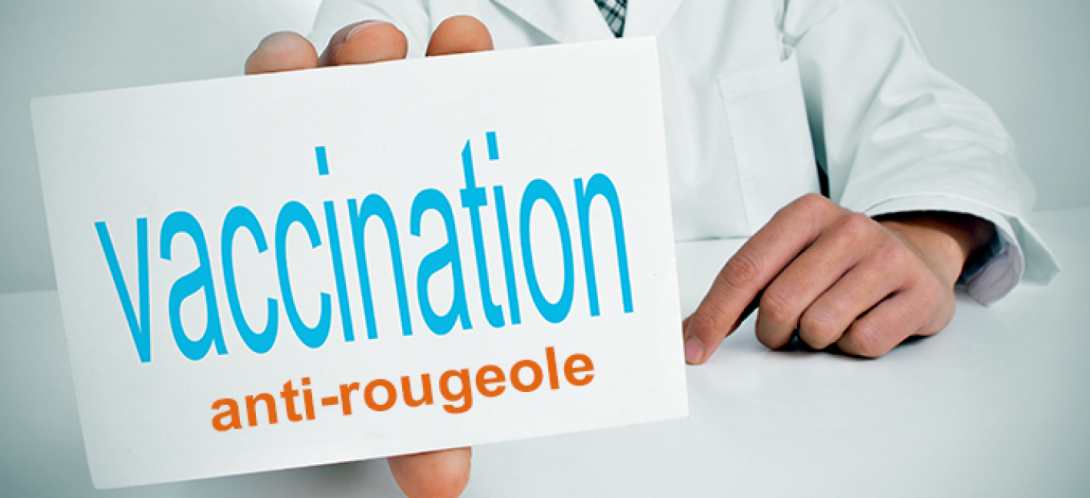
Vaccination, the only essential and effective protection
Vaccination is the only way to protect against infection.
The vaccination recommendation for infants and children is two doses, given at 9 then 12 months. If this vaccination has not been carried out, a catch-up is recommended for children, adolescents and adults born after 1963. People born before 1963 are considered immune (because measles was common then). It is also important that women of childbearing age are immunized before pregnancy or after childbirth.
Vaccination against measles protects you from the disease throughout your life. It also helps protect people around you who, for medical reasons or because they are too young, cannot be vaccinated.
In Switzerland, vaccination coverage against measles is still insufficient (87% on average, target 95%). However, it is high in Geneva (95%), where the population density and the multiplicity of contacts amplify the risk when a case occurs. Measles epidemics occur regularly in Switzerland, the last outbreak in Geneva having occurred in 2019.
The cantonal doctor's service therefore invites all people who are not vaccinated or who have doubts regarding their vaccination status (2 doses are necessary) to contact their treating doctor now for a possible update of their vaccinations.
Disease
Symptoms of measles can be flu-like, with fever and fatigue often accompanied by cough, cold and sore throat. Distinctive sign: People infected with the measles virus may suffer, after a few days, from a marked rash that spreads over the entire body.
Measles can occur at any age, not just during childhood. With the introduction of vaccination, measles, which previously affected a very large proportion of the population, declined significantly.
Epidemiological management
In the current situation, in order to limit the spread of the disease and protect vulnerable people, public health measures were quickly put in place. People likely to have been in contact with the three sick people during their contagious period were identified and contacted. While other viruses (like the flu or COVID) are actively circulating at the start of the cold season, the vast majority of the population has nothing to worry about.
The healthcare network – including primary care doctors and the emergency network – has been informed of the situation; health professionals will thus be able to more easily identify sick people and exposed contacts.
For any further information (media only): Dr. Aglaé Tardin, cantonal doctor, DSM, T. 079 583 38 84.
https://www.ge.ch/document/trois-cas-rougeole-geneve
Three cases of measles in Geneva
Post type
Press Releases
Publication date
November 8, 2023
Author
Department of Health and Mobility (DSM)
Published in
Taking care of your health in Geneva , Department of Health and Mobility (DSM)
Cases of measles have been identified in the canton of Geneva. The disease affected three adults. The situation, although not worrying at this stage, is being monitored very closely by teams from the Directorate General of Health (DGS).
Caused by a virus, measles is a highly contagious infectious disease. It can cause serious complications – such as pneumonia or encephalitis – requiring hospitalization, and which can lead to death in the most serious cases.
Vaccination, the only essential and effective protection
Vaccination is the only way to protect against infection.
The vaccination recommendation for infants and children is two doses, given at 9 then 12 months. If this vaccination has not been carried out, a catch-up is recommended for children, adolescents and adults born after 1963. People born before 1963 are considered immune (because measles was common then). It is also important that women of childbearing age are immunized before pregnancy or after childbirth.
Vaccination against measles protects you from the disease throughout your life. It also helps protect people around you who, for medical reasons or because they are too young, cannot be vaccinated.
In Switzerland, vaccination coverage against measles is still insufficient (87% on average, target 95%). However, it is high in Geneva (95%), where the population density and the multiplicity of contacts amplify the risk when a case occurs. Measles epidemics occur regularly in Switzerland, the last outbreak in Geneva having occurred in 2019.
The cantonal doctor's service therefore invites all people who are not vaccinated or who have doubts regarding their vaccination status (2 doses are necessary) to contact their treating doctor now for a possible update of their vaccinations.
Disease
Symptoms of measles can be flu-like, with fever and fatigue often accompanied by cough, cold and sore throat. Distinctive sign: People infected with the measles virus may suffer, after a few days, from a marked rash that spreads over the entire body.
Measles can occur at any age, not just during childhood. With the introduction of vaccination, measles, which previously affected a very large proportion of the population, declined significantly.
Epidemiological management
In the current situation, in order to limit the spread of the disease and protect vulnerable people, public health measures were quickly put in place. People likely to have been in contact with the three sick people during their contagious period were identified and contacted. While other viruses (like the flu or COVID) are actively circulating at the start of the cold season, the vast majority of the population has nothing to worry about.
The healthcare network – including primary care doctors and the emergency network – has been informed of the situation; health professionals will thus be able to more easily identify sick people and exposed contacts.
For any further information (media only): Dr. Aglaé Tardin, cantonal doctor, DSM, T. 079 583 38 84.
https://www.ge.ch/document/trois-cas-rougeole-geneve

Comment