Announcement

Collapse
No announcement yet.

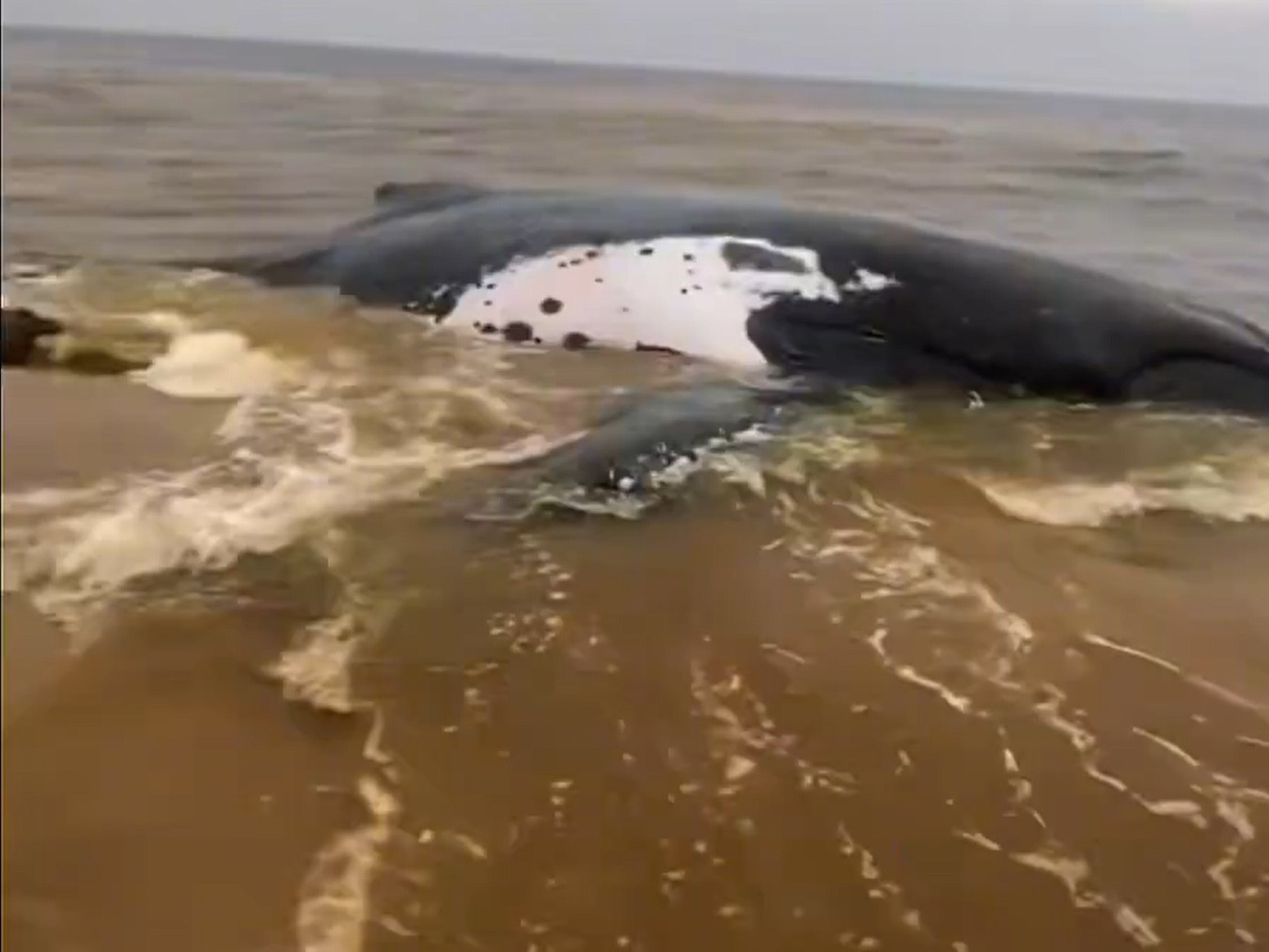
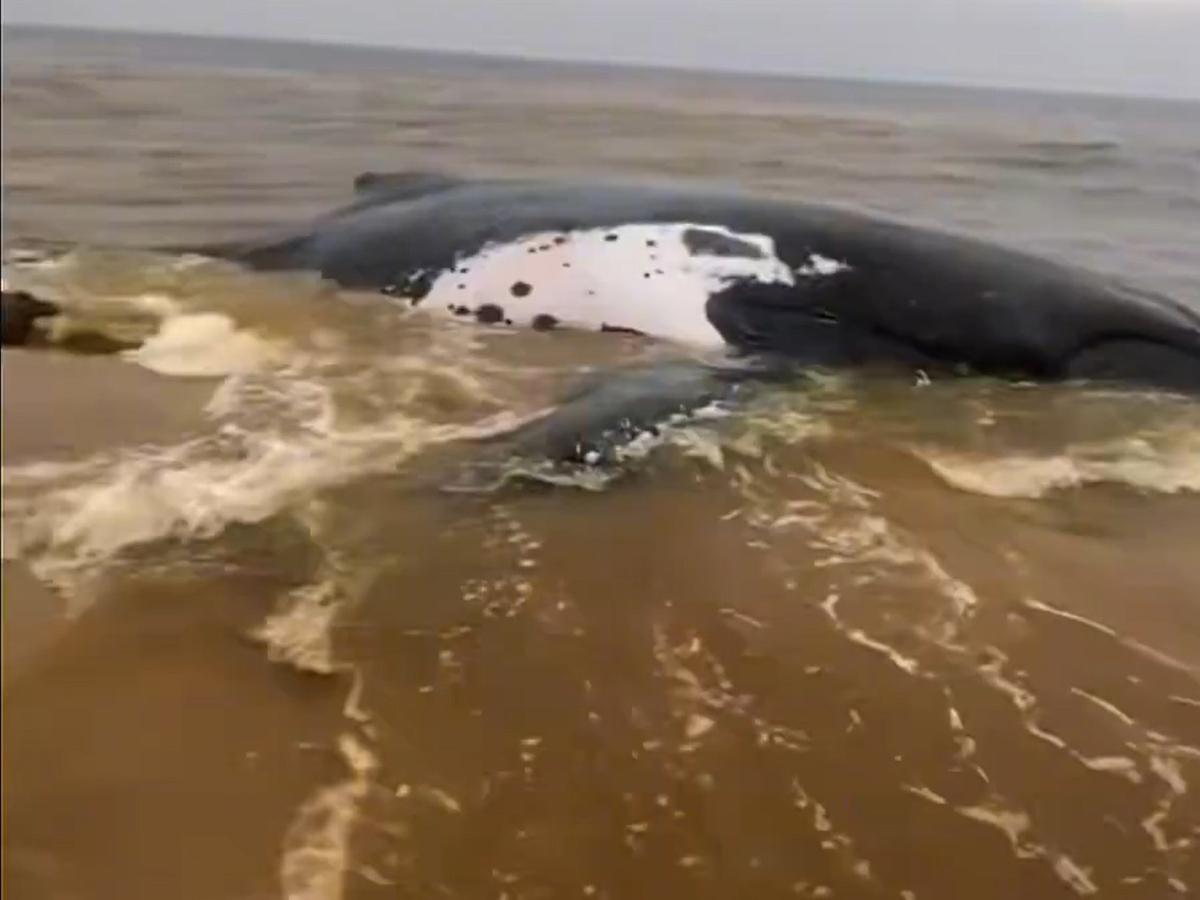
DRC - A whale washes ashore on the Atlantic coast in Muanda, Kongo Central province

Collapse
X
 
  • Filter
  • Time
  • Show
Clear All
new posts

  • DRC - A whale washes ashore on the Atlantic coast in Muanda, Kongo Central province

    Click image for larger version

Name:	image.png
Views:	98
Size:	138.1 KB
ID:	1037807
    /https://en.wikipedia.org/wiki/Moanda,_Democratic_Republic_of_the_Congo
    -------------------------------------------------------------------------------------------------------------------
    Translation Google

    DRC: A 15-meter whale washes ashore on the coast at Mwanda and dies despite the efforts of the ICCN

    by Desk Nature |July 2, 2026 | Biodiversity | 0 comments

    The inhabitants of Muanda, in the Kongo Central province, witnessed an exceptional and moving scene on Wednesday, July 1, 2026. A whale approximately 15 meters long washed up on the beach of this coastal city in the Democratic Republic of Congo.

    Alerted, teams from the Congolese Institute for Nature Conservation (ICCN) quickly went to the scene to try to return the cetacean to the water. Despite their efforts, the animal did not survive, sparking strong emotions among the local population and reigniting questions about the presence of large marine mammals in Congolese waters.

    The event also reignited the debate among local residents. While some claim to have never witnessed such a spectacle, others maintain that the presence of whales and dolphins along the Congolese coast is nothing out of the ordinary. Several fishermen assert that they have already observed these species off the coast of Muanda in previous years.

    Experts point out that the Atlantic waters bordering the DRC, particularly near the mouth of the Congo River, lie on the migratory routes of several cetacean species, notably humpback whales. Every year, between June and September, these mammals leave the cold waters of Antarctica to reach the warmer waters of the Gulf of Guinea, where they breed and give birth.

    Beyond the exceptional nature of this stranding, the incident highlights the difficulties faced by the ICCN's eco-guards. Lacking adequate logistical and technical resources, including lifting equipment, tugboats, and specialized veterinary assistance, the agents were unable to save the animal.

    The exact causes of this stranding remain unknown. According to experts, several factors could explain this type of phenomenon, including disease, the animal's age, a collision with a ship, or disorientation caused by noise and plastic pollution, which are increasingly affecting marine ecosystems.

    This unprecedented episode in Muanda reminds us, once again, of the richness but also the fragility of the marine biodiversity of the Congolese coast, as well as the need to strengthen the intervention capacities of the services responsible for its protection.
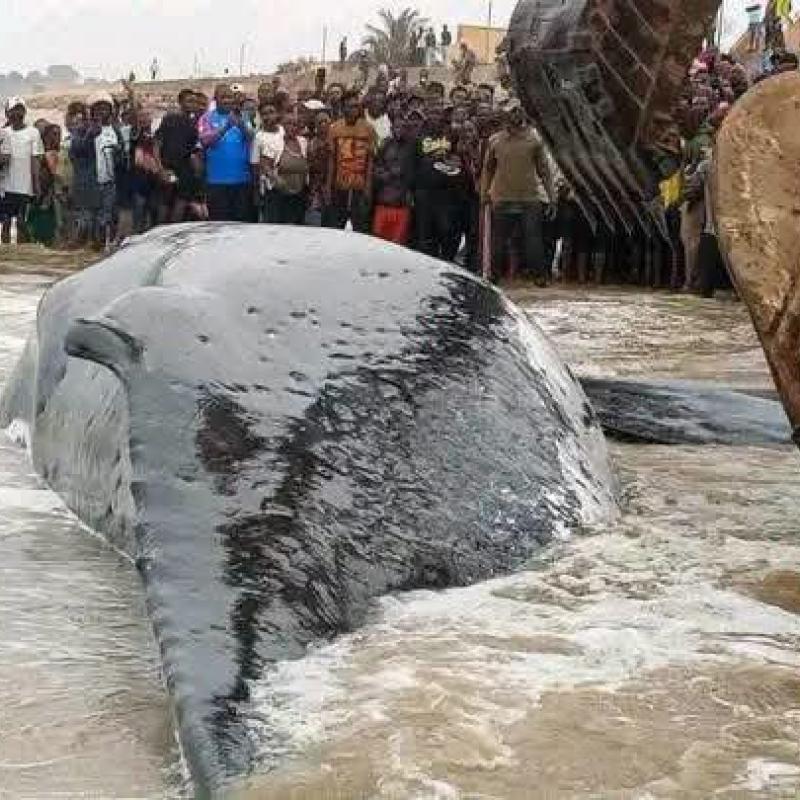
    Les habitants de Muanda, dans la province du Kongo Central, ont été témoins d’une scène aussi exceptionnelle qu’émouvante ce mercredi 1er juillet 2026. Une baleine d’environ 15 mètres de long s’est échouée sur la plage de cette cité côtière de la République démocratique du Congo.

    ----------------------------------------------------------------------------------
    Muanda: A whale washes ashore on the Atlantic coast

    July 2, 2026

    Muanda, July 2, 2026 (ACP).- A whale beached itself on Thursday on the Atlantic coast in Muanda in Kongo Central, in the southwest of the Democratic Republic of Congo, ACP observed.

    " The cetacean, still alive, found on the beach, attracted many curious onlookers who came to observe this unusual phenomenon. Officials from the territorial administration and those from the Congolese Institute for Nature Conservation (ICCN), present on the beach, were consulting in order to determine the circumstances of this stranding ," reported an ACP journalist.

    A heartbreaking scene

    This whale, beached since Tuesday, is dying in front of a distraught local population who, due to a lack of awareness, are approaching the animal dangerously without realizing the seriousness of the situation.

    Unlike rescue protocols deployed elsewhere in the world, the ICCN is experiencing difficulties in saving this cetacean.

    Faced with this lack of institutional response, the cetacean has become, for some, a mere food source. A short-sighted view that overlooks the crucial ecological role of this giant of the seas.

    This situation highlights a major deficiency: the lack of a national system dedicated to the protection of marine wildlife.

    More than just a minor incident, this stranding highlights the urgent need for the Democratic Republic of Congo to develop a genuine strategy for preserving its biodiversity.

    With the balance of our ecosystems threatened, this incident serves as a stark warning: protecting our natural heritage must become a national priority. It is high time we acted to ensure that the management of our natural resources finally reflects their true importance.

    It should also be noted that the stranding of a whale is a rare phenomenon on this part of the Congolese Atlantic coast, we have learned.

    ACP/M/KIT

    Muanda, 2 juillet 2026 (ACP).- Une baleine s'est échouée jeudi sur la côte atlantique à Muanda au Kongo Central, dans le sud-ouest de la République démocratique du Congo, a constaté l'ACP. « Le cétacé, encore vivant, retrouvé sur la plage, a attiré de nombreux curieux venus observer ce phénomène inhabituel, Les…


  • #2
    Translation Google

    Death of a whale on Muanda beach: ICCN warns local population

    Published on Fri, 03/07/2026 - 13:45 | Modified on Fri, 03/07/2026 - 14:51

    An unusual event is drawing crowds to the beach in Muanda (Kongo-Central) until the morning of Friday, July 3, 2026. A beached whale, which ultimately died after several unsuccessful attempts to refloat it, is the reason. The animal, estimated to be between 10 and 12 meters long, weighed around ten tons.

    The cetacean was found dead on Wednesday evening on the Congolese Atlantic coast. This particularly rare event attracted the attention of many onlookers in this area usually characterized by artisanal fishing and coastal shipping.

    Authorities, residents, and agents from the Congolese Institute for Nature Conservation (ICCN) mobilized. Attempts were made to return the animal to the Atlantic Ocean, its natural habitat, but without success.

    The discovery of this marine mammal has aroused astonishment and strong emotion among the residents of Muanda.

    According to several witnesses, the animal was still alive when it was discovered.

    However, the head of the Marine Park of Mangroves and provincial director of L'icône/Kongo-Central, De Dieu By'Ayombe, believes that nothing could have been done to save the animal.

    "When the whale washed ashore, we realized that these were just the last signs the whale had shown. But, it was no longer alive, it was truly dying."

    On the scene, some curious locals said they had seen bullet marks on the whale.

    On this subject, De Dieu By'Ayombe provides further clarification:

    "Those who were there observed that there were even holes, and thought they were bullet wounds. But, they were parasites that penetrate the skin of whales, which can hide zoonoses that are at the root of many diseases."

    Regarding health precautions, the director of the ICCN warns anyone who has been in contact with the animal. He assures that all measures are being taken to ensure that the animal is not consumed by the public.

    "It's a completely protected species of CTS. We are not allowed to share the meat or consume it. Everyone who has touched it must go to hospitals to be tested. We don't know what diseases it can transmit so far."

    This stranding also raises questions about the presence of whales in DRC waters and the means available to intervene quickly in the event of an emergency situation on the coast.

    Un évènement inédit attire du monde jusqu’à ce vendredi 3 juillet 2026 matin sur la plage de Muanda (Kongo-Central). Il s’agit de la présence d’une baleine échouée, qui est finalement morte, après plusieurs tentatives de remise à l’eau infructueuses. L’animal, dont la longueur est estimée entre 10 et 12 mètres, pèserait une dizaine de tonnes. Le cétacé été retrouvé mort depuis mercredi soir sur la côte congolaise de l’Atlantique. Cet événement particulièrement rare a attiré l’attention de beaucoup de curieux dans cette zone habituellement marquée par la pêche artisanale et le trafic côtier.

    Comment


    • #3
      Translation Google

      The whale that washed ashore in Muanda has finally been laid to rest.

      Published on Sun, 05/07/2026 - 21:34 | Modified on Sun, 05/07/2026 - 23:36

      It's the end of an emotionally charged week in the coastal town of Muanda (Kongo-Central). After several days of fascination, curiosity, and public mobilization, the whale, a sea monster nearly 12 meters long and weighing over 10 tons, was finally buried on Saturday, July 4th. The final event took place near the village of Makasamba, following a short traditional ceremony.

      Discovered last Thursday, the imposing marine mammal was taken to its final resting place in a procession that took on the air of a popular tribute.

      Funeral procession

      This unprecedented event is a reminder of the richness, but also the fragility, of the marine biodiversity of the Congolese coastline.

      Accompanied by a motorcade, brass bands, and an impressive crowd, the carcass of the giant whale, which had captivated Muanda for several days, made its final journey through the city, strapped to the back of a container ship. It was then buried in a specially prepared grave, set up by the Congolese Institute for Nature Conservation (ICCN).

      Unprecedented!

      Stranded a few days ago on the beach near Kilometer 5, to everyone's surprise, the whale attracted hundreds of onlookers. In neighborhoods, markets, and everywhere else, it became the topic of every conversation.

      Despite the efforts of the ICCN teams to return it to the Atlantic Ocean, the whale unfortunately did not survive. The circumstances of its death remain unknown to this day.

      Due to its considerable size, a crane had to be brought in from Matadi to move the carcass. Given the risks associated with its decomposition, burial had become essential.

      The sea monster lies underground

      ICCN officials have repeatedly called on residents not to touch the whale or consume its meat, pending possible analyses.

      Upon arriving at the site prepared as its final resting place, the whale was buried after a short traditional ceremony. This final act brought to a close an emotionally charged week.

      In Muanda, the passage of the giant of the seas will remain etched in the memories of the inhabitants for a long time.

      C’est la fin d’une semaine remplie d’émotions dans la ville côtière de Muanda (Kongo-Central). Après plusieurs jours de fascination, de curiosité et de mobilisation populaire, la baleine, un monstre marin de près de 12 mètres et pesant plus de 10 tonnes, a été finalement enterrée samedi 4 juillet. L’événement ultime a eu lieu vers le village Makasamba, après une courte cérémonie coutumière. Découvert jeudi dernier, l'imposant mammifère marin a été conduit vers sa dernière demeure lors d'un déplacement qui a pris des allures d'hommage populaire.

      Comment

      Working...
      X