
 Tweet
Tweet
The flu outbreak in Shanghai is about to reach its peak! Top-tier hospitals are seeing a surge in patients; how can you minimize waiting times?
Sina.com author's real-time report at 10:51 AM on December 12, 2025.
(Source: Shangguan News)
Shanghai is currently in flu season. On social media, many parents are sharing posts from classmates who have requested leave.
According to predictions from the Shanghai Center for Disease Control and Prevention, the flu epidemic in Shanghai will reach its peak from late December to early January next year.
During this period, long queues have started forming again at top-tier children's hospitals.
So, what service optimization measures have hospitals taken to cope with peak periods? What other options do parents have if they want to avoid long queues ?
Since December, Shanghai Children's Hospital has been packed with parents and children seeking medical treatment from morning till night.
In order to shorten the waiting time for hospital visits as much as possible, the hospital has taken a series of measures, such as offline guidance and diversion: instead of queuing for doctors to issue test orders, patients can go to the nurses' station to obtain pre-diagnosis test orders first.
Meanwhile, the hospital has also launched a "hospital-version home testing" service , allowing some children with mild symptoms to avoid going to the hospital.
How do I place an order? Open the JD.com homepage and enter "Shanghai Children's Hospital" in the search bar to be directly redirected to the hospital's quick test page.
Ms. Wu ordered a home flu test for her daughter, who attends kindergarten. A little over an hour later, a nurse came to her home to take a throat swab sample from the child.
After the test is submitted, the results can usually be seen on a mobile phone within one or two hours. Parents can then make an online appointment on the hospital's official internet hospital website to complete the follow-up visit and confirm whether flu medication is needed.
The Municipal Children's Hospital explained that the cost of the hospital-provided home testing service is the same as that of in-person medical treatment. If parents still feel that they need to go to the hospital after the test, they can take the home test results and do not need to go to the hospital for further testing.
The Municipal Center for Disease Control and Prevention stated that if the symptoms are not too serious, going to a community hospital for treatment is also a good option.
For example, Nanxiang Community Hospital has added evening clinics starting this month. These clinics not only offer pediatric Western medicine services, but also provide intravenous infusions and nebulizer treatments. There's almost no waiting; you can see a doctor as soon as you arrive. The doctors on duty have also completed full-time advanced training at Shanghai Children's Hospital.
The municipal CDC reminds the public that if you experience a fever exceeding 38°C accompanied by a cough or sore throat, you may have contracted the flu. Do not go to work or school while sick. You can choose to get tested at home to confirm your infection status, or seek medical attention at your local hospital and use antiviral medication under the guidance of a doctor.
China CDC: The rate of increase in the positive rate of influenza virus testing is slowing down.
On December 11, the Chinese Center for Disease Control and Prevention released the national sentinel surveillance data for acute respiratory infectious diseases (week 49, 2025).
Monitoring results showed that in week 49, the proportion of influenza-like illness (ILI) cases reported by sentinel hospitals nationwide to the total number of outpatient and emergency visits (ILI percentage) was 9.9%. The top three pathogens with the highest positive rates in respiratory samples from ILI cases at sentinel hospitals were influenza virus (54.2%), rhinovirus (5.2%), and respiratory syncytial virus (RSV) (4.0%). The top three pathogens with the highest positive rates in respiratory samples from hospitalized severe acute respiratory infections were influenza virus (22.1%), RSV (7.5%), and rhinovirus (7.1%). Monitoring results for other pathogens are shown in Table 1.
The monitoring results show regional differences between the north and south and differences among different age groups, as detailed in Tables 2 and 3.
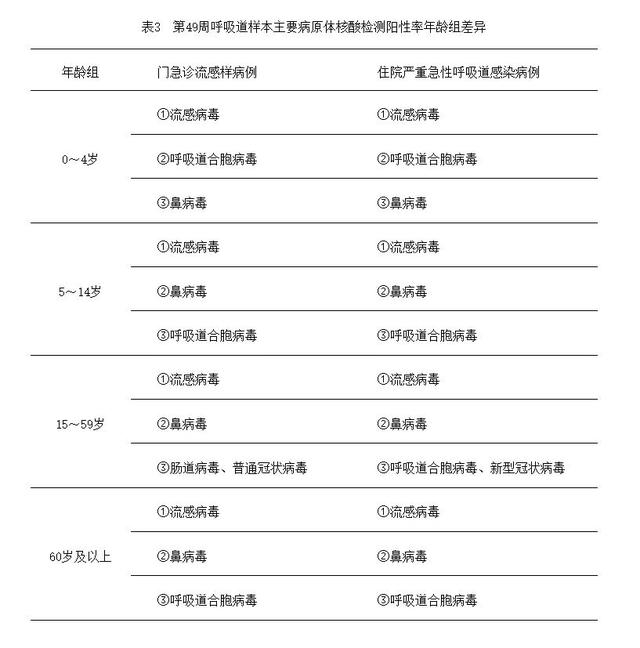
Analysis of nationwide fever clinic (clinic) treatment data, sentinel hospital outpatient and emergency department influenza-like illness case reports, and multi-pathogen detection results shows that all detected pathogens are known common pathogens, and no unknown pathogens or emerging infectious diseases caused by them were found. Recently, influenza virus has been the main detected pathogen, and the overall influenza epidemic is at a high prevalence level. The positive rate of influenza virus detection is on the rise, but the rate of increase is slowing. Influenza activity has decreased in most provinces in Northeast, North, Northwest, and Central China, while it continues to rise in some provinces in East, South, and Southwest China. The number of reported school outbreaks has decreased, and the positive rate of influenza virus detection in the 5-14 year old case group is significantly higher than in other age groups. The positive rate of respiratory syncytial virus (RSV) detection is on the decline, and the positive rate in the 0-4 year old case group is significantly higher than in other age groups. The positive rate of rhinovirus detection is showing a continuous decline. The positive rates of novel coronavirus and other monitored respiratory pathogens are generally at a low level.
Currently, my country has entered the peak season for respiratory infectious diseases, with the overall epidemic situation showing an upward trend. Influenza is at a high prevalence level, and respiratory syncytial virus (RSV) and rhinovirus also exhibit some activity. To prevent the spread of respiratory infectious diseases, it is recommended that key institutions and locations such as kindergartens, primary and secondary schools, and nursing homes conduct thorough health monitoring, promptly detect and manage outbreaks, and minimize their impact. The public is advised to take the following personal protective measures:
Actively get vaccinated against influenza: It is still recommended that everyone aged 6 months and older without contraindications to influenza be vaccinated, especially high-risk groups who are at higher risk of influenza infection and are more likely to develop severe illness after infection, such as medical staff, the elderly aged 60 and older, preschool children and primary and secondary school students, and patients with chronic diseases.
Wear masks properly: Wear a mask throughout the entire medical process; it is recommended to wear a mask in crowded places or when taking public transportation (such as airplanes, trains, subways, etc.), especially for the elderly and some patients with chronic underlying diseases, in order to reduce the risk of infection.
Maintain good hygiene habits: Cover your mouth and nose with a tissue, towel or elbow when coughing or sneezing; pay attention to hand hygiene and avoid touching your eyes, nose and mouth with unclean hands to reduce the risk of pathogen transmission.
Promote a healthy lifestyle: maintain a balanced diet, engage in moderate exercise, and get enough rest to strengthen your body's immunity. If you experience fever, cough, or other respiratory infection symptoms, wear a mask when in contact with others and ensure good indoor ventilation; seek medical attention promptly if necessary.
zhttps://k.sina.com.cn/article_5952915720_162d2490806702wu0c.html
Sina.com author's real-time report at 10:51 AM on December 12, 2025.
(Source: Shangguan News)
Shanghai is currently in flu season. On social media, many parents are sharing posts from classmates who have requested leave.
According to predictions from the Shanghai Center for Disease Control and Prevention, the flu epidemic in Shanghai will reach its peak from late December to early January next year.
During this period, long queues have started forming again at top-tier children's hospitals.
So, what service optimization measures have hospitals taken to cope with peak periods? What other options do parents have if they want to avoid long queues ?
Since December, Shanghai Children's Hospital has been packed with parents and children seeking medical treatment from morning till night.
In order to shorten the waiting time for hospital visits as much as possible, the hospital has taken a series of measures, such as offline guidance and diversion: instead of queuing for doctors to issue test orders, patients can go to the nurses' station to obtain pre-diagnosis test orders first.
Meanwhile, the hospital has also launched a "hospital-version home testing" service , allowing some children with mild symptoms to avoid going to the hospital.
How do I place an order? Open the JD.com homepage and enter "Shanghai Children's Hospital" in the search bar to be directly redirected to the hospital's quick test page.
Ms. Wu ordered a home flu test for her daughter, who attends kindergarten. A little over an hour later, a nurse came to her home to take a throat swab sample from the child.
After the test is submitted, the results can usually be seen on a mobile phone within one or two hours. Parents can then make an online appointment on the hospital's official internet hospital website to complete the follow-up visit and confirm whether flu medication is needed.
The Municipal Children's Hospital explained that the cost of the hospital-provided home testing service is the same as that of in-person medical treatment. If parents still feel that they need to go to the hospital after the test, they can take the home test results and do not need to go to the hospital for further testing.
The Municipal Center for Disease Control and Prevention stated that if the symptoms are not too serious, going to a community hospital for treatment is also a good option.
For example, Nanxiang Community Hospital has added evening clinics starting this month. These clinics not only offer pediatric Western medicine services, but also provide intravenous infusions and nebulizer treatments. There's almost no waiting; you can see a doctor as soon as you arrive. The doctors on duty have also completed full-time advanced training at Shanghai Children's Hospital.
The municipal CDC reminds the public that if you experience a fever exceeding 38°C accompanied by a cough or sore throat, you may have contracted the flu. Do not go to work or school while sick. You can choose to get tested at home to confirm your infection status, or seek medical attention at your local hospital and use antiviral medication under the guidance of a doctor.
China CDC: The rate of increase in the positive rate of influenza virus testing is slowing down.
On December 11, the Chinese Center for Disease Control and Prevention released the national sentinel surveillance data for acute respiratory infectious diseases (week 49, 2025).
Monitoring results showed that in week 49, the proportion of influenza-like illness (ILI) cases reported by sentinel hospitals nationwide to the total number of outpatient and emergency visits (ILI percentage) was 9.9%. The top three pathogens with the highest positive rates in respiratory samples from ILI cases at sentinel hospitals were influenza virus (54.2%), rhinovirus (5.2%), and respiratory syncytial virus (RSV) (4.0%). The top three pathogens with the highest positive rates in respiratory samples from hospitalized severe acute respiratory infections were influenza virus (22.1%), RSV (7.5%), and rhinovirus (7.1%). Monitoring results for other pathogens are shown in Table 1.
The monitoring results show regional differences between the north and south and differences among different age groups, as detailed in Tables 2 and 3.
Analysis of nationwide fever clinic (clinic) treatment data, sentinel hospital outpatient and emergency department influenza-like illness case reports, and multi-pathogen detection results shows that all detected pathogens are known common pathogens, and no unknown pathogens or emerging infectious diseases caused by them were found. Recently, influenza virus has been the main detected pathogen, and the overall influenza epidemic is at a high prevalence level. The positive rate of influenza virus detection is on the rise, but the rate of increase is slowing. Influenza activity has decreased in most provinces in Northeast, North, Northwest, and Central China, while it continues to rise in some provinces in East, South, and Southwest China. The number of reported school outbreaks has decreased, and the positive rate of influenza virus detection in the 5-14 year old case group is significantly higher than in other age groups. The positive rate of respiratory syncytial virus (RSV) detection is on the decline, and the positive rate in the 0-4 year old case group is significantly higher than in other age groups. The positive rate of rhinovirus detection is showing a continuous decline. The positive rates of novel coronavirus and other monitored respiratory pathogens are generally at a low level.
Currently, my country has entered the peak season for respiratory infectious diseases, with the overall epidemic situation showing an upward trend. Influenza is at a high prevalence level, and respiratory syncytial virus (RSV) and rhinovirus also exhibit some activity. To prevent the spread of respiratory infectious diseases, it is recommended that key institutions and locations such as kindergartens, primary and secondary schools, and nursing homes conduct thorough health monitoring, promptly detect and manage outbreaks, and minimize their impact. The public is advised to take the following personal protective measures:
Actively get vaccinated against influenza: It is still recommended that everyone aged 6 months and older without contraindications to influenza be vaccinated, especially high-risk groups who are at higher risk of influenza infection and are more likely to develop severe illness after infection, such as medical staff, the elderly aged 60 and older, preschool children and primary and secondary school students, and patients with chronic diseases.
Wear masks properly: Wear a mask throughout the entire medical process; it is recommended to wear a mask in crowded places or when taking public transportation (such as airplanes, trains, subways, etc.), especially for the elderly and some patients with chronic underlying diseases, in order to reduce the risk of infection.
Maintain good hygiene habits: Cover your mouth and nose with a tissue, towel or elbow when coughing or sneezing; pay attention to hand hygiene and avoid touching your eyes, nose and mouth with unclean hands to reduce the risk of pathogen transmission.
Promote a healthy lifestyle: maintain a balanced diet, engage in moderate exercise, and get enough rest to strengthen your body's immunity. If you experience fever, cough, or other respiratory infection symptoms, wear a mask when in contact with others and ensure good indoor ventilation; seek medical attention promptly if necessary.
zhttps://k.sina.com.cn/article_5952915720_162d2490806702wu0c.html