Announcement

Collapse
No announcement yet.

Cuba: 2025 Chikungunya

Collapse
X
 
  • Filter
  • Time
  • Show
Clear All
new posts

  • Cuba: 2025 Chikungunya

    Source: https://www.cubaheadlines.com/articles/307757


    Chikungunya Outbreak Detected in Matanzas Community
    Saturday, July 26, 2025 by James Rodriguez

    ​Health officials in Matanzas have confirmed a chikungunya outbreak in the España Republicana neighborhood, part of the Perico municipality, following a steady increase in patients experiencing non-specific fever since early July. According to an official press release from the Girón newspaper, tests conducted by the Pedro Kourí Institute of Tropical Medicine (IPK) detected the virus in several patient samples from the area.

    The identified cases exhibit high fever with sudden onset, severe joint pain, and swelling—symptoms typical of this viral disease transmitted by the Aedes aegypti mosquito. In response to the outbreak confirmation, local authorities swiftly activated a contingency plan to curb its spread...

    ​..

  • #2
    Source: https://en.cibercuba.com/noticias/20...ituacion-brote

    Cuban authorities update the situation of the chikungunya outbreak in Matanzas
    The chikungunya outbreak in Matanzas shows a slight decrease in cases of fever.
    By CiberCuba Editorial Team
    Thursday, July 31, 2025 - 2:25 PM​

    Health authorities in the province of Matanzas stated this Thursday that febrile cases have begun to decline following the chikungunya outbreak detected on July 16 in the España Republicana popular council, within the municipality of Perico.

    They explain that although reports of fever have slightly decreased, hygienic-epidemiological measures continue intensively to contain the virus and prevent its spread, reported the local newspaper Girón...


    Comment


    • #3
      Source: https://en.cibercuba.com/noticias/20...cion-sanitaria

      Government updates on the tense health situation in the town of Matanzas
      In Matanzas, Cuba, chikungunya is spreading in Perico, with no severe cases reported but symptoms that affect quality of life. Oropouche and dengue are also worrisome. Control measures are being intensified.
      Latest News
      By CiberCuba Editorial Team
      Wednesday, August 20, 2025 - 6:46 PM​

      The Ministry of Public Health (MINSAP) confirmed this Wednesday that there is currently active transmission of chikungunya in the municipality of Perico, Matanzas, where high levels of mosquito infestation persist, a situation that keeps the population on alert.

      According to Dr. Francisco Durán, director of Epidemiology, cases of chikungunya have been reported in the area, with no fatalities or serious patients, as revealed during his intervention for the official Canal Caribe.

      However, he stated that the symptoms —severe joint pain— significantly affect the quality of life of the patients.

      Work is still ongoing, it is not resolved. There are still cases in the Popular Council of España Republicana. What remains are isolated cases. And well, there are also cases in the municipality, on which work is currently being done, he assured.

      In addition to chikungunya, authorities confirmed the circulation of the Oropouche virus in 11 provinces and 24 municipalities across the country.

      "It is a little more widespread than dengue, although dengue is present in many places, but we are talking about transmission," he added...​

      Comment


      • #4
        Translation Google

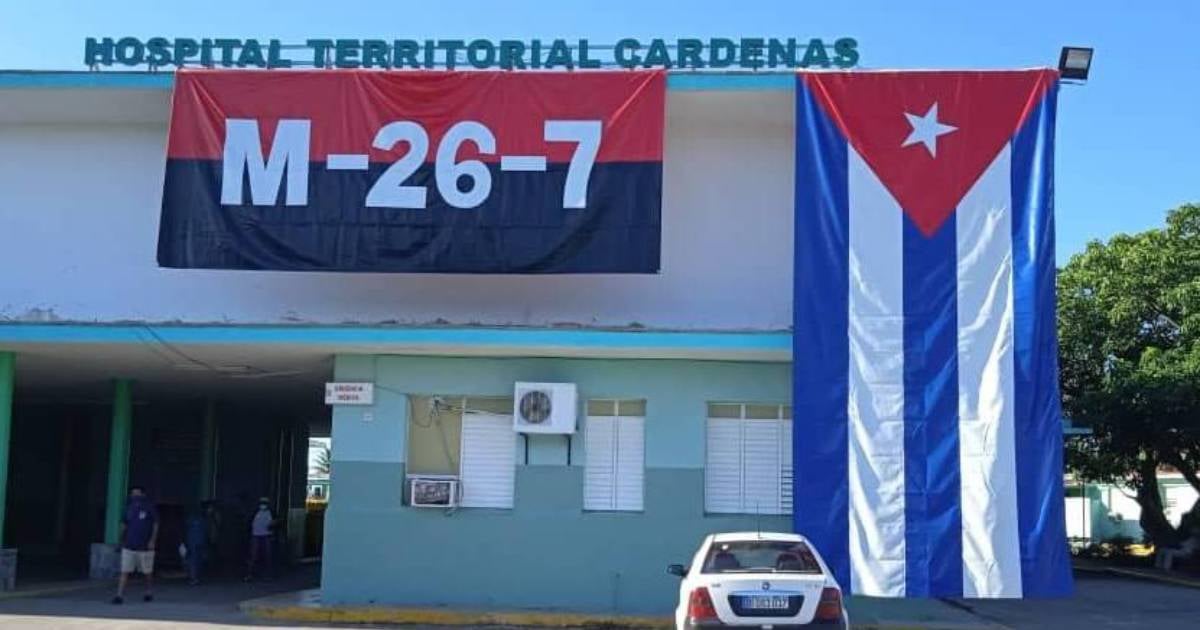
        He died of the virus: A Cuban's harsh denunciation after his grandfather's death in Cárdenas

        The health crisis in Matanzas is worsening with chikungunya, while authorities downplay the situation. Families are suffering from a lack of adequate medical care and insufficient resources.

        News
        By CiberCuba Editorial Team
        Thursday, October 2, 2025 - 3:16 PM

        The health crisis in Matanzas has just taken on a new human face, when Ariel Cabrera , actor, playwright and independent journalist, denounced on social networks the death of his grandfather Juan in Cárdenas due to “the virus” that is ravaging the province.

        “My grandfather Juan just died from the virus. Cárdenas, Matanzas ,” he wrote on his Facebook profile , in a message that reflects the pain of hundreds of families affected by the epidemic and the lack of official responses.

        The testimony comes amid the expansion of chikungunya , confirmed by the Ministry of Public Health in five provinces—Matanzas, Guantánamo, Santiago de Cuba, Pinar del Río and Havana—, although authorities insist that there are no critical cases or deaths directly related to it.

        Matanzas, epicenter of the epidemic

        Since July, the province has experienced a surge in fever cases that has paralyzed daily life in municipalities such as Perico, Martí, Jovellanos, and Cárdenas. The population is facing high fevers, vomiting, and debilitating pain, without sufficient medication to relieve the symptoms.

        Hospitals, like those in Provincial Faustino Pérez, are under increasing pressure, while entire families find themselves confined to their homes caring for multiple patients at the same time. The situation is worsening with garbage accumulating in the streets and neighborhoods, power outages, and a lack of resources for pest control.

        Citizen pain and official silence

        Although the Pan American Health Organization and the United States Embassy in Havana have themselves warned of the risks of the disease —especially among the elderly, pregnant women, and people with chronic illnesses—Cuban authorities insist that the health system “is not bankrupt” and that there are no critical patients.

        However, denunciations like Cabrera's highlight the gap between official discourse and the reality in the shelters. "When one falls, many others fall around it," said a neighbor a few days ago in Santa Marta, a neighborhood near Varadero, where overflowing garbage dumps sit alongside children's clubs and polyclinics.

        A silent emergency

        Chikungunya is not usually fatal, but it causes persistent joint pain and a feeling of physical discomfort that lasts for months. In a country marked by a lack of medicine and misinformation, each death—like the one denounced by Cabrera—becomes a symbol of a system incapable of protecting its citizens in the midst of a crisis.

        In Matanzas, where people are already talking about a "red alert" for the Aedes aegypti mosquito , outrage is growing at the same rate as the contagion. The death of Grandpa Juan is not just a family tragedy, but a call for attention to a health emergency that the authorities prefer to cover up while the population continues to pay the highest price.

        ...

        La crise sanitaire à Matanzas s'aggrave avec le chikungunya, tandis que les autorités minimisent la situation. Les familles souffrent du manque de soins médicaux appropriés et de ressources insuffisantes.

        Comment


        • #5
          Source: https://globalnation.inquirer.net/29...-food-medicine

          Cuba battles chikungunya outbreak despite shortages of food, medicine
          Agence France-Presse / 10:46 AM November 21, 2025

          ​HAVANA — Cuba has been gripped by an outbreak of the viral disease chikungunya, as it battles shortages of clean water, food, fuel and medicine, during its worst economic crisis in decades.

          Island residents have no choice but to ride out the ailment with little to eat or basic medicines to relieve fever and joint pain that can be debilitating but rarely fatal.

          “Everything hurts,” 81-year-old Pilar Alcantara told AFP, lying weakly on a couch in her dilapidated living room in Old Havana.

          “I can’t walk.” She lives alone.​

          The virus first emerged in Cuba’s western Matanzas province in July, but is now in all 15 provinces of the country of 9.7 million people.

          Simultaneously, the communist island has been afflicted by outbreaks of dengue, Zika, Oropouche and yellow fever — all mosquito-borne, like chikungunya.

          “Everyone here has gotten it (chikungunya),” Eva Cristina Quiroga, 74, said as she waited outside her building in Havana while it was being fumigated for mosquitos.​

          Medicines ‘not available’

          Francisco Duran, head of epidemiology at the public health ministry (Minsap) said more than 47,000 Cubans were diagnosed with chikungunya this week alone — double last week’s number.

          Last week, he reported that nearly a third of Cuba’s inhabitants had contracted chikungunya or dengue in recent weeks.​..

          Comment


          • #6
            Translation Google

            An out-of-control chikungunya epidemic in Cuba

            AFP
            Friday, November 21, 2025 5:48 PM
            UPDATE Friday, November 21, 2025 5:48 PM

            Having emerged in July in a western Cuban province, the chikungunya virus has spread throughout the island in recent weeks, with a sharp rise in the number of cases, amid a severe economic crisis marked by shortages of medicine and food.

            "I'm in pain all over" and "I can't walk," laments 81-year-old Pilar Alcantara, who lives alone in the Jesus Maria neighborhood of Havana, from the sofa in her living room where she has been bedridden for several days.

            The octogenarian was one of the last to contract the virus in her block, where some residents, who fell ill a month or two ago, are still complaining of after-effects, including joint pain, typical of this disease.

            "Here, everyone has been infected," Eva Cristina Quiroga, 74, told AFP, as she waited at the entrance of her building where fumigations had just been carried out for the first time to combat the mosquitoes that transmit the virus.

            The chikungunya epidemic, which emerged in July in the province of Matanzas (west), neighboring that of Havana, has already spread to the fifteen provinces of the country, where outbreaks of dengue and oropouche have also been reported.

            Chikungunya "is the main arboviral disease that affects us and the whole country," said Francisco Duran, head of epidemiology at the Ministry of Health, on Thursday, who has been communicating the number of recorded cases daily on television since the previous day.

            According to the expert, more than 47,000 Cubans have been diagnosed this week, double the number from last week, "which reflects the complexity of the disease."

            On Thursday, "627 new or suspected cases of the disease" were reported, but these figures do not reflect the severity of the outbreak, he acknowledged, because they only take into account patients who consult a doctor.

            Last week, the official indicated that approximately 30% of the 9.7 million Cubans had already contracted chikungunya or dengue during this epidemic.

            Drug shortage


            For the residents of the Jesus Maria neighborhood, recurring power cuts and chronic lack of food and medicine make the infection, which can cause a high fever for several days, even more difficult to contract.

            "You have to stay lying down, like I did," because "here we lack medication" to alleviate the symptoms, 61-year-old Fidela Freire told AFP. "You can't even buy chicken" because you don't have the money, she added.

            The chikungunya epidemic is hitting an island already weakened by a severe economic crisis, the worst in thirty years. The lack of foreign currency has eroded public services, particularly healthcare, and prevention efforts, such as fumigation, are hampered by fuel shortages.

            In the west of the island, hit three weeks ago by Hurricane Melissa, the situation is even more difficult, with more than 642 health centers damaged according to the UN.

            Cuba has faced severe dengue epidemics in the past. But chikungunya is a new disease. It first arrived on the island in 2014, as part of a regional epidemic that also affected Brazil, Colombia, Haiti, and the Dominican Republic.

            At the time, health authorities had managed to quickly control a very small outbreak, located in Santiago de Cuba.

            This time, the epidemic became uncontrollable due to "lack of hygiene, accumulated waste, stagnant water" stored in cisterns on homes to compensate for the lack of running water, which has affected up to three million Cubans this year, according to authorities.

            On Thursday, twenty chikungunya patients were in critical condition, according to the Ministry of Health. To date, no deaths have been officially reported.

            This epidemic further weakens the Cuban economy, already subject to a wave of mass emigration and low levels of productivity.

            "Now I work when I can, because I have been prescribed absolute rest," Pedro Gonzalez, a 59-year-old driver who suffers from serious leg damage due to the disease, told AFP.​

            Comment


            • #7
              Translation Google

              In Cuba, an epidemic of chikungunya and dengue fever has killed 33 people, including 21 children.

              Jacques Vilus
              Tuesday, December 2, 2025

              Health authorities on the island revealed alarming figures on Tuesday related to the spread of mosquito-borne viruses. The infrastructure crisis and the shortage of drinking water, which forces residents to store water in precarious conditions, are contributing to the proliferation of disease vectors.

              This grim toll highlights the fragility of the Cuban healthcare system in the face of tropical epidemics. The Cuban Ministry of Health announced on Tuesday, December 2nd, that 33 people had died from chikungunya and dengue fever. This figure is all the more alarming as it primarily affects minors: among the victims are 21 children. The epidemic, which has been raging for several months, combines two viral diseases transmitted by mosquitoes (mainly of the Aedes genus). According to the Deputy Minister of Health, Carilda Peña, the majority of deaths are attributed to the chikungunya virus. While this disease generally causes debilitating joint pain but is rarely fatal, it has proven particularly virulent during this outbreak. Dengue fever, whose symptoms resemble those of severe flu (fever, headaches), has claimed 12 lives.

              Rapid spread facilitated by the crisis

              The initial outbreak of this dual epidemic was detected last July in the province of Matanzas, located in the west of the island. Within five months, the virus had spread to all 15 provinces of the country, exposing a population of approximately 10 million. While Cuba had managed to contain a previous chikungunya epidemic in 2014 thanks to its renowned preventive medicine network, the current situation is exacerbated by the deep economic and infrastructural crisis the island is experiencing. Health authorities themselves have pointed to environmental and social factors that have accelerated the contagion. Carilda Peña cited "poor hygiene" and the accumulation of waste in certain urban areas. Above all, the vice-minister criticized the population's survival strategies in the face of failing public services: "the storage of water in reservoirs by the population to compensate for the shortage of drinking water." These stagnant water reserves, often stored at home without adequate protection due to the lack of running water, provide ideal breeding grounds for mosquitoes, making fumigation campaigns less effective. This resurgence of vector-borne diseases adds to the daily hardships faced by Cubans, already struggling with power outages and food shortages, and poses a major new challenge to the Havana government.

              Two viruses, one vector

              Chikungunya causes a sudden onset of fever and severe joint pain. The name means "the one who bends over" in the Makonde language, referring to the hunched posture of those afflicted.

              Dengue fever, also known as "tropical flu," manifests as high fever, headaches, and retro-orbital pain. Severe forms (dengue hemorrhagic fever) can be fatal.

              The two viruses are not transmitted from person to person, but only through the bite of infected mosquitoes.

              Les autorités sanitaires de l'île ont révélé mardi un bilan inquiétant lié à la propagation de virus transmis par les moustiques. La crise des infrastructures et la pénurie d'eau potable, qui force les habitants à stocker l'eau de manière précaire, favorisent la prolifération des vecteurs de la maladie.

              Comment

              Working...
              X