Check out the FAQ,Terms of Service & Disclaimers by clicking the
link. Please register
to be able to post. By viewing this site you are agreeing to our Terms of Service and Acknowledge our Disclaimers.
FluTrackers.com Inc. does not provide medical advice. Information on this web site is collected from various internet resources, and the FluTrackers board of directors makes no warranty to the safety, efficacy, correctness or completeness of the information posted on this site by any author or poster.
The information collated here is for instructional and/or discussion purposes only and is NOT intended to diagnose or treat any disease, illness, or other medical condition. Every individual reader or poster should seek advice from their personal physician/healthcare practitioner before considering or using any interventions that are discussed on this website.
By continuing to access this website you agree to consult your personal physican before using any interventions posted on this website, and you agree to hold harmless FluTrackers.com Inc., the board of directors, the members, and all authors and posters for any effects from use of any medication, supplement, vitamin or other substance, device, intervention, etc. mentioned in posts on this website, or other internet venues referenced in posts on this website.
We are not asking for any donations. Do not donate to any entity who says they are raising funds for us.
Arzouma Kompaore
Published yesterday at 5:58 PM CET
Alberta's poultry industry is preparing for the annual migration of waterfowl, a phenomenon now synonymous with increased vigilance after a 2025 season marked by a resurgence of avian influenza.
With nine cases confirmed in Canada since the beginning of 2026, none of them in Alberta, producers like Scott Olson , a turkey farmer near Wetaskiwin, are taking extra precautions.
"I am very careful not to go into marshes or where migratory birds gather before going to our facilities ," he emphasizes.
It has suffered three outbreaks since 2022, each of which led to the culling of its poultry by the Canadian Food Inspection Agency.
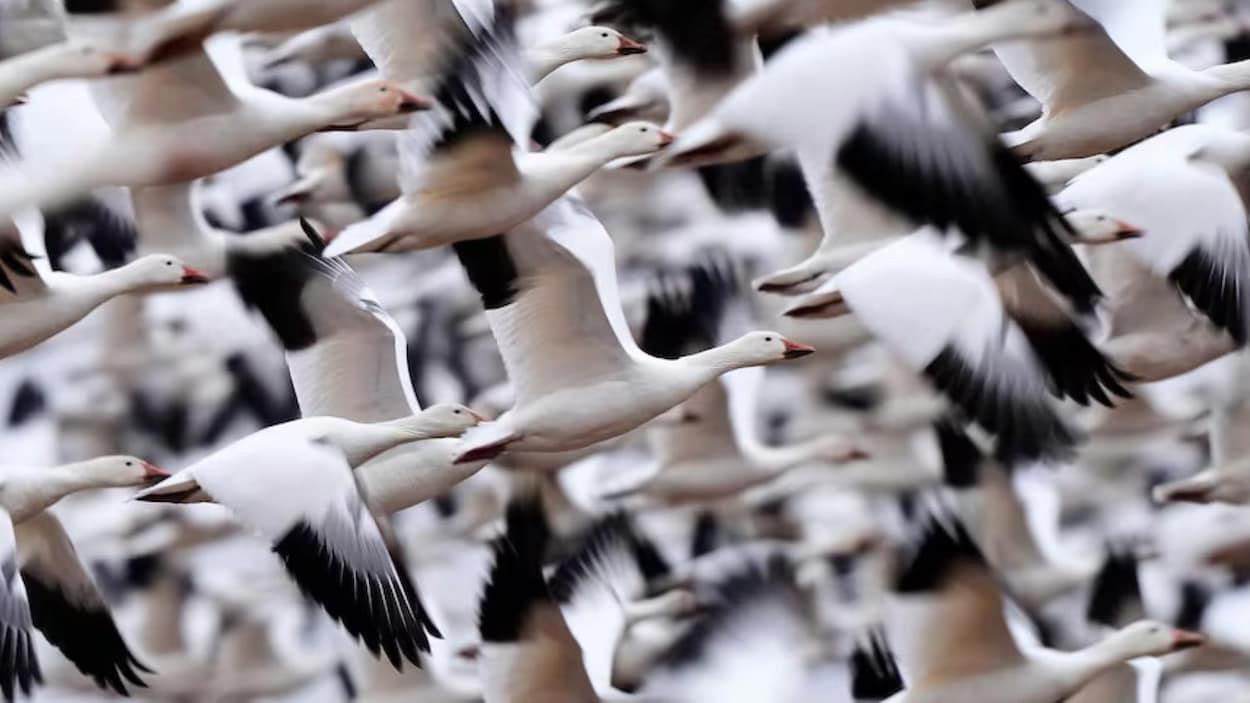
The disease, naturally carried by wild birds such as snow geese, is spread through saliva and droppings. Since December 2021, it has caused the death of more than 2.5 million birds in Alberta and 17 million nationally.
It starts in one barn, then spreads to another a day or two later.
A quote fromScott Olson, turkey farmer.
Faced with this threat, biosecurity measures have become the norm on its farms.
These include the establishment of controlled access zones and rigorous disinfection, as well as dedicated equipment for each building.
"I hope not to contaminate anything by going in and not to bring anything back outside ," explains Mr. Olson , who also limits access to his farm during peak migration periods.
A surge in avian flu cases last year
The year 2025 saw 26 confirmed outbreaks in Alberta, a considerably higher number than the six cases in 2024.
According to the provincial Ministry of Agriculture and Irrigation, one case was linked to spring migration, with the others occurring between September and December. There were 60 cases in 2022 and 20 in 2023.
This trend mirrors that observed in wild animals, where the number of cases peaked in 2022 with 257 infected animals, closely followed by 254 last year.
According to Teryn Girard of Prairie Livestock Veterinarians , these fluctuations are likely correlated with migratory bird activity.
When weather conditions change, there may be more mixing between migratory birds or a change in their route , she says.
She attributes the decline in cases since the record highs of 2022 to significant improvements in mitigation measures by the commercial industry.
Vigilance remains essential.
According to the provincial government, last year's cases serve as a reminder of the need to prepare for spring migrations.
Given the increased spread of the virus among wild waterfowl, such as ducks and geese, and the transmission to domestic farms observed in the fall, many farmers should review their biosecurity practices, procedures and training , a statement said.
Although no cases have been reported to date in Alberta in 2026, nine cases have been confirmed elsewhere in Canada: three in British Columbia, three in Nova Scotia, two in Quebec and one in Ontario, including two in wild animals.
Federal authorities reiterate that these continued detections of avian influenza are a strong reminder for all farmers to remain vigilant .
Face à la migration printanière, les éleveurs de l'Alberta durcissent les mesures de biosécurité pour éviter le retour dévastateur de la grippe aviaire
 Tweet
Tweet
 ...
...


Comment