
 Tweet
Tweet
Translation Google
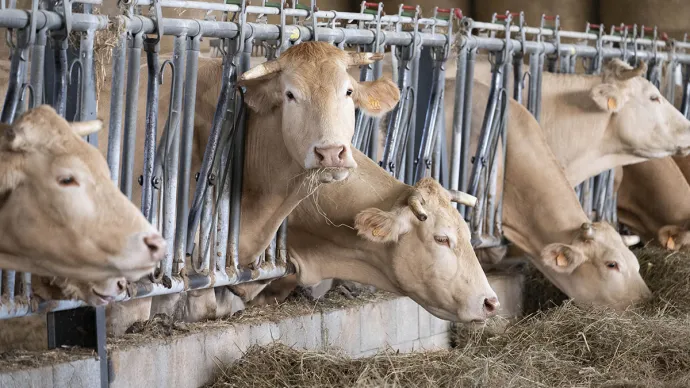
Xavier Remongin/agriculture.gouv.fr
December 12, 2025 Press Release
Contagious nodular dermatosis (CND): strengthening of measures in response to the evolving health situation in Occitanie
While the health situation regarding chronic pancreatitis (CP) has stabilized in the Auvergne-Rhône-Alpes region thanks to effective control measures, it remains a concern in Occitanie. Two new outbreaks were confirmed on December 9th and 10th, respectively in Ariège and Hautes-Pyrénées. The situation necessitates intensified efforts to eradicate the disease.
Establishment of a new regulated zone
A new regulated zone (ZR6) is established around these two hotspots, covering all or part of the following departments: Ariège, Hautes-Pyrénées, Haute-Garonne, Gers, Aude, and Pyrénées-Atlantiques. As with the five previously established regulated zones in France, this zone includes:
Faced with the sudden deterioration of the health situation, the Ministry of Agriculture has decided to expand the control measures by establishing a vaccination zone covering the departments of Aude, Haute-Garonne, Gers, Pyrénées-Atlantiques (excluding municipalities already located in regulated zones), and Landes. The measures implemented in this zone include: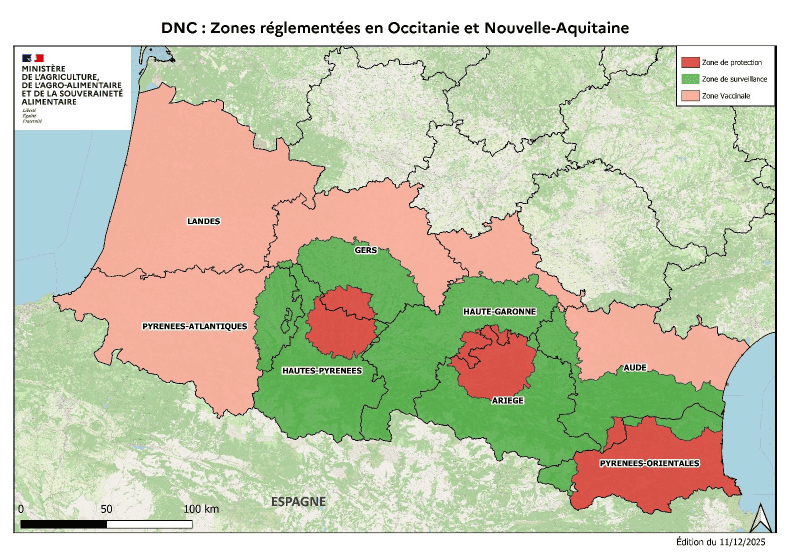
Strengthened national measures until January 1st
Furthermore, to limit the spread of the virus, the following measures apply throughout the national territory until January 1st :
In addition to fully covering vaccination costs , the Ministry continues to support farmers whose herds are affected by the disease. The depopulation of their flocks is a dramatic event, which the public authorities are fully aware of: psychological support is therefore being offered to farmers. Furthermore, the compensation scheme has been strengthened and payments are being processed as quickly as possible.
The outbreaks detected in Ariège and Hautes-Pyrénées are located more than 100 km from the nearest affected department (Pyrénées-Orientales), which far exceeds the range of the insect vectors of the disease (less than 5 km). Strict adherence to the bans and restrictions on cattle movement is crucial to preventing the long-distance spread of the virus. Otherwise, the shortcomings of a few could undo the efforts made by many farmers since the start of the epidemic.
Enhanced road checks are therefore being put in place to ensure compliance with these measures, and investigations are systematically carried out in the event of a suspected outbreak .
Movement restrictions are an integral part of the proven strategy to eradicate CND: in fact, three restricted zones have already been lifted. This eradication strategy was validated in July by the National Committee for the Orientation of Animal and Plant Health Policy, which brings together agricultural professionals, veterinarians, animal health groups, and scientists specializing in this disease. On December 9th, the majority of members of the National Committee reaffirmed their confidence in the strategy implemented. Cough disease is a strictly animal, viral disease that is not transmissible to humans, neither through contact with infected cattle, nor through the consumption of products derived from these animals (meat, milk, cheese), nor through insect bites. It spreads between cattle through the movement of infected animals or via insect vectors (horseflies and biting flies).
Everything you need to know about the DNC .
...
----------------------------------------------------------------------------------------------
December 15, 2025 Press Release
Annie Genevard's visit to Occitanie regarding the health situation related to contagious nodular dermatosis (CND)
...
During a visit to Occitanie, Annie Genevard, Minister of Agriculture, Agri-food and Food Sovereignty, wanted to organize a time for discussion on the health situation related to contagious nodular dermatosis (CND) by bringing together all the representatives of local agricultural professionals.
The discussions focused on the health strategy to eradicate DNC and the deployment of vaccination in Occitanie, following the announcement on December 12 of the creation of a vaccine sanitary cordon around the Pyrenees, aimed at protecting the Occitan livestock and, more broadly, all French cattle herds.
With the Minister having opened the dialogue for an adjustment of the delimitation of the vaccination zone, the representatives of the professionals have committed to sending the Minister a request to extend this vaccination cordon to two other departments, Tarn and Hérault.
The Minister also decided to establish a scientific dialogue unit starting tomorrow, composed of professional representatives nominated by the Prefect of the Occitanie region and the President of the Occitanie Regional Council, as well as scientists from institutions recognized for their expertise in animal health. This body will be tasked with examining, as quickly and independently as possible, the proposals formulated in Occitanie, with regard to the imperative of protecting livestock.
The expert scientific members will be appointed from within the National Society of Veterinary Technical Groups (SNGTV), the National Agency for Food, Environmental and Occupational Health Safety (Anses), the Center for International Cooperation in Agricultural Research for Development (Cirad) and the National Veterinary School of Toulouse (ENVT). Cough disease is a strictly animal, viral disease that is not transmissible to humans, neither through contact with infected cattle, nor through the consumption of products derived from these animals (meat, milk, cheese), nor through insect bites. It spreads between cattle through the movement of infected animals or via insect vectors (horseflies and biting flies).
Consult the DNC status report

-------------------------------------------------------------------------------------
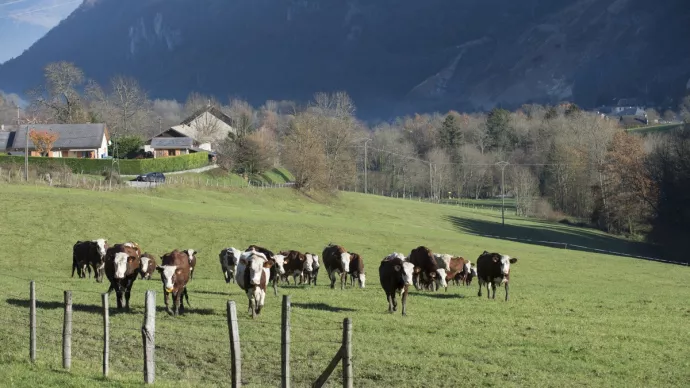
Pascal Xicluna/agriculture.gouv.fr
December 15, 2025 Info +
Contagious lumpy skin disease of cattle (CLSD): current situation
Candida nephritis (CN) was first detected in France on June 29, 2025, in Savoie. This viral disease, which is highly detrimental to the health of cattle (potentially leading to death), results in significant production losses in infected herds. CN is not transmissible to humans, neither through contact with infected cattle, nor through the consumption of products from contaminated cattle, nor through the bites of vector insects.
News
To limit the spread of the virus, the following measures apply throughout the national territory until January 1st :
Between June 29 and December 14, 2025, a total of 113 outbreaks were detected in France: Savoie (32), Haute-Savoie (44), Ain (3), Rhône (1), Jura (7), Pyrénées-Orientales (21), Doubs (1), Ariège (1) and Hautes-Pyrénées (1), Haute-Garonne (1), Aude (1).
Control measures
For the protection of French cattle herds, it is essential to continue the control measures defined since the beginning of the emergence of CND in the territory:
Regulated zones are established by prefectoral decree around each detected outbreak of non-communicable diseases (NCDs). They include:
Six regulated zones have been established in France:
To learn more about the disease: consult our frequently asked questions .
...
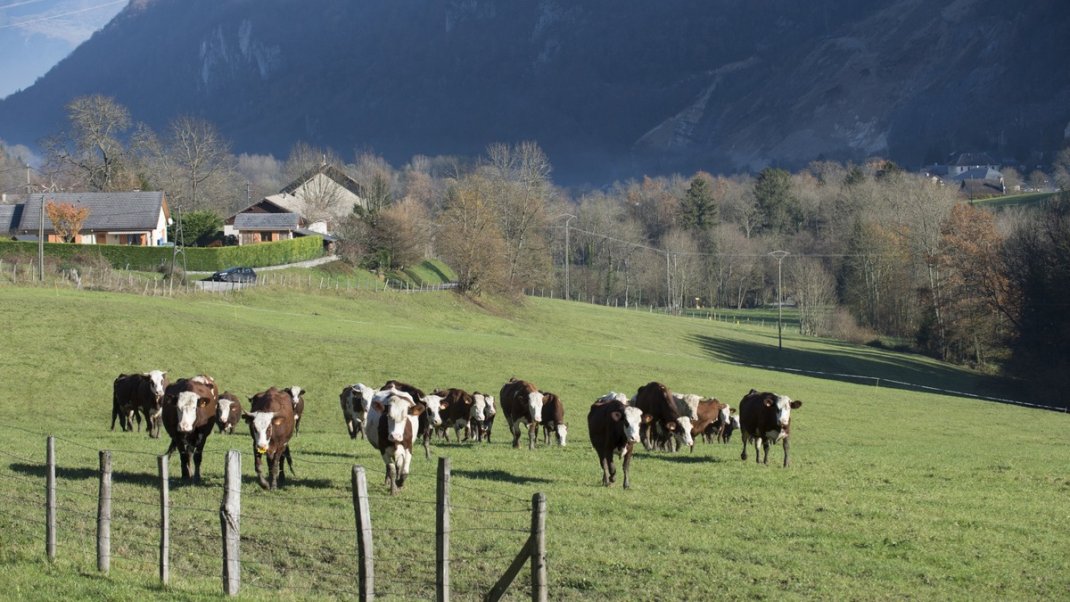
Xavier Remongin/agriculture.gouv.fr
December 12, 2025 Press Release
Contagious nodular dermatosis (CND): strengthening of measures in response to the evolving health situation in Occitanie
While the health situation regarding chronic pancreatitis (CP) has stabilized in the Auvergne-Rhône-Alpes region thanks to effective control measures, it remains a concern in Occitanie. Two new outbreaks were confirmed on December 9th and 10th, respectively in Ariège and Hautes-Pyrénées. The situation necessitates intensified efforts to eradicate the disease.
Establishment of a new regulated zone
A new regulated zone (ZR6) is established around these two hotspots, covering all or part of the following departments: Ariège, Hautes-Pyrénées, Haute-Garonne, Gers, Aude, and Pyrénées-Atlantiques. As with the five previously established regulated zones in France, this zone includes:
- a protection zone , within a 20 km radius around each outbreak, where movement restrictions are reinforced;
- a surveillance zone , within a radius of 50 km around each outbreak, where reinforced preventive measures are applied (increased veterinary surveillance, disinsection), as well as restrictions on the movement of cattle.
Faced with the sudden deterioration of the health situation, the Ministry of Agriculture has decided to expand the control measures by establishing a vaccination zone covering the departments of Aude, Haute-Garonne, Gers, Pyrénées-Atlantiques (excluding municipalities already located in regulated zones), and Landes. The measures implemented in this zone include:
- mandatory vaccination of all cattle, fully covered by the State ;
- the prohibition of any cattle leaving the vaccination zone, except to a slaughterhouse.
Strengthened national measures until January 1st
Furthermore, to limit the spread of the virus, the following measures apply throughout the national territory until January 1st :
- Festive gatherings of cattle are prohibited;
- notifications of cattle movements must be made within 24 hours of the movement (instead of seven days);
- Means of transport for cattle must be disinfected if they are moved outside of France.
In addition to fully covering vaccination costs , the Ministry continues to support farmers whose herds are affected by the disease. The depopulation of their flocks is a dramatic event, which the public authorities are fully aware of: psychological support is therefore being offered to farmers. Furthermore, the compensation scheme has been strengthened and payments are being processed as quickly as possible.
- Rapid compensation: the replacement value of each bovine is assessed (based on its age, genetics, production potential, etc.) by independent experts. Within days of the culling, an advance payment is made by the State to the farmers, without waiting for the experts' assessment, to allow them to rebuild their cash flow.
- Period of unproductivity taken into account: the period of unproductivity of the farm is also compensated, according to a compensation scale taking into account the period during which renewal is impossible as long as the movement of animals is prohibited on the area of the farm, as well as a duration of organization of repopulation.
The outbreaks detected in Ariège and Hautes-Pyrénées are located more than 100 km from the nearest affected department (Pyrénées-Orientales), which far exceeds the range of the insect vectors of the disease (less than 5 km). Strict adherence to the bans and restrictions on cattle movement is crucial to preventing the long-distance spread of the virus. Otherwise, the shortcomings of a few could undo the efforts made by many farmers since the start of the epidemic.
Enhanced road checks are therefore being put in place to ensure compliance with these measures, and investigations are systematically carried out in the event of a suspected outbreak .
Movement restrictions are an integral part of the proven strategy to eradicate CND: in fact, three restricted zones have already been lifted. This eradication strategy was validated in July by the National Committee for the Orientation of Animal and Plant Health Policy, which brings together agricultural professionals, veterinarians, animal health groups, and scientists specializing in this disease. On December 9th, the majority of members of the National Committee reaffirmed their confidence in the strategy implemented. Cough disease is a strictly animal, viral disease that is not transmissible to humans, neither through contact with infected cattle, nor through the consumption of products derived from these animals (meat, milk, cheese), nor through insect bites. It spreads between cattle through the movement of infected animals or via insect vectors (horseflies and biting flies).
Everything you need to know about the DNC .
...
----------------------------------------------------------------------------------------------
December 15, 2025 Press Release
Annie Genevard's visit to Occitanie regarding the health situation related to contagious nodular dermatosis (CND)
...
During a visit to Occitanie, Annie Genevard, Minister of Agriculture, Agri-food and Food Sovereignty, wanted to organize a time for discussion on the health situation related to contagious nodular dermatosis (CND) by bringing together all the representatives of local agricultural professionals.
The discussions focused on the health strategy to eradicate DNC and the deployment of vaccination in Occitanie, following the announcement on December 12 of the creation of a vaccine sanitary cordon around the Pyrenees, aimed at protecting the Occitan livestock and, more broadly, all French cattle herds.
With the Minister having opened the dialogue for an adjustment of the delimitation of the vaccination zone, the representatives of the professionals have committed to sending the Minister a request to extend this vaccination cordon to two other departments, Tarn and Hérault.
The Minister also decided to establish a scientific dialogue unit starting tomorrow, composed of professional representatives nominated by the Prefect of the Occitanie region and the President of the Occitanie Regional Council, as well as scientists from institutions recognized for their expertise in animal health. This body will be tasked with examining, as quickly and independently as possible, the proposals formulated in Occitanie, with regard to the imperative of protecting livestock.
The expert scientific members will be appointed from within the National Society of Veterinary Technical Groups (SNGTV), the National Agency for Food, Environmental and Occupational Health Safety (Anses), the Center for International Cooperation in Agricultural Research for Development (Cirad) and the National Veterinary School of Toulouse (ENVT). Cough disease is a strictly animal, viral disease that is not transmissible to humans, neither through contact with infected cattle, nor through the consumption of products derived from these animals (meat, milk, cheese), nor through insect bites. It spreads between cattle through the movement of infected animals or via insect vectors (horseflies and biting flies).
Consult the DNC status report
-------------------------------------------------------------------------------------
Pascal Xicluna/agriculture.gouv.fr
December 15, 2025 Info +
Contagious lumpy skin disease of cattle (CLSD): current situation
Candida nephritis (CN) was first detected in France on June 29, 2025, in Savoie. This viral disease, which is highly detrimental to the health of cattle (potentially leading to death), results in significant production losses in infected herds. CN is not transmissible to humans, neither through contact with infected cattle, nor through the consumption of products from contaminated cattle, nor through the bites of vector insects.
News
To limit the spread of the virus, the following measures apply throughout the national territory until January 1st :
- Festive gatherings of cattle are prohibited;
- notifications of cattle movements must be made within 24 hours of the movement (instead of seven days), only for assembly centers and livestock markets;
- Means of transport for cattle must be disinfected in the event of commercial movement outside of France.
Between June 29 and December 14, 2025, a total of 113 outbreaks were detected in France: Savoie (32), Haute-Savoie (44), Ain (3), Rhône (1), Jura (7), Pyrénées-Orientales (21), Doubs (1), Ariège (1) and Hautes-Pyrénées (1), Haute-Garonne (1), Aude (1).
Control measures
For the protection of French cattle herds, it is essential to continue the control measures defined since the beginning of the emergence of CND in the territory:
- Early detection of outbreaks, based on: close monitoring of the health status of cattle by farmers, systematic reporting to the veterinarian in case of suggestive signs (fever, discharges, nodules) for the carrying out of official samples; regulated zones are established by prefectural decree around outbreaks (see the section "Regulated zones").
- Total depopulation of cattle from the homes.
- In regulated areas, mass vaccination is mandatory and carried out as quickly as possible; this vaccination is fully funded by the State. The vaccination strategy applies to all cattle, regardless of age.
- Compliance in regulated areas with biosecurity requirements and in particular the prohibitions on the movement of cattle or the strict respect of the conditions of movement in the event of an authorized derogation movement.
Regulated zones are established by prefectoral decree around each detected outbreak of non-communicable diseases (NCDs). They include:
- a so-called "surveillance zone", within a radius of 50 kilometers around the outbreak, where preventive measures are applied (reinforced veterinary surveillance, disinsection), as well as restrictions on the movement of cattle aimed at preventing the disease from spreading to other farms by transporting cattle.
- A so-called "protection zone," within a 20-kilometer radius of the outbreak, is established where the same rules apply as in the surveillance zone, with even stricter measures regarding the movement of animals. If 28 days pass after the depopulation of the last infected farm, without the detection of other outbreaks, then the "protection zone" becomes a "surveillance zone."
Six regulated zones have been established in France:
- The first regulated zone (ZR1) covered part of the departments of Jura, Isère, Ain, Savoie and Haute-Savoie, following outbreaks detected in Ain, Savoie and Haute-Savoie between June 29 and September 6. This regulated zone became a vaccination zone on October 22.
- The second regulated zone (ZR2) covers part of the departments of Ain, Isère, Loire and Rhône, following the outbreak detected on September 18 in Rhône. This regulated zone became a vaccination zone on November 5.
- The third regulated zone (ZR3) was established following outbreaks detected in Spain in early October. The Spanish regulated zone initially extended to the southern part of the Pyrénées-Orientales department. With the emergence of outbreaks in Pyrénées-Orientales, this zone has expanded and, since October 15th, now covers the entire department, plus parts of Aude and Ariège.
- The fourth regulated zone (ZR4) covers part of the departments of Jura, Doubs, Côte-d'Or, Haute-Saône and Saône-et-Loire. It was put in place on October 11, following the confirmation of an outbreak in the town of Ecleux (Jura).
- The fifth regulated zone (ZR5) was established following the detection of an outbreak on a farm in the Ain department on October 14th. This zone partially overlaps with ZR1, ZR2, and ZR4. This regulated zone became a vaccination zone on November 30th.
- The sixth regulated zone (ZR6) was established following the detection of an outbreak on a farm in Ariège on December 9th, and expanded following the detection of other outbreaks in the following days. It overlaps part of ZR3.
To learn more about the disease: consult our frequently asked questions .
...


Comment