Announcement

Collapse
No announcement yet.

DRC - Ebola outbreak in North Kivu and Ituri: July 30, 2018+

Collapse
X
 
  • Filter
  • Time
  • Show
Clear All
new posts

  • #46
    Translation Google

    Exhumation of the body of a person in Nyalulembe in Butembo: The whole truth


    Posted on: 22/08/2018 at 15h47min29s

    By Radio Moto Butembo-Beni

    This body is that of an inhabitant of the city of Butembo known by the nickname of KULA MAMBO KUFA NI KUSTUKA. He was exhumed the night of Monday, August 20, 2018 by strangers. His body was then reclaimed on Tuesday, August 21, 2018 on NYALULEMBE Hill, KYAGHALA Ward. It is in Bulengera commune, in the eastern part of the city of Butembo in North Kivu.

    The name MALO, well known by his nicknames KAMULETE KULA MAMBO KUFA NI KUSTUKA was re-buried under great military escort in the same grave where he had been dug up the day before. According to testimonies gathered in this corner of the Bulengera Commune, this man died on Friday 18 August in a medical facility. He was rushed there after suffering a grave illness in the KAKWANGURA correctional home.
    ...
    Posted on: 22/08/2018 at 15h47min29s
    By Radio Moto Butembo-Beni

    https://radiomotofm.info/lirearticle...C3%A9rit%C3%A9

    Comment


    • #47
      The response to the Ebola outbreak in North Kivu and Ituri at the center of the extraordinary meeting of the Government
      Internet
      Kinshasa
      22-08-2018
      Politique - The Ebola virus epidemic in North Kivu and Ituri is of great concern to the Government of the Republic, which has been addressing this imperative issue during the Council of Ministers chaired by President Joseph Kabila Wednesday, August 22 at the government building.
      Below is the report of the government.

      MINUTES OF THE 16th EXTRAORDINARY MEETING OF THE COUNCIL OF MINISTERS

      Under the presidency of the President of the Republic, HE Joseph Kabila Kabange, the Council of Ministers held its 16th extraordinary meeting on 22 August 2018 at the Government Building.

      Only one point was entered on the agenda:

      Examination and adoption of a file

      This case concerns the dossier on the response to the Ebola virus epidemic presented by the Minister of Public Health who reported that it was on July 27, 2018 that his services were alerted by group deaths occurring in the Mangina health area, Mabalako Health Zone with a clinical picture of fever, diarrhea, vomiting and other haemorrhagic signs. An investigative team sent to the scene on 30 July collected and sent six samples to Goma and Kinshasa, four of which were positive at Ebola Zaire (Likati). The declaration of the epidemic occurred on August 1st. The following day, August 2, the Minister of Public Health went down to Mangina with the Governor of North Kivu to deploy the first team of specialists in epidemiology, laboratory and care.

      This epidemic, whose epicenter has been located on the edge of two densely populated provinces, North Kivu and Ituri, as well as the high mobility of the population presents a major public health challenge. In fact, probable deaths have been reported in the Beni, Oicha, Mabalako, Butembo, Musienene and Mandima health zones, while those in Beni, Oicha, Mabalako and Mangina have reported confirmed cases.

      The Minister of Public Health presented 9 measures constituting the components of the response namely:

      ? epidemiological surveillance;

      ? Monitoring entry and exit points to other provinces and neighboring countries;

      ? Prevention of infections in public places such as markets, car parks, places of worship and schools especially in Mangina;

      ? The vaccination ;

      ? The psychological and social care of the victims and their relatives;

      ? psychosocial awareness;

      ? The installation of Ebola treatment centers in Mangina, Goma and Beni;

      ? Free healthcare in all affected health areas;

      ? Replacement of all equipment at Mangina Hospital.

      It should be noted that the coordination of this response was made under the leadership of the Government whose Ministry of Public Health has implemented a mixed strategy with concentric circles around the epicenter not to disperse the forces and teams in advance for investigations.

      The response budget amounts to US $ 43 million, respectively, with a balance of US $ 13 million allocated prior to stabilization after the response to the previous epidemic in Ecuador and the Government's own funds through the PDSS program financed by the World Bank and partners (China, Japan, DIFID, USAID, Canada), which allowed for no funding gap.

      The response has benefited from the expertise of the Center of Deseases Control (CDC) of Atlanta (USA) which some experts collaborated with their Congolese counterparts. It has received technical and logistical support from Monusco, the United Nations system, WHO, UNICEF, OCHA and Alima. The FARDC through its Military Rapid Reaction Unit (UMIR) present in Beni and the Congolese National Police have helped to secure all these operations in these areas where there are still some negative forces.

      As for the epidemiological situation, out of 102 reported cases, 75 cases were confirmed with 27 probable ones. Of a total of 59 deaths, 27 probable and 32 confirmed.

      41 people were hospitalized, 33 confirmed mainly in Mangina.

      Of 308 analyzes, 91 were positive.

      Vaccination, a critical element in breaking the chain of contamination, is underway.

      The Minister of Public Health said that 7,000 vaccines have been acquired and transported locally and more than 2,000 people have already been vaccinated.

      5 experimental therapeutic molecules approved by the ethical and scientific committees, in particular the mAb 114 developed by the Congolese professor Muyembe of the INRB in collaboration with the NAH in the United States, were used. 10 patients have already received i
      thttps://www.digitalcongo.net/article...f430004c8e7e5/
      CSI:WORLD http://swineflumagazine.blogspot.com/

      treyfish2004@yahoo.com

      Comment


      • #48
        Democratic Republic of Congo: Ebola Virus Disease - External Situation Report 3

        REPORT

        from World Health Organization Published on 22 Aug 2018 ?View Original


        The Ministry of Health in the Democratic Republic of the Congo, WHO and partners are responding to an Ebola virus disease (EVD) outbreak since 1 August 2018, with the epicentre being Mangina town in Mabalako Health Zone, North Kivu Province, in the east of the country. Confirmed cases have also been reported from Beni Health Zone (North Kivu Province) and Mandima Health Zone (Ituri Province).
        Since our last situation report on 14 August 2018 (External situation report 2), an additional 45 new confirmed EVD cases and 18 new deaths have been reported. Nine other suspected cases are under investigation to confirm or exclude EVD. By 20 August 2018, 39 case-patients were admitted in Ebola treatment centres (ETCs) in Mabalako (36) and Beni (3).
        As of 20 August 2018, a total of 102 confirmed and probable EVD cases, including 59 deaths, have been reported. Of the 102 cases, 75 are confirmed and 27 are probable. Of the 59 deaths, 32 occurred in confirmed cases and 27 remain probable. A total of 13 cases have been reported among health workers, of which, 12 are confirmed and one has died. Since the onset of the outbreak, a total of 10 case-patients have recovered from the disease and were discharged and re-integrated into their communities. Among the 88 cases out of the 102 confirmed and probable cases for which age and sex are known, the median age was 32 years (age range: 0-74), with the age group 30-39 being most affected, accounting for 28% (25/88) cases. Women accounted for 58% (51/88) of all cases...https://reliefweb.int/report/democra...l-situation-17


        CSI:WORLD http://swineflumagazine.blogspot.com/

        treyfish2004@yahoo.com

        Comment


        • #49
          Beni-Ebola: High blood pressure this Wednesday after the death of 2 people with the virus in Mangango
          August 22, 2018


          The tension was high this Wednesday, August 20, 2018 in Mangango agglomeration located more than 12 km from the city of Beni on the axis Beni-Mangina, epicenter of the Ebola virus.

          In the background, the deaths of two people with Ebola, including a former director of Mambau Primary School, angered the local population who took to the streets.

          The situation worsened when the police seized one of the protesters who attacked the vehicle of an NGO working in the health service in Mangina.


          In an attempt to calm the situation, the police used shooting in the air to disperse the protesters.

          The anger of the inhabitants will also be justified by the fact that all Ebola patients who are sent to Mangina for their care do not come back alive.
          https://7sur7.cd/new/beni-ebola-vive...us-a-mangango/
          CSI:WORLD http://swineflumagazine.blogspot.com/

          treyfish2004@yahoo.com

          Comment


          • #50
            Death toll in DRC from Ebola outbreak now at 61

            2018-08-23 17:00
            Sixty-one people have died in the latest outbreak of Ebola in the Democratic Republic of Congo (DRC), the authorities said, adding that four novel drugs had been added to the roster of treatments.

            The health ministry's General Directorate for Combatting Disease said 103 cases of Ebola had been recorded in the eastern DRC as of August 22, 76 of which had been confirmed by laboratory tests....https://www.news24.com/Africa/News/d...at-61-20180823
            CSI:WORLD http://swineflumagazine.blogspot.com/

            treyfish2004@yahoo.com

            Comment


            • #51
              Translation Google
              DIRECTORATE GENERAL FOR DISEASE CONTROL
              EPIDEMIOLOGICAL SITUATION IN NORTH KIVU PROVINCE
              Thursday 23 August 2018


              The epidemiological situation of the Ebola Virus Disease dated August 22, 2018 :
              • A total of 103 cases of haemorrhagic fever were reported in the region, 76 confirmed and 27 probable.
              • Of the 76 confirmed cases, 36 died, 31 are hospitalized and 9 are cured.
              • 13 suspected cases are under investigation.
              • 2 deaths of confirmed cases in Mabalako.


              Remarks:
              • To avoid that the total number of cases varies (up or down) daily, the suspect cases have been placed in a separate category. Thus, suspect cases with positive laboratory tests will be added to the confirmed category, while negative ones (non-cases) will be removed from the table.
              • The category of probable cases includes all reported deaths for which it was not possible to obtain biological samples for laboratory confirmation. The investigations will determine whether these deaths are related to the epidemic or not.
              News of the response

              Meeting with local authorities
              • On Thursday, August 23, 2018, the Minister of Health, Dr. Oly Ilunga, officially handed over materials to strengthen the fight against the Ebola outbreak in Mandima, Ituri province. In particular, he handed the Governor of the Province an ambulance and 13 motorcycles for surveillance and investigation. Then they visited the site in Makeke where the new Ebola Treatment Center (ETC) will be built.
              • The Minister of Health also met with the customary authorities of Mangina and Beni to appease them and reassure them of the actions carried out by the Ministry of Health to contain the virus as quickly as possible. The customary authorities, for their part, are committed to becoming more involved in raising awareness among the population.

              Vaccination
              • Since vaccination began on 8 August 2018, 2,613 people have been vaccinated , including 1,311 in Mabalako, 632 in Beni, 626 in Mandima and 44 in Oicha.
              Port of entry monitoring
              • Ministry of Health teams held a meeting with the Ministry of Transport and Roads of Communication to organize the awareness of traders about the risks of Ebola Virus Disease at trade corridors in eastern DRC .
              • To date, 715,238 travelers have passed the sanitary control at the 28 entry points set up.


              ...

              Comment


              • #52
                WORLD NEWSAUGUST 24, 2018 / 4:09 AM / UPDATED 19 MINUTES AGO

                Doctor in eastern Congo contracts Ebola in 'dreaded' scenario: WHO

                Stephanie Nebehay

                GENEVA (Reuters) -
                ...
                A doctor living in the town of Oicha in North Kivu has been re-hospitalised with Ebola symptoms after his wife was confirmed as having the disease when she traveled to the nearby city of Beni, said Dr. Peter Salama, WHO?s head of emergency operations.

                Oicha is almost entirely surrounded by ADF Ugandan Islamist militia, and there are ?extremely serious security concerns? following many civilian killings, he said. Aid workers, priests and government officials are held hostage in the area, he added.
                ...
                The doctor?s initial test for Ebola - which causes vomiting, hemorrhagic fever and diarrhea - had been negative but fresh results are awaited after retesting, Salama told Reuters. The doctor is among 14 confirmed or probable cases among health workers.
                ...
                ?So for the first time really we have a confirmed case and contacts in an area of very high insecurity. It really was the problem we were anticipating and the problem at same time that we were dreading,? he told a news briefing.

                WHO and health experts reached Oicha with armed escort by MONUSCO troops this week from Beni along a road classified as a ?red zone? in terms of insecurity, Salama said.

                ?We know from that incident now in Oicha we are going to have to operate in some very complex environments due to security and access concerns.?
                ...

                Comment


                • #53
                  Source: http://www.who.int/csr/don/24-august-2018-ebola-drc/en/
                  Ebola virus disease ? Democratic Republic of the Congo

                  Disease outbreak news
                  24 August 2018

                  Since the last Disease Outbreak News on 17 August 2018, 25 additional cases have been laboratory confirmed for Ebola virus disease (EVD) in the Democratic Republic of the Congo. These new confirmed cases have been reported in Beni, Oicha and Mabalako health zones (North Kivu province) and Mandima health zone (Ituri Province). However, all exposures and transmission events, to date, have been linked back to the outbreak epi-centre, Mabalako. Beyond the EVD outbreak, the Democratic Republic of the Congo is in a complex humanitarian crisis and is experiencing several other concurrent epidemics.
                  As of 22 August 2018, a total of 103 EVD cases (76 confirmed and 27 probable) including 63 deaths (36 confirmed and 27 probable) have been reported1 in five health zones in North Kivu (Beni, Butembo, Oicha, Mabalako, Musienene) and one health zone in Ituri (Mandima) (Figure 1). The majority of cases (62 confirmed and 21 probable) have been reported from Mabalako in Mabalako Health Zone (Figure 2). As of 22 August, six new suspected cases from Mabalako (n=3) and Beni (n=3) are pending laboratory testing to confirm or exclude EVD. A total of 88 confirmed and probable cases have age and sex reported. As of 19 August, the median age was 32 years (age range: 0-74), with the age group 30-39 accounting for 28% (25/88) of cases. Fifty eight percent (51/88) of all cases were female (Figure 3).
                  Fourteen cases have been reported among health workers, of which 13 were laboratory confirmed; one has died. Many of these health care workers were likely infected in clinics before the declaration of the outbreak, not in Ebola treatment centres (ETCs). WHO and partners are working with health workers and communities to increase awareness on infection, prevention and control (IPC) measures, as well as vaccinate those at risk of infection.
                  The MoH, WHO and partners continue to systematically monitor and rapidly investigate all alerts in all provinces of the Democratic Republic of Congo, and in neighbouring countries2. Alerts in several provinces of the Democratic Republic of Congo as well as in Uganda, Rwanda, and the Central African Republic have been investigated; EVD has been ruled out in all alert events to date.
                  For more information, see:
                  Figure 1: Confirmed and probable Ebola virus disease cases by week of illness onset, 22 August 2018 (n=103)


                  Figure 2. Confirmed and probable Ebola virus disease cases by health zone in North Kivu and Ituri provinces, Democratic Republic of the Congo, 15 August 2018


                  Figure 3: Confirmed and probable Ebola virus disease cases by age and sex, 19 August 2018 (n=88)


                  Public health response

                  The MoH has rapidly initiated response mechanisms in North Kivu and Ituri provinces, with support from WHO and partners. Priorities include the establishment and strengthening of surveillance, contact tracing, laboratory capacity, IPC, clinical management, vaccination, risk communication and community engagement, safe and dignified burials, response coordination, cross-border surveillance, and preparedness activities in neighbouring provinces and countries.
                  • The Prime Minister and the MoH of the Democratic Republic of the Congo visited various points of entry (PoEs) in Goma where health measures to screen travellers are being implemented.
                  • On 20 August, 7160 additional doses of vaccines arrived in Kinshasa and were promptly transported to Beni. An additional 2160 doses of vaccine will be shipped before the end of the week.
                  • As of 20 August, contact tracing activities have resumed in Mandima health zone following the engagement of communities by the national and local authorities. A network of partners has been set up to develop geographic information and interactive visualization tools to allow real-time monitoring of the evolution of the situation and the response.
                  • As of 19 August, WHO has deployed over 100 technical and logistics specialists to support response activities. Global Outbreak Alert and Response Network (GOARN) partner institutions continue to support the response as well as ongoing readiness and preparedness activities in non-affected provinces of the Democratic Republic of the Congo and in neighbouring countries.
                  • The Alliance for International Medical Action (ALIMA) and M?decins Sans Fronti?res (MSF) have established Ebola treatment centres (ETCs) in Beni and Mangina. ETCs have been prepared to provide therapeutics under the monitored emergency use of unregistered and experimental interventions (MEURI) protocol in collaboration with the MoH and the Institut National de Recherche Biom?dicale (INRB). WHO is providing technical expertise on site and is assisting with the creation of a data safety management board. To date, 13 patients have received investigational therapeutics.
                  • A medical evacuation (medevac) support team from Norway arrived in Goma to provide specialized training on medevac procedures and handling of equipment using already existing facilities donated by Norway.
                  • Efforts to improve communication and engagement between responders and community members are being prioritized, especially in relation to patient care and loss of lives as a result of EVD. Additionally, outreach and sensitization activities with community influencers and networks will continue in affected areas.
                  • The WHO Regional Office for Africa (AFRO) has facilitated the deployment of nine experts and is in the process of deploying an additional 15 experts to 10 countries including the Democratic Republic of the Congo for EVD preparedness activities.
                  • GOARN and AFRO regional partners are implementing preparedness and readiness missions in at-risk countries neighbouring the Democratic Republic of the Congo. Multi-disciplinary teams composed of staff from WHO and other operational partners have been deployed in Rwanda and Burundi.
                  • The International Federation of Red Cross and Red Crescent Societies (IFRC) is supporting the Congolese Red Cross to conduct safe and dignified burial (SBD). As of 23 August 2018, six SDB teams are operational in Beni, Mangina and Butembo. Two additional teams will complete their training this week and will be operational. As of 21 August, 47 SDBs have been successful conducted.
                  • The International Organization for Migration (IOM), WHO and the U.S. Centers for Disease Control and Prevention (CDC) are supporting the National Border Health Programme of the MoH to map and equip critical points of entry to help detect and prevent the spread of the disease to other provinces and internationally.
                  • As of 20 August 2018, Points of Entry (POE) surveillance (health screening) activities, along with risk communication and hygiene promotion, are in place at 21 sites in Beni and in Goma.
                  • The WHO preparedness team in the Democratic Republic of the Congo, in collaboration with the MoH and partners, have identified 14 provinces (priority 1: Sud Kivu, Ituri, Maniema, Tshopo; priority 2: Haut-Uele, Mongala, Nord-Ubangi, Sud-Ubangi; priority 3: Sankuru, Kasai, Kasai Central, Kasai Oriental, Bandundu, Lomani) to enhance their preparedness and readiness capacities.

                  WHO risk assessment

                  This latest outbreak of EVD is affecting north-eastern provinces of the Democratic Republic of the Congo which border Uganda, Rwanda and South Sudan. Potential risk factors for transmission of EVD at the national and regional levels include the transportation links between the affected areas, the rest of the country, and neighbouring countries; the internal displacement of populations; and displacement of Congolese refugees to neighbouring countries. The country is concurrently experiencing several epidemics and a long-term humanitarian crisis. Additionally, the security situation in North Kivu and Ituri may hinder the implementation of response activities. Based on this context, the public health risk was assessed to be high at the national and regional levels, and low globally.
                  WHO advice

                  The Strategic Advisory Group of Experts (SAGE) working group on Ebola vaccines has reviewed the epidemiological situation and the evidence available with regard to the different candidate Ebola vaccines and the impact of different interventions. While ring vaccination remains the preferred strategy (as stated in the April 2017 SAGE report), a geographic targeted approach was proposed as an exceptional alternative if the ring vaccination around a laboratory-confirmed case of Ebola proves unfeasible. The following interim recommendation was agreed upon: ?Should an Ebola disease outbreak occur before the candidate vaccine is licensed, SAGE recommended that the rVSV-ZEBOV Ebola vaccine be promptly deployed under the Expanded Access framework, with informed consent and in compliance with Good Clinical Practice. If the outbreak is caused by an Ebola virus species other than Zaire, consideration should be given to the use of other candidate vaccines that target the putative viral species?3.
                  For more information, see:
                  As investigations continue to establish the full extent of this outbreak and the risk of national and regional spread remains high, it is important for neighbouring provinces and countries to enhance surveillance and preparedness activities. WHO will continue to work with neighbouring countries and partners to ensure health authorities are alerted and are operationally ready to respond.
                  WHO advises against any restriction of travel and trade to the Democratic Republic of the Congo based on the currently available information. WHO continues to closely monitor and, if necessary, verify travel and trade measures in relation to this event. Currently, no country has implemented any travel restriction to and from the Democratic Republic of the Congo. Travellers to DRC should seek medical advice before travel and should practice good hygiene.
                  For more information, see:


                  1The number of cases is subject to change due to ongoing reclassification, retrospective investigation, and the availability of laboratory results.
                  2Angola, Burundi, Central African Republic, Republic of the Congo, Rwanda, South Sudan, the United Republic of Tanzania, Uganda and Zambia

                  Comment


                  • #54
                    SUBSCRIBE
                    AUDIO HUB


                    DR Congo: Ebola outbreak spreads to eastern ‘no-go’ zone surrounded by rebels


                    WHO-Eugene Kabambi
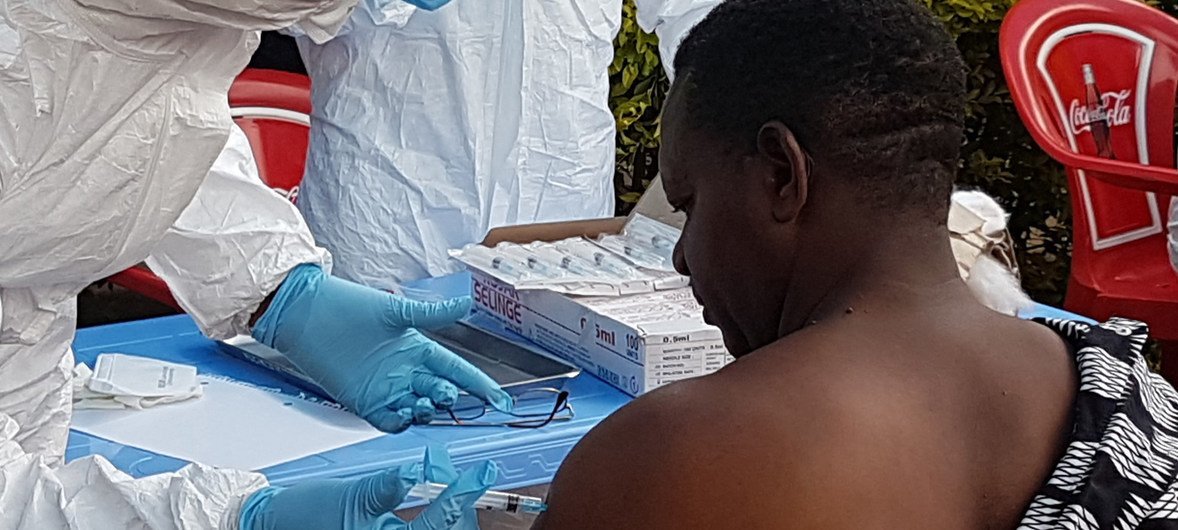
                    On 8 August 2018, the vaccination of frontline health care workers started, followed by the vaccination of community contacts and their contacts, in Mangina, North Kivu, the epicenter of the 10th Ebola epidemic to hit the Democratic Republic of the Congo. There are currently 3220 doses of rVSV-ZEBOV Ebola vaccine available in Kinshasa.

                    24 August 2018

                    Rebel violence in eastern Democratic Republic of the Congo (DRC) is escalating inside the vast country’s Ebola-hit North Kivu province, putting millions at risk, the United Nations refugee agency warned on Friday.


                    “Thousands of civilians have fled their burned-out villages, bringing reports of brutal attacks,” Andrej Mahecic, spokesperson for the Office of the UN High Commissioner for Refugees (UNHCR), told the regular press briefing in Geneva Friday, following reports that a case of Ebola infection and one suspected case have been found in one town in the area, Oicha, which is surrounded by armed groups.

                    The disease has killed more than 60 people and infected dozens more in recent weeks

                    Forced displacement in this part of the country remains massive. It is estimated that more than a million people are displaced in North Kivu. This is the highest concentration of internally displaced people (IDPs) in the DRC. An estimated half a million people have been forced from their homes this year alone.

                    At the same briefing, Dr. Peter Salama, WHO Deputy Director-General of Emergency Preparedness and Response, said that the discovery of Ebola infection in the hard-to-reach part of eastern DRC could mark a “pivotal” point in the response to the deadly disease.

                    “It really was the problem we were anticipating and the problem … we were dreading. Our teams have responded this week. They’ve had to reach Oicha with armed escorts... Once they reach Oicha, they are able to move within Oicha town more freely, because the town itself is a yellow zone from a security perspective,” he explained.

                    Mr. Mahecic said UNHCR is particularly worried about the deteriorating situation in the Ebola-hit northern territory of Ben, where Oicha town is
                    located. The area is home to some 1.3 million people. Spiralling conflict has left the population living there virtually in a state of siege since October 2017. Reports of increased human rights violations and restrictions of humanitarian access are frequent.


                    Estimates are that more than 100 armed groups are active in the province, continually terrorizing the population. Despite a large-scale military offensive of the Congolese Army against one of the main rebel groups, the Allied Democratic Forces (ADF) since January, there has been no let-up in the violence.

                    “Despite security challenges, a UNHCR team accessed the area north of Beni earlier this month and conducted humanitarian assessments in Oicha and Eringeti districts,” he said, adding: “Residents told our staff about brutal attacks against the civilians carried out with machetes. Stories of massacres, extortion, forced displacement and other human rights violations are frequent.”

                    Further, sexual and gender-based violence is rampant across the Beni territory. Many children are being recruited as child soldiers. The violence is particularly rampant in the so-called “triangle of death,” between the towns of Eringeti, Mbau and Kamango, on the Uganda-DRC border, as well as in the towns of Beni, Oicha and Mavivi.

                    UNHCR is scaling up its capacity in North Kivu to respond to the growing humanitarian needs.

                    “We are arranging additional emergency shelters and other humanitarian assistance to meet the needs of the displaced in Beni. While UNHCR’s humanitarian response is continuing despite the outbreak of Ebola, the prevailing security situation and drastic funding shortfall severely hamper our efforts. UNHCR’s DRC 2018 appeal totalling $201 million is only 17 per cent funded,” explained Mr. Mahecic.

                    https://news.un.org/fr/story/2018/08/1022012

                    Comment


                    • #55
                      Translation Google
                      DIRECTORATE GENERAL FOR DISEASE CONTROL
                      EPIDEMIOLOGICAL SITUATION IN THE PROVINCE OF NORTH KIVU
                      Friday 24 August 2018


                      The epidemiological situation of the Ebola Virus Disease dated August 23, 2018 :
                      • A total of 105 cases of haemorrhagic fever were reported in the region, 77 confirmed and 28 probable.
                      • Of the 77 confirmed cases, 11 are cured , 27 are hospitalized and 39 have died.
                      • 10 suspected cases are under investigation.
                      • 1 new case confirmed to Beni.
                      • 2 new people healed in Mabalako.
                      • 3 confirmed cases, including 2 in Mabalako and 1 in Beni.
                      • 1 community death (probable case) in Beni.


                      Remarks:
                      • To avoid that the total number of cases varies (up or down) daily, the suspect cases have been placed in a separate category. Thus, suspect cases with positive laboratory tests will be added to the confirmed category, while negative ones (non-cases) will be removed from the table.
                      • The category of probable cases includes all reported deaths for which it was not possible to obtain biological samples for laboratory confirmation. The investigations will determine whether these deaths are related to the epidemic or not.
                      News of the response

                      Medical care
                      • During his visit to the Mangina Ebola Treatment Center (ETC) on Thursday, August 23, 2018, the Minister of Health, Dr. Oly Ilunga Kalenga, witnessed the unloading of two patients cured of Ebola. These two people are among the first ten patients to receive the therapeutic molecule mAb 114, developed by Professor Jean-Jacques Muyembe and the National Institute of Health (NIH) from the serum of a survivor of the Ebola epidemic from 1995 to Kikwit. The short, medium and long-term observations of patients and survivors will make it possible to evaluate the extent to which the molecule has contributed to their recovery.

                      Vaccination
                      • Since vaccination began on August 8, 2018, 2,957 people have been vaccinated , including 1,422 in Mabalako, 701 in Beni, 746 in Mandima and 88 in Oicha .

                      ...

                      Comment


                      • #56
                        Translation Google
                        DIRECTORATE GENERAL FOR DISEASE CONTROL
                        EPIDEMIOLOGICAL SITUATION IN THE PROVINCE OF NORTH KIVU
                        Sunday, August 26, 2018


                        The epidemiological situation of the Ebola Virus Disease dated 25 August 2018 :
                        • A total of 111 cases of haemorrhagic fever were reported in the region, 83 confirmed and 28 probable.
                        • 6 suspected cases are under investigation.
                        • 4 new confirmed cases, including 3 in Beni and 1 in Mabalako.
                        • 2 deaths of confirmed cases, including 1 in Beni and 1 in Mabalako.


                        Remarks:
                        • To avoid that the total number of cases varies (up or down) daily, the suspect cases have been placed in a separate category. Thus, suspect cases with positive laboratory tests will be added to the confirmed category, while negative ones (non-cases) will be removed from the table.
                        • The category of probable cases includes all reported deaths for which it was not possible to obtain biological samples for laboratory confirmation. The investigations will determine whether these deaths are related to the epidemic or not.
                        News of the response


                        Vaccination
                        • Since vaccination began on August 8, 2018, 3,591 people have been vaccinated , including 1,822 in Mabalako, 761 in Beni, 887 in Mandima and 121 in Oicha.


                        ...

                        Comment


                        • #57
                          Translation Google

                          Bunia: death of a person after vomiting blood, the Ebola outbreak suspected


                          Posted on Sun, 26/08/2018 - 15:16 | Edited on Sun, 26/08/2018 - 15:16

                          One person died Saturday, August 25 in Bunia (Ituri), after showing similar signs of the Ebola virus disease. According to the provincial vice-governor, Pacific Kerta, the patient died a few hours after vomiting blood.

                          The patient had left Butembo in North Kivu and was traveling to Watsa in Haut-U?l? via Ituri. When he arrived in Lopa, 30 km north of Bunia, he began to vomit blood several times.

                          Pacific Kerta, who is closely following the case, reports that the deceased had signs similar to Ebola fever. He was first taken to a medical facility in Ndibakudu in Bunia before being sent to the General Hospital where he died.

                          Family members who wanted to recover their brother's body faced the refusal of the staff. A dispute ensued. The police had to intervene with warning shots to disperse them.

                          The remains are still kept in the morgue of the general hospital, before the result of the samples sent to the laboratory in Beni.

                          Faced with psychosis in the city, the vice-governor calls the population not to panic.

                          He assured that all services are mobilized to face this challenge in case of confirmation of Ebola. He invites the whole population to respect the rules of hygiene.

                          Une personne est décédée samedi 25 août à Bunia (Ituri), après avoir présenté des signes similaires de la maladie à virus Ebola. Selon le vice-gouverneur de province, Pacifique Keta, le malade est mort quelques heures après avoir vomi du sang. Le malade avait quitté Butembo au Nord-Kivu et se rendait à Watsa dans le Haut-Uélé en passant par l’Ituri. Arrivé à Lopa, à 30 km au Nord de Bunia, il a commencé à vomir du sang à plusieurs reprises. Pacifique Keta qui suit de près ce dossier fait savoir que la personne décédée présentait des signes similaires à la fièvre à virus d’Ebola.

                          Comment


                          • #58
                            Translation Google

                            Ituri: No Ebola in Bunia, says Vice Governor Keta Pacific

                            Posted on Sun, 26/08/2018 - 19:24 | Edited on Sun, 26/08/2018 - 19:24

                            Samples of suspected cases of Ebola virus fever recorded in Bunia (Ituri) are declared negative, said provincial vice-governor Keta Pacific on Sunday (August 26th). According to him, the Beni laboratory in North Kivu has found nothing to indicate the Ebola epidemic.

                            "Since this morning [Sunday, August 26], samples had been sent to Beni. It turns out that they are negative, "said Pacific Keta Upar.

                            One person died Saturday, August 25 in Bunia (Ituri), after showing similar signs of the Ebola virus disease. He vomited blood several times. A general panic was observed in the city where the Ebola outbreak was suspected.

                            The remains of the deceased remained under observation at the morgue pending the results sent to Beni for analysis. His family came to recover his body and had some altercations with the nursing staff. The police separated the two camps with warning shots.

                            Now that the epidemic is not confirmed in Bunia, the vice governor of Ituri is asking the family members of the person who was showing signs of Ebola to recover their body at the morgue in Bunia.

                            However, he regretted this altercation and thought that it would be necessary to "review certain provisions in relation to the communication. "

                            "With all that happened, we realized that the crisis committee communication component did not work well. A similar case where the population is struggling to recover a body or a suspect case, it means that there is much to do to mobilize the population on some devices, "said Pacific Keta.

                            In the meantime, he calls on the population to be vigilant and to observe the rules of hygiene.

                            « Depuis ce matin [de dimanche 26 août], on avait envoyé des échantillons à Beni. Il s’avère qu’ils sont négatifs », a-t-il affirmé.

                            Comment


                            • #59
                              Translation Google
                              DIRECTORATE GENERAL FOR DISEASE CONTROL
                              EPIDEMIOLOGICAL SITUATION IN THE PROVINCE OF NORTH KIVU
                              Tuesday 28 August 2018


                              The Epidemiological Situation of Ebola Virus Disease on August 27, 2018 :
                              • A total of 112 cases of haemorrhagic fever were reported in the region, 84 confirmed and 28 probable.
                              • 18 suspected cases are under investigation, including 2 in the city of Goma.
                              • 1 new case confirmed in Mandima (known contact).
                              • No new deaths.
                              • 3 new people healed.


                              Remarks:
                              • To avoid that the total number of cases varies (up or down) daily, the suspect cases have been placed in a separate category. Thus, suspect cases with positive laboratory tests will be added to the confirmed category, while negative ones (non-cases) will be removed from the table.
                              • The category of probable cases includes all reported deaths for which it was not possible to obtain biological samples for laboratory confirmation. The investigations will determine whether these deaths are related to the epidemic or not.
                              News of the response

                              Social mobilization
                              • The Bishop of the Diocese of Butembo-B?ni visited the teams of the riposte. After visiting several points of entry to the city and the Ebola Treatment Center (CTE) in Mangina, he was vaccinated to encourage people at risk to report to the health authorities.
                              Back to School
                              • Following the concerns of civil society regarding the start of the school year, a committee of experts met to assess whether it was necessary to postpone the start of the school year. After evaluating the situation, the committee concluded that it was preferable to maintain the return to school on September 3 as planned. The Government and partners are taking all necessary steps to ensure that children can learn and develop their potential safely. Children will be made aware of the hygiene and good behavior to adopt. Washbasins with chlorinated water will be placed at the entrances of the 250 schools identified in the affected areas. In addition, school principals and teachers in these areas will receive training on Ebola virus disease,
                              To read the UNICEF communiqu?, click here .
                              Vaccination
                              • Since vaccination began on August 8, 2018, 4,511 people have been vaccinated , including 2,278 in Mabalako, 1,095 in Beni, 1,017 in Mandima and 121 in Oicha.

                              ...

                              Comment


                              • #60
                                Translation Google
                                DIRECTORATE GENERAL FOR DISEASE CONTROL
                                EPIDEMIOLOGICAL SITUATION IN THE PROVINCE OF NORTH KIVU
                                Wednesday 29 August 2018


                                The Epidemiological Situation of Ebola Virus Disease, August 28, 2018 :
                                • A total of 115 cases of haemorrhagic fever were reported in the region, of which 85 were confirmed and 30 were probable.
                                • 10 suspected cases are under investigation. Suspicious cases of Goma have been negative.
                                • 1 new confirmed case in Mabalako.
                                • 2 community deaths (probable cases) in Beni.
                                • 1 new person healed.


                                Remarks:
                                • To avoid that the total number of cases varies (up or down) daily, the suspect cases have been placed in a separate category. Thus, suspect cases with positive laboratory tests will be added to the confirmed category, while negative ones (non-cases) will be removed from the table.
                                • The category of probable cases includes all reported deaths for which it was not possible to obtain biological samples for laboratory confirmation. The investigations will determine whether these deaths are related to the epidemic or not.
                                News of the response

                                Social mobilization
                                • On Wednesday, June 29, 2018, the Minister of Health, Dr. Oly Ilunga Kalenga, went to the Provincial Assembly of North Kivu to present the evolution of the response to the Ebola epidemic and address the concerns members of the provincial government, MPPs and civil society. During the question-and-answer session, two points crystallized the exchanges: the school year and the pay of the health professionals. Regarding the start of the school year, the Minister advised to maintain the return to the date provided while strengthening and systematizing the hygiene measures in each school. For health professionals, he explained the procedure for registering providers on the lists of personnel involved in the response.
                                Medical care
                                • The United Nations Population Fund (UNFPA) has donated a batch of ten tons of medical and surgical equipment to the Beni General Referral Hospital to avoid cases of Ebola infection in maternity wards. This donation will cover the care of at least 30,000 people for 6 months and includes childbirth care, access to family planning and care for survivors of gender-based violence.
                                Vaccination
                                • Since vaccination began on August 8, 2018, 4,645 people have been vaccinated , including 2,372 in Mabalako, 1,135 in Beni, 1,017 in Mandima and 121 in Oicha.
                                • Minister of Health Dr. Oly Ilunga Kalenga launched the first phase of the polio vaccination campaign in Goma. Nearly five years without a new case of polio, the Democratic Republic of Congo recorded this year, twenty cases of poliovirus derived which prompted the Government to launch a new vaccination campaign. The first phase of this campaign concerns nine provinces: Bas-Uele, Haut-Uele, Mongala, North and South Kivu, North and South Ubangi, Tshopo and Ituri. Due to the current Ebola outbreak in North Kivu Province, several risk areas have been temporarily excluded from the polio vaccination campaign. These areas include Beni, Butembo, Mabalako, Musienene, Katwa, Kalunguta and Oicha. As soon as the Ebola outbreak is under control,


                                ...

                                Comment

                                Working...
                                X