Announcement

Collapse
No announcement yet.

DRC - 17th Ebola outbreak : Approx. 336 suspected cases & 87 deaths reported, 4 deaths confirmed. More results pending, Ituri province - May 2026 - WHO declares a public health emergency of international concern (PHEIC)

Collapse
X
 
  • Filter
  • Time
  • Show
Clear All
new posts

  • DRC - 17th Ebola outbreak : Approx. 336 suspected cases & 87 deaths reported, 4 deaths confirmed. More results pending, Ituri province - May 2026 - WHO declares a public health emergency of international concern (PHEIC)

    Africa CDC Convenes Emergency Meeting After Reports of a Large Outbreak of Non-Zaire Ebola In the DRC


    #19,160

    While details remain scant, overnight Africa CDC released an urgent statement overnight on what appears to be an unusually large outbreak of a non-Zaire Ebola virus in Ituri province, Democratic Republic of the Congo; centered primarily in the Mongwalu and Rwampara health zones.


    With the caveat that only 13 of 20 samples have tested positive - they report 246 suspected cases and 65 deaths - which (if correct) suggests this outbreak may have been ongoing for some time.

    The preliminary finding of a `non-Zaire' Ebola strain is noteworthy. While a more complete genomic analysis expected within the next 24 hours, the two biggest contenders are the Sudan Ebolavirus (SEBOV) and Bundibugyo Ebolavirus (BEBOV).

    Previously, 15 of the 16 confirmed Ebola outbreaks in the DRC since 1976 have been Ebola Zaire, with one outlier, an outbreak of the Bundibugyo Ebolavirus in 2012.

    A non-Zaire ebolavirus could complicate matters, since the current Ebola vaccine is designed specifically for ZEBOV, and it is not expected to provide significant cross protection against other strains.

    First, the statement from Africa CDC, after which I'll return with a bit more.
    Africa CDC Calls Urgent Regional Coordination Meeting Following Ebola Virus Disease Outbreak in Ituri Province, DRC

    Addis Ababa, Ethiopia / Kinshasa, DRC, 15 May 2026 — The Africa Centres for Disease Control and Prevention (Africa CDC) is closely monitoring the confirmed Ebola Virus Disease outbreak in Ituri province, Democratic Republic of the Congo, and is working with national authorities and partners to support a rapid, coordinated response.

    Following consultations with the DRC’s Ministry of Health and National Public Health Institute, preliminary laboratory results from the Institut National de Recherche Biomédicale (INRB) have detected Ebola virus in 13 of 20 samples tested. The results suggest a non-Zaire ebolavirus, with sequencing ongoing to further characterise the strain. Results are expected within the next 24 hours with support from Africa CDC.

    As of the latest update, about 246 suspected cases and 65 deaths have been reported, mainly in Mongwalu and Rwampara health zones. Four deaths have been reported among laboratory-confirmed cases. Suspected cases have also been reported in Bunia, pending confirmation.

    Africa CDC is concerned about the risk of further spread due to the urban context of Bunia and Rwampara, intense population movement, mining-related mobility in Mongwalu, insecurity in affected areas, gaps in contact listing, infection prevention and control challenges, and the proximity of affected areas to Uganda and South Sudan.

    In response, Africa CDC is convening an urgent high-level coordination meeting today, 15 May 2026, with health authorities from the DRC, Uganda and South Sudan, together with key partners including the World Health Organization, UNICEF, FAO, the United States CDC, the European CDC, China CDC, the Public Health Agency of Canada, Gilead Sciences, Merck & Co., Johnson & Johnson Innovative Medicine, Regeneron Pharmaceuticals, Roche, Abbott Laboratories, Cepheid, BioNTech, Moderna, Evotec Biologics, CEPI, Gavi, Médecins Sans Frontières, IFRC, the World Bank, the African Development Bank, Afreximbank, the Gates Foundation, the Wellcome Trust, and other partners.

    The meeting will focus on immediate response priorities, cross-border coordination, surveillance, laboratory support, infection prevention and control, risk communication, safe and dignified burials, and resource mobilisation.

    “Africa CDC stands in solidarity with the Government and people of the Democratic Republic of the Congo as they respond to this outbreak,” said H.E. Dr Jean Kaseya, Director General of Africa CDC. “Given the high population movement between affected areas and neighbouring countries, rapid regional coordination is essential. We are working with DRC, Uganda, South Sudan and partners to strengthen surveillance, preparedness and response, and to help contain the outbreak as quickly as possible.”

    Africa CDC is preparing support across key response pillars, including coordination through emergency operations mechanisms, digital surveillance and data management, cross-border preparedness, laboratory coordination, infection prevention and control, risk communication and community engagement. In addition, Africa CDC will work with partners to assess the availability and appropriateness of medical countermeasures once sequencing results confirm the exact ebolavirus species.

    Africa CDC is urging communities in affected and at-risk areas to follow guidance from national health authorities, report symptoms promptly, avoid direct contact with suspected cases, and support response teams working to protect communities. Additional information will be provided as they become available and as sequencing results are finalised.

    About Ebola Virus Disease

    Ebola Virus Disease is a severe and often fatal illness. It spreads through direct contact with the bodily fluids of infected persons, contaminated materials, or persons who have died from the disease. Early detection, prompt isolation and care, contact tracing, infection prevention and control, community engagement, and safe and dignified burials are critical to stopping transmission. WHO describes Ebola as spreading through direct contact with bodily fluids and contaminated surfaces or materials.

    There are 6 known types of Ebolaviruses, with the most recent (Bombali) discovered in 2018.
    • Ebola virus (species Zaire ebolavirus)
    • Sudan virus (species Sudan ebolavirus)
    • Taï Forest virus (species Taï Forest ebolavirus, formerly Côte d’Ivoire ebolavirus)
    • Bundibugyo virus (species Bundibugyo ebolavirus)
    • Reston virus (species Reston ebolavirus)
    • Bombali virus (species Bombali ebolavirus)

    Of these, only 4 are known to infect and sicken humans (Bombali and Reston have yet to do so). These viruses are endemic in bats, can infect non-human primates and other mammalian hosts, and occasionally spill over into humans.


    While most Ebola outbreaks are contained after a few dozen - or a few hundred - cases, the 2014-2016 West African outbreak spanned 3 countries, and claimed over 11,000 lives.

    Exported cases outside of Africa are rare, but have been reported (see here, here, and here).

    All of which means we'll be keeping a close eye on this emerging regional public health emergency.


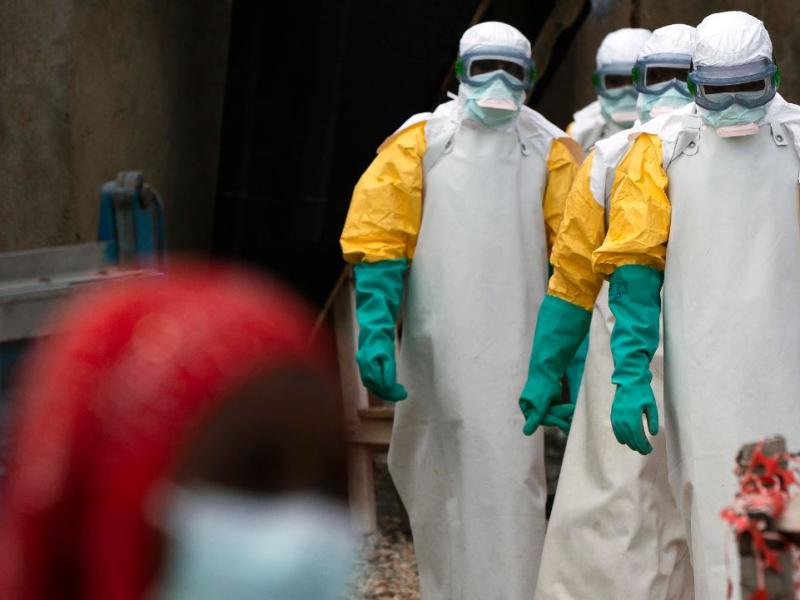
      #19,160 While details remain scant, overnight Africa CDC released an urgent statement overnight on what appears to be an unusually large...
    All medical discussions are for educational purposes. I am not a doctor, just a retired paramedic. Nothing I post should be construed as specific medical advice. If you have a medical problem, see your physician.

  • #2
    Please see:

    Ebola forums by country

    DRC humanitarian crisis 'world's most neglected', says UN

    Comment


    • #3
      Translation Google

      Ituri: An unidentified illness is causing concern in Mungwalu; several deaths have been reported (health sources)

      Published on Fri, 15/05/2026 - 06:26 | Modified on Fri, 15/05/2026 - 06:26

      An as-yet-unidentified illness is causing serious concern in the mining town of Mungwalu, in the Djugu territory of Ituri province. For nearly two weeks, several deaths have been recorded, including among healthcare workers, according to local sources. However, these figures have not yet been officially confirmed by health authorities.

      Faced with this worrying situation, medical teams are mobilized to determine the exact origin of this disease which is already fueling psychosis within the population.

      The symptoms

      According to the chief medical officer of the Mungwalu health zone, those affected are exhibiting worrying symptoms, including high fevers, headaches, body aches, vomiting and, in some cases, hemorrhaging.

      He is already reporting dozens of deaths recorded in various health facilities, at traditional healers' practices, and at home, particularly in Mungwalu and Bunia, the capital of Ituri. Among the victims are also reportedly members of the healthcare staff.

      Psychosis

      Concerns are growing in the community, and several rumors are circulating about the origin of this illness. Some residents mention an incident that occurred during a funeral after a coffin was cremated in a neighborhood of the city.

      Health professionals, however, are urging the public to be cautious, stressing that there is currently no scientific evidence to establish a link between this event and the recorded cases.

      Analyses are underway in Kinshasa

      According to local health sources, the initial tests came back negative. New samples have been sent to the National Institute of Biomedical Research (INRB) for further analysis to identify the pathogen causing the illness.

      While awaiting the results, health authorities, with the support of partners such as Doctors Without Borders, have strengthened prevention, isolation and awareness measures in the affected areas.

      A coordination meeting was held on Thursday, May 14, to launch an awareness campaign on respecting preventative measures. Local administrative authorities hope this will reassure the population and limit the spread of panic in this part of Ituri.


      -----------------------------------------------------------------------
      Reinforced preventative measures in schools following an Ebola alert in Bunia

      Published on Fri, 15/05/2026 - 13:40 | Modified on Fri, 15/05/2026 - 13:43

      According to school officials, these measures follow instructions communicated the previous day by provincial health authorities during a meeting held in Bunia.

      Reporters from Radio Okapi, who visited a local school, observed that before entering school premises, students were subjected to temperature checks and mandatory hand washing with disinfectants.

      Three health zones affected

      According to several local health sources, this increased vigilance comes after suspected cases of Ebola in the health zones of Mungwalu, Rwampara and Bunia.

      Even before an official declaration of an epidemic by the provincial governor, the Provincial Health Division is already mobilizing to put in place a response plan against this disease which has already caused several dozen deaths.

      Call to strengthen health measures

      John Mugiza Besisa, manager of the SHALOM schools in Bunia, believes that this situation requires a strengthening of prevention measures in schools.

      "This concerns us, those of us who supervise students and teaching staff. We must strengthen security and health measures for our children ," he said.

      For his part, the provincial director of EPST Ituri 1, Yvon Mukya Basele, assures that an awareness campaign will be launched to enforce barrier measures in all schools under his jurisdiction.

      Thirteen confirmed cases

      According to medical sources, the National Institute of Biomedical Research (INRB) confirmed this Friday morning 13 cases of Ebola of a previously unidentified strain in Ituri, among the samples sent from Bunia a few days ago.

      Comment


      • #4
        Translation Google

        Eastern DRC: Ebola virus disease outbreak confirmed in Ituri province (Africa CDC)

        Friday, May 15, 2026 - 08:55

        An Ebola virus disease outbreak has just been confirmed in Ituri province, in eastern DRC. The announcement was made this Friday, May 15, by the Africa Centres for Disease Control and Prevention (Africa Centres for Disease Control and Prevention), the public health agency of the African Union.

        In the same press release received by ACTUALITE.CD, the Africa CDC indicates that it is closely monitoring the situation and is organizing an urgent high-level coordination meeting today with the DRC, Uganda, and South Sudan, as well as with its international partners. This meeting aims to strengthen cross-border surveillance, preparedness, and response efforts to the epidemic.

        According to the African Union agency responsible for supporting member states' public health initiatives and strengthening the capacity of their health institutions to face health threats, following consultations with the Ministry of Health and the National Institute of Public Health of the Democratic Republic of Congo, preliminary results of laboratory analyses by the National Institute of Biomedical Research (INRB) in Kinshasa detected the Ebola virus in 13 of the 20 samples tested.

        According to the same institution, approximately 246 suspected cases and 65 deaths have been reported, primarily in the Mongwalu and Rwampara health zones. Four deaths were recorded among the laboratory-confirmed cases. Suspected cases have also been reported in Bunia, pending confirmation.

        This announcement was preceded by a series of warnings from Dr. Timothée Kossianza Bakamano, professor, researcher and representative of Hospice Africa DRC. He had issued an urgent health alert concerning the worrying situation observed in the Djugu territory, particularly in the mining region of the Banyali Kilo community and the rural commune of Mongwalu.

        According to the document consulted, for several days a widespread psychosis had taken hold among the local population following a rumor about the mysterious destruction of a deceased person's coffin, replaced by another, a situation which was said to have been the cause of a series of deaths observed in the rural commune of Mongwalu.

        Despite these warnings, local authorities initially only issued denials, before the outbreak was confirmed two days after the alerts.

        Clément MUAMBA


        -------------------------------------------------------------------------
        Ebola in Ituri: "What is particularly worrying is the high risk of regional spread" (Jean Kaseya, DG Africa CDC)

        Friday, May 15, 2026 - 09:52

        An Ebola virus disease epidemic has just been officially declared this Friday, May 15, 2026, in the province of Ituri, in the East of the DRC, one of the areas of the country plagued by armed conflicts involving local militias and foreign armed groups.

        According to the Director General of the Africa Centres for Disease Control and Prevention, Dr. Jean Kaseya, who announced the news, preliminary laboratory test results have revealed several positive cases, while sequencing is still underway to precisely identify the strain of the outbreak.

        He clarifies, however, that this is not the Zaire strain, the most well-known during previous epidemics. Dr. Kaseya also warns of a high risk of regional spread, due to significant population movements between affected areas and neighboring countries, particularly Uganda and South Sudan, as well as persistent insecurity and challenges related to infection prevention and control.

        “We are closely monitoring the confirmed Ebola virus disease outbreak in Ituri province in the DRC. Preliminary laboratory results have confirmed several positive cases, and sequencing is underway to precisely identify the strain. But we know it is not the Zaire strain. To date, 246 suspected cases and 65 deaths have been reported, including several among the confirmed cases. What is particularly concerning is the high risk of regional spread due to significant population movements between the affected areas and neighboring countries, particularly Uganda and South Sudan, combined with insecurity and challenges related to infection prevention and control,” said Dr. Jean Kaseya, Director General of the Africa Centres for Disease Control and Prevention (Africa CDC).

        In response to this situation, a high-level regional emergency meeting is being organised with the health authorities of the DRC, Uganda and South Sudan, as well as several international partners, including the World Health Organization (WHO) and UNICEF.

        According to the head of the African Union agency in charge of public health issues, efforts will focus in particular on strengthening surveillance, laboratory capacity, infection control, community engagement and cross-border coordination.

        "Today I am organizing a high-level regional emergency meeting with health authorities from Uganda, South Sudan, and the DRC, as well as various partners, including WHO, UNICEF, and pharmaceutical companies, to coordinate the response to this outbreak. We remain committed to providing assistance in the areas of laboratory surveillance, infection control, community engagement, cross-border preparedness, and coordination. We encourage communities to remain vigilant in the face of this outbreak," recommended Dr. Jean Kaseya.

        This Ebola virus disease outbreak is occurring in a region of the country marked by serious violence against civilians, attributed to the ADF rebels, who continue to wreak havoc on civilian populations despite joint military operations conducted by the FARDC and Ugandan forces. Adding to this is the activity of several local militias, including CODECO, the Zaïre group, the CRP, and others. This situation further destabilizes the humanitarian context in this part of the DRC and is causing massive population displacements.

        This outbreak in Ituri province comes nearly six months after the DRC announced, on December 1, 2025, the end of the 16th Ebola virus disease outbreak in Kasai province, with no new cases reported in the 42 days since the last patient recovered on October 19, 2025.

        Clément MUAMBA

        Une épidémie de maladie à virus Ebola vient d’être déclarée officiellement ce vendredi 15 mai 2026 dans la province de l’Ituri, dans l’Est de la RDC, une des zones du pays en proie à des conflits armés impliquant des milices locales et des

        ---------------------------------------------------------------------------------

        Ebola in Ituri: how an epidemic festered for six weeks without being identified

        Friday, May 15, 2026 - 10:14

        It all started with rumors. On May 5, 2026, messages circulated on social media from Mongbwalu, a mining town 90 kilometers from Bunia, in Ituri province. They spoke of unusual deaths, many deaths. More than fifty, it was said.

        That's not wrong. Medical teams scrutinizing the records of the General Referral Hospital confirm it: between April 1st and May 13th, 2026, 55 patients died at this facility. What's striking is the acceleration. In April, the case fatality rate in the internal medicine department was 9%. In May, it jumped to 31%.

        Four healthcare professionals are among the dead. Four caregivers, in four days.

        One family, fifteen dead

        The community already has its own explanation. They speak of a pastor who allegedly burned fetishes, called “Tumu,” and who died shortly afterward, along with his wife. Since then, fear has taken hold. A “widespread psychosis,” the authors of the official report published on May 13th soberly note.

        But behind the rumors, the figures are real. Field teams, after meetings with five health facilities in the area, have recorded 45 additional deaths occurring in the community, outside of hospitals. Twenty-six in the CECA 20 zone, nineteen in Mongbwalu.

        The most disturbing case involves a single family in the Mongbwalu health zone: fifteen deaths. Five of them died in Bunia, after gathering as a family. All presented with the same symptoms: headaches, fever, and vomiting. The period lasted two weeks.

        Patient profile

        What doctors are observing in the wards looks like this: fever, headache, vomiting, intense fatigue. In some patients, other signs are added: difficulty breathing, nosebleeds, blackish vomit.

        Three specific cases are documented in the May 13 report.

        A 45-year-old nurse was hospitalized on May 6 at the Abelkozo health center with a persistent fever between 38 and 39 degrees Celsius, headaches, and fatigue. On the fourth day, she experienced nosebleeds and dizziness. She was transferred to the Mongbwalu General Referral Hospital on May 12. She died on May 13.

        A 55-year-old man, admitted to several facilities since May 1st, presented with a fever of 39 degrees Celsius, nausea, diarrhea, muscle and joint pain, and red eyes. On the morning of May 13th, hemorrhagic symptoms appeared: nosebleeds and vomiting of blood. He died that evening.

        A 17-year-old girl, six months pregnant. Symptoms began on May 10. She was hospitalized on the 13th for seizures, fever, agitation, and bleeding.

        Ebola ruled out, then confirmed

        The initial tests were reassuring, provisionally. Ebola Zaire, dengue, rotavirus, cholera, malaria, Yersinia pestis, moxibustion, Covid-19: all negative on the samples analyzed in Mongbwalu itself.

        Two days later, on May 15, the results from the National Institute of Biomedical Research changed everything. Of the 20 samples tested, 13 were positive for the Ebola virus. Not the Zaire strain, the one known in the DRC and against which vaccines exist. The analyses suggested an Ebola virus of a different species. Sequencing is underway. The results are expected within 24 hours.

        The situation has also changed: 246 suspected cases and 65 deaths have now been recorded, mainly in the Mongbwalu and Rwampara health zones. Four deaths have been confirmed by laboratory testing. Suspected cases have been reported as far away as Bunia.

        Kinshasa, Kampala, Juba

        Africa CDC, the African Union's public health agency, convened an emergency meeting on the afternoon of May 15. Around the table were health authorities from the DRC, Uganda, and South Sudan, the WHO, UNICEF, the WFP, as well as representatives from about ten pharmaceutical laboratories and manufacturers, including Gilead, Merck, Johnson & Johnson, Moderna, BioNTech, and Roche.

        Africa CDC is less concerned about Mongbwalu itself than about the area surrounding it. The mining town attracts workers who are constantly on the move. Bunia is a city, with all the density and movement that implies. The Ugandan and South Sudanese borders are close. Population movements in this part of Ituri are intense and difficult to monitor. And the insecurity in the area complicates access for the teams.

        “Given the significant population movements between the affected areas and neighbouring countries, rapid regional coordination is essential,” said Dr. Jean Kaseya, Executive Director of Africa CDC.

        The shortcomings of the terrain

        The field report of May 13th did not mask the difficulties. The Abelkozo health area scored 7% on infection prevention and control assessments. The Mongbwalu General Referral Hospital (HGR) scored 34%. There was no compliant isolation space, not enough testing kits, and no organized triage at the hospital. Staff had not been trained to manage diseases with epidemic potential.

        By May 13, twelve contacts had been pre-listed. The list was not yet complete. It is these shortcomings, known from the beginning, that the epidemic is currently experiencing.

        Tout a commencé par des rumeurs. Le 5 mai 2026, des messages circulent sur les réseaux sociaux depuis Mongbwalu, une bourgade minière à 90 kilomètres de Bunia, dans la province de l’Ituri. On parle de décès inhabituels, beaucoup de décès.

        Comment


        • #5
          In April or early May nothing was in the press, aid agencies like MSF or Save the Children, WHO....how is that? Continuing conflict in area disrupts any health efforts.


          ---------------------------------------------------------

          Rebel fighters kill at least 69 people in northeastern DR Congo


          Security officials say CODECO militia groups carried out the attack in Ituri province.


          10 May 2026

          An attack by armed rebels has killed at least 69 people in Ituri province in the conflict-torn northeast of the Democratic Republic of the Congo (DRC), according to security officials.

          For more than 30 years, the mineral-rich eastern DRC has been a battleground for various armed groups, vying for control of its many mines.


          more.... https://www.aljazeera.com/news/2026/...stern-dr-congo


          --------------------------------------------------------

          SERIES OF ATTACKS ACROSS EASTERN DR CONGO KILL DOZENS OF CIVILIANS


          In recent days, attacks across the eastern Democratic Republic of the Congo (DRC) have killed dozens of civilians, including in Irumu, Djugu and Mambasa territories in Ituri Province. On 28 April armed men affiliated with the Cooperative for the Development of the Congo (CODECO), a loose coalition of militias claiming to protect the Lendu community, attacked several villages near Pimbo in Djugu territory, killing at least 69 people, the majority of whom were civilians. Local sources indicated that the death toll may exceed 70 because insecurity delayed the recovery of bodies for several days.

          more....https://www.globalr2p.org/publicatio...-alert-no-482/

          Comment


          • #6

            CDC
            @CDCgov
            ·
            48m
            CDC is closely monitoring reports of an Ebola outbreak in Ituri province in the Democratic Republic of the Congo, and is working closely with the Ministry of Health through our Country Office to support response efforts. Ebola spreads through direct contact with bodily fluids of a person who is sick or has died from the disease, and early detection and response are critical to limiting transmission. CDC continues to support global public health partners in surveillance, laboratory analysis, infection prevention, and outbreak response efforts. The risk of Ebola to the American public is considered low, and travelers should stay informed through official public health guidance while health authorities work to further characterize the virus strain and contain the outbreak.
            CSI:WORLD http://swineflumagazine.blogspot.com/

            treyfish2004@yahoo.com

            Comment


            • #7

              ….Suspected cases have been detected in Bunia, which has an estimated population of 300,000, and are awaiting confirmation, CDC Africa said.

              Initial results 'suggest a non-Zaire ebolavirus' strain but further sequencing is ongoing.

              The Zaire ebolavirus -- the deadliest strain with a case fatality rate of 80 to 90 percent -- is the only variant for which an approved vaccine currently exists.

              Teams from the World Health Organization as well as from the NGO Doctors Without Borders have been sent to the scene and are trying to assess the risks.

              Burials have already taken place and concern is mounting among locals.

              'For the past few weeks, the municipality of Mongbwalu has been recording a cascade of deaths, with at least five to six people dying every day in the streets,' Gloire Mumbesa, who lives in the area, told AFP by telephone.

              'We just dug graves to bury three people, but we don’t actually know what these people died of. We're starting to be afraid of every possible case of illness,' Salama Bamunoba, a civil society member in Rwampara, said.

              A health source in the Mongbwalu area, who spoke on condition of anonymity, said an 'exponential' number of deaths had been seen since mid-April.

              Patients are currently placed in isolation in health centres but the staff lack equipment including protective gear, the source said.

              In a country four times the size of France, delivering medicines is often a challenge, with transportation infrastructure limited and often in poor condition…


              Bunia (DR Congo) (AFP) - A new outbreak of the deadly Ebola virus has been declared in the eastern Democratic Republic of Congo, African health officials said Friday, voicing concern of the risk it could further spread.Some 246 suspected cases, including 65 deaths, have been reported, the Africa Centres for Disease Control and Prevention (CDC Africa) said. The latest outbreak in the vast central African country of more than 100 million inhabitants is in northeastern Ituri province, which borders Uganda and South Sudan, CDC Africa said.Mining in the gold-rich province creates an intense movement of people on a daily basis.For years, Ituri has been plagued by recurrent clashes driven by local militias, making it difficult to access certain parts of the province for security reasons.'Ebola Virus Disease outbreak confirmed in Ituri Province,' Africa CDC said in a statement.Results from 13 of 20 samples tested in the capital, Kinshasa, indicated that 'four deaths have been reported among laboratory-confirmed cases', it said.The last outbreak in the country was in August in the central region and killed at least 34 people, before being declared eradicated in December.Nearly 2,300 people died in the deadliest outbreak in the DRC between 2018 and 2020.First identified in 1976 and believed to have originated in bats, Ebola is a deadly viral disease spread through direct contact with bodily fluids. It can cause severe bleeding and organ failure.'With the insecurity, people are crowded together in the city, and since there are so many people in the city, an epidemic like this would be very serious,' Anne-Marie Dive, a resident of Bunia, the main city in Ituri, said by telephone.- 'We just dug graves' - The highly contagious haemorrhagic fever has killed an estimated 15,000 people in Africa over the past 50 years, despite advances in vaccines and treatment.The cases reported in recent weeks were in Mongbwalu and Rwampara health zones, each of which has around 150,000 inhabitants. The Mongbwalu area lies about 90 kilometres (56 miles) from Bunia, while Rwampara is adjacent to the Bunia urban area.Suspected cases have been detected in Bunia, which has an estimated population of 300,000, and are awaiting confirmation, CDC Africa said.Initial results 'suggest a non-Zaire ebolavirus' strain but further sequencing is ongoing.The Zaire ebolavirus -- the deadliest strain with a case fatality rate of 80 to 90 percent -- is the only variant for which an approved vaccine currently exists.Teams from the World Health Organization as well as from the NGO Doctors Without Borders have been sent to the scene and are trying to assess the risks.Burials have already taken place and concern is mounting among locals.'For the past few weeks, the municipality of Mongbwalu has been recording a cascade of deaths, with at least five to six people dying every day in the streets,' Gloire Mumbesa, who lives in the area, told AFP by telephone.'We just dug graves to bury three people, but we don’t actually know what these people died of. We're starting to be afraid of every possible case of illness,' Salama Bamunoba, a civil society member in Rwampara, said.A health source in the Mongbwalu area, who spoke on condition of anonymity, said an 'exponential' number of deaths had been seen since mid-April.Patients are currently placed in isolation in health centres but the staff lack equipment including protective gear, the source said.In a country four times the size of France, delivering medicines is often a challenge, with transportation infrastructure limited and often in poor condition.The current Ebola outbreak is the 17th in the DRC since the virus was first detected in the country.Guinea, Uganda and Sierra Leone have also seen Ebola outbreaks in recent years.burs-cld/mnk-kjm/rh

              CSI:WORLD http://swineflumagazine.blogspot.com/

              treyfish2004@yahoo.com

              Comment


              • #8
                Conversation


                Ministère de la Santé RDC
                @MinSanteRDC
                #COMMUNIQUÉ
                Image
                1:18 PM · May 15, 2026
                ·
                115
                Views
                CSI:WORLD http://swineflumagazine.blogspot.com/

                treyfish2004@yahoo.com

                Comment


                • #9
                  Click image for larger version

Name:	image.png
Views:	261
Size:	53.8 KB
ID:	1034860
                  Click image for larger version

Name:	image.png
Views:	262
Size:	53.2 KB
ID:	1034861


                  11:40 AM · May 15, 2026

                  Comment


                  • #10
                    Click image for larger version

Name:	image.png
Views:	271
Size:	8.0 KB
ID:	1034863

                    "Today, I had a call with the Minister of Health of the #DRC concerning the new outbreak of Ebola disease in the country’s north-eastern Ituri Province.

                    Currently, WHO is aware that 13 cases of Ebola have been confirmed by the L'Institut National de Recherche Biomédicale, I.N.R.B., in Kinshasa.

                    On 5 May, WHO received a signal of suspected cases and sent a team to Ituri to support DRC health officials in their investigation of the outbreak and collect samples in the field, which initially tested negative for Ebola.

                    Samples were subsequently sent to I.N.R.B., which yesterday confirmed some as positive for Ebola.

                    This is the 17th recorded Ebola outbreak in DRC since the virus was first identified in 1976. DRC has a strong track record in Ebola response and control.

                    The WHO’s Representative to DRC, and other WHO experts, are in Ituri and working side-by-side with DRC health authorities to respond to, and contain the outbreak.

                    Additional WHO experts in risk communication and community engagement, infection prevention and control, clinical care and logistics will join the WHO team already on the ground in coming days.

                    We have deployed medical supplies and protective equipment for infection prevention and control to Bunia, the Ituri provincial capital.

                    Today, I have released $500,000 from WHO’s Contingency Fund for Emergencies to immediately support the response.

                    Priority actions include risk communication and community engagement, strengthening disease surveillance, active case finding and contact tracing, infection prevention and control in health facilities, expanding access to safe clinical care, and increasing laboratory testing capacity.

                    WHO will continue working to support the DRC to bring this Ebola outbreak under control, and will deploy resources, and work with and mobilize partners across the region, to contain its spread and care for those affected"-
                    @DrTedros​

                    8:27 AM · May 15, 2026

                    Comment


                    • #11
                      Translation Google

                      DRC: 246 suspected cases and 80 deaths in the 17th Ebola outbreak in Ituri

                      Friday, May 15, 2026 - 10:02 PM

                      The DRC government declared on Thursday the 17th outbreak of Ebola virus disease in three health zones of Ituri province: Rwampara, Mongwalu and Bunia.

                      According to a statement signed by the Minister of Public Health, Hygiene, and Social Welfare, Dr. Kamba Mulanda Samuel Roger, laboratory analyses conducted on May 14, 2026, by the National Institute of Biomedical Research confirmed eight positive cases out of thirteen blood samples taken. The identified strain is the Ebola Bundibugyo virus. Five samples could not be analyzed due to insufficient volume.

                      As of May 15, 2026, 246 suspected cases were notified and 80 deaths were recorded, including four cases that tested positive.

                      The suspected index case is a nurse who died at the Evangelical Medical Center in Bunia. This case dates back to April 24, 2026, in the Rwampara health zone. The patient presented with fever, hemorrhaging, and vomiting, along with severe weakness.

                      The government has activated the Public Health Emergency Operations Centre at level 1 response level, deployed rapid response teams, and launched an appeal for the mobilization of technical and financial partners. The public is encouraged to call the toll-free number 151 for any information.

                      Le gouvernement de la RDC a déclaré ce jeudi la 17e épidémie de maladie à virus Ebola dans trois zones de santé de la province de l’Ituri : Rwampara, Mongwalu et Bunia.

                      Comment


                      • #12
                        Click image for larger version

Name:	image.png
Views:	199
Size:	17.4 KB
ID:	1034893

                        Democratic Republic of the Congo confirms new Ebola outbreak, WHO scales up support

                        15 May 2026

                        Kinshasa/Brazzaville — The World Health Organization (WHO) is rapidly scaling up support to the Government of the Democratic Republic of the Congo following confirmation of an outbreak of Ebola Bundibugyo in the country’s north-eastern Ituri Province.

                        Laboratory analysis conducted by the National Institute of Biomedical Research (INRB), the country’s reference laboratory in the capital Kinshasa, confirmed the Ebola outbreak caused by the Bundibugyo species in 13 of 20 samples collected from suspected cases linked to a cluster of severe illness and deaths reported in Mongbwalu and Rwampara health zones in Ituri Province. The Bundibugyo species was first identified in 2007 in Bundibugyo district in western Uganda, during which 131 cases were reported with 42 deaths (case fatality rate of 32%).

                        In the current outbreak in the Democratic Republic of the Congo, a total of 67 community deaths suspected to be due to Ebola Bundibugyo have been reported so far. Patients presented with symptoms including fever, generalized body pain, weakness, vomiting and, in some cases, bleeding. Several cases deteriorated rapidly and died. Given the uncertainties and severity of the illness, there is concern about the scale of transmission in affected communities.

                        A WHO mission including the WHO representative, the emergency preparedness and response team had already been deployed in Ituri to support the provincial authorities with investigations that led to the confirmation of the outbreak in the two health zones. The team is also working with the national and provincial health authorities to strengthen outbreak control measures and prevent further spread of the virus. National authorities have activated emergency coordination mechanisms and deployed additional multidisciplinary rapid response teams to affected areas.

                        Additional WHO experts in epidemiology, infection prevention and control, laboratory diagnostics, clinical care, logistics, risk communication and community engagement are being mobilized to reinforce the frontline response. Priority actions include strengthening disease surveillance, active case finding, contact tracing, infection prevention and control in health facilities, expanding access to safe care, laboratory testing capacity, ensuring safe burials and community sensitization to prevent further spread of the disease.

                        “The Democratic Republic of the Congo has extensive experience responding to Ebola outbreaks, and WHO is rapidly scaling up support to the ongoing response,” said Dr Mohamed Janabi, WHO Regional Director for Africa. "Working closely with national authorities and partners, we are mobilizing swiftly, deploying additional expertise and resources to halt the spread of the virus, protect and save lives.”

                        WHO is airlifting 5 metric tonnes of supplies, including infection prevention and control, materials, laboratory sample transportation equipment, case management, tents and other supplies currently available in Kinshasa to Bunia to support frontline health workers and treatment facilities.

                        The outbreak is affecting areas that present significant operational challenges, including urban areas with intense population movements associated with mining activities, insecurity, and frequent cross- border movement—all of which increase the risk of further transmission.

                        In neighbouring Uganda, the Ministry of Health confirmed Ebola Bundibugyo in a patient from the Democratic Republic of the Congo who was being treated at a health facility but later died. Ugandan health authorities have activated outbreak control measures, including disease surveillance, screening and response readiness.

                        This marks the 17th recorded outbreak of Ebola disease in the Democratic Republic of the Congo since the virus was first identified in 1976 in Yambuku, in Equateur Province. The last one was an outbreak of Ebola virus disease that ended in December 2025.

                        Ebola disease is a severe and often fatal illness transmitted through direct contact with the blood, secretions, organs or other bodily fluids of infected people, as well as contaminated surfaces and materials. Early detection, supportive treatment and rapid public health measures significantly improve survival and are critical to stopping transmission.


                        The World Health Organization (WHO) is rapidly scaling up support to the Government of the Democratic Republic of the Congo following confirmation of an outbreak of Ebola Bundibugyo in the country’s north-eastern Ituri Province.

                        Comment


                        • #13
                          Click image for larger version

Name:	image.png
Views:	202
Size:	9.6 KB
ID:	1034897

                          Image translated by Google

                          Click image for larger version

Name:	image.png
Views:	207
Size:	1.35 MB
ID:	1034895Click image for larger version

Name:	image.png
Views:	208
Size:	1.14 MB
ID:	1034896
                          5:13 PM · May 15, 2026

                          Comment


                          • #14
                            Translation Google

                            Ebola outbreak in Ituri: response launched in Bunia, Rwampara and Mongwalu

                            Published on Sat, 16/05/2026 - 13:13 | Modified on Sat, 16/05/2026 - 13:13

                            Several suspected cases of Ebola virus disease are currently being treated in various health facilities in Bunia and Mongwalu. Medical teams and health partners are working to identify contacts and limit the spread of the epidemic, a Radio Okapi reporter observed on Saturday, May 16.

                            At Bunia General Referral Hospital, six suspected cases are under medical observation in a special isolation unit. Another patient is being monitored at Rwampara Hospital, while suspected cases have also been reported at Mongwalu General Hospital, considered one of the epicenters of the outbreak.

                            According to several medical sources, the main challenge remains identifying contacts still hidden within the community. A lack of financial resources and appropriate equipment complicates the response. In Bunia, only six places are available for isolating patients.

                            This Saturday morning, the head of the Provincial Health Division met with the chief medical officers of the health zones and the heads of health facilities. In the afternoon, the Provincial Governor convened a meeting with partners involved in the response.

                            Mongwalu, the epicenter of the epidemic: preventative measures still rare

                            In the wake of the official declaration of this 17th Ebola outbreak in the DRC , preventative measures are beginning to be implemented in Mongwalu. Health teams are raising awareness among the population about wearing masks, washing hands, and conducting safe burials.

                            Yet, daily life seems almost normal: markets are open, shops are busy, motorcycles are on the road, and children are at school. But behind this apparent normality, anxiety is growing.

                            But many residents are still unaware that they need to resume these preventative measures, which they had practiced extensively during the COVID pandemic. Gloire Mumbesa, a resident of Mongwalu, explains:

                            “ We see some people in the streets wearing face masks. It’s as if the population is starting to understand that there are a series of deaths in the area and that it could be an epidemic. But so far, many people still don’t know exactly what to do.”

                            According to the mayor of Mongwalu, two more people died overnight, including a woman who was taken to the hospital. Other medical sources report at least four additional deaths.

                            Comment


                            • #15
                              Translation Google

                              Ebola in Ituri: Community communication, the main weapon to stop the epidemic, according to Muyembe

                              May 16, 2026

                              Bunia, May 16, 2026 (ACP) - Good communication with local communities and the population's adherence to health measures are the main weapons to curb the spread of the Ebola virus disease epidemic in Ituri province (Northeast of the Democratic Republic of Congo), said Professor Jean-Jacques Muyembe on Saturday, during an interview on France24.

                              " Good communication with local communities and public adherence to health measures are the main weapons to curb the spread of the disease ," he said.

                              Regarding the "Bundibugyo" strain detected in the health zones of Mongbwalu, Rwampara and Bunia, the Director General of the National Institute of Biomedical Research (INRB) advocated for strengthening community awareness in order to repeat the success of the response carried out in 2012 in Isiro, in the province of Haut-Uélé.

                              " The first time we had an outbreak with Bundibugyo was in 2012 in Isiro. We simply used the right communication and the right advice. If the population adheres to these public health measures, there is a good chance that the outbreak will be controlled in two or three months ," he reassured.

                              Furthermore, Professor Muyembe mentioned ongoing research on possible cross-protection between vaccines developed against Ebola Zaire and the Bundibugyo strain, a lead that could constitute a major breakthrough in the fight against the epidemic.

                              “ We want to test whether the molecules developed for Ebola Zaire can also offer cross-protection with Ebola Bundibugyo. If the vaccine against Ebola Zaire can have cross-protection, it will truly be a miracle that can accelerate the fight against this epidemic ,” he said.

                              The co-discoverer of the Ebola virus also praised the involvement of technical and financial partners, including the World Health Organization (WHO) and the World Bank, believing that their support remains essential for an effective response.

                              " The support of technical and financial partners is truly key. With the support of the WHO, the World Bank and the efforts of the government, we can stop this epidemic as quickly as possible ," he stated.

                              Addressing operational challenges, Professor Muyembe acknowledged that logistics remains one of the main obstacles in this health response, stressing the need to avoid a militarized approach in order to maintain a climate of trust with local populations.

                              “ In 2020, we had an epidemic in this province and we did not militarize the response. We favoured a cautious approach and used indigenous people as much as possible as members of the response teams ,” he recalled.

                              Despite persistent security threats in some areas of Ituri, Dr. Muyembe stressed that health teams had managed to work thanks to community collaboration.

                              In its press release of May 15, the Ministry of Health reported 246 suspected cases notified and 80 deaths, including 4 who tested positive, it is noted.

                              ACP/CL


                              -------------------------------------------------------------------------

                              Ebola: the Bundibugyo strain has already caused outbreaks in Uganda and Isiro in the DRC in 2012

                              Saturday, May 16, 2026 - 1:46 PM

                              We know a little more about the strain of the Ebola virus disease epidemic, the 17th recorded in the Democratic Republic of Congo, which is currently raging in the province of Ituri, in the East of the country.

                              During a press conference held this Saturday, May 16, the Minister of Public Health, Hygiene and Social Welfare, Samuel Roger Kamba, revealed that it is the Bundibugyo strain, already reported in the past in Uganda, one of the DRC's neighbouring countries, as well as in the Democratic Republic of Congo in 2012, more precisely in Isiro, in the Haut-Uele province.

                              "You know that the Ebola virus, frantically, there are several strains, and so we immediately had to collect and begin validating the samples, and it was negative for the Zaire strain because, as you know, there are several types of hemorrhagic diseases. I said, 'Okay, we'll go further, take the samples to the INRB Kinshasa, which has more resources to search for the different other strains, different types of Ebola.' The samples arrived on the 13th and were examined, and on the evening of the 14th, so the night before last, we had confirmation that it is Ebola of the Bundibugyo strain, a strain that is already known, notably for having struck Uganda and which already caused an epidemic in our country, particularly in Isiro in 2012," explained the Minister of Public Health, Hygiene and Social Welfare, Samuel Roger Kamba.

                              At present, the supervising minister was keen to clarify that the investigations are continuing in order to identify the various contact cases as well as all the deceased within the community.

                              "Our deployed teams then began actively searching for all cases and identifying all those who may have died in the community," added Samuel Roger Kamba.

                              Bundibugyo ebolavirus is a strain of the Ebola virus first officially identified in 2007, following an outbreak in the Bundibugyo district of Uganda. Like other forms of the Ebola virus, it causes severe hemorrhagic fever that can lead to serious complications in infected individuals.

                              The infection severely affects the skin and blood vessels. Among the most frequent skin manifestations is a maculopapular rash, characterized by red spots and small lesions on the epidermis. The virus also attacks the cells lining the blood vessels, causing vascular fragility that leads to bleeding under the skin, visible as petechiae, ecchymoses, or purpura.

                              Beyond skin lesions, Bundibugyo ebolavirus profoundly disrupts the body's functions. It impairs blood clotting, promotes internal bleeding, and can cause multiple organ failure. This systemic impact explains the high severity of the disease and the need for rapid and intensive medical care.

                              This Ebola virus disease outbreak is occurring in a region of the country marked by serious violence against civilians, attributed to the ADF rebels, who continue to wreak havoc on civilian populations despite joint military operations conducted by the FARDC and Ugandan forces. Adding to this is the activity of several local militias, including CODECO, the Zaïre group, the CRP, and others. This situation further destabilizes the humanitarian context in this part of the DRC and is causing massive population displacements.

                              This outbreak in Ituri province comes nearly six months after the DRC announced, on December 1, 2025, the end of the 16th Ebola virus disease outbreak in Kasai province, with no new cases reported in the 42 days since the last patient recovered on October 19, 2025.

                              Kuzamba Mbuangu & Clément MUAMBA

                              On en sait un peu plus sur la souche de l’épidémie de maladie à virus Ebola, la 17e enregistrée en République démocratique du Congo, qui sévit actuellement dans la province de l’Ituri, dans l’Est du pays.


                              See also:
                              Uganda's Ebola Bundibugyo outbreak thread from 2007


                              DRC's Ebola Bundibugyo outbreak thread from 2012


                              Comment

                              Working...
                              X