

Gert van der Hoek
In Memoriam - Editor, Senior Moderator
[FONT="]APR 14 2017[/FONT]
by MAGGIE FOX
[FONT="]A common backyard mosquito can be infected with the Zika virus and it may pass the virus along in its eggs, researchers reported Friday.
The findings add to worries that the Asian tiger mosquito, scientifically known as Aedes albopictus, could help spread the virus as mosquito season hits temperate regions of the world.
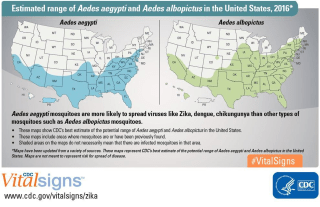
Estimated range of Aedes aegypti and Aedes albopictus in the United States, 2016. CDC
The study, published in the Journal of Medical Entomology, doesn't prove that tiger mosquitoes can spread Zika, which causes severe birth defects. But it adds to evidence that they might.
Chelsea Smartt of the Florida Medical Entomology Laboratory and the University of Florida and colleagues hatched eggs from Aedes albopictus mosquitoes gathered during a 2015 outbreak of Zika in Brazil. When they ground up the mosquitoes that grew from those eggs ? male and female ? they found genetic pieces of Zika.
"Our results mean that Aedes albopictus may have a role in Zika virus transmission and should be of concern to public health," Smartt said in a statement.
"This mosquito is found worldwide, has a wide range of hosts and has adapted to colder climates."[/FONT]
READ MORE
by MAGGIE FOX
[FONT="]A common backyard mosquito can be infected with the Zika virus and it may pass the virus along in its eggs, researchers reported Friday.
The findings add to worries that the Asian tiger mosquito, scientifically known as Aedes albopictus, could help spread the virus as mosquito season hits temperate regions of the world.
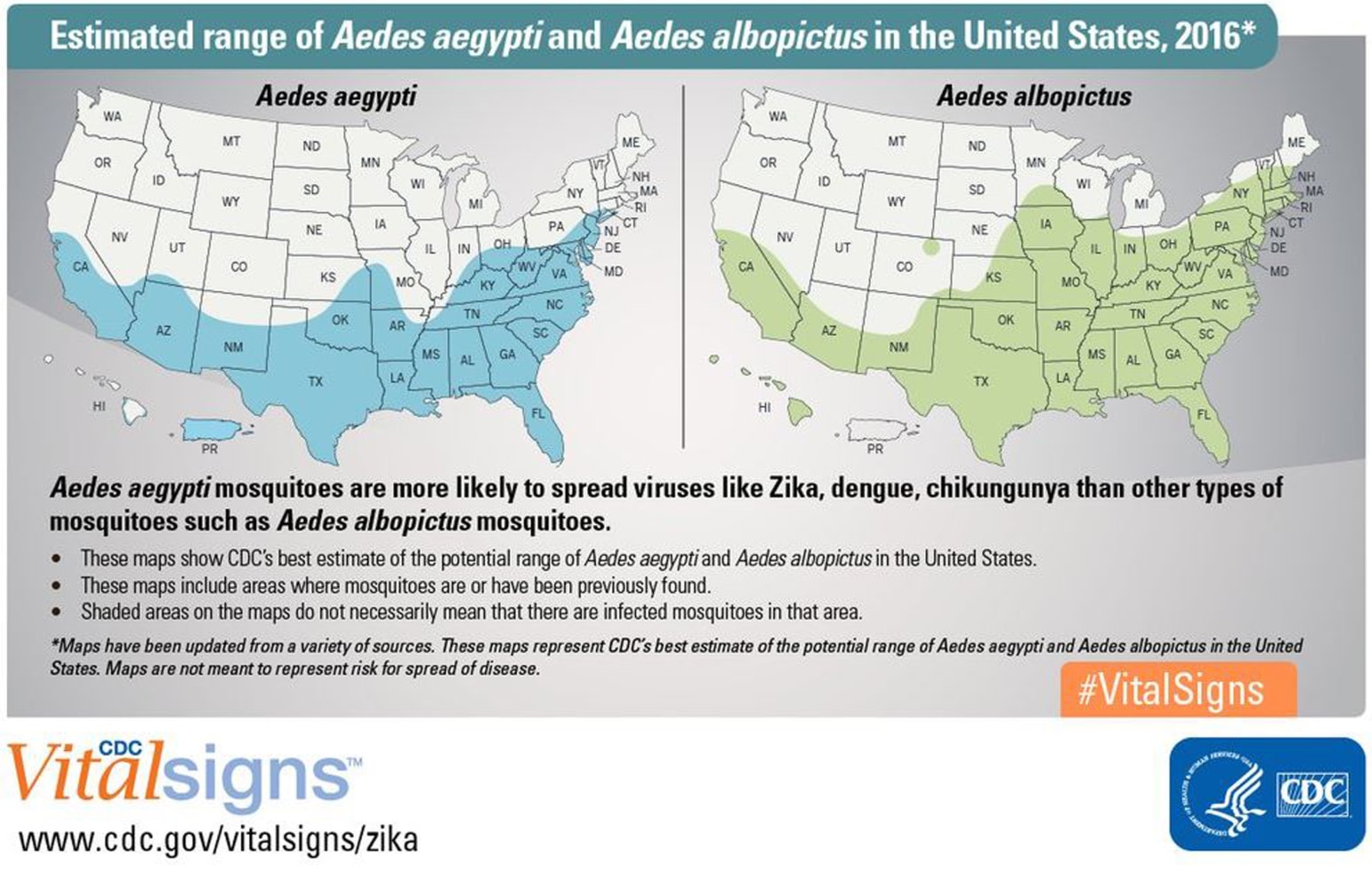
Estimated range of Aedes aegypti and Aedes albopictus in the United States, 2016. CDC
The study, published in the Journal of Medical Entomology, doesn't prove that tiger mosquitoes can spread Zika, which causes severe birth defects. But it adds to evidence that they might.
Chelsea Smartt of the Florida Medical Entomology Laboratory and the University of Florida and colleagues hatched eggs from Aedes albopictus mosquitoes gathered during a 2015 outbreak of Zika in Brazil. When they ground up the mosquitoes that grew from those eggs ? male and female ? they found genetic pieces of Zika.
"Our results mean that Aedes albopictus may have a role in Zika virus transmission and should be of concern to public health," Smartt said in a statement.
"This mosquito is found worldwide, has a wide range of hosts and has adapted to colder climates."[/FONT]
READ MORE