

Commonground
Senior Moderator
[emphasis is mine]
03 March 2026
Nairobi—Across the African region, health threats are increasingly being detected early, bolstering measures to protect communities. To further reinforce health emergency preparedness, the World Health Organization (WHO) Regional Office for Africa today launched an integrated intelligence system to narrow the gap between decision-making lifesaving response even more.
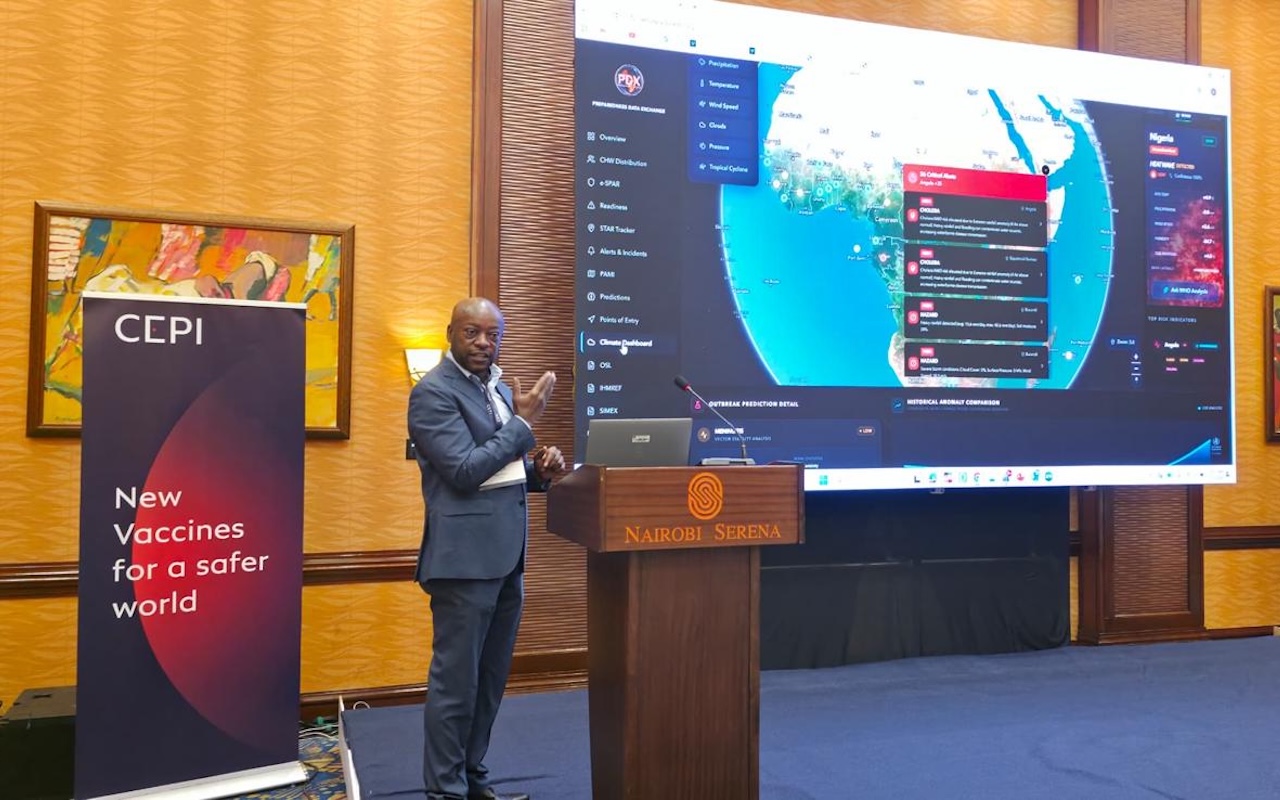
The Preparedness Data Exchange, or PDX, is an integrated, AI-enabled intelligence system is designed to support early, evidence-based decisions across the region. It brings together real-time all-hazards risk scoring, International Health Regulations core capacity monitoring, primary health care readiness indicators, climate intelligence, workforce data, laboratory trends, emergency operations information and media tracking within a single operational environment.
Rather than analysing these elements separately, the platform synthesises them to generate a unified risk picture that highlights vulnerabilities before they escalate.
PDX shortens the time between signal detection and coordinated response. At its core is an embedded artificial intelligence assistant that allows health officials to query live preparedness data in plain language and receive source-cited, auditable answers grounded in validated WHO datasets.
The platform is designed to strengthen national systems rather than replace them. Ministries of health and WHO country offices can use PDX to monitor evolving risk conditions, test hypotheses and inform readiness measures such as pre-positioning supplies, deploying rapid response teams or reinforcing laboratory capacity. Epidemiologists and disease surveillance officers remain central to interpretation, with technology supporting coordinated action.
“When we speak about AI-enabled preparedness, we are not speaking about replacing epidemiologists or public health leaders. We are speaking about augmenting them, using federated learning, integrated surveillance, and high-performance computation to move from reactive response to anticipatory intelligence,” said Dr Marie Roseline Belizaire, Regional Emergency Director at WHO Africa.
The shift reflects the realities facing the African region. Countries are managing overlapping epidemic threats, climate-related hazards and humanitarian pressures, often with uneven analytical capacity.
Over the past decade, diseases surveillance systems have strengthened significantly, yet preparedness gaps persist when information remains fragmented. Climate alerts, laboratory signals and community reports may each indicate heightened risk, but without rapid integration, opportunities for early action narrow.
For Dr Dick Chamla, Team Lead for Emergency Preparedness and Response at the WHO Emergency Hub in Nairobi, “preparedness is becoming a continuous discipline rather than an episodic activity. Integrated intelligence allows us to identify risk conditions early and act before disease transmission accelerates.”
Through PDX, WHO, partners and African governments are advancing a model of preparedness that is integrated, transparent and forward-looking, ensuring that action begins before emergency escalates. The Preparedness Data Exchange signals WHO Africa’s commitment to AI-driven, anticipatory and unified preparedness intelligence built to protect populations across the continent.

Click image to enlarge
For Additional Information or to Request Interviews, Please contact:
Saida Swaleh
Communications and Media Relations Officer
WHO Regional Office for Africa
Email: saida.swaleh@who.int
Chinyere Nwonye
Emergencies Communications Officer
WHO Africa Regional Office
nwonyec@who.int
+2348034645524
Collins Boakye-Agyemang
Communications and marketing officer
Tel: + 242 06 520 65 65 (WhatsApp)
Email: boakyeagyemangc@who.int
https://www.afro.who.int/news/data-decisions-strengthening-health-security-africa
03 March 2026
Nairobi—Across the African region, health threats are increasingly being detected early, bolstering measures to protect communities. To further reinforce health emergency preparedness, the World Health Organization (WHO) Regional Office for Africa today launched an integrated intelligence system to narrow the gap between decision-making lifesaving response even more.
The Preparedness Data Exchange, or PDX, is an integrated, AI-enabled intelligence system is designed to support early, evidence-based decisions across the region. It brings together real-time all-hazards risk scoring, International Health Regulations core capacity monitoring, primary health care readiness indicators, climate intelligence, workforce data, laboratory trends, emergency operations information and media tracking within a single operational environment.
Rather than analysing these elements separately, the platform synthesises them to generate a unified risk picture that highlights vulnerabilities before they escalate.
PDX shortens the time between signal detection and coordinated response. At its core is an embedded artificial intelligence assistant that allows health officials to query live preparedness data in plain language and receive source-cited, auditable answers grounded in validated WHO datasets.
The platform is designed to strengthen national systems rather than replace them. Ministries of health and WHO country offices can use PDX to monitor evolving risk conditions, test hypotheses and inform readiness measures such as pre-positioning supplies, deploying rapid response teams or reinforcing laboratory capacity. Epidemiologists and disease surveillance officers remain central to interpretation, with technology supporting coordinated action.
“When we speak about AI-enabled preparedness, we are not speaking about replacing epidemiologists or public health leaders. We are speaking about augmenting them, using federated learning, integrated surveillance, and high-performance computation to move from reactive response to anticipatory intelligence,” said Dr Marie Roseline Belizaire, Regional Emergency Director at WHO Africa.
The shift reflects the realities facing the African region. Countries are managing overlapping epidemic threats, climate-related hazards and humanitarian pressures, often with uneven analytical capacity.
Over the past decade, diseases surveillance systems have strengthened significantly, yet preparedness gaps persist when information remains fragmented. Climate alerts, laboratory signals and community reports may each indicate heightened risk, but without rapid integration, opportunities for early action narrow.
For Dr Dick Chamla, Team Lead for Emergency Preparedness and Response at the WHO Emergency Hub in Nairobi, “preparedness is becoming a continuous discipline rather than an episodic activity. Integrated intelligence allows us to identify risk conditions early and act before disease transmission accelerates.”
Through PDX, WHO, partners and African governments are advancing a model of preparedness that is integrated, transparent and forward-looking, ensuring that action begins before emergency escalates. The Preparedness Data Exchange signals WHO Africa’s commitment to AI-driven, anticipatory and unified preparedness intelligence built to protect populations across the continent.
Click image to enlarge
For Additional Information or to Request Interviews, Please contact:
Saida Swaleh
Communications and Media Relations Officer
WHO Regional Office for Africa
Email: saida.swaleh@who.int
Chinyere Nwonye
Emergencies Communications Officer
WHO Africa Regional Office
nwonyec@who.int
+2348034645524
Collins Boakye-Agyemang
Communications and marketing officer
Tel: + 242 06 520 65 65 (WhatsApp)
Email: boakyeagyemangc@who.int
https://www.afro.who.int/news/data-decisions-strengthening-health-security-africa