

Shannon Bennett
Well-known member
Which parts of us are Neanderthal? Our genes point to skin and hair
 Alan Boyle, Science Editor NBC News
6 hours ago
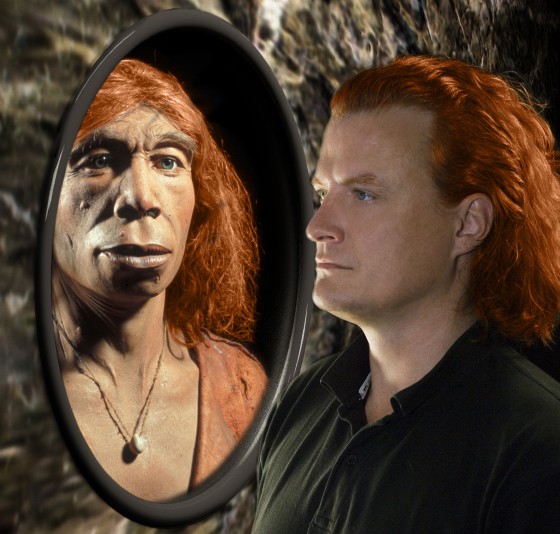 Michael Hofreiter and Kurt Fiusterweier / MPG EVA
Researchers have found that Neanderthal genetic coding is found with high frequency in genes that affect skin characteristics. That suggests that beneficial coding was picked up from Neanderthals to help humans adapt to non-African environments. Earlier studies have suggested that the traits for redheadedness are of Neanderthal origin.
A double-barreled comparison of ancient Neanderthal DNA with hundreds of modern-day genomes suggests that many of us have Neanderthal skin and hair traits ? but other parts of the Neanderthal genome appear to have been bred out of us along the way.
The findings, reported Wednesday by two separate teams of researchers in the journals Science and Nature, follow up on previous studies showing that Neanderthals interbred with humans outside Africa. Even though the Neanderthals went extinct about 30,000 years ago, they left traces of their genetic code in non-African DNA ? and now scientists are starting to discover exactly what that code does.
"Our genomes have these amazing stories that we're still learning to how to read, that tell us about our past 50,000 to 100,000 years," University of Washington geneticist Joshua Akey, a co-author of the Science study, told NBC News.
Chris Stringer, an anthropologist at London's Natural History Museum who was not involved in either study, said in an email that the latest findings "provide yet another twist to the hotly debated Neanderthal interbreeding story."
Broader Neanderthal influence
Previous studies indicated that non-Africans have 1 to 4 percent Neanderthal DNA in their genomes. But when hundreds of human genomes were analyzed from different parts of the world, scientists found that the breadth of Neanderthal influence was much wider. The Science study, which looked at 665 modern-day genomes, showed a 20 percent overlap.
"The difference between those two numbers arises from the fact that the 1 percent of the Neanderthal sequences that you have might be in different places from the 1 percent that I carry," Akey explained.
The Nature study analyzed 1,004 modern-day genomes and came up with an even higher figure, around 30 percent. Depending on which computer model holds true, the overlap could rise as high as 60 percent if the genetic analysis were extended to every modern human genome, Akey said.
Prime territory: Skin and hair
Both studies pinpointed parts of the genome that affect skin and hair characteristics as prime territory for snippets of Neanderthal DNA. "The idea is that maybe Neanderthals carried versions of alleles [genetic variants] for these genes that were well-adapted to their environment," the lead author of the Nature study, Harvard Medical School's Sriram Sankararaman, told NBC News.
The current view is that the branch of our family tree that gave rise to Neanderthals migrated out of Africa first, and then headed for Europe and Asia. They were followed hundreds of thousands of years later by our own branch, Homo sapiens. The latest findings suggest that those new arrivals must have acquired beneficial traits from Neanderthals through interbreeding.
"It's a pretty fascinating way of adapting to an environment," Akey said. "Instead of resting on your laurels, waiting for an adaptation to appear, you just pick one up from the local population."
The adaptations might have included lighter skin to soak up more Vitamin D from sunlight, or there may have been other skin or hair qualities more suited to a cold climate. "There are so many things that skin does that it's hard to say which traits were influenced more by the Neanderthal variants," Akey said.
Neanderthal negativity
Other traits were apparently not so advantageous. Sankararaman and his colleagues identified long stretches of DNA that were nearly devoid of Neanderthal influence. Those areas included the sex-related X chromosome and genes that are more highly expressed in the testes.
That's a big clue that the Neanderthal coding for reproductive traits caused decreased fertility in males when it was blended into the human genome, Sankararaman said. Through succeeding generations, natural selection would remove that inconvenient coding from sex-related regions of the genome.
"This suggests that when ancient humans met and mixed with Neanderthals, the two species were at the edge of biological incompatibility," Harvard Medical School's David Reich, the senior author of the Nature study, said in a news release. Such incompatibility is also seen in present-day mammalian species ? for example, horses and donkeys.
If that's the case, Neanderthals and humans may have tried to mate more often than previously thought. "We think there could have been a much higher proportion of Neanderthal [DNA in humans] right at the time of mixing, but a lot of it got lost," Sankararaman said.
The Nature study flagged high levels of Neanderthal DNA in other parts of the human genome that have been linked to conditions ranging from lupus, diabetes and Crohn's disease to smoking behavior, cirrhosis of the liver and long-term depression.
"Now that we can estimate the probability that a particular genetic variant arose from Neanderthals, we can begin to understand how that inherited DNA affects us," Reich said. "We may also learn more about what Neanderthals themselves were like."
How the clues were verified
The techniques used by the two research teams can be used to study the contributions to our DNA from other now-extinct populations ? such as the mysterious Denisovans, who split off from our main evolutionary line more than 170,000 years ago.
To identify the Neanderthal DNA snippets, Sankararaman and his colleagues looked for strings of human genetic code that were present in their high-quality Neanderthal genome sequence but not in sequences from West Africa, which presumably were untouched by Neanderthal influence. Other methods verified that the code was likely to come from interbreeding sometime between 37,000 and 86,000 years ago.
Akey and his colleague at the University of Washington, Benjamin Vernot, used statistical methods to identify areas of the modern-day genome that were likely to come from Neanderthals. Then they checked those DNA strings against the Neanderthal genome, like checking the answer key in the back of a math textbook. It turned out to be a surprisingly reliable method.
"Maybe we don't always have to find ancient DNA from fossils," Akey told NBC News. "Rather than always being beholden to fossils, maybe this provides an alternative where we can find ancient DNA embedded in the genomes of modern individuals."
http://www.nbcnews.com/science/which-parts-us-are-neanderthal-our-genes-point-skin-hair-2D12015074
6 hours ago
Researchers have found that Neanderthal genetic coding is found with high frequency in genes that affect skin characteristics. That suggests that beneficial coding was picked up from Neanderthals to help humans adapt to non-African environments. Earlier studies have suggested that the traits for redheadedness are of Neanderthal origin.
A double-barreled comparison of ancient Neanderthal DNA with hundreds of modern-day genomes suggests that many of us have Neanderthal skin and hair traits ? but other parts of the Neanderthal genome appear to have been bred out of us along the way.
The findings, reported Wednesday by two separate teams of researchers in the journals Science and Nature, follow up on previous studies showing that Neanderthals interbred with humans outside Africa. Even though the Neanderthals went extinct about 30,000 years ago, they left traces of their genetic code in non-African DNA ? and now scientists are starting to discover exactly what that code does.
"Our genomes have these amazing stories that we're still learning to how to read, that tell us about our past 50,000 to 100,000 years," University of Washington geneticist Joshua Akey, a co-author of the Science study, told NBC News.
Chris Stringer, an anthropologist at London's Natural History Museum who was not involved in either study, said in an email that the latest findings "provide yet another twist to the hotly debated Neanderthal interbreeding story."
Broader Neanderthal influence
Previous studies indicated that non-Africans have 1 to 4 percent Neanderthal DNA in their genomes. But when hundreds of human genomes were analyzed from different parts of the world, scientists found that the breadth of Neanderthal influence was much wider. The Science study, which looked at 665 modern-day genomes, showed a 20 percent overlap.
"The difference between those two numbers arises from the fact that the 1 percent of the Neanderthal sequences that you have might be in different places from the 1 percent that I carry," Akey explained.
The Nature study analyzed 1,004 modern-day genomes and came up with an even higher figure, around 30 percent. Depending on which computer model holds true, the overlap could rise as high as 60 percent if the genetic analysis were extended to every modern human genome, Akey said.
Prime territory: Skin and hair
Both studies pinpointed parts of the genome that affect skin and hair characteristics as prime territory for snippets of Neanderthal DNA. "The idea is that maybe Neanderthals carried versions of alleles [genetic variants] for these genes that were well-adapted to their environment," the lead author of the Nature study, Harvard Medical School's Sriram Sankararaman, told NBC News.
The current view is that the branch of our family tree that gave rise to Neanderthals migrated out of Africa first, and then headed for Europe and Asia. They were followed hundreds of thousands of years later by our own branch, Homo sapiens. The latest findings suggest that those new arrivals must have acquired beneficial traits from Neanderthals through interbreeding.
"It's a pretty fascinating way of adapting to an environment," Akey said. "Instead of resting on your laurels, waiting for an adaptation to appear, you just pick one up from the local population."
The adaptations might have included lighter skin to soak up more Vitamin D from sunlight, or there may have been other skin or hair qualities more suited to a cold climate. "There are so many things that skin does that it's hard to say which traits were influenced more by the Neanderthal variants," Akey said.
Neanderthal negativity
Other traits were apparently not so advantageous. Sankararaman and his colleagues identified long stretches of DNA that were nearly devoid of Neanderthal influence. Those areas included the sex-related X chromosome and genes that are more highly expressed in the testes.
That's a big clue that the Neanderthal coding for reproductive traits caused decreased fertility in males when it was blended into the human genome, Sankararaman said. Through succeeding generations, natural selection would remove that inconvenient coding from sex-related regions of the genome.
"This suggests that when ancient humans met and mixed with Neanderthals, the two species were at the edge of biological incompatibility," Harvard Medical School's David Reich, the senior author of the Nature study, said in a news release. Such incompatibility is also seen in present-day mammalian species ? for example, horses and donkeys.
If that's the case, Neanderthals and humans may have tried to mate more often than previously thought. "We think there could have been a much higher proportion of Neanderthal [DNA in humans] right at the time of mixing, but a lot of it got lost," Sankararaman said.
The Nature study flagged high levels of Neanderthal DNA in other parts of the human genome that have been linked to conditions ranging from lupus, diabetes and Crohn's disease to smoking behavior, cirrhosis of the liver and long-term depression.
"Now that we can estimate the probability that a particular genetic variant arose from Neanderthals, we can begin to understand how that inherited DNA affects us," Reich said. "We may also learn more about what Neanderthals themselves were like."
How the clues were verified
The techniques used by the two research teams can be used to study the contributions to our DNA from other now-extinct populations ? such as the mysterious Denisovans, who split off from our main evolutionary line more than 170,000 years ago.
To identify the Neanderthal DNA snippets, Sankararaman and his colleagues looked for strings of human genetic code that were present in their high-quality Neanderthal genome sequence but not in sequences from West Africa, which presumably were untouched by Neanderthal influence. Other methods verified that the code was likely to come from interbreeding sometime between 37,000 and 86,000 years ago.
Akey and his colleague at the University of Washington, Benjamin Vernot, used statistical methods to identify areas of the modern-day genome that were likely to come from Neanderthals. Then they checked those DNA strings against the Neanderthal genome, like checking the answer key in the back of a math textbook. It turned out to be a surprisingly reliable method.
"Maybe we don't always have to find ancient DNA from fossils," Akey told NBC News. "Rather than always being beholden to fossils, maybe this provides an alternative where we can find ancient DNA embedded in the genomes of modern individuals."
http://www.nbcnews.com/science/which-parts-us-are-neanderthal-our-genes-point-skin-hair-2D12015074


