• FluTrackers.com Inc. does not provide medical advice. Information on this web site is collected from various internet resources, and the FluTrackers board of directors makes no warranty to the safety, efficacy, correctness or completeness of the information posted on this site by any author or poster. The information collated here is for instructional and/or discussion purposes only and is NOT intended to diagnose or treat any disease, illness, or other medical condition. Every individual reader or poster should seek advice from their personal physician/healthcare practitioner before considering or using any interventions that are discussed on this website. By continuing to access this website you agree to consult your personal physican before using any interventions posted on this website, and you agree to hold harmless FluTrackers.com Inc., the board of directors, the members, and all authors and posters for any effects from use of any medication, supplement, vitamin or other substance, device, intervention, etc. mentioned in posts on this website, or other internet venues referenced in posts on this website.
  • We are not asking for any donations. Do not donate to any entity who says they are raising funds for us.

West Virginia reports second human swine H3N2 case at same daycare as first - 21 additional children symptomatic ILI

Re: West Virginia reports second human swine H3N2 case

Re: West Virginia reports second human swine H3N2 case

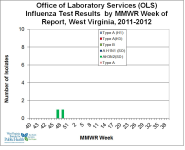
The chart in question;

WV.PNG

I havesent a query to the DOH just to be sure.
 
Re: West Virginia reports second human swine H3N2 case

Re: West Virginia reports second human swine H3N2 case

Novel Influenza H3N2 variant virus [(H3N2)v]
in West Virginia
Infectious Disease Epidemiology December 2011
350 Capitol St, Room 125, Charleston WV 25301-3715
Phone: 304.558.5358 ? Fax: 304.558.6335 ? In West Virginia: 1-800-423-1271
http://www.dhhr.wv.gov/oeps/disease/flu/Pages/default.aspx
In response to confirming the second case of H3N2 in Mineral Co and based on recommendations from
the Centers for Disease Control and Prevention, we are asking your help in our effort finding cases that
might be infected with this novel influenza virus. We are recommending the following:
For those under the age of 5 years of age, we are asking for enhanced surveillance. In an outbreak
situation, all children 5 years old and under, who present to ER with any upper respiratory symptoms
should be tested for influenza by nasopharyngeal swab and should be sent to the WV Office of
Laboratory Services for PCR testing. Upper Respiratory symptoms may include ANY of the following:
 Fever (patient does not necessarily have to have a fever)
 Stuffy/runny nose
 Sore throat
 Cough
 Shortness of breath.
Nasopharyngeal swabs should be sent to West Virginia Office of Laboratory Services (OLS) for (RT-PCR
testing). For more information about influenza testing kits, submission forms and shipping materials,
please visit OLS website at http://www.wvdhhr.org/labservices/labs/virology/influenza.cfm
For those over the age of 5 we are continuing out routine surveillance by identifying ILI in your community
and reporting this to your local health department. Influenza-like illness (ILI) is defined as: fever > 100 ?F;
and, cough and/or sore throat; and no other identified cause. Please report the number of people
presenting with ILI in your practice per week to your local health department.
During times of low influenza activity, the negative predictive value of a rapid test for influenza is highest.
Confirmation of a negative rapid test by PCR or culture in patients with clinical symptoms of ILI may be
indicated especially in patients with severe illness and in the setting of an outbreak. Commercial testing
for influenza is summarized at:
http://www.dhhr.wv.gov/oeps/disease/flu/Documents/Provider_how do I test for influen
za.pdf
The CDC recommends an annual seasonal flu vaccine to protect against seasonal influenza viruses.
However, a seasonal flu vaccine is unlikely to protect against influenza A (H3N2)v virus infection.
Recommendations of the Advisory Committee on Immunization Practices (ACIP) for 2011 can be found
at:
http://www.cdc.gov/mmwr/preview/mmwrhtml/mm6033a3.htm
Persons with ILI should be managed in accordance with IDSA guidelines, available at:
http://www.dhhr.wv.gov/oeps/disease/flu/Documents/IDSA Seasonal Influenza Guidelines.pdf
If clinically indicated, antiviral treatment should not be withheld pending confirmation by polymerase chain
reaction (PCR). Oseltamivir (Tamiflu) and zanamivir (Relenza) have activity against currently circulating
influenza A and B strains, including the novel influenza A (H3N2)v virus. Antiviral treatment is
recommended as early as possible for any patient with confirmed or suspected influenza who is
hospitalized; has severe, complicated, or progressive illness; or is at higher risk for influenza
complications. CDC treatment guidelines are available at:
http://www.cdc.gov/flu/professionals/antivirals/summary-clinicians.htm
For more information, please visit our website at
http://www.dhhr.wv.gov/oeps/disease/Pages/default.aspx
or call us 24/7 at 1-800-423-1271.

Infectious Disease Epidemiology December 2011
350 Capitol St, Room 125, Charleston WV 25301-3715
Phone: 304.558.5358 ? Fax: 304.558.6335 ? In West Virginia: 1-800-423-1271
http://www.dhhr.wv.gov/oeps/disease/flu/Pages/default.aspx
 
Re: West Virginia reports second human swine H3N2 case

Re: West Virginia reports second human swine H3N2 case

:tiphat: Missouriwatcher

Novel influenza A Virus: Two human infections with a novel influenza A virus were reported.
Pneumonia and Influenza (P&I) Mortality Surveillance: The proportion of deaths attributed to P&I was below the epidemic threshold.
Influenza-associated Pediatric Mortality: No influenza-associated pediatric deaths were reported.
Outpatient Illness Surveillance: The proportion of outpatient visits for influenza-like illness (ILI) was 1.4%, which is below the national baseline of 2.4%. All 10 regions reported ILI below region-specific baseline levels. One state experienced moderate ILI activity, New York City experienced low ILI activity, 49 states experienced minimal ILI activity, and the District of Columbia had insufficient data.
Geographic Spread of Influenza: The geographic spread of influenza in two states was reported as local; Guam, Puerto Rico, and 37 states reported sporadic activity, and the District of Columbia, the U.S. Virgin Islands, and 11 states reported no influenza activity.

Two human infections with novel influenza A viruses were detected in two states (West Virginia and Wisconsin). One patient was infected with an influenza A (H1N1) variant virus with genes from human, swine, and avian lineages (A(H1N1)v) and reported close contact with pigs prior to illness onset. The other patient was infected with an influenza A (H3N2) variant virus with genes from human, swine, and avian lineages (A(H3N2)v) and did not have contact with pigs prior to illness onset, but did have contact with another confirmed case of A(H3N2)v. Both patients have recovered from their illnesses...

http://www.cdc.gov/flu/weekly/#S6
 
Re: West Virginia reports second human swine H3N2 case

Re: West Virginia reports second human swine H3N2 case

"Have You Heard?"

December 23, 2011 -- An influenza A (H1N1) virus that is known to circulate in U.S. swine but not humans has been detected in an adult in the state of Wisconsin. The patient reported occupational contact with swine prior to illness onset. No human-to-human transmission with this virus has been identified. CDC laboratory testing has confirmed that this is a new reassortant influenza A H1N1 virus as it has acquired the matrix [M] gene from the 2009 H1N1 pandemic virus. Laboratory testing shows that the virus is susceptible to the influenza antiviral medications, oseltamivir and zanamivir. Surveillance for additional human cases in the area has been enhanced. Providers are being asked to collect specimens for influenza virus testing from any patient presenting with influenza-like illness.

The virus identified in Wisconsin has genes from avian, swine and human influenza viruses, making it a so-called ?triple reassortant? (tr) virus. Triple reassortant viruses have been circulating in U.S. swine since the 1990s. However the virus detected in Wisconsin is different from earlier triple reassortant influenza A H1N1 viruses in swine (tr-H1N1) in that it has acquired the matrix [M] gene) from the 2009 influenza A (H1N1) virus. A review of publicly posted influenza genome sequence web sites indicates this reassortment (the tr-H1N1 virus common in swine with the 2009 H1N1 M gene) has been found in U.S. swine since 2010. However, this is the first time this genetic sequence has been detected in a human. Gene sequences of the virus detected in Wisconsin have been posted to publicly available web sites.

..


http://www.cdc.gov/media/haveyouheard/stories/Influenza_A_Variant.html
 
Re: West Virginia reports second human swine H3N2 case

Re: West Virginia reports second human swine H3N2 case

Yikes. The date on the release below is December 15. If this information has been known for three weeks, why hasn't it been more widely disseminated? Combining this information with the above information makes this look like a many generation cluster over several weeks.

http://peds.stanford.edu/chiefsblog/2011/12/30/111230 CDPH H3N2.pdf

More recently, investigation of a case in West Virginia has identified a possible outbreak, with 23 out of 70 contacts of the case reporting ILI; all have recovered.
 
Re: West Virginia reports second human swine H3N2 case

Re: West Virginia reports second human swine H3N2 case

I missed that. Wow. A potential cluster of 23 additional cases, representing one third of direct contacts could indicate efficient H2H transmission. I would think that isolates from the contacts with ILI could have been subtyped by now. This would also be the first case where H3N2v would have been documented in more than one or two direct contacts of a confirmed case. Prior data, even the Iowa cluster, have been interpretted as indicating limited H2H transmission. A change in this interpretation would be an important development.

Yikes. The date on the release below is December 15. If this information has been known for three weeks, why hasn't it been more widely disseminated? Combining this information with the above information makes this look like a many generation cluster over several weeks.

http://peds.stanford.edu/chiefsblog/2011/12/30/111230 CDPH H3N2.pdf

More recently, investigation of a case in West Virginia has identified a possible outbreak, with 23 out of 70 contacts of the case reporting ILI; all have recovered.
 
Re: West Virginia reports second human swine H3N2 case at same daycare as first - 21 additional children symptomatic ILI

http://www.cdc.gov/mmwr/preview/mmwrhtml/mm6051a4.htm?s_cid=mm6051a4_w

West Virginia. On November 19, a child aged <5 years developed acute onset of fever after 1 week of cough and congestion. The child had been hospitalized for an unrelated condition 2 days before the onset of fever. On November 21, a respiratory specimen was collected. Rapid diagnostic tests conducted by the hospital were negative for influenza and respiratory syncytial virus, but influenza A was identified by an alternative rRT-PCR at the hospital. The specimen was forwarded to the West Virginia Office of Laboratory Services, where it was identified as a suspected influenza A (H3N2)v virus. Subsequent genome sequencing conducted at CDC confirmed the virus as A(H3N2)v with the M gene from the A(H1N1)pdm09 virus. The child, who had no recent travel or exposure to swine, was discharged on November 21, and has since recovered from the influenza illness.

An investigation was conducted to ascertain respiratory illnesses among contacts of the child that occurred during November 9?December 19. Multiple contacts, including children who regularly attended day care with the child, were found to have had respiratory illness during this period. On November 29, a second child aged <5 years who attended day care regularly with the first child and who had no recent travel or swine exposure became ill with fever, cough, diarrhea, and rhinorrhea. The second child did not seek medical care and recovered fully from the illness. A respiratory specimen obtained from the second child on December 7 was inconclusive by rRT-PCR at the West Virginia Office of Laboratory Services; however, the specimen was confirmed as influenza A (H3N2)v with the M gene from the A(H1N1)pdm09 virus via genome sequencing at CDC.

No additional A(H3N2)v cases have been identified among the other ill day care attendees or contacts of either patient. Enhanced surveillance for influenza-like illness and increased diagnostic testing of respiratory specimens is being conducted in West Virginia and adjacent counties in Maryland as part of the ongoing investigation of these cases. Currently, no evidence of additional human-to-human transmission in the community has been identified.
 
Re: West Virginia reports second human swine H3N2 case at same daycare as first - 21 additional children symptomatic ILI

The link from post 4 is now up and running;

THIS IS AN OFFICIAL WEST VIRGINIA HEALTH ADVISORY NUMBER WV0058-12-23-11
Distributed via the WV Health Alert Network – December, 23, 2011
Novel Influenza H3N2 variant virus [(H3N2)v] in Mineral County, West Virginia
TO: West Virginia Healthcare Providers, Local Health Departments, Hospitals and other Healthcare Facilities
FROM: Marian L. Swinker, MD, MPH, Commissioner for Public Health and State Health Officer, WVDHHR,
Bureau for Public Health
DATE: December 23, 2011
LOCAL HEALTH DEPARTMENTS: PLEASE DISTRIBUTE TO COMMUNITY HEALTH PROVIDERS,
HOSPITAL-BASED PHYSICIANS, INFECTION CONTROL PREVENTIONISTS, LABORATORY
DIRECTORS, AND OTHER APPLICABLE PARTNERS
OTHER RECIPIENTS: PLEASE DISTRIBUTE TO ASSOCIATION MEMBERS, STAFF, ETC.

Two children attending the same daycare have been diagnosed with a novel influenza A H3N2
variant [(H3N2)v] virus with the matrix (M) gene from the influenza A(H1N1) pdm09 virus in the
Mineral County area. The illness onset dates were November 19th and November 29th, 2011. Both
children have recovered completely without antiviral therapy. No recent travel or exposure to swine
was reported from either patient. However, respiratory illness was identified in multiple contacts.
Investigation is ongoing.

This influenza A (H3N2)v virus is similar to viruses (formerly known as swine-origin triple reassortant
H3N2 influenza viruses) that have caused 10 previous cases of novel influenza A infection in the
United States since August 2011. These novel influenza A (H3N2) viruses are substantially different
from currently circulating seasonal (human) influenza A (H3N2) viruses, but are distantly related to
human influenza viruses that circulated among people in the 1990s. For that reason, some adults
may have some residual immunity against this virus. However, children younger than 6 years have no
immunity to this virus, rendering this age group the most vulnerable for infection.

We are requesting your assistance to identify outbreaks or clusters of upper respiratory infections
among children 5 year old or younger, especially in daycares and kindergartens. Upper respiratory
symptoms may include fever, sore throat, cough, nasal congestion, or shortness of breath. Nasal or
throat swabs for PCR testing are appropriate specimens from young children because of the large
amount of virus they shed. In West Virginia, outbreaks are required to be reported immediately to the
local health department. Please contact (800)-423-1271 or your local health department for
questions.
http://www.dhhr.wv.gov/oeps/disease/Documents/WV_HAN_58.pdf

 
Back
Top