• FluTrackers.com Inc. does not provide medical advice. Information on this web site is collected from various internet resources, and the FluTrackers board of directors makes no warranty to the safety, efficacy, correctness or completeness of the information posted on this site by any author or poster. The information collated here is for instructional and/or discussion purposes only and is NOT intended to diagnose or treat any disease, illness, or other medical condition. Every individual reader or poster should seek advice from their personal physician/healthcare practitioner before considering or using any interventions that are discussed on this website. By continuing to access this website you agree to consult your personal physican before using any interventions posted on this website, and you agree to hold harmless FluTrackers.com Inc., the board of directors, the members, and all authors and posters for any effects from use of any medication, supplement, vitamin or other substance, device, intervention, etc. mentioned in posts on this website, or other internet venues referenced in posts on this website.
  • We are not asking for any donations. Do not donate to any entity who says they are raising funds for us.

West Nile Virus

KC

Moderator
It's West Nile Virus time again....

California West Nile Virus website:
http://www.westnile.ca.gov/

> From their website

2006

11 dead birds have tested positive for WNV in 2006, from Sacramento, Santa Clara, San Diego, and Orange Counties.

2005

West Nile virus activity was detected in 54/58 California counties in 2005.

Humans

To date in 2005, there have been 935 human WNV infections from 40 counties in California.

101 of the 935 infections were first detected in asymptomatic individuals through screening done at blood banks - 42 later became symptomatic. Eight of the 101 presumptively viremic blood donors did not confirm in follow-up testing, and have been removed from the totals. Four asymptomatic individuals were detected via local public health agencies.

Of the 880 WNV cases with symptoms, 305 were classified as West Nile neuroinvasive disease, 534 were classified as West Nile fever cases, and 41 were of unknown clinical presentation.

There were 19 West Nile virus-related fatalities reported in California in 2005 from Amador, Butte, Fresno, Kings, Madera, Plumas, Riverside, Sacramento, San Bernardino, San Joaquin, Stanislaus, and Tulare counties.

Equines (Horses)

In 2005, 456 horses from 43 counties were infected with WNV. Of the horses with infections, 200 have either died or been euthanized.

Dead Birds

In 2005, 3,046 dead birds from 52 counties tested positive for WNV in California.

The top 4 species affected by WNV are 1) American Crows 2) Western Scrub-Jays 3) Yellow-billed Magpies and 4) Steller's Jays

Mosquito Pools and Sentinel Chickens

In 2005, 1,242 mosquito pools from 29 counties tested positive for WNV.
1,053 chickens from 31 counties tested positive for WNV/SLE ***antibodies (seroconverted) in 2005.

* Horse data is only updated on Fridays

** A mosquito pool is a collection of approximately 50 mosquitoes that are tested together for West Nile virus.

*** WNV and SLE (St. Louis encephalitis) are closely related viruses in the family Flaviviridae and preliminary testing cannot distinguish between these two viruses. Further testing is conducted as needed to determine if the sentinel chickens are antibody positive to WNV or SLE.
--------------------------------------------------------------

> Also from the website

How is WNV transmitted?


Infected Mosquitoes. Most often, WNV is spread by the bite of an infected mosquito. Mosquitoes are WNV carriers ("vectors") that become infected when they feed on infected birds. Infected mosquitoes can then spread WNV to humans and other animals when they bite.

Transfusions, Transplants, and Mother-to-Child. All donated blood is checked for WNV before being used. The risk of getting WNV through blood transfusions and organ transplants is very small, and should not prevent people who need surgery from having it. Transmission during pregnancy from mother to baby or transmission to an infant via breastfeeding is extremely rare.

Not through touching. WNV is not spread through casual contact such as touching or kissing a person with the virus, or by breathing in the virus.

--------------------------------------------------------------------

Observations:

1) West Nile is a vector borne illness that IS HUMAN TO HUMAN.

2) We saw hundreds of dead crows in our area. They were reported but nobody ever came to pick them up and have them tested. These were official reports from one government agency to another.

3) I read a few posts about H5N1 and migration routes along the Nile River... coincidence or correlation?

3) It is suspected to have arrived on the East Coast of the United States in 1999.

4) Symptoms are very similiar to Chik, Dengue, and other vector borne diseases. All the emphasis has been on avoiding mosquitoes.

5) It has also infected cats, dogs, and squirrels.
 
Last edited:
Re: West Nile Virus

VERY BAD ADVICE

> From the California Website on West Nile Virus

Identify and Report Dead Birds

Information on Reporting Dead Birds

CLICK HERE TO REPORT A DEAD BIRD
or call toll-free:
1-877-WNV-BIRD (1-877-968-2473)
Operators available: 8 am - 5 pm / 7 days a week
After 5 pm, please leave a message

After you have reported a dead bird, you will be contacted if that bird will be picked up for West Nile virus testing. If you have not been contacted within 24 hours of your report, you may safely dispose of the dead bird in your trash. There is no evidence that West Nile virus can be acquired by handling dead birds, but it is best not to handle the dead bird with your bare hands. Use gloves, a shovel, or a plastic bag to place the bird in a trash bag for disposal. Please DO NOT freeze dead birds. West Nile virus is transmitted by mosquitoes, so the best way to protect yourself from West Nile virus is to avoid getting bitten by mosquitoes. Click here for prevention information.

Due to the high volume of reports to the hotline, the California Department of Health Services is unable to respond to each report. However, all of the information received about dead birds is used by public agencies to track where birds are dying. Dead birds are an indicator of West Nile virus activity. This allows the local mosquito and vector control agencies to concentrate mosquito control efforts in those areas. Thank you for your cooperation.

------------------------------------------------------------------

Advice: Don't pick up dead birds even if a government agency tells you it is safe to do so.
 
Last edited:
Re: West Nile Virus

From 2004.... before the big surge in 2005... hmmm..... Points to ponder....

Virus undercount called likely

WEST NILE: Thousands may not know they've had it, officials say. Bird deaths top 2 million, an expert says.

11:52 PM PDT on Friday, October 15, 2004

By DOUGLAS E. BEEMAN / The Press-Enterprise

WEST NILE VIRUS
County Human cases
San Bernardino 191
Riverside 102
Los Angeles 300
Orange 59
Imperial 1
San Diego 1
California 750

County Deaths
San Bernardino 5
Los Angeles 9
Riverside 2
Orange 3
Tehama 1
California 20

County Equine cases
Riverside 94
San Bernardino 37
California 496
County Equine deaths
Riverside 49
San Bernardino 15
California 210

Numbers as of Friday (2004)

SOURCE: California Department of Health Services, California Department of Food and Agriculture

The number of human West Nile virus cases may be vastly undercounted because most people didn't realize they had been infected, Inland health officials said Friday at a half-day briefing in Riverside.

While the mosquito-borne virus may have gone unnoticed in thousands of people, it has been devastating to bird populations in the state, a UC Riverside scientist said.

"We probably lost something like half a million crows" in California, said Tom Scott, a conservation biologist at UCR. He estimates that as many as 2.5 million birds have died of West Nile virus this year.

"There's never been a virus that's done anything like this in California," Scott said.

Some 750 people in 22 California counties have been infected with the virus this year, according to the latest state figures.

On Friday, state officials announced that an Orange County man has become California's 20th fatality this year from the virus.

The 70-year-old man first became ill Aug. 18, but the state did not confirm the West Nile infection until Wednesday.

The virus also infects horses, which are very vulnerable to it, but there are vaccines available to protect them.

Inland health officials said Friday that the number of reported human infections is lower than they had anticipated. They credited aggressive mosquito control efforts.

Riverside County has confirmed 102 infections, including 42 cases in which people have suffered more serious complications, such as encephalitis and meningitis, said Sarah Mack, the county's chief of health statistics.

The milder form of the disease is called West Nile fever, with symptoms that can include headaches, body aches, a body rash and profound fatigue.

"There probably was more West Nile fever than was reported, but the magnitude is unknown," Mack said.

Historically, about 1 percent of West Nile's victims develop serious complications.

If that is true in California, Mack said, it could equate to more than 4,000 Riverside County infections. (By the same measure, San Bernardino County could have about 5,000 infections.)

The county has reported 49 serious West Nile infections this year, according to county health data.)

Whatever the number, Inland health officials hope fewer people will fall ill next year.

West Nile virus first surfaced in Southern California last year. Infections in other states have peaked in the second year.

"We hope the numbers (of infections) tail off next year," said Dr. Eric Frykman, health officer in San Bernardino County, where 191 infections have been reported. "If this isn't the second year, the numbers will be bigger next year."

Scott, for one, believes next year will see fewer infections. The reason: Many of the birds thought to help the virus amplify in nature have been decimated.

---------------------------------------------------------
Comments:

1) Scott was wrong. The death rate among birds and people intensified in 2005 as compared to 2004. The virus continues in 2006. Happy belated new year to anyone studying virology and trends.
 
Re: West Nile Virus

Ventura County added today.

> From California West Nile Virus Site

In 2006:

12 dead birds have tested positive for WNV in 2006, from Orange, Sacramento, San Diego, Santa Clara, and Ventura Counties.
 
Re: West Nile Virus

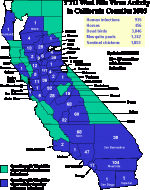
2005 WNV Map:
 

Attachments

  • WNV.gif
    WNV.gif
    15 KB · Views: 0
Re: West Nile Virus

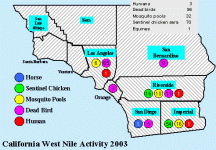
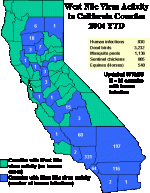
2003 and 2004 WNV Maps:
 

Attachments

  • 2003WNV.gif
    2003WNV.gif
    9.8 KB · Views: 2
  • 2004WNV.gif
    2004WNV.gif
    11.5 KB · Views: 2
Re: West Nile Virus

From the California West Nile Virus Website:

What is West Nile Virus?
West Nile virus (WNV) is a mosquito-borne disease that is common in Africa, west Asia, the Middle East, and more recently, North America. Human infection with WNV may result in serious illness. Experts believe WNV is established as a seasonal epidemic in North America that flares up in the summer and continues into the fall.

When was WNV first found in the United States?West Nile virus was first detected in the United States in New York in 1999. Since then, WNV has spread to 48 states, and to Canada and Mexico. Last year there were 2,448 human cases of WNV detected in the United States, including 84 deaths. This is much lower than in 2003 when there were more than 10,000 human cases of WNV detected, including 262 deaths.

When was WNV first found in California?
WNV first appeared in California in 2002 with the identification of one human case. In 2003, three human cases occurred in California and WNV activity was detected in six southern California counties. By 2004, WNV activity was observed in all 58 counties in California and 830 human infections were identified. Click Here for a summary of West Nile Virus in California in 2004.

How is WNV detected and monitored in California?
California is well prepared to detect, monitor, and respond to WNV through ongoing collaboration between over 100 public agencies. The California surveillance system includes human and horse case detection and testing of mosquitoes, sentinel chicken flocks, and dead birds for WNV.
 
Re: West Nile Virus

From the National Biological Information Infrasturcture (NBII) (http://partners.nbii.gov/portal/server.pt) :

"The West Nile virus (WNV) was first detected in the Western Hemisphere in 1999 and has since rapidly spread across the North Americcan continent into all 48 continental states, seven Canadian provinces, and throughout Mexico. In addition, WNV activity has been detected in Puerto Rico, the Dominican Republic, Jamaica, Guadeloupe and El Salvador."
 
Re: West Nile Virus

From the National Institutes of Health (NIH), U.S. Health and Human Services (HHS) http://www.niaid.nih.gov/factsheets/westnile.htm :

"West Nile virus is an emerging infectious disease that made its first appearance in the United States in 1999. The microbe that causes the infection belongs to a group of disease-causing viruses known as flaviviruses, which are usually spread by ticks or mosquitoes. Other well-known diseases caused by flaviviruses include yellow fever, Japanese encephalitis, dengue, and Saint Louis encephalitis." (My note: Chik also)

... "The first step in the transmission cycle of West Nile virus occurs when a mosquito bites an infected bird or other infected animal. Crows are commonly associated with the virus because they are highly susceptible to infection. Scientists have identified more than 138 bird species that can be infected, and more than 43 mosquito species that can transmit West Nile virus. Although the virus primarily cycles between mosquitoes and birds, infected female mosquitoes also can transmit West Nile virus through their bites to humans and other "incidental hosts" such as horses. With so many susceptible hosts to amplify the virus and so many types of mosquitoes to transmit it, West Nile virus has spread rapidly across the United States."

"West Nile virus was first isolated in Uganda in 1937. Today it is most commonly found in Africa, West Asia, Europe, and the Middle East. In 1999, it was found in the Western Hemisphere for the first time in the New York City area. In early spring 2000, it appeared again in birds and mosquitoes and then spread to other parts of the eastern United States. By 2004, the virus had been found in birds and mosquitoes in every state except Alaska and Hawaii."

... "No specific vaccines or treatments exist for West Nile virus. Faced with a potentially deadly illness spreading quickly across the United States, scientists and public health officials have accelerated research on developing tools to prevent and treat West Nile disease."

... "BASIC RESEARCH"

Complex interactions between the virus, birds and other animals, mosquitoes, and the environment have influenced the pattern of West Nile virus emergence and distribution across the United States. Yet specific factors contributing to the emergence of West Nile virus are poorly understood. Knowledge of these principles is essential in planning strategies to prevent, treat, and control this disease. The goal of NIAID basic research on West Nile virus is to develop the knowledge base to enable the development of medical countermeasures against West Nile virus.

NIAID supports basic research at universities to better understand the infection in animals and humans, the virus itself, and the environmental factors that influence disease emergence. For example, researchers are:

- Determining how the virus replicates and spreads throughout the body in order to develop vaccines and drugs to prevent and treat disease

- Determining which viral proteins contribute to the virus' ability to cause disease

- Investigating how the immune system responds in the most serious form of the disease, West Nile encephalitis

- Studying whether migrating bird populations carry the virus to points in Central and South America. The emergence of West Nile virus in these new areas, which harbor abundant mosquito populations, could set up conditions for a potentially severe epidemic

- Examining the ecology and year-to-year maintenance of mosquito-borne encephalitis viruses and how genetic variation affects spread and virulence of the virus

- Researchers are also working to better understand other insects and ticks that transmit other flaviviruses. Such an understanding will allow improved monitoring and surveillance, and enable development and preliminary testing of strategies to control carriers of the virus.
 
Re: West Nile Virus

(Cross Posted into West Nile Virus and Pandemic Chikungunya forums)

2006: From the article posted by Snowy Owl in Pandemic Chik news http://www.flutrackers.com/forum/showthread.php?t=3728 , Aedes and Culex mosquitoes are now known to spread Chik.

Until recently, the primary carrier was considered the be Aedes, in particular Aedes aegypti and Aedes albopictus. The addition of other vector mosquitoes may be critical to the rapid spread and increased virulence of Chik. The increased number of vectors causes a widening of the number and type of reservoir hosts available. It may also cause previously dead end hosts to become reservoir hosts. West Nile Virus in North America has undergone a similar shift.

From the W.H.O. (17 February 2006): ..."Chikungunya, a viral disease, is transmitted to humans by infected mosquitoes, typically Aedes aegypti, although there may be other competent mosquito vectors. The name, chickungunya, comes from the Swahili for stooped walk, reflecting the physique of a person suffering from the disease. The disease has been described in Africa, South-East Asia, southern India and Pakistan. It occurs principally during the rainy season."

"Chikungunya is rarely fatal. Symptoms appear between 4 and 7 days after the patient has been bitten by the infected mosquito. A high fever and headache occur, with significant pains in the joints (ankles, wrists) and can persist for several weeks...."
-----------------------------------------------------------------------

From the United States CDC: http://www.cdc.gov/ncidod/dvbid/westnile/mosquitoSpecies.htm

1999 - Known West Nile Virus Vectors in the United States

Aedes Aedes vexans
Culex Culex pipiens, Culex restuans, Culex salinarius

2006 - Known West Nile Virus Vectors in the United States

Aedes Aedes aegypti, Aedes albopictus, Aedes atlanticus/tormentor, Aedes atropalpus, Aedes canadensis, Aedes cantator, Aedes cinereus, Aedes condolescens, Aedes dorsalis, Aedes dupreei, Aedes fitchii, Aedes fulvus pallens, Aedes grossbecki, Aedes infirmatus, Aedes japonicus, Aedes melanimon, Aedes nigromaculis, Aedes provocans, Aedes sollicitans, Aedes squamiger, Aedes sticticus, Aedes stimulans, Aedes taeniorhynchus, Aedes triseriatus, Aedes trivittatus, Aedes vexans

Anopheles Anopheles atropos, Anopheles barberi, Anopheles crucians/bradleyi, Anopheles franciscanus, Anopheles freeborni, Anopheles hermsi, Anopheles punctipennis, Anopheles quadrimaculatus, Anopheles walkeri

Coquillettidia Coquillettidia perturbans

Culex Culex coronator, Culex erraticus, Culex erythrothorax, Culex nigripalpus, Culex pipiens, Culex quinquefasciatus, Culex restuans, Culex salinarius, Culex stigmatosoma, Culex tarsalis, Culex territans, Culex thriambus

Culiseta Culiseta impatiens, Culiseta inornata, Culiseta melanura, Culiseta morsitans

Deinocerites Deinocerites cancer

Mansonia Mansonia tittilans

Orthopodomyia Orthopodomyia signifera

Psorophora Psorophora ciliata, Psorophora columbiae, Psorophora ferox, Psorophora howardii

Uranotaenia Uranotaenia sapphirina
 
Last edited:
Re: Alaska on the watch for West Nile Virus

Re: Alaska on the watch for West Nile Virus

Lobotomy said:

Lobo - the above is a commercial (not news) site, that went out of business (due to lack of demand).

We have not WNV cases yet. The good news is that few of our mosquitos are capable of carrying the virus.

See http://www.alaskatrekker.com/mosquitos.htm

Only two (other sites say 4) of the state's 35 species of mosquitoes have been found to carry the virus in the Lower 48. Chances of the virus taking hold in Alaska are slim, according to wildlife veterinarian Kimberlee Beckmen and Jim Kruse, an insect expert at the University of Alaska Museum. Birds carry the virus, and mosquitoes spread the virus by biting infected birds and injecting it into other birds, people or horses. Alaska has natural limitations for the spread of the virus. The Alaska scientists agree that it's a long shot for the West Nile Virus to establish itself in Alaska. The disease has not made it to higher latitudes of Europe and the two mosquito species that have transmitted the virus most often in the Lower 48 don't live in Alaska. "Until we start getting dead birds up here, there's no reason to worry," Kruse said.
----------------------------------------

On a personal note - most news reports are saying......"maybe, but unlikely."

.


Re: West Nile Virus

AD,

The only thing stopping WNV from Alaska is B.C. It is in every province of Canada except BC, and in every state in the United States except Hawaii (Hawaii just sent in dead bird samples to be identified).

The updated list of mosquito vectors is from January 06. You will see several of those are cold weather mosquitoes and are found in Alaska. Your Alaska trekkers site may not be utilizing the most recent information on what mosquitoes carry WNV.
 
Re: West Nile Virus

AD,

Thanks for the link to the site. Most of the data that they reference is circa 2002.
 
Re: West Nile Virus

From the CDC (2005) Stats:

"Of the 2949 cases, 1272 (43%) were reported as West Nile meningitis or encephalitis (neuroinvasive disease), 1566 (53%) were reported as West Nile fever (milder disease), and 111 (4%) were clinically unspecified at this time."

2005: 116 confirmed deaths in the United States from WNV.

From the CDC (2004) Stats:

"Of the 2539 cases, 1142 (45%) were reported as West Nile meningitis or encephalitis (neuroinvasive disease), 1269 (50%) were reported as West Nile fever (milder disease), and 128 (5%) were clinically unspecified at this time."

2004: 100 confirmed deaths in the United States from WNV.

From the CDC (2003) Stats:

" Of 9862 cases, 6830 (69%) were reported as West Nile fever (milder disease), 2866 (29%) were reported as West Nile meningitis or encephalitis (neuroinvasive disease) and 166 (2%) were clinically unspecified."

2003: 264 confirmed deaths in the United States from WNV.

From the CDC (2002) Stats:

"Of the 4156 cases, 2946 (71%) were reported as West Nile meningitis or encephalitis (neuroinvasive disease), 1160 (28%) were reported as West Nile fever (milder disease), and 50 (1%) were clinically unspecified at this time."

2002: 284 confirmed deaths in the United States from WNV.

From the CDC (2001) Stats:

"Of the 66 cases, 64 (97%) were reported as West Nile meningitis or encephalitis (neuroinvasive disease), 2 (3%) were reported as West Nile fever (milder disease), and 0 (1%) were clinically unspecified at this time."

2001: 9 confirmed deaths in the United States from WNV.

From the CDC (2000) Stats:

"Of the 21 cases, 19 (90%) were reported as West Nile meningitis or encephalitis (neuroinvasive disease), 2 (10%) were reported as West Nile fever (milder disease), and 0 (0%) were clinically unspecified at this time."

2000: 2 confirmed deaths in the United States from WNV.

From the CDC (1999) Stats:

"Of the 62 cases, 59 (95%) were reported as West Nile meningitis or encephalitis (neuroinvasive disease), 3 (5%) were reported as West Nile fever (milder disease), and 0 (0%) were clinically unspecified at this time."

1999: 7 confrmed deaths in the United States from WNV.

1999 to Present: 782 confirmed deaths in the United States from West Nile Virus
 
Re: West Nile Virus

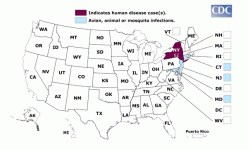
West Nile Virus Maps:
 

Attachments

  • 1999_West_Nile_Virus.gif
    1999_West_Nile_Virus.gif
    23.1 KB · Views: 1
  • 2005_West_Nille_Virus.gif
    2005_West_Nille_Virus.gif
    22.1 KB · Views: 1
Re: West Nile Virus

Date: Sun, 23 Apr 2006 23:55:11 -0400 (EDT)
From: ProMED-mail
Subject: PRO/AH/EDR> West nile virus - Argentina: equines, RFI

WEST NILE VIRUS - ARGENTINA: EQUINES, REQUEST FOR INFORMATION
***************************************
A ProMED-mail post
<http://www.promedmail.org>
ProMED-mail is a program of the
International Society for Infectious Diseases
<http://www.isid.org>

[1]
Date: Sat, 22 Apr 2006 17:41:16 -0400
From: Maria Compte
Source: La Nacion, Buenos Aires. Argentina [Translated by submitter] [edited]
<http://buscador.lanacion.com.ar/Nota.asp?nota_id=799692&high=caballos>


Sanitary Alert: Dangerous Virus Enters the Country
- ----------------
For the 1st time, at least 2 cases of the serious West Nile Virus, a
disease propagated among birds and other animals through the bite of
a mosquito, have been detected in Argentina. This was confirmed last
night to La Nacion by a knowledgeable source from the National
Service for Agricultural Sanitation and Quality (Senasa). Both cases
were detected in horses, which typically are one of the mammal
species affected by this virus.

The same information source added that yesterday and in accordance to
international regulations, Senasa reported the news to the
International Office for Epizootics, based in Paris; it also informed
that it has temporarily banned the export of horses beginning next
Monday [24 Apr 2006].

As of today Senasa has not offered any specific details, like the
exact number of animals affected, the name of the breeding ranch, its
geographic location, the viral strain, or the preventive strategies
to be taken, all questions that are going to be addressed early next
week, as per our source.

Unofficially, though, there have been speculations that the equines
affected are Pure Bred racehorses from a ranch located in the county
of Capitan Sarmiento, in Buenos Aires Province, about 145 km. from
the capital city of Buenos Aires.

Doctor Horacio Lopez, Chief of Infectious Diseases of the School of
Medicine at the University of Buenos Aires, explained that most of
the infections in humans - about 80 percent-- do not produce any type
of symptoms. About 20 percent of infected people might show mild
flu-like symptoms.. And about one in 150 infected patients might
develop a more serious disease (encephalitis, meningitis or
meningoencephalitis).

Dr. Lopez mentioned that WNV belongs to the flavivirus family
"along with Saint Louis Virus [SLE, St. Louis Encephalitis], which
was the cause of the encephalitis outbreak in Cordoba Province last
year. Other related viruses are dengue and yellow fever."

From the Ministry of Health, Dr. Andres Leibovich, Undersecretary
for Preventive and Health Promotion Programs, informed that his
agency still does not have any information regarding the cases.
"Nevertheless, we are already taking measures and along with Senasa
and the Epidemiology Section of the Ministry of Health of Buenos
Aires Province we have started to draft a preventive strategy. But we
need to act with the responsibility that this subject deserves; our
epidemiological surveillance system has worked very well until now,
and we don't want to set off the alert in the population until we
have all the information that we need in this case."

Dr. Tomas Orduna, Chief of the Regional Pathologies and Tropical
Medicine at Muniz Hospital (an Infectious Diseases Reference Hospital
in Argentina), said that "it is very unusual that the cases detected
have occurred in mammals, not in birds; horses are one of the
sentinel species, but it is birds the ones that are the main
reservoir of the virus."

Dr. Orduna expanded saying that "if the virus is already in
mosquitoes, I must deduct from this that there have to be birds
infected as well, but that they have not been detected as yet.
Presently we are having the South-to-North bird migration (it is the
beginning of the winter season in the Southern Hemisphere), and the
epidemiological logic tells us that the virus will get here from the
Northern Hemisphere during their North-to-South migration. It is very
important to be cautious about the possibility of false positive diagnoses."

- --
Maria Emilia Compte, MD, MPH&TM
Vice President for Programs
Intermed International
420 Lexington Avenue
New York, NY 10170 USA


******
[2]
From: Maria Compt
Date: Sun, 23 Apr 2006 15:52:10 -0400
Source: La Nacion Online, Buenos Aires, Argentina [Trans. by
submitter] [edited]
<http://buscador.lanacion.com.ar/Nota.asp?nota_id=799924&high=caballos>

Comment from Maria Compte:
This is a follow up to the piece contributed yesterday on the
(possible) detection of West Nile virus in Argentina for the 1st time
[see [1] above]. The area around of San Antonio de Areco is well
known for high quality racing and polo horse-breeding ranches. In
addition, I am including a short article from March 2006 on mass
mortality in aquatic birds in Mendoza Province, which may or may not
be due to the same pathogen (Mendoza is located near Chile, more than
1000 km west of Buenos Aires Province location where the infected
racing horses have been detected).

Death of 2 Horses due to West Nile Virus is Confirmed
- -------------------
They belong to a Racehorse Breeding Ranch in San Antonio de Areco. No
cases have been detected in humans, but a prevention plan is being set in place

The Ministry of Health of Buenos Aires Province confirmed yesterday
the death of 2 horses affected by West Nile virus (WNV) at the same
time that announced that no human cases have been reported, and that
it is already working in a preventive campaign.

The cases, which La Nacion informed of in yesterday's edition, were
communicated to the provincial government by the National Service for
Agricultural Sanitation and Quality (Senasa), last Thursday [20 Apr
2006]. On Friday [21 Apr 2006] a meeting between representatives of
that agency and of the national and provincial Ministries of Health took place.

"During this meeting we analyzed what actions to take, which must be
based on prevention. It must be emphasized to the population that
there are no human cases to date, and that this virus is not
contagious from person to person" told La Nacion the Director of
Epidemiology of Buenos Aires Province, Maria del Carmen Weis. "People
that might have been in contact with the affected horses should not
worry either. A human being can only be infected by the bite of an
infected common mosquito. it is in this aspect of the disease where
prevention must be developed", added the specialist. Still, since
1999 in the United States about 14 000 cases of people infected have
been detected, of whom more than 500 died.

The horses that died here as a consequence of WNV were 2 Pure Bred
Racing animals from San Antonio de Areco (Note: location is 113 km
northwest of city of Buenos Aires). The County's Mayor, Eduardo
Jordan, told La Nacion: "We are working to inform the population and
avoid misunderstanding and alarm. I don't yet know to which specific
farm the dead animals belong, we will know this on Monday (for
tomorrow)." It has been rumors that the affected ranch is an
important establishment that won several prestigious prices in the
last years, including the Carlos Pellegrini Grand Prize (Note: the
highest horse racetrack prize in Argentina)

Dr. Weis added that "Senasa is currently doing animal investigations,
and from the (human) sanitary areas we are working on prevention. We
are on alert and in continuing communication and epidemiological
surveillance." In the case that a person would be affected by WNV,
the consequences would depend on the virulence of the strain and the
immunological defenses of the patient. "There is no vaccine, and it
is a virus, so the treatment is based on observation of the
(clinical) evolution of the disease."

The confirmation of the arrival of the virus in the country has
brought worry to the horse breeding industry, based on the experience
of what happened in the United States in 2002, when the disease
sickened more than 15 000 horses, with a 30 percent mortality and
millions of dollars in losses for the horseracing industry.

Yesterday there where even speculations that one of the infected
horses died at the San Isidro Racetrack stables (One of the 2 main
racetracks in the city of Buenos Aires, located in a northern
suburb), after traveling from Entre Rios Province (about 400 km
northeast of Buenos Aires), but the President of the Racetrack
Committee of the Argentine Jockey Club, Pablo Piffaretti,
emphatically denied such version of the events. "To date [22 Apr
2006] at 2 PM, we have not have registered one single case. We know
that in the US horses are exposed to this disease and that it is
treated (?) with a vaccine. What I don't understand here is that a
horse has been the 1st to fall ill with the disease, when usually it
is birds the ones that are first detected. Monday [24 Apr 2006] we
will contact Senasa to work with them on this situation", said Piffaretti.

In addition, Mario Lopez Oliva, President of the Argentine
Association of Equine Veterinary Medicine, reminded that "Equines are
final hosts and do not transmit the disease to humans. The arrival of
this virus was only a matter of time and fortunately is findings us
well prepared, because we have good information on this disease. If
it would have first affected regular countryside horses, we most
people would probably not have noticed it." As per the expert's
opinion, it would not be necessary to cancel horse races, "unless all
the horses fell ill", and said that there are 2 types of vaccines
available for horses, one American and the other European, both of
which produce good immunity. Argentina is a strong exporter of sports
horses, an activity that has been temporarily suspended depending on
the sanitary regulations that will have to be put in place before the
horses are allowed to enter other regions. Just considering racing
animals, since 2005 over 500 horses were exported to other countries,
an trade that now will be put on hold.

- --
Maria Emilia Compte, MD, MPH&TM
Vice President for Programs
Intermed International
420 Lexington Avenue
New York, NY 10170 USA


******
[3]
Date: 23 Apr 2006
From: Maria Compte
Source:El Dia Newspaper (Online edition). La Plata, Buenos Aires
Province, [12 Mar 2006] [Trans. by submitter]


Concern in Mendoza for Discovery of Dead Birds
In a lagoon, more than 50 were found. Samples of the dead birds were
sent to the University of Buenos Aires. Avian flu is ruled out.
- -------------------
Staff from the Undesecretariat for the Environment established a
state of alert in the Llancanelo Lagoon, Department of Malargue, as a
consequence of the death of over 50 birds, registered this summer.
Authorities sent samples to the University of Buenos Aires to be
studied, which turned out negative for avian influenza, but now we
are waiting to rule out hepatitis or West Nile virus", a disease that
already has entered South America and that is said that it could
arrive in Mendoza within 2 years.

The affected birds belong to the species known as Coscoroba
(Coscoroba coscoroba, a waterfowl that look like a cross between a
swan and a goose and are most closely related to whistling ducks;
these birds are mostly residents and breed in Argentina and Chile,
but some migration takes place before the Argentine winter season to
Paraguay and Southern/ Central Brazil). This is one of 130 species
that inhabit the Malargue bodies of water, some of them residents,
other migratory, and many of them with endangered species status.

Due to this reason, the alert was declared early in order to try to
stop the spread of the virus in the lakes and lagoon of the province,
considering the migratory routes and the fact that Llancanelo Lagoon
is a Southern breeding site for many bird species from the
hemisphere. The official plan is to minimize the risk of an
ecological disaster in that natural environment due to some avian
epidemic" as was indicated by a report released by the Department of
Fauna of the Undersecretariat for the Environment.

"We need to realize the real probability of the imminence of the
arrival of West Nile virus to Llancanelo", warned the report, about
the disease which attacks humans, birds, mosquitoes, horses, and other mammals.

In the meantime, an Program of Epidemic Surveillance and Emerging
Diseases has been set in motion, with the formation of a committee
that will coordinate and centralize the information and establish a
management strategy to follow. Also a protocol has been set up in
Malargue to analyze dead birds in Llancanelo and obtain results in
the shortest time possible. Studies requiring higher level of
complexity will be sent to Buenos Aires.

- --
Maria Emilia Compte, MD, MPH&TM
Vice President for Programs
Intermed International
420 Lexington Avenue, Room 2331
New York, NY 10170 USA


******
[4]
Date: 23 Apr 2006
From: Carlos Hermida
Subject: west nile virus


In spite of lack of official formalities news distributed by
[reputable] media indicate that an outbreak of West Nile Virus was
diagnosed in horses in Argentina.

This onset in deep autumn raise suspicion about previous undetected
virus circulation.

- --
Carlos Hermida
<hermida@fibertel.com.ar>

[If these are the 1st documented cases in horses, there is likely no
natural immunity in the horses. That being the case, the disease if
often fatal in horses. Vaccination of horses is recommended. There
are 2 companies with vaccines available for horses in the US. There
may be other vaccines available in other countries. - Mod.TG]

[This is the 1st report of disease due to West Nile virus (WNV) in
South America. ProMED mail's prior report on the most southerly
extension of the virus in the Western Hemisphere was in Trinidad (see
ProMED-mail posting West Nile virus update 2005 - Western Hemisphere
(01) 20050106.0033) with a report of 2 seropositive horses and 3
seropositive birds. One wonders if the other countries along the
route (see map of South America at
<http://www.lib.utexas.edu/maps/americas/south_america_ref04.jpg>)
have had WNV infections but have not as yet confirmed the presence of
the virus in their countries (this moderator's favorite adage "seek
and ye shall find"). Information from knowledgeable sources in
Argentina, and in other countries in South America on WNV activity in
their countries would be very much appreciated.

While WNV has not commonly been reported from waterfowl, there has
been a wide range of species that have been infected with the virus
as seen in the North American experience. It is interesting that the
above newswire in [3] did speculate WNV as a possible etiology for
the avian die-off, mentioning that it has already entered South
America. For an excellent review of the North American experience
with WNV, see Glaser A. West Nile virus and North America: an
unfolding story. Rev. sci. tech. Off. int. Epiz., 2004, 23 (2),
557-568. available at:
<http://www.oie.int/eng/publicat/rt/2302/PDF/557-568glaser.pdf>.

For a map of Argentina see
<http://www.lib.utexas.edu/maps/americas/argentina_pol96.jpg> - Mod. MPP

[see also:
West Nile virus, humans, equines - Cuba 20050202.0355
West Nile virus update 2005 - Western Hemisphere (01) 20050106.0033

2004
- ----
West Nile virus update 2004 - Western Hemisphere (01) 20040730.2073
West Nile virus update 2004 - Western Hemisphere (29) 20041231.3456
West Nile virus, birds - Puerto Rico (Ceiba) 20040614.1599

2003
- ----
West Nile virus - Caribbean Islands (02) 20031017.2619
West Nile virus - Caribbean Islands 20031011.2560
West Nile virus, equines - El Salvador 20030504.1116
West Nile Virus, birds, migratory - Americas 20031007.2512
West Nile Virus, birds, migratory - Americas (02) 20031009.2545
West Nile virus, birds - Dominican Republic 20030315.0645
2002
- -----
West Nile virus, human, - (El Salvador): suspected 20020909.5264
2001
- ----
West Nile virus, human - Cayman Islands 20011016.2538]
......................mpp/tg/mpp

 
Back
Top