Laidback Al
Well-known member
Weekly Epidemiological Record http://www.who.int/wer/2009/wer8409.pdf
Relevé épidémiologique hebdomadaire
27 FEBRUARY 2009, 84th YEAR / 27 FÉVRIER 2009, 84e ANNÉE
No. 9, 2009, 84, 65–76
http://www.who.int/wer
Antigenic and genetic characteristics
of H5N1 viruses and candidate
vaccine viruses developed for
potential use in human vaccines,
February 2009
Since their reemergence in 2003, H5N1 influenza viruses
have become endemic in some countries and continue
to cause outbreaks in poultry and sporadic human infections.
It is not known if the next influenza pandemic
will be caused by H5N1 viruses or, should one occur,
which of the clades of H5N1 viruses would be responsible.
However, because an H5N1 pandemic is a possibility,
and one with potential for an unusually severe outcome,
the development of representative H5N1 candidate
vaccine viruses from those available for characterization,
coordinated by WHO, is an essential component
of the overall global strategy for pandemic preparedness.
This summary provides an update on the characterization
of available H5N1 viruses circulating in birds,
including those that have caused human infections, and
the current status of the development of candidate
H5N1 vaccine viruses. This information may be used to
guide national decisions on procurement of H5N1 vaccines.
H5N1 vaccines continue to be developed by manufacturers
using clade 1 and clade 2 viruses. Clinical trials have
been conducted or are under way in several countries,
and stockpiles of clade 1 and clade 2 vaccines are being
acquired by a number of countries.1 Clinical trials using
different viruses should continue as an essential element
in pandemic preparedness. Such trials should provide
data on priming vaccination schedules and induction
of cross-reactive immunity by vaccines containing
viruses from different clades.
Companies are recommended to consult individual national
authorities on the specific H5N1 viruses to be
used for preparing experimental pilot lots and stockpiles
of H5N1 vaccines. Decisions should be based on
several considerations including the epidemiology and
geographical distribution of the circulating H5N1 viruses.
Comparisons of the candidate H5N1 vaccine viruses with
respect to immunogenicity and cross-reactivity and their
relationship to newly emerging H5N1 viruses are ongoing,
and will be updated periodically by WHO.
Molecular epidemiology of H5N1 viruses
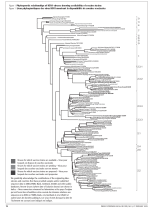
A nomenclature for phylogenetic relationships among
the haemagglutinin (HA) genes of H5N1, viruses was devised
in consultation with representatives from the Food
and Agriculture Organization of the United Nations
(FAO), the World Organisation for Animal Health (OIE)
and WHO2 (Figure 1). The HA sequences of the majority
of H5N1 viruses circulating in avian species are separated
into a number of distinct clades. Clade 1 viruses
have continued to circulate and have been recently isolated
in poultry in Cambodia, Thailand and Viet Nam.
Although recent human clade 1 infections have been limited
to Cambodia, clade 1 viruses have also been previously
isolated from humans in Hong Kong Special
Administrative Region of China, Thailand and Viet Nam.
Clade 2.1 viruses have continued to circulate in poultry
and have caused human infections in Indonesia. Clade
2.2 viruses have the most geographically diverse distribution
and have caused outbreaks in birds in >60 countries
in Africa, Asia and Europe, with human infections in
Azerbaijan, Bangladesh, China, Djibouti, Egypt, Iraq,
Nigeria, Pakistan and Turkey. Clade 2.3.2 and 2.3.4 viruses
continue to circulate in birds in Asia; clade 2.3.4 viruses
have been responsible for human infections in China, the
Lao People’s Democratic Republic, Myanmar and Viet
Nam. Viruses from other clades, including clade 7, have
been detected in birds in Asia. Since September 2008,
human infections have been caused by clade 2.3.2 viruses
in China, clade 2.3.4 viruses in China and Viet Nam, clade
1 viruses in Cambodia, clade 2.2 viruses in Egypt and by
clade 2.1 viruses in Indonesia.
Antigenic characteristics of H5N1 viruses
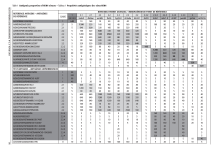
Haemagglutination inhibition (HI) tests of available
H5N1 viruses demonstrate that current vaccine candidates
continue to provide good antigenic coverage of
most available isolates within corresponding clades. In
addition, recent data show that the clade 2.1 vaccine
virus A/duck/Hunan/795/2002 is antigenically similar to
the vaccine virus A/Indonesia/5/2005. However, some
viruses within clades 1, 2.1, 2.2, 2.3.2, 2.3.4 and 7 show
evidence of antigenic and/or genetic heterogeneity
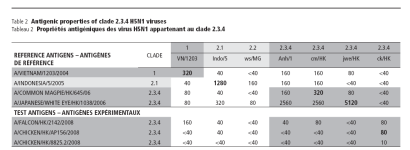
(Table 1 and Figure 1). Within clade 2.3.4, A/chicken/
Hong Kong/AP156/2008-like viruses are antigenically
distinct from reference strains (Table 2). Antigenic diversity
is also present within clade 7, and viruses such
as A/chicken/Vietnam/NCDV-03/2008 show reduced reactivity
with antisera to the clade 7 reference strain
A/chicken/Vietnam/NCDV-016/2008. Of the most recent
human isolates from China, A/Guangxi/1/2009 belongs
to clade 2.3.2, the fi rst human isolate from this clade.
A/Hunan/2/2009, belonging to clade 2.3.4, shows genetic
divergence from other viruses of this clade. Both viruses
should be considered as potential vaccine strains
pending further characterization.
Potential H5N1 vaccine viruses
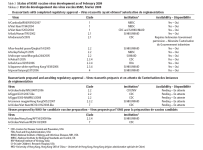
Potential H5N1 vaccine viruses are listed in Table 3. On
the basis of the geographical spread, epidemiology, and
antigenic and genetic properties of the H5N1 viruses,
national authorities may recommend the use of >1 of
these for pilot lot vaccine production, clinical trial and
subsequent stockpiling of vaccines, should such national
policies exist.
Additional H5N1 candidate vaccine viruses are being
developed as the viruses continue to evolve, and
will be announced as they become available. Institutions,
companies and others interested in pandemic
vaccine development who wish to receive these prototype
viruses should contact the WHO Global Influenza Programme at GISN@who.int or the institutions
listed in announcements published on the
WHO web site.3
1 See http://www.who.int/vaccine_research/diseases/influenza/flutrials_tables/en/
index.html
2 See http://www.who.int/csr/disease/avian_influenza/guidelines/nomenclature/en/
index.html
3 See http://www.who.int/csr/disease/avian_influenza/guidelinestopics/en/index5.
html
Relevé épidémiologique hebdomadaire
27 FEBRUARY 2009, 84th YEAR / 27 FÉVRIER 2009, 84e ANNÉE
No. 9, 2009, 84, 65–76
http://www.who.int/wer
Antigenic and genetic characteristics
of H5N1 viruses and candidate
vaccine viruses developed for
potential use in human vaccines,
February 2009
Since their reemergence in 2003, H5N1 influenza viruses
have become endemic in some countries and continue
to cause outbreaks in poultry and sporadic human infections.
It is not known if the next influenza pandemic
will be caused by H5N1 viruses or, should one occur,
which of the clades of H5N1 viruses would be responsible.
However, because an H5N1 pandemic is a possibility,
and one with potential for an unusually severe outcome,
the development of representative H5N1 candidate
vaccine viruses from those available for characterization,
coordinated by WHO, is an essential component
of the overall global strategy for pandemic preparedness.
This summary provides an update on the characterization
of available H5N1 viruses circulating in birds,
including those that have caused human infections, and
the current status of the development of candidate
H5N1 vaccine viruses. This information may be used to
guide national decisions on procurement of H5N1 vaccines.
H5N1 vaccines continue to be developed by manufacturers
using clade 1 and clade 2 viruses. Clinical trials have
been conducted or are under way in several countries,
and stockpiles of clade 1 and clade 2 vaccines are being
acquired by a number of countries.1 Clinical trials using
different viruses should continue as an essential element
in pandemic preparedness. Such trials should provide
data on priming vaccination schedules and induction
of cross-reactive immunity by vaccines containing
viruses from different clades.
Companies are recommended to consult individual national
authorities on the specific H5N1 viruses to be
used for preparing experimental pilot lots and stockpiles
of H5N1 vaccines. Decisions should be based on
several considerations including the epidemiology and
geographical distribution of the circulating H5N1 viruses.
Comparisons of the candidate H5N1 vaccine viruses with
respect to immunogenicity and cross-reactivity and their
relationship to newly emerging H5N1 viruses are ongoing,
and will be updated periodically by WHO.
Molecular epidemiology of H5N1 viruses
A nomenclature for phylogenetic relationships among
the haemagglutinin (HA) genes of H5N1, viruses was devised
in consultation with representatives from the Food
and Agriculture Organization of the United Nations
(FAO), the World Organisation for Animal Health (OIE)
and WHO2 (Figure 1). The HA sequences of the majority
of H5N1 viruses circulating in avian species are separated
into a number of distinct clades. Clade 1 viruses
have continued to circulate and have been recently isolated
in poultry in Cambodia, Thailand and Viet Nam.
Although recent human clade 1 infections have been limited
to Cambodia, clade 1 viruses have also been previously
isolated from humans in Hong Kong Special
Administrative Region of China, Thailand and Viet Nam.
Clade 2.1 viruses have continued to circulate in poultry
and have caused human infections in Indonesia. Clade
2.2 viruses have the most geographically diverse distribution
and have caused outbreaks in birds in >60 countries
in Africa, Asia and Europe, with human infections in
Azerbaijan, Bangladesh, China, Djibouti, Egypt, Iraq,
Nigeria, Pakistan and Turkey. Clade 2.3.2 and 2.3.4 viruses
continue to circulate in birds in Asia; clade 2.3.4 viruses
have been responsible for human infections in China, the
Lao People’s Democratic Republic, Myanmar and Viet
Nam. Viruses from other clades, including clade 7, have
been detected in birds in Asia. Since September 2008,
human infections have been caused by clade 2.3.2 viruses
in China, clade 2.3.4 viruses in China and Viet Nam, clade
1 viruses in Cambodia, clade 2.2 viruses in Egypt and by
clade 2.1 viruses in Indonesia.
Antigenic characteristics of H5N1 viruses
Haemagglutination inhibition (HI) tests of available
H5N1 viruses demonstrate that current vaccine candidates
continue to provide good antigenic coverage of
most available isolates within corresponding clades. In
addition, recent data show that the clade 2.1 vaccine
virus A/duck/Hunan/795/2002 is antigenically similar to
the vaccine virus A/Indonesia/5/2005. However, some
viruses within clades 1, 2.1, 2.2, 2.3.2, 2.3.4 and 7 show
evidence of antigenic and/or genetic heterogeneity
(Table 1 and Figure 1). Within clade 2.3.4, A/chicken/
Hong Kong/AP156/2008-like viruses are antigenically
distinct from reference strains (Table 2). Antigenic diversity
is also present within clade 7, and viruses such
as A/chicken/Vietnam/NCDV-03/2008 show reduced reactivity
with antisera to the clade 7 reference strain
A/chicken/Vietnam/NCDV-016/2008. Of the most recent
human isolates from China, A/Guangxi/1/2009 belongs
to clade 2.3.2, the fi rst human isolate from this clade.
A/Hunan/2/2009, belonging to clade 2.3.4, shows genetic
divergence from other viruses of this clade. Both viruses
should be considered as potential vaccine strains
pending further characterization.
Potential H5N1 vaccine viruses
Potential H5N1 vaccine viruses are listed in Table 3. On
the basis of the geographical spread, epidemiology, and
antigenic and genetic properties of the H5N1 viruses,
national authorities may recommend the use of >1 of
these for pilot lot vaccine production, clinical trial and
subsequent stockpiling of vaccines, should such national
policies exist.
Additional H5N1 candidate vaccine viruses are being
developed as the viruses continue to evolve, and
will be announced as they become available. Institutions,
companies and others interested in pandemic
vaccine development who wish to receive these prototype
viruses should contact the WHO Global Influenza Programme at GISN@who.int or the institutions
listed in announcements published on the
WHO web site.3
1 See http://www.who.int/vaccine_research/diseases/influenza/flutrials_tables/en/
index.html
2 See http://www.who.int/csr/disease/avian_influenza/guidelines/nomenclature/en/
index.html
3 See http://www.who.int/csr/disease/avian_influenza/guidelinestopics/en/index5.
html