

Niko
Editor, Senior Moderator
Webby takes reins of World Health Organization lab at St. Jude
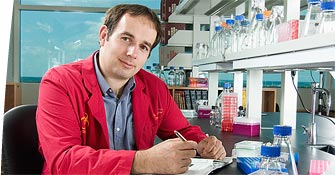
Richard Webby, PhD, an associate member in Infectious Diseases, has been named director of the World Health Organization (WHO) Collaborating Center for Studies on the Ecology of Influenza Viruses in Lower Animals and Birds.
Robert Webster, PhD, who holds the hospital?s Rose Marie Thomas Chair in Infectious Diseases, has been at St. Jude since 1968. He has headed the lab since 1975 and recommended to the WHO that the position be transferred to Webby. Of the five WHO collaborating centers, the St. Jude center is the only one that focuses on the transmission of animal viruses to humans. The other laboratories, located in Atlanta, Georgia; Tokyo, Japan; London, England; and Melbourne, Australia, deal primarily with human influenza.
?It?s time to hand the torch to the next generation of young people to continue this important role of St. Jude in the international community,? said Webster, who noted that respiratory infections are recognized as one of the institutional goals at St. Jude.
Throughout his career, Webster has studied animal and avian viruses, characterizing the viruses and identifying how they cross into humans. The St. Jude center increased in international prominence during the past decade, after the appearance of the avian virus H5N1. New pandemics of influenza originate in the world?s wild, aquatic bird population.
?Dr. Webster?s legacy is that he has highlighted the importance of the avian reservoir of influenza as it relates to human health,? Webby said. ?We now know that the avian reservoir is the initial source for all human flu. He has helped the world understand that we need to keep an eye on what?s going on in the animal populations and communicate with each other about those changes.?
A St. Jude employee since 1999, Webby began his career in New Zealand, where he earned both undergraduate and doctoral degrees. He completed his postdoctoral training in Webster?s lab, and his mentor says he is pleased to hand over the WHO responsibilities to his prot?g?.
?Richard has attended WHO meetings and has been accepted by the international community,? Webster said.
In the past several years, with the assistance of employees in the Children?s GMP, LLC, the St. Jude collaborating center has produced the seed strains for H5N1 viruses. Webby used reverse genetics to make the first such seed strain. The vaccine was identified by Time magazine as one of the major scientific achievements of 2007. In 2004, Webby was identified as one of the Scientific American 50, selected as a research leader in public health and epidemiology.
Webby says his new responsibilities include traveling to Geneva, Switzerland, twice a year to participate in vaccine strain selection meetings. He will also participate in teleconferences to discuss outbreaks that occur around the world and to determine how to respond to those events.
?I will serve as the liaison between our lab and the World Health Organization, providing WHO with any information they need on outbreaks in animals and the characterization of viruses from those outbreaks,? Webby said. ?If these animal viruses do move into humans, understanding the characteristics of those viruses will certainly help WHO respond.?
February 2008
http://www.stjude.org/stjude/v/inde...rl=search_results.jsp&QueryText=Richard webby
Richard Webby, PhD, an associate member in Infectious Diseases, has been named director of the World Health Organization (WHO) Collaborating Center for Studies on the Ecology of Influenza Viruses in Lower Animals and Birds.
Robert Webster, PhD, who holds the hospital?s Rose Marie Thomas Chair in Infectious Diseases, has been at St. Jude since 1968. He has headed the lab since 1975 and recommended to the WHO that the position be transferred to Webby. Of the five WHO collaborating centers, the St. Jude center is the only one that focuses on the transmission of animal viruses to humans. The other laboratories, located in Atlanta, Georgia; Tokyo, Japan; London, England; and Melbourne, Australia, deal primarily with human influenza.
?It?s time to hand the torch to the next generation of young people to continue this important role of St. Jude in the international community,? said Webster, who noted that respiratory infections are recognized as one of the institutional goals at St. Jude.
Throughout his career, Webster has studied animal and avian viruses, characterizing the viruses and identifying how they cross into humans. The St. Jude center increased in international prominence during the past decade, after the appearance of the avian virus H5N1. New pandemics of influenza originate in the world?s wild, aquatic bird population.
?Dr. Webster?s legacy is that he has highlighted the importance of the avian reservoir of influenza as it relates to human health,? Webby said. ?We now know that the avian reservoir is the initial source for all human flu. He has helped the world understand that we need to keep an eye on what?s going on in the animal populations and communicate with each other about those changes.?
A St. Jude employee since 1999, Webby began his career in New Zealand, where he earned both undergraduate and doctoral degrees. He completed his postdoctoral training in Webster?s lab, and his mentor says he is pleased to hand over the WHO responsibilities to his prot?g?.
?Richard has attended WHO meetings and has been accepted by the international community,? Webster said.
In the past several years, with the assistance of employees in the Children?s GMP, LLC, the St. Jude collaborating center has produced the seed strains for H5N1 viruses. Webby used reverse genetics to make the first such seed strain. The vaccine was identified by Time magazine as one of the major scientific achievements of 2007. In 2004, Webby was identified as one of the Scientific American 50, selected as a research leader in public health and epidemiology.
Webby says his new responsibilities include traveling to Geneva, Switzerland, twice a year to participate in vaccine strain selection meetings. He will also participate in teleconferences to discuss outbreaks that occur around the world and to determine how to respond to those events.
?I will serve as the liaison between our lab and the World Health Organization, providing WHO with any information they need on outbreaks in animals and the characterization of viruses from those outbreaks,? Webby said. ?If these animal viruses do move into humans, understanding the characteristics of those viruses will certainly help WHO respond.?
February 2008
http://www.stjude.org/stjude/v/inde...rl=search_results.jsp&QueryText=Richard webby