#19,377
Since 2024 Washington State has seen scores of HPAI outbreaks in poultry, and more than a dozen
confirmed and probable human infections related to
exposure to poultry and/
or wild birds.
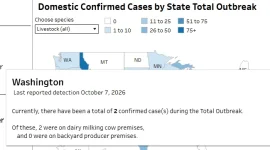
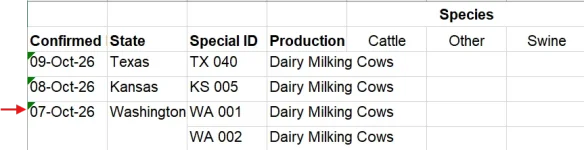
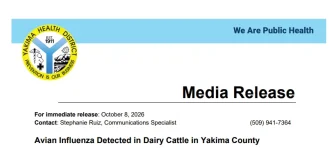
Eight days ago (Oct 9th), however,
their WSDA confirmed their
first detection of avian influenza in dairy cattle (herds=
2).
Yesterday,
Washington State reported their first (
reportedly mild) human infection with H5N1 derived from an
(unspecified) dairy exposure.

Details on this latest case remain scant, and yesterday's
CDC FluView Report (wk 40) did not include this case, reporting:
Novel Influenza A Virus Infections
No new confirmed human infections with a novel influenza virus were reported to CDC as of October 14, 2026.
The CDC's
A(H5) Bird Flu: Current Situation webpage
was updated on the
15th, showing the latest dairy-associated case (
see below). Presumably we'll get an update in next week's FluView.

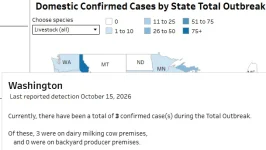
In the meantime, the USDA has added a
3rd dairy herd from Washington State to their
HPAI positive list. Other than the one-line entry (
below), I've seen no other information on this outbreak.

Thus far, the genotype of the virus infecting Washington Cattle
(likely either B3.13 or D1.1) - and the recent human case - have not been announced, nor do we know exactly what kind of exposure the recent human case had.
For
more than 2 years the CDC, the USDA, and state agricultural agencies have urged the use of PPEs for farm workers, and anyone else who might be exposed to infected livestock or birds.

While recommended, the use of PPEs has been suboptimal, particularly on farms and ranches. They can be hot, cumbersome to wear, and difficult to don and doff properly. (see
MMWR: PPE Use by Dairy Farmworkers Exposed to Cows Infected with HPAI A(H5N1) Viruses — Colorado, 2024).
Over the past 30 days the number of infected backyard flocks vs. commercial flocks has run nearly 2 to 1, and over the course of the past 4+ years the number of backyard flock (n=1227) outbreaks have exceeded commercial outbreaks (n=1048).
Although the risks of infection are believed low, we've already seen at least
two fatalities (
here, and
here) in the United States from H5Nx following
`. . . exposure to a combination of a non-commercial backyard flock and wild birds.'
The APPA estimates `Eleven (11) million U.S. households own backyard chickens (
a 28% increase from 2023)', yet a recent survey (see
MMWR: Knowledge, Attitudes, and Practices Regarding Avian Influenza Among Owners of Backyard Flocks) found significant gaps in their knowledge of dealing with avian flu.
Although it is too early to predict what kind of avian flu season we will see this fall and winter - or whether
any new genotypes will be added to the mix - we are already
seeing signs of increased activity.
Which means, if you raise backyard birds, frequent live markets, or have outdoor pets, now would be a good time to familiarize yourselves with the risks of avian flu, and the things you can do to reduce those risks to you and your families.
https://afludiary.blogspot.com/2026/10/washington-state-confirms-3rd-dairy.html



 www.yakimacounty.us