• FluTrackers.com Inc. does not provide medical advice. Information on this web site is collected from various internet resources, and the FluTrackers board of directors makes no warranty to the safety, efficacy, correctness or completeness of the information posted on this site by any author or poster. The information collated here is for instructional and/or discussion purposes only and is NOT intended to diagnose or treat any disease, illness, or other medical condition. Every individual reader or poster should seek advice from their personal physician/healthcare practitioner before considering or using any interventions that are discussed on this website. By continuing to access this website you agree to consult your personal physican before using any interventions posted on this website, and you agree to hold harmless FluTrackers.com Inc., the board of directors, the members, and all authors and posters for any effects from use of any medication, supplement, vitamin or other substance, device, intervention, etc. mentioned in posts on this website, or other internet venues referenced in posts on this website.
  • We are not asking for any donations. Do not donate to any entity who says they are raising funds for us.

USA: Outbreak of Lung Illness Associated with Using E-cigarette Products - 2,668 hospitalized cases, 60 fatalities

New Jersey reports first death linked to vaping
THE ASSOCIATED PRESS
OCTOBER 01, 2019 01:25 PM, UPDATED OCTOBER 01, 2019 01:26 PM
TRENTON, N.J.
New Jersey health officials say the state has had its first death tied to vaping.

The Health Department said in a statement Tuesday that a woman from northern New Jersey died in August. Her identity and details surrounding her death were not released.
...
https://www.tri-cityherald.com/news/business/health-care/article235684637.html
 
First vaping-related death confirmed in Alabama
WVTMUpdated: 9:55 AM CDT Oct 2, 2019
Linda Grantin

MONTGOMERY, Ala. —
The Alabama Department of Public Health confirmed a man in East Alabama is the state's first death associated with vaping.
...
As of October 1, there were 19 Alabama residents under investigation. Of the 19 reports, 4 cases have been identified and 9 other reports are still under investigation in Alabama; 3 have been identified as probable cases; 1 confirmed case, of lung disease associated with vaping.
...
https://www.wvtm13.com/article/sher...ares-his-owner-s-passion-for-running/29332052
 
DPH Announces Delaware’s First Death Associated with Multi-State Outbreak of Vaping-Related Lung Illnesses
News | Date Posted: Thursday, October 3, 2019

DOVER – Today the Delaware Division of Public Health (DPH) hosted a media call to provide an update on its participation in a multi-state investigation into an outbreak of severe pulmonary disease reported across the country. As of September 27, 2019, 46 states, including Delaware, have reported 805 cases of lung injury associated with use of e-cigarette products (e.g., devices, liquids, refill pods, and cartridges).

Currently in Delaware, there are 11 cases of vaping-related lung injury that meet the Centers for Disease Control and Prevention (CDC) case definition as either probable or confirmed. Additionally, DPH announced today that one of the cases associated with this outbreak involves an individual who died.

“The Division of Public Health is saddened to announce the first death in Delaware associated with this outbreak,” said DPH Director Dr. Karyl Rattay. “Our thoughts and prayers are with the individual’s family. This death is a harsh reminder that these illnesses are serious and life-threatening. We continue to recommend that individuals consider refraining from vaping or using e-cigarette products. At this time, no vaping is safe.”
...
https://news.delaware.gov/2019/10/0...te-outbreak-of-vaping-related-lung-illnesses/
 
https://www.nytimes.com/2019/10/02/health/vaping-illnesses.html
[h=1]Lung Damage From Vaping Resembles Chemical Burns, Report Says[/h] By Denise Grady

Published Oct. 2, 2019Updated Oct. 3, 2019
All 17 of our cases show a pattern of injury in the lung that looks like a toxic chemical exposure, a toxic chemical fume exposure, or a chemical burn injury,” said Dr. Brandon T. Larsen, a surgical pathologist at the Mayo Clinic in Scottsdale, Ariz. “To be honest, they look like the kind of change you would expect to see in an unfortunate worker in an industrial accident where a big barrel of toxic chemicals spills, and that person is exposed to toxic fumes and there is a chemical burn in the airways.”

The injuries also look like those seen in people exposed to poisons like mustard gas, a chemical weapon used in World War I, he said.
 
[h=1]Outbreak of Lung Injury Associated with E-Cigarette Use, or Vaping[/h]
Espa?ol (Spanish)

Related Pages
Posted October 3, 2019 at 4:00pm ET

CDC, the U.S. Food and Drug Administration (FDA), state and local health departments, and other clinical and public health partners are investigating a multistate outbreak of lung injury associated with use of e-cigarette, or vaping, products.

If you have questions about CDC’s investigation into the lung injuries associated with use of electronic cigarette, or vaping, products, contact CDC-INFO or call 800-232-4636.


What we know
  • As of October 1, 2019, 1,080* lung injury cases associated with using e-cigarette, or vaping, products have been reported to CDC from 48 states and 1 U.S. territory.
  • Eighteen deaths have been confirmed in 15 states.
  • All patients have reported a history of using e-cigarette, or vaping, products.
  • Most patients report a history of using THC-containing products. The latest national and regional findings suggest products containing THC play a role in the outbreak.
  • Approximately 70% of patients are male.
  • Approximately 80% of patients are under 35 years old.
    • 16% of patients are under 18 years old
    • 21% of patients are 18 to 20 years old
On This Page
device icon
Digital Press Kit
For the Public: What You Need to Know
Lots of hands reaching together

For Healthcare Providers
Doctor standing with arms crossed

For State and Local Health Departments
person at computer


What we don’t know
  • The specific chemical exposure(s) causing lung injuries associated with e-cigarette use, or vaping, remains unknown at this time.
  • No single product or substance has been linked to all lung injury cases.
    • The outbreak is occurring in the context of a dynamic marketplace for e-cigarette, or vaping, products, which may have a mix of ingredients, complex packaging and supply chains, and include potentially illicit substances.
    • Users may not know what is in their e-cigarette or e-liquid solutions. Many of the products and substances can be modified by suppliers or users. They can be obtained from stores, online retailers, from informal sources (e.g. friends, family members), or “off the street.”
  • More information is needed to know whether one or more e-cigarette or vaping products, substances, or brands is responsible for the outbreak.
Top of Page

What CDC recommends
  • While this investigation is ongoing, CDC recommends that you consider refraining from using e-cigarette, or vaping, products, particularly those containing THC.
  • If you are an adult who used e-cigarettes containing nicotine to quit cigarette smoking, do not return to smoking cigarettes.
  • If you have recently used an e-cigarette or vaping product and you have symptoms like those reported in this outbreak, see a healthcare provider.
  • Regardless of the ongoing investigation:
    • Anyone who uses e-cigarette, or vaping, products should not buy these products (e.g., e-cigarette or vaping products with THC or CBD oils) from informal sources (e.g. friends, family members) or “off the street,” and should not modify or add any substances to these products that are not intended by the manufacturer.
    • Youth and young adults should not use e-cigarette, or vaping, prod?ucts.
    • Women who are pregnant should not use e-cigarette, or vaping, products.
    • Adults who do not currently use tobacco products should not start using e-cigarette, or vaping, products.
    • THC use has been associated with a wide range of health effects, particularly with prolonged heavy use. The best way to avoid potentially harmful effects is to not use THC, including through e-cigarette, or vaping, products. Persons with marijuana use disorder should seek evidence-based treatment by a health care provider.
Top of Page

Key Facts about E-Cigarette Use, or Vaping
  • Electronic cigarettes – or e-cigarettes — are also called vapes, e-hookahs, vape pens, tank systems, mods, and electronic nicotine delivery systems (ENDS).
  • Using an e-cigarette product is commonly called vaping.
  • E-cigarettes work by heating a liquid to produce an aerosol that users inhale into their lungs.
  • The liquid can contain: nicotine, tetrahydrocannabinol (THC) and cannabinoid (CBD) oils, and other substances and additives. THC is the psychoactive mind-altering compound of marijuana that produces the “high”.
Top of Page

Latest Outbreak Information

Updated every Thursday
  • As of October 1, 2019, 1,080* lung injury cases associated with the use of e-cigarette, or vaping, products have been reported to CDC from the following states and 1 U.S. territory: AL, AR, AZ, CA, CO, CT, DE, FL, GA, HI, IA, ID, IL, IN, KS, KY, LA, MA, ME, MD, MI, MN, MO, MT, MS, NC, ND, NE, NJ, NM, NV, NY, OH, OK, OR, PA, RI, SC, SD, TN, TX, UT, VA, VT, WA, WI, WV, WY, and USVI.
  • Eighteen deaths have been confirmed in 15 states: Alabama, California (2), Delaware, Florida, Georgia, Illinois, Indiana, Kansas (2), Minnesota, Mississippi, Missouri, Nebraska, New Jersey, Oregon (2), and Virginia. More deaths are under investigation.
    • The median age of deceased patients was 49.5 years and ranged from 27-71 years.
  • Among 889 patients with data on age and sex:
    • 70% of patients are male.
    • The median age of patients is 23 years and ranges from 13-75 years.
    • 81% of patients are under 35 years old.
    • By age group category:
      • 16% of patients are under 18 years old;
      • 21% of patients are 18 to 20 years old;
      • 18% of patients are 21 to 24 years old;
      • 26% of patients are 25 to 34 years old; and
      • 19% of patients are 35 years or older.
  • The latest findings from the investigation into lung injuries associated with e-cigarette use, or vaping, suggest products containing THC play a role in the outbreak.
  • All patients have a reported history of e-cigarette product use, or vaping, and no consistent evidence of an infectious cause has been discovered. Therefore, the suspected cause is a chemical exposure.
  • The specific chemical exposure(s) causing lung injuries associated with e-cigarette product use, or vaping, remains unknown at this time.
  • No single product or substance has been linked to all lung injury cases. More information is needed to know whether a single product, substance, brand, or method of use is responsible for the outbreak.
  • Among 578 patients with information on substances used in e-cigarette, or vaping, products in the 3 months prior to symptom onset:
    • About 78% reported using THC-containing products; 37% reported exclusive use of THC-containing products.
    • About 58% reported using nicotine-containing products; 17% reported exclusive use of nicotine-containing products.
  • This complex investigation spans many states, involves hundreds of patients, and involves a wide variety of substances and e-cigarette, or vaping, products.
Top of Page

What CDC is Doing
  • CDC is working 24/7 to identify the cause or causes of this outbreak through partnerships with states and other federal agencies.
  • CDC has activated the Emergency Operations Center (EOC) to coordinate activities and provide assistance to states, public health partners and clinicians around the nation.
  • CDC’s Lung Injury response efforts are committed to:
    • Identify and define the risk factors and the source for lung disease associated with e-cigarette product use, or vaping.
    • Detect and track confirmed and probable cases in the US.
    • Communicate actionable recommendations to state, local, and clinical audiences.
    • Establish lab procedures that can assist with the public heath investigation and patient care.
  • CDC continues to work closely with FDA, states, public health partners, and clinicians on this investigation by providing consultation and technical assistance to states on communication, health alerts, public outreach, and surveillance.
  • CDC is maintaining an outbreak webpage with key messages and weekly updates on case counts, deaths, and resources.
  • CDC is holding congressional briefings, media telebriefings, and regular calls with health departments, clinicians to provide timely updates.
  • CDC worked with states to create a case definition to classify confirmed and probable cases in a consistent way. States are in the process of classifying patients. We expect that states and clinicians may look back for past lung injury cases based on CDC’s case definition CDC will report numbers of confirmed and probable lung injury cases once states have finalized their classification of cases.
  • By invitation, CDC has deployed Epidemic Intelligence Service (EIS) officers to states to conduct Epi-Aids.
  • CDC has started collecting and testing clinical lab specimens to learn more about this lung injury.
  • CDC developed guidance documents for were created to assist public health laboratories, healthcare providers, and pathologists, and others, with specimen collection, storage, and submission.
  • For more information and resources visit For the Public, For Healthcare Providers and For State and Local Health Departments.
*The increase in lung injury cases from last week represents both new patients and recent reporting of previously-identified patients to CDC.
Top of Page


Top of Page

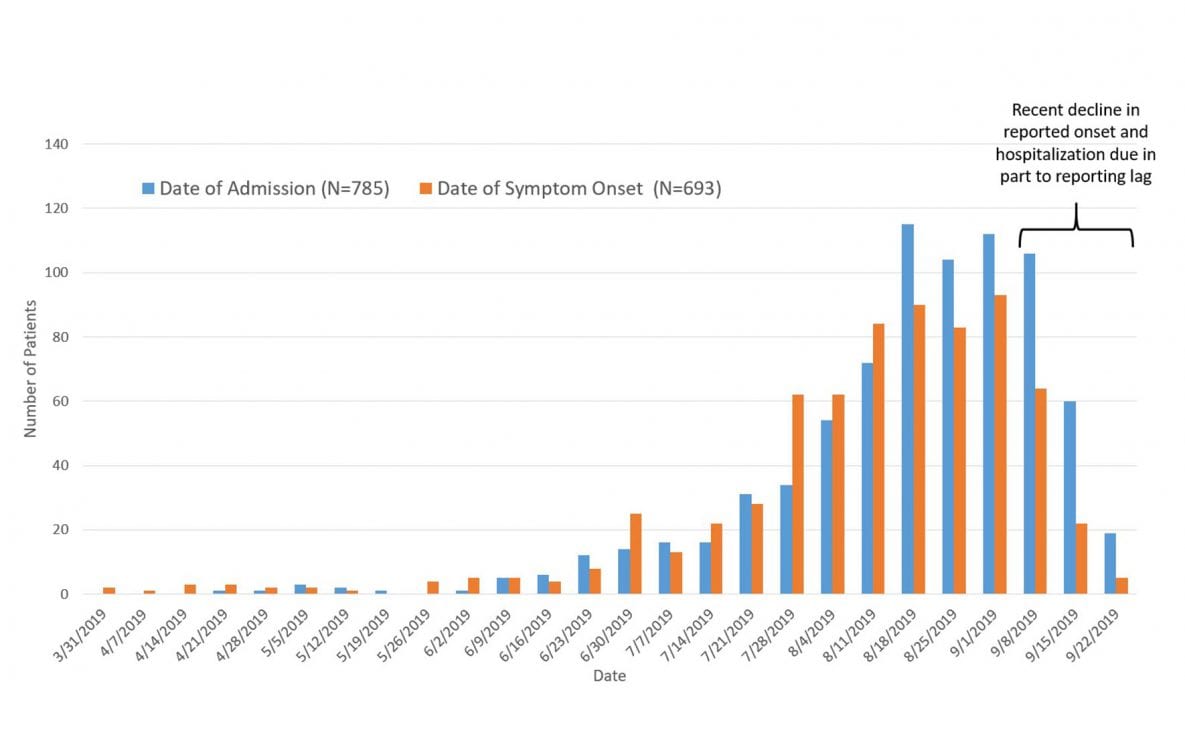
Dates of symptom onset and hospital admission for patients with lung injury associated with e-cigarette use, or vaping — United States, March 31–September 28, 2019
epi-chart-1002-large.jpg


https://www.cdc.gov/tobacco/basic_i...lung-disease.html#latest-outbreak-information
 
First vaping-related death reported in Connecticut
HEALTH by JENNA CARLESSO OCTOBER 3, 2019


Connecticut health officials on Thursday reported the first death from a vaping-related illness in the state.

A person between the ages of 30 and 39 is the first to die in Connecticut of a mysterious lung disease linked to vaping, state public health officials said Thursday.

In addition, the number of vaping-related illnesses here has reached 25, seven more than the last time state leaders provided data less than a week ago.

The first fatality in Connecticut happened last week. Health officials said the person, whose name was withheld, had been hospitalized for multiple medical conditions.
...
https://ctmirror.org/2019/10/03/firs...n-connecticut/
 
Department of Health reports 1 vaping death in Pennsylvania, multiple lung injuries
by CBS21 NewsFriday, October 4th 2019

HARRISBURG, Pa. — The Pennsylvania Department of Health held a a press conference on Friday to provide an update on lung injuries associated with vaping and to outline steps being taken.

Officials announced one reported death and nine confirmed lung injury cases in the state due to vaping. There are also 12 probable cases related to vaping. The Center for Disease Control and Prevention are investigating an additional 63 cases in the state. The individuals in the cases have all suffered serious lung injuries and most have been hospitalized.

Vaping with illegal cartridges containing THC is the main cause of these reported cases, according to officials, but the Department of Health warns against the use of legally purchased products as well.
...
https://local21news.com/news/local/...ping-death-in-pennsylvania-multiple-illnesses

MDHHS reports first death in the state from vaping-related lung injury
by Newschannel 3 Friday, October 4th 2019

First person in Michigan dies from vaping-related illness amid nationwide outbreak of lung diseases. (WWMT/MGN Online)


LANSING, Mich. — The Michigan Department of Health and Human Services (MDHHS) Friday announced the first death in connection with the outbreak of vaping-related lung injury in the state. MDHHS officials said the department was notified of the death of an adult male on Wednesday, Oct. 2. The department did not release the name or any other information on the individual due to confidentiality reasons.

“We are saddened to announce a death associated with this outbreak,” said Dr. Joneigh Khaldun, chief medical executive and chief deputy for health for MDHHS. “To protect public health, we urge people to consider refraining from vaping until the specific cause of the vaping-related severe lung injuries being reported nationwide has been identified."
...
https://wwmt.com/news/state/mdhhs-reports-first-death-in-the-state-from-vaping-related-lung-injury
 
Vaping-related death reported in Kings County, second death in Valley

One person has died due to "complications related to the use of e-cigarettes," the Kings County Department of Public Health reported Monday afternoon.

By Gilbert Magallon
Tuesday, October 8, 2019 2:14AM
FRESNO, Calif. (KFSN) -- Another vaping-related death has been reported in the Central Valley, this time in Kings County.

The Kings County Department of Public Health said a woman died from a severe lung injury.

Nancy Gerking with the department says like many, it started with symptoms similar to a common cold. The symptoms including shortness of breath, coughing, chest pain, nausea, fever, vomiting or diarrhea.
...
https://abc30.com/health/vaping-rel...-kings-county-second-death-in-valley/5601183/
 
Governor Cuomo says 17-year-old Bronx teen first NY vaping death

Posted: Oct 8, 2019 / 02:37 PM EDT / Updated: Oct 8, 2019 / 04:05 PM EDT

NEW YORK STATE (WSYR-TV) — On Tuesday, Governor Andrew Cuomo announced that a Bronx teen is New York’s first vaping-related death.

The Department of Health says the 17-year-old was first hospitalized in September with a “vaping-associated respiratory illness.” The teen was readmitted to the hospital in late September and then passed away on October 4th.

The Department of Health says they have received 110 reports of severe pulmonary illness in New York State in people ranging from age 14 to 69 who have used a vaping product at least once.
...
https://www.localsyr.com/news/local...17-year-old-bronx-teen-first-ny-vaping-death/
 
Georgia confirms its 2nd death linked to vaping
THE ASSOCIATED PRESS
OCTOBER 09, 2019 07:01 AM, UPDATED 6 HOURS 49 MINUTES AGO
ATLANTA
Health officials in Georgia say they have confirmed the state's second death linked to vaping.

The Georgia Department of Public Health said in a news release Wednesday the person died after being hospitalized for lung injury and had a history of nicotine vaping. No other details were given.
...
https://www.tri-cityherald.com/news/business/health-care/article235948232.html

Utah's first vaping-related death reported, victim was under 30
By Alexandria Hein | Fox News


Health officials in Utah announced the state’s first vape-related death on Wednesday, adding that the victim had “vaped THC prior to their death.” The Utah Department of Health said the victim was under age 30, and died at home without being hospitalized prior to death.


“The UDOH Office of the Medical Examiner made the final determination as to the cause of death,” the health department said in the news release. “Public health officials investigating the death have determined the individual vaped THC prior to their death. In order to protect the identity of the deceased resident, no further information will be released.”
...
https://www.foxnews.com/health/utah-1st-vaping-death
 
Indiana vaping-related deaths now up to 3
POSTED 2:05 PM, OCTOBER 10, 2019, BY FOX59 WEB, UPDATED AT 04:47PM, OCTOBER 10, 2019


LAFAYETTE, Ind.– Indiana now has two more deaths of severe lung injuries linked to a history of e-cigarette use.

The Indianapolis State Department of Health (ISDH) said the latest deaths bring Indiana to three since September 6.

“These deaths are heartbreaking,” said State Health Commissioner Kris Box, M.D., FACOG. “I urge anyone who is using these products to consider stopping, especially if you are vaping THC.”
...
https://fox59.com/2019/10/10/second-vaping-related-death-for-indiana-reported-in-tippecanoe-county/

Texas records 1st death linked to e-cigarette use
by Associated PressThursday, October 10th 2019

DALLAS (AP) — Health officials in Texas say the state has recorded its first death associated with vaping-related lung illnesses.

The Texas Department of State Health Services confirmed Wednesday that an older woman in north Texas died last week from a lung disease associated with using electronic cigarettes. The agency says the state has also identified 95 confirmed or probable cases of lung illnesses linked to vaping.
...
https://wwmt.com/news/nation-world/texas-records-1st-death-linked-to-e-cigarette-use
[h=1]Outbreak of Lung Injury Associated with E-Cigarette Use, or Vaping[/h]
Espa?ol (Spanish)

Table of Contents
Posted October 10, 2019 at 1:00pm ET

CDC, the U.S. Food and Drug Administration (FDA), state and local health departments, and other clinical and public health partners are investigating a multistate outbreak of lung injury associated with use of e-cigarette, or vaping, products.

If you have questions about CDC’s investigation into the lung injuries associated with use of electronic cigarette, or vaping, products, contact CDC-INFO or call 800-232-4636.


What we know
  • As of October 8, 2019, 1,299* lung injury cases associated with the use of e-cigarette, or vaping, products have been reported to CDC from 49 states, the District of Columbia, and 1 U.S. territory.
  • Twenty-six deaths have been confirmed in 21 states.
  • All patients have reported a history of using e-cigarette, or vaping, products.
  • Most patients report a history of using THC-containing products. The latest national and regional findings suggest products containing THC play a role in the outbreak.
  • Approximately 70% of patients are male.
  • Approximately 80% of patients are under 35 years old.
    • 15% of patients are under 18 years old
    • 21% of patients are 18 to 20 years old
On This Page
book icon
Resources
device icon
Digital Press Kit
For the Public: What You Need to Know
Lots of hands reaching together

For Healthcare Providers
Doctor standing with arms crossed

For State and Local Health Departments
person at computer


What we don’t know
  • The specific chemical exposure(s) causing lung injuries associated with e-cigarette use, or vaping, remains unknown at this time.
  • No single product or substance has been linked to all lung injury cases.
    • The outbreak is occurring in the context of a dynamic marketplace for e-cigarette, or vaping, products, which may have a mix of ingredients, complex packaging and supply chains, and include potentially illicit substances.
    • Users may not know what is in their e-cigarette or e-liquid solutions. Many of the products and substances can be modified by suppliers or users. They can be obtained from stores, online retailers, from informal sources (e.g. friends, family members), or “off the street.”
  • More information is needed to know whether one or more e-cigarette or vaping products, substances, or brands is responsible for the outbreak.
Top of Page

What CDC recommends
  • While this investigation is ongoing, CDC recommends that you consider refraining from using e-cigarette, or vaping, products, particularly those containing THC.
  • If you are an adult who used e-cigarettes containing nicotine to quit cigarette smoking, do not return to smoking cigarettes.
  • If you have recently used an e-cigarette or vaping product and you have symptoms like those reported in this outbreak, see a healthcare provider.
  • Regardless of the ongoing investigation:
    • Anyone who uses e-cigarette, or vaping, products should not buy these products (e.g., e-cigarette or vaping products with THC or CBD oils) from informal sources (e.g. friends, family members) or “off the street,” and should not modify or add any substances to these products that are not intended by the manufacturer.
    • Youth and young adults should not use e-cigarette, or vaping, prod?ucts.
    • Women who are pregnant should not use e-cigarette, or vaping, products.
    • Adults who do not currently use tobacco products should not start using e-cigarette, or vaping, products.
    • THC use has been associated with a wide range of health effects, particularly with prolonged heavy use. The best way to avoid potentially harmful effects is to not use THC, including through e-cigarette, or vaping, products. Persons with marijuana use disorder should seek evidence-based treatment by a health care provider.
Top of Page

Key Facts about E-Cigarette Use, or Vaping
  • Electronic cigarettes – or e-cigarettes — are also called vapes, e-hookahs, vape pens, tank systems, mods, and electronic nicotine delivery systems (ENDS).
  • Using an e-cigarette product is commonly called vaping.
  • E-cigarettes work by heating a liquid to produce an aerosol that users inhale into their lungs.
  • The liquid can contain: nicotine, tetrahydrocannabinol (THC) and cannabinoid (CBD) oils, and other substances and additives. THC is the psychoactive mind-altering compound of marijuana that produces the “high”.
Top of Page

Latest Outbreak Information

Updated every Thursday
  • As of October 8, 2019, 1,299* lung injury cases associated with e-cigarette use, or vaping, have been reported to CDC from the following states, the District of Columbia, and 1 U.S. territory: AL, AR, AZ, CA, CO, CT, DE, FL, GA, HI, IA, ID, IL, IN, KS, KY, LA, MA, ME, MD, MI, MN, MO, MT, MS, NC, ND, NE, NJ, NH, NM, NV, NY, OH, OK, OR, PA, RI, SC, SD, TN, TX, UT, VA, VT, WA, WI, WV, WY, and USVI.
  • Twenty-six deaths have been confirmed in 21 states: Alabama, California (3), Connecticut, Delaware, Florida, Georgia (2), Illinois, Indiana, Kansas (2), Massachusetts, Michigan, Minnesota, Mississippi, Missouri, Nebraska, New Jersey, New York, Oregon (2), Pennsylvania, Texas, and Virginia. More deaths are under investigation.
    • The median age of deceased patients was 49 years and ranged from 17 to 75 years.
  • Among 1,043 patients with data on age and sex:
    • 70% of patients are male.
    • The median age of patients is 24 years and ranges from 13 to 75 years.
    • 80% of patients are under 35 years old.
    • By age group category:
      • 15% of patients are under 18 years old;
      • 21% of patients are 18 to 20 years old;
      • 18% of patients are 21 to 24 years old;
      • 26% of patients are 25 to 34 years old; and
      • 20% of patients are 35 years or older.
  • The latest findings from the investigation into lung injuries associated with e-cigarette use, or vaping, suggest products containing THC play a role in the outbreak.
  • All patients have a reported history of e-cigarette product use, or vaping, and no consistent evidence of an infectious cause has been discovered. Therefore, the suspected cause is a chemical exposure.
  • The specific chemical exposure(s) causing lung injuries associated with e-cigarette product use, or vaping, remains unknown at this time.
  • No single product or substance has been linked to all lung injury cases. More information is needed to know whether a single product, substance, brand, or method of use is responsible for the outbreak.
  • Among 573 patients with information on substances used in e-cigarette, or vaping, products in the 3 months prior to symptom onset**:
    • About 76% reported using THC-containing products; 32% reported exclusive use of THC-containing products.
    • About 58% reported using nicotine-containing products; 13% reported exclusive use of nicotine-containing products.
  • This complex investigation spans many states, involves hundreds of patients, and involves a wide variety of substances and e-cigarette, or vaping, products.
Top of Page

What CDC is Doing
  • CDC is working 24/7 to identify the cause or causes of this outbreak through partnerships with states and other federal agencies.
  • CDC has activated the Emergency Operations Center (EOC) to coordinate activities and provide assistance to states, public health partners and clinicians around the nation.
  • CDC’s Lung Injury response efforts are committed to:
    • Identify and define the risk factors and the source for lung disease associated with e-cigarette product use, or vaping.
    • Detect and track confirmed and probable cases in the US.
    • Communicate actionable recommendations to state, local, and clinical audiences.
    • Establish lab procedures that can assist with the public heath investigation and patient care.
  • CDC continues to work closely with FDA, states, public health partners, and clinicians on this investigation by providing consultation and technical assistance to states on communication, health alerts, public outreach, and surveillance.
  • CDC is maintaining an outbreak webpage with key messages and weekly updates on case counts, deaths, and resources.
  • CDC is holding congressional briefings, media telebriefings, and regular calls with health departments, clinicians to provide timely updates.
  • CDC worked with states to create a primary and an out-of-hospital case definition to classify confirmed and probable cases in a consistent way. States are in the process of classifying patients. We expect that states and clinicians may look back for past lung injury cases based on CDC’s case definition CDC will report numbers of confirmed and probable lung injury cases once states have finalized their classification of cases.
  • By invitation, CDC has deployed Epidemic Intelligence Service (EIS) officers and other CDC staff to support states.
  • CDC has started collecting and testing clinical lab specimens to learn more about this lung injury.
  • CDC developed guidance documents for were created to assist public health laboratories, healthcare providers, and pathologists, and others, with specimen collection, storage, and submission.
  • For more information and resources visit For the Public, For Healthcare Providers and For State and Local Health Departments. Also available are Publications and Resources.
*The increase in lung injury cases from last week represents both new patients and recent reporting of previously-identified patients to CDC.

**Based on complete reports received.
Top of Page


Top of Page

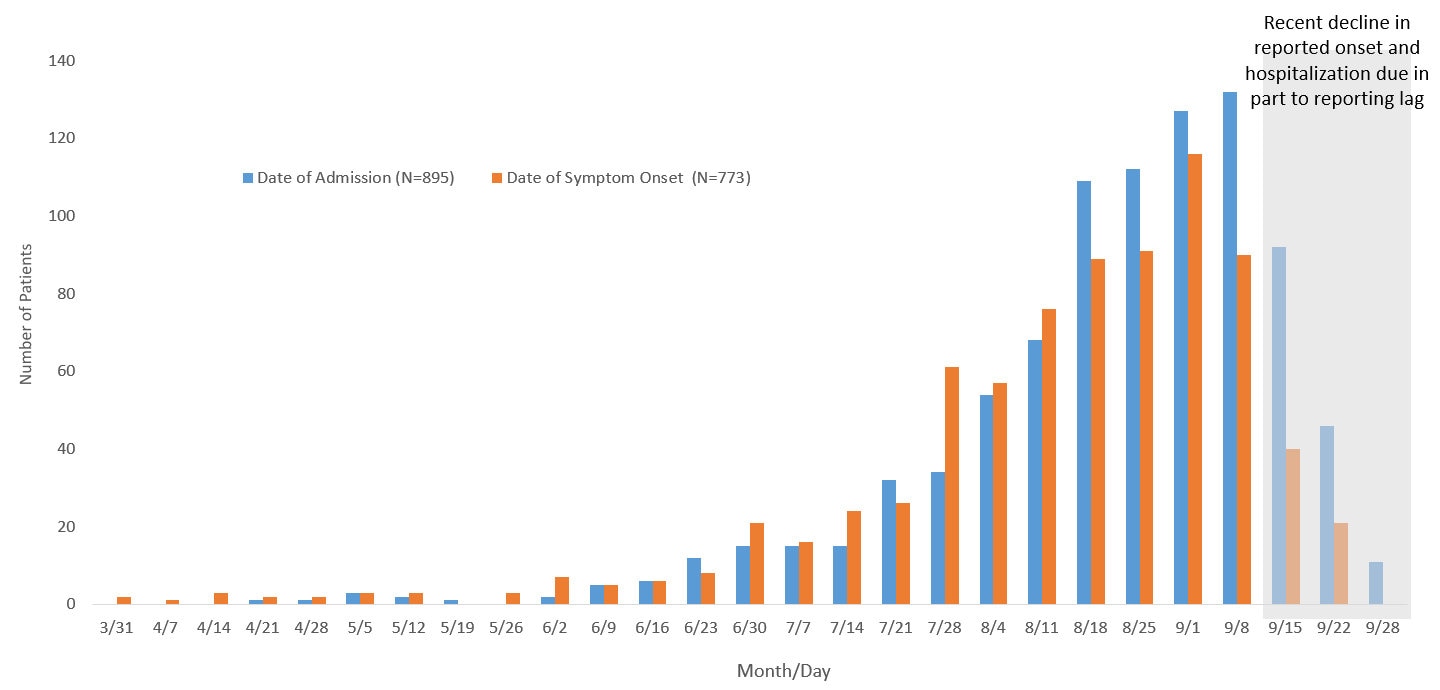
Dates of symptom onset and hospital admission for patients with lung injury associated with e-cigarette use, or vaping — United States, March 31–October 5, 2019
epi-chart-1010.jpg


https://www.cdc.gov/tobacco/basic_i...lung-disease.html#latest-outbreak-information

Comment - The two newly reported deaths from Indiana raise the national toll to 28. - Ro
 
Indiana sees two more deaths related to vaping, bringing total to three
Shari Rudavsky, Indianapolis StarPublished 4:49 p.m. ET Oct. 10, 2019 | Updated 5:42 p.m. ET Oct. 10, 2019

Vaping has been marketed as a healthy option to traditional smoking. But federal and state health officials have issued warnings and data that dispel that notion. Dwight Adams, dwight.adams@indystar.com


Two more Indiana residents have died of lung illness related to vaping, which brings the total number of deaths in the state to three, the Indiana State Department of Health said Thursday.

Although 26 deaths have occurred in 21 states across the nation, not counting Indiana's two most recent deaths, only the state of California has had as many deaths as Indiana, according to the Centers for Disease Control and Prevention.
...
https://www.indystar.com/story/news...ms-lives-2-more-indiana-residents/3935075002/
 
Teen becomes first vaping-related death recorded in Montana
by The Associated PressWednesday, October 16th 2019


Montana health officials say a teenager has died of a lung disease associated with a national outbreak of vaping-related illnesses.


MISSOULA, Mont. — Montana health officials say a teenager has died of a lung disease associated with a national outbreak of vaping-related illnesses.

Montana Department of Public Health and Human Services officials said Tuesday that the teenager died of severe pulmonary disease, and is the state's first recorded death connected to e-cigarette use.
...
https://nbcmontana.com/news/local/of...ath-in-montana

Minnesota reports 2 more deaths from vaping-related illnesses
The first patient vaped a number of products, including illegal THC, while the second patient had severe underlying conditions and is believed to have vaped unknown products in addition to nicotine.
Written By: Forum News Service | Oct 16th 2019 - 10am.

ST. PAUL — Two more Minnesotans have died due to complications from severe lung injuries associated with vaping, the Minnesota Department of Health reported Wednesday.

In an Oct. 16 news release, the Health Department said the latest two deaths involved people over the age of 50. Both died in September after complicated hospitalizations. The patients had difficulty breathing, which prompted their hospitalizations, the release said.
...
https://www.grandforksherald.com/lif...inda+Pierce%29
 
[h=1]Outbreak of Lung Injury Associated with E-Cigarette Use, or Vaping[/h]
Espa?ol (Spanish)
lung-injury-narrow.jpg

CDC, the U.S. Food and Drug Administration (FDA), state and local health departments, and other clinical and public health partners are investigating a multistate outbreak of lung injury associated with use of e-cigarette, or vaping, products.

If you have questions about CDC’s investigation into the lung injuries associated with use of electronic cigarette, or vaping, products, contact CDC-INFO or call 1-800-232-4636.

General Public

For the Public
Health Care Providers

For Healthcare Providers
Health Departments

For Health Departments
Updated October 17, 2019 at 3:00 PM ET

What We Know
  • As of October 15, 2019, 1,479* lung injury cases associated with the use of e-cigarette, or vaping, products have been reported to CDC from 49 states (all except Alaska), the District of Columbia, and 1 U.S. territory.
  • Thirty-three deaths have been confirmed in 24 states.
  • All patients have reported a history of using e-cigarette, or vaping, products.
  • We do know that THC is present in most of the samples tested by FDA to date, and most patients report a history of using THC-containing products.
  • The latest national and state findings suggest products containing THC, particularly those obtained off the street or from other informal sources (e.g. friends, family members, illicit dealers), are linked to most of the cases and play a major role in the outbreak.
  • As such, we recommend that you should not use e-cigarette, or vaping, products that contain THC.
  • Since the specific causes or causes of lung injury are not yet known, the only way to assure that you are not at risk while the investigation continues is to consider refraining from use of all e-cigarette, or vaping, products
  • The use of e-cigarettes, or vaping, products is unsafe for all ages, including youth and young adults. Nicotine is highly addictive and can harm adolescent brain development, which continues into the early to mid-20s.
On This Page


What We Don't Know
  • At this time, FDA and CDC have not identified the cause or causes of the lung injuries in these cases, and the only commonality among all cases is that patients report the use of e-cigarette, or vaping, products.
  • No one compound or ingredient has emerged as the cause of these illnesses to date; and it may be that there is more than one cause of this outbreak. Many different substances and product sources are still under investigation. The specific chemical exposure(s) causing lung injuries associated with e-cigarette product use, or vaping, remains unknown at this time
book icon
Resources
device icon
Digital Press Kit

What CDC Recommends
  • CDC recommends that people should not:
    • Use e-cigarette, or vaping, products that contain THC.
    • Buy any type of e-cigarette, or vaping, products, particularly those containing THC, off the street.
    • Modify or add any substances to e-cigarette, or vaping, products that are not intended by the manufacturer, including products purchased through retail establishments.
  • Since the specific cause or causes of lung injury are not yet known, the only way to assure that people are not at risk while the investigation continues is to consider refraining from use of all e-cigarette and vaping products. There is no safe tobacco product. All tobacco products, including e-cigarettes, carry a risk.
  • If you are an adult using e-cigarettes, or vaping, products, to quit smoking, do not return to smoking cigarettes. Adults addicted to nicotine using e-cigarettes should weigh all risks and benefits, and consider utilizing FDA-approved nicotine replacement therapies.
  • If people continue to use an e-cigarette, or vaping, product, carefully monitor yourself for symptoms and see a healthcare provider immediately if you develop symptoms like those reported in this outbreak.
  • Irrespective of the ongoing investigation:
    • E-cigarette, or vaping, products should never be used by youths, young adults, or women who are pregnant.
    • Adults who do not currently use tobacco products should not start using e-cigarette, or vaping, products.
    • THC use has been associated with a wide range of health effects, particularly with prolonged heavy use. The best way to avoid potentially harmful effects is to not use THC, including through e-cigarette, or vaping, products. Persons with marijuana use disorder should seek evidence-based treatment by a health care provider.
    • There is no safe tobacco product. All tobacco products, including e-cigarettes, carry a risk.
    • CDC will continue to update guidance, as appropriate, as new data emerges from this complex outbreak.
Top of Page

Key Facts about E-Cigarette Use, or Vaping
  • Electronic cigarettes — or e-cigarettes — are also called vapes, e-hookahs, vape pens, tank systems, mods, and electronic nicotine delivery systems (ENDS).
  • Using an e-cigarette product is commonly called vaping.
  • E-cigarettes work by heating a liquid to produce an aerosol that users inhale into their lungs.
  • The liquid can contain: nicotine, tetrahydrocannabinol (THC) and cannabinoid (CBD) oils, and other substances and additives. THC is the psychoactive mind-altering compound of marijuana that produces the “high”.
Top of Page

Latest Outbreak Information

Updated every Thursday
    • As of October 15, 2019, 1,479* lung injury cases associated with e-cigarette use, or vaping, have been reported to CDC from the District of Columbia, 1 U.S. territory (USVI), and 49 states (all except Alaska).
    • Thirty-three deaths have been confirmed in 24 states: Alabama, California (3), Connecticut, Delaware, Florida, Georgia (2), Illinois, Indiana (3), Kansas (2), Massachusetts, Michigan, Minnesota (3), Mississippi, Missouri, Montana, Nebraska, New Jersey, New York, Oregon (2), Pennsylvania, Tennessee, Texas, Utah, and Virginia. More deaths are under investigation.
      • The median age of deceased patients was 44 years and ranged from 17 to 75 years.
    • Among 1,358 patients with data on age and sex:
      • 70% of patients are male.
      • The median age of patients is 23 years and ages range from 13 to 75 years.
      • 79% of patients are under 35 years old.
      • By age group category:
        • 15% of patients are under 18 years old;
        • 21% of patients are 18 to 20 years old;
        • 18% of patients are 21 to 24 years old;
        • 25% of patients are 25 to 34 years old; and
        • 21% of patients are 35 years or older.
  • To date, national and state data suggest that products containing THC, particularly those obtained off the street or from other informal sources (e.g., friends, family members, or illicit dealers), are linked to most of the cases and play a major role in the outbreak.
  • All patients have a reported history of e-cigarette product use, or vaping, and no consistent evidence of an infectious cause has been discovered. Therefore, the suspected cause is exposure to a chemical or chemicals.
  • The specific chemical exposure(s) causing lung injuries associated with e-cigarette use, or vaping, remains unknown at this time.
  • Among 849 patients with information on substances used in e-cigarette, or vaping, products in the 3 months prior to symptom onset**:
    • About 78% reported using THC-containing products; 31% reported exclusive use of THC-containing products.
    • About 58% reported using nicotine-containing products; 10% reported exclusive use of nicotine-containing products.
  • This complex investigation spans almost all states, involves over a thousand patients, and involves a wide variety of brands and substances and e-cigarette, or vaping, products. Case counts continue to increase and new cases are being reported, which makes it more difficult to determine the cause or causes of this outbreak.
Top of Page

What CDC is Doing
  • CDC is working 24/7 to identify the cause or causes of this outbreak through partnerships with states and other federal agencies.
  • CDC has activated the Emergency Operations Center (EOC) to coordinate activities and provide assistance to states, public health partners and clinicians around the nation.
  • CDC’s Lung Injury response efforts are committed to:
    • Identify and define the risk factors and the source for lung disease associated with e-cigarette product use, or vaping.
    • Detect and track confirmed and probable cases in the US.
    • Communicate actionable recommendations to state, local, and clinical audiences.
    • Establish lab procedures that can assist with the public heath investigation and patient care.
  • CDC continues to work closely with FDA, states, public health partners, and clinicians on this investigation by providing consultation and technical assistance to states on communication, health alerts, public outreach, and surveillance.
  • CDC is maintaining an outbreak webpage with key messages and weekly updates on case counts, deaths, and resources.
  • CDC is holding congressional briefings, media telebriefings, and regular calls with health departments, clinicians to provide timely updates.
  • CDC worked with states to create primary and out-of-hospital case definitions to classify confirmed and probable cases in a consistent way. States are in the process of classifying patients. We expect that states and clinicians may look back for past lung injury cases based on CDC’s case definition CDC will report numbers of confirmed and probable lung injury cases once states have finalized their classification of cases.
  • By invitation, CDC has deployed Epidemic Intelligence Service (EIS) officers and other CDC staff to support states.
  • CDC is offering additional laboratory testing.
    • CDC is currently validating targeted methods to test chemicals in bronchoalveolar lavage (BAL) fluid, blood, or urine and has received initial samples.
    • CDC is testing pathologic specimens, including lung biopsy or autopsy specimens, associated with patients.
    • CDC is also validating methods for aerosol emission testing of case-associated product samples from e-cigarette, or vaping, products and e-liquids. Initial data from product sample testing has guided the need for these additional assays.
    • Results may provide insight into the nature of the chemical exposure(s) contributing to this outbreak.
  • CDC developed guidance documents for were created to assist public health laboratories, healthcare providers, and pathologists, and others, with specimen collection, storage, and submission.
  • For more information and resources visit For the Public, For Healthcare Providers and For State and Local Health Departments as well as our Publications and Resources page.
* The increase in lung injury cases from last week represents both new patients and recent reporting of previously-identified patients to CDC.

** Based on complete reports received.
Top of Page


Top of Page

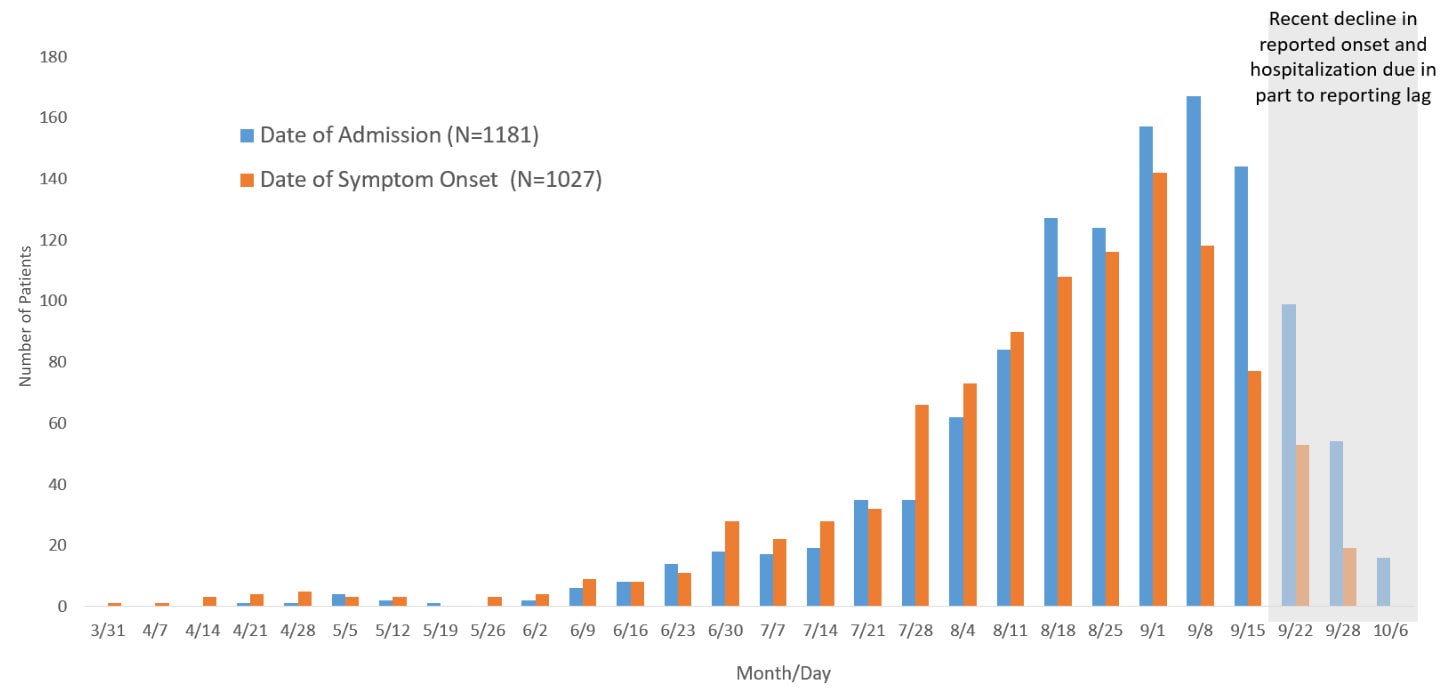
Dates of symptom onset and hospital admission for patients with lung injury associated with e-cigarette use, or vaping — United States, March 31–October 12, 2019
epi-chart-2019-10-12.jpg


Top of Page

https://www.cdc.gov/tobacco/basic_i...lung-disease.html#latest-outbreak-information
 
First vaping related death in Nashville confirmed: TN DOH, Metro Public Health Dept.
by Jason HallThursday, October 17th 2019


The Metro Public Health Department and the Tennessee Department of Health confirmed the first reported death from a vaping associated disease in Nashville on Thursday.

An adult male suffered a severe pulmonary illness associated with the use of electronic cigarettes.
...
https://fox17.com/news/local/first-...see-confirmed-tn-doh-metro-public-health-dept
 
[h=1]Outbreak of Lung Injury Associated with the Use of E-Cigarette, or Vaping, Products[/h]
Espa?ol (Spanish)
lung-injury-narrow.jpg

CDC, the U.S. Food and Drug Administration (FDA), state and local health departments, and other clinical and public health partners are investigating a multistate outbreak of lung injury associated with use of e-cigarette, or vaping, products.

If you have questions about CDC’s investigation into the lung injuries associated with use of e-cigarette, or vaping, products, contact CDC-INFO or call 1-800-232-4636.


On This Page


General Public

For the Public
Health Care Providers

For Healthcare Providers
Health Departments

For Health Departments
Updated October 24, 2019 at 1:00 PM EDT


What We Know

About the Outbreak:
  • As of October 22, 2019, 1,604* cases of e-cigarette, or vaping, product use associated lung injury (EVALI) have been reported to CDC from 49 states (all except Alaska), the District of Columbia, and 1 U.S. territory.
About Patient Exposure:
  • All EVALI patients have reported a history of using e-cigarette, or vaping, products.
    • THC is present in most of the samples tested by FDA to date, and most patients report a history of using THC-containing products.
    • The latest national and state findings suggest products containing THC, particularly those obtained off the street or from other informal sources (e.g. friends, family members, illicit dealers), are linked to most of the cases and play a major role in the outbreak.
book icon
Resources
device icon
Digital Press Kit

What We Don't Know
  • At this time, FDA and CDC have not identified the cause or causes of the lung injuries in these cases, and the only commonality among all cases is that patients report the use of e-cigarette, or vaping, products.
  • No one compound or ingredient has emerged as the cause of these illnesses to date; and it may be that there is more than one cause of this outbreak. Many different substances and product sources are still under investigation. The specific chemical exposure(s) causing lung injuries associated with e-cigarette product use, or vaping, remains unknown at this time

What CDC Recommends
  • CDC recommends that you do not use e-cigarette, or vaping, products that contain THC.
  • CDC also recommends that people should not:
    • Buy any type of e-cigarette, or vaping, products, particularly those containing THC, off the street.
    • Modify or add any substances to e-cigarette, or vaping, products that are not intended by the manufacturer, including products purchased through retail establishments.
  • Since the specific compound or ingredient causing lung injury are not yet known, the only way to assure that you are not at risk while the investigation continues is to consider refraining from use of all e-cigarette, or vaping, products.
  • If you are an adult using e-cigarettes, or vaping, products, to quit smoking, do not return to smoking cigarettes. Adults addicted to nicotine using e-cigarettes should weigh all risks and benefits and consider utilizing FDA-approved nicotine replacement therapiesexternal icon.
  • If people continue to use an e-cigarette, or vaping, product, carefully monitor yourself for symptoms and see a healthcare provider immediately if you develop symptoms like those reported in this outbreak.
  • Irrespective of the ongoing investigation:
    • E-cigarette, or vaping, products should never be used by youths, young adults, or women who are pregnant.
    • Adults who do not currently use tobacco products should not start using e-cigarette, or vaping, products. There is no safe tobacco product. All tobacco products, including e-cigarettes, carry a risk.
  • THC use has been associated with a wide range of health effects, particularly with prolonged heavy use. The best way to avoid potentially harmful effects is to not use THC, including through e-cigarette, or vaping, products. Persons with marijuana use disorder should seek evidence-based treatment by a health care provider.
  • CDC will continue to update guidance, as appropriate, as new data emerges from this complex outbreak.
Top of Page

Key Facts about Use of E-Cigarette, or Vaping, Products
  • Electronic cigarettes — or e-cigarettes — are also called vapes, e-hookahs, vape pens, tank systems, mods, and electronic nicotine delivery systems (ENDS).
  • Using an e-cigarette product is commonly called vaping.
  • E-cigarettes work by heating a liquid to produce an aerosol that users inhale into their lungs.
  • The liquid can contain: nicotine, tetrahydrocannabinol (THC) and cannabinoid (CBD) oils, and other substances and additives. THC is the psychoactive mind-altering compound of marijuana that produces the “high”.
Top of Page

Latest Outbreak Information

Updated every Thursday
  • This complex investigation spans almost all states, involves over a thousand patients, and a wide variety of brands and substances and e-cigarette, or vaping, products. Case counts continue to increase and new cases are being reported, which makes it more difficult to determine the cause or causes of this outbreak.
  • As of October 22, 2019, 1,604* cases of e-cigarette, or vaping, product use associated lung injury (EVALI) have been reported to CDC from 49 states (all except Alaska), the District of Columbia, and 1 U.S. territory.
    • Thirty-four deaths have been confirmed in 24 states: Alabama, California (3), Connecticut, Delaware, Florida, Georgia (2), Illinois (2), Indiana (3), Kansas (2), Massachusetts, Michigan, Minnesota (3), Mississippi, Missouri, Montana, Nebraska, New Jersey, New York, Oregon (2), Pennsylvania, Tennessee, Texas, Utah, and Virginia. More deaths are under investigation.
  • Data on age, sex, and substances used in e-cigarette, or vaping, products will be updated in the MMWR report being released on Friday, October 25, 2019.
  • See CDC’s Lung Injury cases map and bar chart of dates of symptoms onset and hospital admission for Patients with e-cigarette, or vaping, product use associated lung injury (EVALI) for more details.
Top of Page

What CDC is Doing

Public Health Response:
  • CDC’s Lung Injury response efforts are committed to:
    • Identify and define the risk factors and the source for lung disease associated with e-cigarette product use, or vaping.
    • Detect and track confirmed and probable cases in the US.
    • Communicate actionable recommendations to state, local, and clinical audiences.
    • Establish lab procedures that can assist with the public heath investigation and patient care.
Partnerships:
  • CDC is working 24/7 to identify the cause or causes of this outbreak through partnerships with states and other federal agencies.
  • CDC continues to work closely with FDA, states, public health partners, and clinicians on this investigation by providing consultation and technical assistance to states on communication, health alerts, public outreach, and surveillance.
  • CDC has activated the Emergency Operations Center (EOC) to coordinate activities and provide assistance to states, public health partners and clinicians around the nation.
  • CDC worked with states to create primary and out-of-hospital case definitions to classify confirmed and probable cases in a consistent way. States are in the process of classifying patients.
    • We expect that states and clinicians may look back for past lung injury cases based on CDC’s case definition CDC will report numbers of confirmed and probable lung injury cases once states have finalized their classification of cases.
  • By invitation, CDC has deployed Epidemic Intelligence Service (EIS) officers and other CDC staff to support states.
Media and Communication:
  • CDC is maintaining an outbreak webpage with key messages and weekly updates on case counts, deaths, and resources.
  • CDC is holding congressional briefings, media telebriefings, and regular calls with health departments, clinicians to provide timely updates.
Laboratory Testing:
  • CDC and FDA are expanding the range of available laboratory testing.
    • CDC is currently testing bronchoalveolar lavage (BAL) fluid samples, as well as blood or urine samples paired to BAL fluid samples.
    • CDC is testing pathologic specimens, including lung biopsy or autopsy specimens, associated with patients.
    • CDC is offering aerosol emission testing of case-associated product samples from e-cigarette, or vaping, products and e-liquids. Analysis of aerosol emissions will augment FDA’s ongoing work to characterize e-liquid and will improve our understanding of exposure among case-patients associated with the Lung Injury outbreak. CDC is coordinating e-cigarette, or vaping, product analysis with FDA.
    • Results may provide insight into the nature of the chemical exposure(s) contributing to this outbreak.
  • CDC developed guidance documents for were created to assist public health laboratories, healthcare providers, and pathologists, and others, with specimen collection, storage, and submission.
  • For more information and resources visit For the Public, For Healthcare Providers and For State and Local Health Departments as well as our Publications and Resources page.
* The increase in lung injury cases from last week represents both new patients and recent reporting of previously-identified patients to CDC.

** Based on complete reports received.
Top of Page


Top of Page

Dates of symptom onset and hospital admission for patients with lung injury associated with e-cigarette use, or vaping — United States, March 31–October 19, 2019

Top of Page

[h=3]Multimedia[/h] CDCTobaccoFree
Page last reviewed: October 24, 2019
Content source: Office on Smoking and Health, National Center for Chronic Disease Prevention and Health Promotion

https://www.cdc.gov/tobacco/basic_information/e-cigarettes/severe-lung-disease.html#latest-outbreak-information
 
DC Health Department Confirms First Vaping-Associated Death
Thursday, October 24, 2019
DC Health Advises Residents to Stop Using E-Cigarettes
(Washington, DC) The District of Columbia Department of Health (DC Health) has confirmed one death associated with vaping. As of October 22, 2019, 1,604* cases of e-cigarette, or vaping, product use associated lung injury (EVALI) have been reported to CDC from 49 states (all except Alaska), the District of Columbia, and 1 U.S. territory.

DC Health urges District residents to refrain from using all e-cigarette and vaping products until further notice. Cannabis or THC (tetrahydrocannabinol) vape-products that are obtained off the street may pose the greatest risk.
...
https://dchealth.dc.gov/release/dc-health-department-confirms-first-vaping-associated-death
 
Report: Individual from West Tennessee dies from vaping-associated respiratory illness
POSTED 6:03 AM, OCTOBER 25, 2019, BY ERYN TAYLOR AND AP, UPDATED AT 06:09AM, OCTOBER 25, 2019

NASHVILLE, Tenn. — The Tennessee Department of Health has confirmed a second vaping-related illness has resulted in death.

The Tennessean reported that the individual was from West Tennessee, but no other information was released.

This is the second vaping-related death in the state and appears to be the 36th across 24 states:
...
https://wreg.com/2019/10/25/report-...s-from-vaping-associated-respiratory-illness/
 
Update: Characteristics of Patients in a National Outbreak of E-cigarette, or Vaping, Product Use–Associated Lung Injuries — United States, October 2019


Early Release / October 28, 2019 / 68


Erin D. Moritz, PhD[SUP]1[/SUP]; Lauren B. Zapata, PhD[SUP]2[/SUP]; Akaki Lekiachvili, MD[SUP]2[/SUP]; Emily Glidden, MPH[SUP]1[/SUP]; Francis B. Annor, PhD[SUP]3[/SUP]; Angela K. Werner, PhD[SUP]1[/SUP]; Emily N. Ussery, PhD[SUP]2[/SUP]; Michelle M. Hughes, PhD[SUP]4[/SUP]; Anne Kimball, MD[SUP]5[/SUP][SUP],6[/SUP]; Carla L. DeSisto, PhD[SUP]2[/SUP][SUP],5[/SUP]; Brandon Kenemer, MPH[SUP]2[/SUP]; Mays Shamout, MD[SUP]2[/SUP][SUP],5[/SUP]; Macarena C. Garcia, DrPH[SUP]7[/SUP]; Sarah Reagan-Steiner, MD[SUP]8[/SUP]; Emily E. Petersen, MD[SUP]2[/SUP]; Emily H. Koumans, MD[SUP]2[/SUP]; Matthew D. Ritchey, DPT[SUP]2[/SUP]; Brian A. King, PhD[SUP]2[/SUP]; Christopher M. Jones, DrPH[SUP]3[/SUP]; Peter A. Briss, MD[SUP]2[/SUP]; Lisa Delaney, MS[SUP]9[/SUP]; Anita Patel, PharmD[SUP]10[/SUP]; Kara D. Polen, MPH[SUP]4[/SUP]; Katie Sives, MPH[SUP]2[/SUP]; Dana Meaney-Delman, MD[SUP]4[/SUP]; Kevin Chatham-Stephens, MD[SUP]4[/SUP]; Lung Injury Response Epidemiology/Surveillance Group (View author affiliations)
View suggested citation Summary


What is already known about this topic?

CDC and partners are investigating the ongoing outbreak of e-cigarette, or vaping, product use–associated lung injury (EVALI) in the United States, the District of Columbia, and one U.S. territory.

What is added by this report?

As of October 22, 2019, a total of 1,604 cases of EVALI, including 34 deaths, were reported to CDC. Based on data collected as of October 15, 2019, use of tetrahydrocannabinol (THC)-containing products in the 3 months preceding symptom onset was reported by 86% of patients. The median age of EVALI patients who survived was 23 years, and the median age of EVALI patients who died was 45 years.

What are the implications for public health practice?

Most EVALI patients report using THC-containing products before symptom onset. CDC recommends that persons should not use e-cigarette, or vaping, products containing THC. Because the specific compound or ingredient causing EVALI is not known, persons should consider refraining from use of all e-cigarette, or vaping, products.

Article Metrics Altmetric:

Article has an altmetric score of 146

News (1)
Twitter (176) Citations:

Views:


Views equals page views plus PDF downloads
Metric Details
On This Page
Table
References
Related Materials
CDC, the Food and Drug Administration, state and local health departments, and other public health and clinical stakeholders are investigating a national outbreak of electronic-cigarette (e-cigarette), or vaping, product use–associated lung injury (EVALI) (1). As of October 22, 2019, 49 states, the District of Columbia (DC), and the U.S. Virgin Islands have reported 1,604 cases of EVALI to CDC, including 34 (2.1%) EVALI-associated deaths in 24 states. Based on data collected as of October 15, 2019, this report updates data on patient characteristics and substances used in e-cigarette, or vaping, products (2) and describes characteristics of EVALI-associated deaths. The median age of EVALI patients who survived was 23 years, and the median age of EVALI patients who died was 45 years. Among 867 (54%) EVALI patients with available data on use of specific e-cigarette, or vaping, products in the 3 months preceding symptom onset, 86% reported any use of tetrahydrocannabinol (THC)-containing products, 64% reported any use of nicotine-containing products, and 52% reported use of both. Exclusive use of THC-containing products was reported by 34% of patients and exclusive use of nicotine-containing products by 11%, and for 2% of patients, no use of either THC- or nicotine-containing products was reported. Among 19 EVALI patients who died and for whom substance use data were available, 84% reported any use of THC-containing products, including 63% who reported exclusive use of THC-containing products; 37% reported any use of nicotine-containing products, including 16% who reported exclusive use of nicotine-containing products. To date, no single compound or ingredient used in e-cigarette, or vaping, products has emerged as the cause of EVALI, and there might be more than one cause. Because most patients reported using THC-containing products before symptom onset, CDC recommends that persons should not use e-cigarette, or vaping, products that contain THC. In addition, because the specific compound or ingredient causing lung injury is not yet known, and while the investigation continues, persons should consider refraining from the use of all e-cigarette, or vaping, products.

State health departments, the Council of State and Territorial Epidemiologists Vaping Associated Pulmonary Injury Epidemiology Task Force, and CDC developed and disseminated surveillance case definitions* and data collection tools (i.e., patient interview and medical record abstraction forms) to monitor and track cases beginning in August 2019. Some states are using these tools, whereas others elected to use state-specific tools. States and jurisdictions routinely report the number of confirmed and probable EVALI cases to CDC on a voluntary basis and, when available, include data from medical record abstractions and patient interviews. Proxies (e.g., spouses or parents) were interviewed if patients were too ill or if they had died. Most states and jurisdictions report the number of cases to CDC as case status is determined; however, it can take up to several weeks to complete and submit information from interview and medical record abstraction. This report provides updated data on patient demographic characteristics; substances used in e-cigarette, or vaping, products; and characteristics of EVALI patients who died, based on cases reported to CDC with available interview and medical record abstraction data as of October 15, 2019. The median ages of patients were compared across groups using the Wilcoxon rank-sum test. SAS statistical software (version 9.4; SAS Institute) was used for the analysis.

As of October 22, 2019, 49 states, DC, and the U.S. Virgin Islands had reported 1,604 cases of EVALI to CDC, including 34 (2.1%) EVALI-associated deaths in 24 states. Among 1,378 patients with confirmed or probable EVALI reported to CDC by October 15, 2019, with available data, 964 (70%) were male (Table). No cases in pregnant women were reported. Among 1,364 patients with information on age, the median age was 24 years (range = 13–75 years) and was similar among males (23 years) and females (25 years); 737 (54%) patients were aged <25 years, and 1,081 (79%) were aged <35 years. Among 383 EVALI patients with available information on race/ethnicity, 298 (78%) were non-Hispanic white, and 62 (16%) were Hispanic. Among 867 patients with available data on substances used, 749 (86%) reported any use of THC-containing products, and 552 (64%) reported any use of nicotine-containing products in the 3 months preceding symptom onset; 455 patients (52%) reported use of both THC-containing products and nicotine-containing products, 294 (34%) reported exclusive use of THC-containing products, and 97 (11%) reported exclusive use of nicotine-containing products. Twenty-one (2%) patients reported no use of THC- or nicotine-containing products.

Among the 29 EVALI-associated deaths reported to CDC as of October 15, 2019, 59% (17) were male; the median age was 45 years (range = 17–75 years) overall (Table), 55 years (range = 17–71 years) among males, and 43 years (range = 27–75 years) among females; the age difference between males and females was not statistically significant (p = 0.5). Patients who died were older than patients who survived (p<0.01). Among 19 EVALI patients who died and for whom data on substance use was available, the use of any THC-containing products was reported by patients or proxies for 84% (16), including 63% (12) who exclusively used THC-containing products. Use of any nicotine-containing products was reported for 37% (seven), including 16% (three) who exclusively used nicotine-containing products. Use of both THC- and nicotine-containing products was reported in four decedents.

Top Discussion


Cases of EVALI continue to be reported to CDC as part of this national outbreak. Similar to previous reports at the national and state levels (14), most patients reported use of THC-containing products in the 3 months before symptom onset. Patients were predominantly aged <35 years, non-Hispanic white, and male. Patients with EVALI who died were older than patients who survived. Illnesses and deaths occurred across an age spectrum, from adolescents to older adults. Approximately half of cases, and two deaths, occurred in patients aged <25 years. Older adults were disproportionately represented among patients who died; only 2% of cases, but nearly 25% of deaths, occurred in patients aged >65 years. Further, any use of THC-containing products was reported for 86% of patients who survived and 84% of patients who died; exclusive use of THC-containing products was reported for 63% of EVALI patients who died and for 33% who survived.

Findings from this report, which is the largest analysis of EVALI patients to date, suggest that this outbreak continues to primarily affect young persons, highlighting the need to communicate the dangers of e-cigarette, or vaping, use particularly among youths and young adults. Although 2% of all EVALI patients were aged 65–75 years, 24% of deaths were in this age group; relevant tailored and targeted messaging might also be needed for this age group. Consistent with previously published reports (14), the data presented here suggest that THC-containing products are playing an important role in this outbreak. Further, reports from Illinois, Utah, and Wisconsin suggest that patients have typically obtained their THC-containing e-cigarette, or vaping, products through informal sources, such as friends or illicit in-person and online dealers, although local and regional differences in illicit THC supply and production might exist (3,4).

The findings in this report are subject to at least three limitations. First, data on substances used in e-cigarette, or vaping, products were self-reported or reported by proxies and might be subject to recall bias, as well as social desirability bias because nonmedical marijuana is illegal in many states. Therefore, underreporting might have occurred, particularly for patients who died and others whose information was provided by a proxy. Second, data on some variables, such as race/ethnicity, were missing for many patients, and conclusions based on these data might not be generalizable to the entire patient population. Finally, these data might be subject to misclassification of substance use for multiple reasons. Patients likely did not know the content of the e-cigarette, or vaping, products they used, and methods used to collect substance use data varied across states.

To date, no single compound or ingredient has emerged as the cause of EVALI, and there might be more than one cause. Because most patients report using THC-containing products before the onset of symptoms, CDC recommends that persons should not use e-cigarette, or vaping, products that contain THC. Persons should not buy any type of e-cigarette, or vaping, products, particularly those containing THC, off the street and should not modify or add any substances to e-cigarette, or vaping, products that are not intended by the manufacturer, including products purchased through retail establishments. In addition, because the specific compound or ingredient causing lung injury is not yet known, and while the investigation continues, persons should consider refraining from use of all e-cigarette, or vaping, products. E-cigarette, or vaping, products should never be used by youths, young adults, or women who are pregnant. Moreover, persons who do not currently use tobacco products should not start using e-cigarette, or vaping, products (2,5).

Top Acknowledgments


Sarah Khalidi, Sondra Reese, Alabama Department of Public Health; Appathurai Balamurugan, Allison James, Arkansas Department of Health; Monique Adakai, Emily Carlson, Arizona Department of Health Services; Armando Chevez, Daniel U. Kwon, California Department of Public Health; Elyse Contreras, Katelyn E. Hall, Colorado Department of Public Health and Environment; Sydney Jones, Connecticut Department of Public Health; Adrienne Sherman, Kenan Zamore, District of Columbia Department of Health; Amanda Bundek, Caroline Judd, Division of Public Health, Delaware Department of Health and Social Services; Heather Rubino, Thomas Troelstrup, Florida Department of Health; Georgia Department of Public Health Lung Injury Response Team; Hawaii Department of Health; Chris Galeazzi, Ben Williamson, Iowa Department of Public Health; Eileen M. Dunne, Kathryn A. Turner, Idaho Division of Public Health; Dawn Nims, Lori Saathoff-Huber, Illinois Department of Public Health; Kathryn Gaub, Sara Hallyburton, Indiana State Department of Health; Amie Cook, Kansas Department of Health and Environment; Kentucky Department for Public Health; Julie Hand, Theresa Sokol, Louisiana Department of Health; Daniel Church, MaryKate Martelon, Massachusetts Department of Public Health; Kenneth A. Feder, Clifford S. Mitchell, Maryland Department of Health; Maine Center for Disease Control and Prevention; Rita Seith, Eden V. Wells, Michigan Department of Health and Human Services; Stacy Holzbauer, Terra Wiens, Minnesota Department of Health; Valerie Howard, George Turabelidze, Missouri Department of Health and Senior Services; Paul Byers, Kathryn Taylor, Mississippi State Department of Health; Kim Bailey, RiverStone Health; William Gavin, Gallatin City-County Health Department; Ariel Christensen, Molly N. Hoffman, North Carolina Division of Public Health; Clint Boots, Tracy Miller, Kodi Pinks, North Dakota Department of Health; Matthew Donahue, Tom Safranek, Nebraska Department of Health and Human Services; Suzann Beauregard, Pascal Kalin, New Hampshire Department of Health and Human Services; Lisa McHugh, Stephen Perez, New Jersey Department of Health; Alex Gallegos, Joseph T. Hicks, New Mexico Department of Health; Ashleigh Faulstich, Victoria LeGarde, Melissa Peek-Bullock, Nevada Department of Health and Human Services; Adam Helman, Kristen Navarette, New York State Department of Health; Courtney Dewart, Kirtana Ramadugu, Ohio Department of Health; Claire B. Nguyen, Tracey Wendling, Oklahoma State Department of Health; Amanda Faulkner, Tasha Poissant, Oregon Health Authority; Joann F. Gruber, Laurel Harduar Morano, Pennsylvania Department of Health; Ailis Clyne, Morgan Orr, James Rajotte, Rhode Island Department of Health; Sharon Biggers, Virginie Daguise, Daniel Kilpatrick, South Carolina Department of Health & Environmental Control; Joshua L. Clayton, Jonathan Steinberg, South Dakota Department of Health; Julie Shaffner, Kelly Squires, Tennessee Department of Health; Emily Hall, Varun Shetty, Texas Department of State Health Services; Esther M. Ellis, U.S. Virgin Islands Department of Health; Nathaniel Lewis, Utah Department of Health; Jonathan Falk, Lilian Peake, Virginia Department of Health; Vermont Department of Health; Michelle Holshue, Cathy Wasserman, Washington State Department of Health; Staff members, Wisconsin Department of Health Services; Shannon McBee, Christy Reed, West Virginia Department of Health and Human Resources; and Melissa Taylor, Wyoming Department of Health. Lung Injury Response Epidemiology/Surveillance Task Force


Adebola Adebayo, National Center for Immunization and Respiratory Diseases, CDC; Jennifer Adjemian, Center for Surveillance, Epidemiology, and Laboratory Services, CDC; Minal Amin, National Center for Immunization and Respiratory Diseases, CDC; Jose Aponte, Center for Surveillance, Epidemiology, and Laboratory Services, CDC; Grace Appiah, National Center for Emerging and Zoonotic Infectious Diseases, CDC; Christina Armatas, California Department of Public Health; Melissa Arons, Epidemic Intelligence Service, Center for Global Health, CDC; Sukhshant Kaur Atti, Agency for Toxic Substances and Disease Registry, CDC; Michelle Banks, National Center for Immunization and Respiratory Diseases, CDC; Vaughn Barry, Epidemic Intelligence Service, National Center for Injury Prevention and Control, CDC; Amy Board, Epidemic Intelligence Service, National Center for Injury Prevention and Control, CDC; Tegan Boehmer, National Center for Environmental Health, CDC; John Bowyer, National Center for Emerging and Zoonotic Infectious Diseases, CDC; Lauren Boyle-Estheimer, National Center for Chronic Disease Prevention and Health Promotion, CDC; Diane Browning, Northrop Grumman; David Bui, Epidemic Intelligence Service, National Center for Environmental, CDC; Jordan Cates, Epidemic Intelligence Service, National Center for Immunization and Respiratory Diseases, CDC; Gyan Chandra, National Center for Chronic Disease Prevention and Health Promotion, CDC; Karen Chang, Epidemic Intelligence Service, National Center for Chronic Disease Prevention and Health Promotion, CDC; Jennifer Chevinsky, Epidemic Intelligence Service, National Center for Chronic Disease Prevention and Health Promotion, CDC; Katelyn Chiang, National Center for Chronic Disease Prevention and Health Promotion, CDC; Pyone Cho, National Center for Chronic Disease Prevention and Health Promotion, CDC; George Cone, National Center for Immunization and Respiratory Diseases, CDC; Matthew Cone, Council of State and Territorial Epidemiologists; Kristen Cowan, , National Center for Environmental Health, CDC; Augustina Delaney, G2S Corporation; Lindsey Duca, Epidemic Intelligence Service, National Center for Chronic Disease Prevention and Health Promotion, CDC; Angela Dunn, Utah Department of Health; Shideh Delrahim Ebrahim-Zadeh, National Center for Environmental Health, CDC; Jeff Engel, Council of State and Territorial Epidemiologists; Molly Evans, National Center for Injury Prevention and Control, CDC; Victoria Fields, Epidemic Intelligence Service, National Center on Birth Defects and Developmental Disabilities CDC; Aaron Fleishauer, North Carolina Department of Health and Human Services; Jennifer Freed, Agency for Toxic Substances and Disease Registry, CDC; Allison Gately, National Center for Injury Prevention and Control, CDC; Isaac Ghinai, Illinois Department of Health; Caitlin Green, National Center on Birth Defects and Developmental Disabilities, CDC; Janet Hamilton, Council of State and Territorial Epidemiologists; Arianna Hanchey, National Center for Environmental Health, CDC; Kathleen Hartnett, Center for Surveillance, Epidemiology, and Laboratory Services, CDC; Amy Heinzerling, California Department of Public Health; Dessica Hodges, Mercer University; Brooke Hoots, National Center for Injury Prevention and Control, CDC; Asad Islam, Center for Surveillance, Epidemiology, and Laboratory Services, CDC; Mia Israel, Council of State and Territorial Epidemiologists; Yunho Jang, National Center for Immunization and Respiratory Diseases, CDC; Sumera Jiva, Mercer University; Jona Johnson, Agency for Toxic Substances and Disease Registry, CDC; Charlotte Kabor?, National Center for Chronic Disease Prevention and Health Promotion, CDC; Emily Kiernan, Office of the Director, CDC; Uzay Kirbiyik, Center for Surveillance, Epidemiology, and Laboratory Services, CDC; Hannah Kisselburgh, National Center for Emerging and Zoonotic Infectious Diseases, CDC; Mimisha Kothari, Center for Surveillance, Epidemiology, and Laboratory Services, CDC; Vikram Krishnasamy, National Center for Injury Prevention and Control, CDC; Mohammed Lamtahri, Center for Surveillance, Epidemiology, and Laboratory Services, CDC; Michael Landen, New Mexico Department of Health; Jennifer Layden, Illinois Department of Public Health; Mark Layer, National Center for Environmental Health, CDC; Ruth Lynfield, Minnesota Department of Health; Kristen Marshall, Epidemic Intelligence Service, Center for Surveillance, Epidemiology, and Laboratory Services, CDC; Keegan McCaffrey, Utah Department of Health; Eva McLanahan, Office of the Director, CDC; Jonathan Meiman, Wisconsin Department of Health; Christina Mikosz, National Center for Injury Prevention and Control, CDC; Maureen Miller, Epidemic Intelligence Service, National Center for Chronic Disease Prevention and Health Promotion, CDC; Roger Mir, Center for Surveillance, Epidemiology, and Laboratory Services, CDC; Yousra Mohamoud, National Center for Chronic Disease Prevention and Health Promotion, CDC; Livia Navon, Illinois Department of Public Health; Varsha Neelam, National Center on Birth Defects and Developmental Disabilities, CDC; David Nitschke, , Center for Surveillance, Epidemiology, and Laboratory Services, CDC; Rashid Njai, Office of the Deputy Director for Non-Infectious Diseases, Office of the Director, CDC; Kevin O’Laughlin, Epidemic Intelligence Service, National Center for Emerging and Zoonotic Infectious Diseases, CDC; Samantha Olson, G2S Corporation; Cria Perrine, National Center for Chronic Disease Prevention and Health Promotion, CDC; Cassandra Pickens, National Center for Injury Prevention and Control, CDC; Mary Pomeroy, Epidemic Intelligence Service, National Center for Emerging and Zoonotic Infectious Diseases, CDC; Aaron Kite Powell, Center for Surveillance, Epidemiology, and Laboratory Services, CDC; Ian Pray, Wisconsin Department of Health Services; Tia Rogers, Epidemic Intelligence Service, National Center for Injury Prevention and Control, CDC; Nicole Roth, Eagle Medical Services; Phillip Salvatore, Epidemic Intelligence Service, National Center for Injury Prevention and Control, CDC; Caroline Schrodt, Epidemic Intelligence Service, National Center for Emerging and Zoonotic Infectious Diseases, CDC; Sarah Shafer, National Center for Immunization and Respiratory Diseases, CDC; Dhara Shah, Council of State and Territorial Epidemiologists; Raschelle Smalley, Mercer University; Steven Sumner, National Center for Injury Prevention and Control, CDC; Lauren Tanz, North Carolina Department of Health and Human Services; Mark Tenforde, Center for Surveillance, Epidemiology, and Laboratory Services, CDC; Vilma Thomas, National Center for Chronic Disease Prevention and Health Promotion, CDC; Megan Toe, Council of State and Territorial Epidemiologists; Kate Varela, Epidemic Intelligence Service, National Institute for Occupational Safety and Health; Alana Vivolo, National Center for Injury Prevention and Control, CDC; Jason Wilken, California Department of Public Health; Peter Yang, National Center for Chronic Disease Prevention and Health Promotion, CDC; Anna Yousaf, National Center for Immunization and Respiratory Diseases, CDC.

Top

Corresponding author: Erin D. Moritz, emoritz@cdc.gov.

Top
[SUP]1[/SUP]National Center for Environmental Health, CDC; [SUP]2[/SUP]National Center for Chronic Disease Prevention and Health Promotion, CDC; [SUP]3[/SUP]National Center for Injury Prevention and Control, CDC; [SUP]4[/SUP]National Center on Birth Defects and Developmental Disabilities, CDC; [SUP]5[/SUP]Epidemic Intelligence Service, CDC; [SUP]6[/SUP]National Center for HIV/AIDS, Viral Hepatitis, STD, and TB Prevention, CDC; [SUP]7[/SUP]Center for Surveillance, Epidemiology, and Laboratory Services, CDC; [SUP]8[/SUP]National Center for Emerging and Zoonotic Infectious Diseases, CDC; [SUP]9[/SUP]National Institute for Occupational Safety and Health, CDC; [SUP]10[/SUP]National Center for Immunization and Respiratory Disease, CDC.

Top

All authors have completed and submitted the International Committee of Medical Journal Editors form for disclosure of potential conflicts of interest. No potential conflicts of interest were disclosed.

Top


* https://www.cdc.gov/tobacco/basic_information/e-cigarettes/assets/2019-Lung-Injury-Surveillance-Case-Definition-508.pdfpdf icon.

Top References
  1. Siegel DA, Jatlaoui TC, Koumans EH, et al.; Lung Injury Response Clinical Working Group; Lung Injury Response Epidemiology/Surveillance Group. Update: interim guidance for health care providers evaluating and caring for patients with suspected e-cigarette, or vaping, product use associated lung injury—United States, October 2019. MMWR Morb Mortal Wkly Rep 2019;68:919–27. CrossRefexternal icon PubMedexternal icon
  2. Perrine CG, Pickens CM, Boehmer TK, et al.; Lung Injury Response Epidemiology/Surveillance Group. Characteristics of a multistate outbreak of lung injury associated with e-cigarette use, or vaping—United States, 2019. MMWR Morb Mortal Wkly Rep 2019;68:860–4. CrossRefexternal icon PubMedexternal icon
  3. Ghinai I, Pray IW, Navon L, et al. E-cigarette product use, or vaping, among persons with associated lung injury—Illinois and Wisconsin, April–September 2019. MMWR Morb Mortal Wkly Rep 2019;68:865–9. CrossRefexternal icon PubMedexternal icon
  4. Lewis N, McCaffrey K, Sage K, et al. E-cigarette use, or vaping, practices and characteristics among persons with associated lung injury—Utah, April–October 2019. MMWR Morb Mortal Wkly Rep 2019;68:953–6. CrossRefexternal icon PubMedexternal icon
  5. CDC. Outbreak of lung injury associated with e-cigarette use, or vaping. Atlanta, GA: US Department of Health and Human Services, CDC; 2019. https://www.cdc.gov/tobacco/basic_in...g-disease.html
Top

Characteristic: No. /Total No. (%[SUP]†[/SUP])EVALI patients who survived EVALI–associated deaths All EVALI patients

[TD="colspan: 4, align: left"] Sex [/TD]

[TD="align: left"]Male[/TD]
[TD="align: center"]947/1,349 (70)[/TD]
[TD="align: center"]17/29 (59)[/TD]
[TD="align: center"]964/1,378 (70)[/TD]

[TD="align: left"]Female[/TD]
[TD="align: center"]402/1,349 (30)[/TD]
[TD="align: center"]12/29 (41)[/TD]
[TD="align: center"]414/1,378 (30)[/TD]

[TD="colspan: 4, align: left"] Age group (yrs) [/TD]

[TD="align: left"]13–17[/TD]
[TD="align: center"]735/1,335 (55)[SUP]?[/SUP][/TD]
[TD="align: center"]2/29 (7)[SUP]?[/SUP][/TD]
[TD="align: center"]196/1,364 (14)[/TD]

[TD="align: left"]18–24[/TD]
[TD="align: center"]541/1,364 (40)[/TD]

[TD="align: left"]25–34[/TD]
[TD="align: center"]339/1,335 (25)[/TD]
[TD="align: center"]5/29 (17)[/TD]
[TD="align: center"]344/1,364 (25)[/TD]

[TD="align: left"]35–44[/TD]
[TD="align: center"]165/1,335 (12)[/TD]
[TD="align: center"]7/29 (24)[/TD]
[TD="align: center"]172/1,364 (13)[/TD]

[TD="align: left"]45–64[/TD]
[TD="align: center"]79/1,335 (6)[/TD]
[TD="align: center"]8/29 (28)[/TD]
[TD="align: center"]87/1,364 (6)[/TD]

[TD="align: left"]65–75[/TD]
[TD="align: center"]17/1,335 (1)[/TD]
[TD="align: center"]7/29 (24)[/TD]
[TD="align: center"]24/1,364 (2)[/TD]

[TD="colspan: 4, align: left"] Median age, yrs (range) [/TD]

[TD="align: left"]Overall[/TD]
[TD="align: center"]23 (13–72)[/TD]
[TD="align: center"]45 (17–75)[/TD]
[TD="align: center"]24 (13–75)[/TD]

[TD="align: left"]Male[/TD]
[TD="align: center"]23 (13–68)[/TD]
[TD="align: center"]55 (17–71)[/TD]
[TD="align: center"]23 (13–71)[/TD]

[TD="align: left"]Female[/TD]
[TD="align: center"]25 (13–72)[/TD]
[TD="align: center"]43 (27–75)[/TD]
[TD="align: center"]25 (13–75)[/TD]

[TD="align: left"] Race/Ethnicity[SUP]?[/SUP] [/TD]
[TD="align: left"] [/TD]
[TD="align: left"] [/TD]
[TD="align: left"] [/TD]

[TD="align: left"]White[/TD]
[TD="align: center"]283/365 (78)[/TD]
[TD="align: center"]15/18 (83)[/TD]
[TD="align: center"]298/383 (78)[/TD]

[TD="align: left"]Black or African American[/TD]
[TD="align: center"]22/365 (6)**[/TD]
[TD="align: center"]1/18 (6)**[/TD]
[TD="align: center"]9/383 (2)[/TD]

[TD="align: left"]American Indian or Alaska Native[/TD]
[TD="align: center"]4/383 (1)[/TD]

[TD="align: left"]Asian, Native Hawaiian, or other Pacific Islander[/TD]
[TD="align: center"]5/383 (1)[/TD]

[TD="align: left"]Other[/TD]
[TD="align: center"]5/383 (1)[/TD]

[TD="align: left"]Hispanic[/TD]
[TD="align: center"]60/365 (16)[/TD]
[TD="align: center"]2/18 (11)[/TD]
[TD="align: center"]62/383 (16)[/TD]

[TD="colspan: 4, align: left"] Substances used in e-cigarette, or vaping, products[SUP] ††,??[/SUP] [/TD]

[TD="align: left"]THC-containing products, any use[/TD]
[TD="align: center"]733/848 (86)[/TD]
[TD="align: center"]16/19 (84)[/TD]
[TD="align: center"]749/867 (86)[/TD]

[TD="align: left"]Nicotine-containing products, any use[/TD]
[TD="align: center"]545/848 (64)[/TD]
[TD="align: center"]7/19 (37)[/TD]
[TD="align: center"]552/867 (64)[/TD]

[TD="align: left"]Both THC- and nicotine-containing products, any use[/TD]
[TD="align: center"]451/848 (53)[/TD]
[TD="align: center"]4/19 (21)[/TD]
[TD="align: center"]455/867 (52)[/TD]

[TD="align: left"]THC-containing products, exclusive use[/TD]
[TD="align: center"]282/848 (33)[/TD]
[TD="align: center"]12/19 (63)[/TD]
[TD="align: center"]294/867 (34)[/TD]

[TD="align: left"]Nicotine-containing products, exclusive use[/TD]
[TD="align: center"]94/848 (11)[/TD]
[TD="align: center"]3/19 (16)[/TD]
[TD="align: center"]97/867 (11)[/TD]

[TD="align: left"]No THC- or nicotine-containing products reported[/TD]
[TD="align: center"]21/848 (2)[/TD]
[TD="align: center"]0/19 (0)[/TD]
[TD="align: center"]21/867 (2)[/TD]
Abbreviation: THC = tetrahydrocannabinol.
* Reported as of October 15, 2019.
[SUP]†[/SUP] Percentages might not add up to 100% because of rounding.
[SUP]?[/SUP] Data for the 13–17 and 18–24 age groups were combined to protect patient identity.
[SUP]?[/SUP] Whites; blacks or African Americans; American Indians or Alaska Natives; Asians, Native Hawaiians and other Pacific Islanders; and Others were non-Hispanic. Hispanic persons could be of any race.
** Data for persons in the following race/ethnicity groups were combined to protect patient identity: black or African American; American Indian or Alaska Native, Asian, Native Hawaiian, or other Pacific Islander, and Other.
[SUP]††[/SUP] In the 3 months preceding symptom onset; categories not mutually exclusive.
[SUP]??[/SUP] Data on both THC- and nicotine-containing product use required to be included.

Top


Suggested citation for this article: Moritz ED, Zapata LB, Lekiachvili A, et al. Update: Characteristics of Patients in a National Outbreak of E-cigarette, or Vaping, Product Use–Associated Lung Injuries — United States, October 2019. MMWR Morb Mortal Wkly Rep. ePub: 28 October 2019. DOI: http://dx.doi.org/10.15585/mmwr.mm6843e1external icon.

MMWR and Morbidity and Mortality Weekly Report are service marks of the U.S. Department of Health and Human Services.
Use of trade names and commercial sources is for identification only and does not imply endorsement by the U.S. Department of Health and Human Services.
References to non-CDC sites on the Internet are provided as a service to MMWR readers and do not constitute or imply endorsement of these organizations or their programs by CDC or the U.S. Department of Health and Human Services. CDC is not responsible for the content of pages found at these sites. URL addresses listed in MMWR were current as of the date of publication.

All HTML versions of MMWR articles are generated from final proofs through an automated process. This conversion might result in character translation or format errors in the HTML version. Users are referred to the electronic PDF version (https://www.cdc.gov/mmwr) and/or the original MMWR paper copy for printable versions of official text, figures, and tables.

Questions or messages regarding errors in formatting should be addressed to mmwrq@cdc.gov.

View Page In:pdf icon PDF [419K]

https://www.cdc.gov/mmwr/volumes/68/...cid=mm6843e1_w

 
Third Georgia vaping-related death confirmed
Within three weeks, the CDC has identified and confirmed 11 more vaping-associated illness cases
Author: LaPorsche Thomas
Published: 7:43 AM EDT October 30, 2019
Updated: 8:24 AM EDT October 30, 2019
ATLANTA — The Georgia Department of Public Health (DPH) and the Centers for Disease Control and Prevention (CDC) said there are three vaping-related deaths in Georgia as of Oct. 29.

The organizations also identified 25 cases of vaping-associated illnesses in Georgia. This marks 11 more cases than previously reported on Oct. 9.
...
https://www.11alive.com/article/news...5-983c74d9e524

Massachusetts reports 2nd vaping-related death
The second resident to die was a woman in her 40s from Middlesex County.
FILE - In this Friday, Oct. 4, 2019 file photo, a woman uses her vaping device in Harmony, Pa. Health officials say a teenager in Montana has died of a lung disease associated with a national outbreak of vaping-related illnesses. The Montana Department of Public Health and Human Services said Tuesday, Oct. 15, 2019, it was the state's first recorded death connected to e-cigarette use. (AP Photo/Keith Srakocic, File) –Keith Srakocic / AP, File
SHARE TWEETWGBH-FM, 10:48 AM
BOSTON (AP) — Massachusetts health officials say a second state resident has died from a vaping-related lung illness.

Marylou Sudders, secretary of Health and Human Services, told WGBH-FM on Wednesday that the second resident was a woman in her 40s from Middlesex County. The state previously said a woman in her 60s from Hampshire County died of a vaping-related illness.

...
https://www.boston.com/news/health/2019/10/30/massachusetts-2nd-vaping-death
 
Back
Top Bottom