• FluTrackers.com Inc. does not provide medical advice. Information on this web site is collected from various internet resources, and the FluTrackers board of directors makes no warranty to the safety, efficacy, correctness or completeness of the information posted on this site by any author or poster. The information collated here is for instructional and/or discussion purposes only and is NOT intended to diagnose or treat any disease, illness, or other medical condition. Every individual reader or poster should seek advice from their personal physician/healthcare practitioner before considering or using any interventions that are discussed on this website. By continuing to access this website you agree to consult your personal physican before using any interventions posted on this website, and you agree to hold harmless FluTrackers.com Inc., the board of directors, the members, and all authors and posters for any effects from use of any medication, supplement, vitamin or other substance, device, intervention, etc. mentioned in posts on this website, or other internet venues referenced in posts on this website.
  • We are not asking for any donations. Do not donate to any entity who says they are raising funds for us.

USA - Mad cow disease found in 1 cow in California - USDA

Treyfish

Moderator
WASHINGTON?The U.S. Department of Agriculture on Tuesday said it has confirmed the first new case of mad-cow disease since 2006 in a California dairy cow.
The cow was tested as part of the USDA's ongoing surveillance system for the disease. The USDA tests about 40,000 cows per year. This is the fourth case of mad-cow disease reported in the U.S.
Agency officials stressed that no meat from the animal entered the human food supply. USDA officials said they don't expect any foreign countries to ban U.S. beef because of the new mad-cow case.:tiphat:http://online.wsj.com/article/SB10001424052702303592404577364161418169628.html
 
Re: Mad cow disease found in California

Re: Mad cow disease found in California

Mad cow disease found in California dairy cow: USDA

The U.S. Agriculture Department confirmed on Tuesday that it found a case of bovine spongiform encephalopathy, or mad cow disease, in a dairy cow in central California though no parts of the animal entered the nation's food supply.
The USDA has begun to notify authorities at the World Organization for Animal Health (OIE) as well as U.S. trading partners, but the finding should not affect the nation's beef exports, said John Clifford, the USDA's chief veterinary officer...:tiphat:http://www.reuters.com/article/2012/04/24/us-usa-madcow-idUSBRE83N15B20120424
 
Re: Mad cow disease found in California

Re: Mad cow disease found in California

California Dairy Cow, USDA Says
http://www.huffingtonpost.com/2012/...usda_n_1449871.html?view=print&comm_ref=falsePosted: 04/24/2012 3:08 pm Updated: 04/24/2012 4:05 pm

<?xml:namespace prefix = fb ns = "http://www.facebook.com/2008/fbml" /><fb:like class=" fb_edge_widget_with_comment fb_iframe_widget" layout="box" width="500" height="15" show_faces="false" href="http://www.huffingtonpost.com/2012/04/24/mad-cow-disease-california-usda_n_1449871.html" background_color="#cccccc" font="Trebuchet" entry_id="1449871" hp_track="Badges"></fb:like>


<!-- Large image -->
r-MAD-COW-DISEASE-CALIFORNIA-large570.jpg
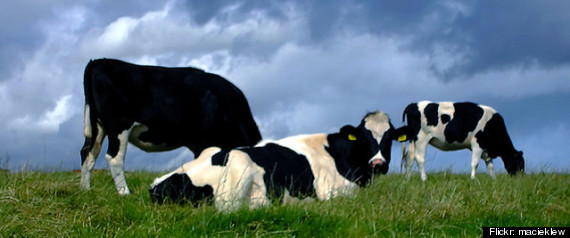
The USDA has confirmed that a case of mad cow disease was found in a California dairy cow. It is the fourth case of mad cow, or bovine spongiform encephalopathy (BSE), found in U.S. cattle since the first in December 2003.
USDA Chief Veterinary Officer John Clifford said Tuesday afternoon that the cow did not enter the human food chain and that all U.S. meat and dairy supplies are safe. Further mitigating the risk to the public, milk does not transmit BSE.
The animal tested positive for a case of "atypical" BSE, "a very rare form of the disease not generally associated with an animal consuming infected feed," the USDA said.
According to the USDA, the animal's carcass is being held under state authority at a California rendering facility and will be destroyed. "It was never presented for slaughter for human consumption, so at no time presented a risk to the food supply or human health," Clifford said.
The USDA said that they have begun notifying authorities at the World Organization for Animal Health (OIE) as well as U.S. trading partners. The USDA does not expect the detection of mad cow to affect U.S. beef exports, however.
Cattle futures on the Chicago Mercantile Exchange fell the exchange limit of 3 cents (2.6%) Tuesday afternoon to $1.11575 a pound, the lowest level since July.
Read or watch the full statement from the USDA on the discovery of mad cow disease in California:
"As part of our targeted surveillance system, the U.S. Department of Agriculture's (USDA) Animal and Plant Health Inspection Service (APHIS) has confirmed the nation's fourth case of bovine spongiform encephalopathy (BSE) in a dairy cow from central California. The carcass of the animal is being held under State authority at a rendering facility in California and will be destroyed. It was never presented for slaughter for human consumption, so at no time presented a risk to the food supply or human health. Additionally, milk does not transmit BSE. "The United States has had longstanding interlocking safeguards to protect human and animal health against BSE. For public health, these measures include the USDA ban on specified risk materials, or SRMs, from the food supply. SRMs are parts of the animal that are most likely to contain the BSE agent if it is present in an animal. USDA also bans all nonambulatory (sometimes called "downer") cattle from entering the human food chain. For animal health, the Food and Drug Administration (FDA) ban on ruminant material in cattle feed prevents the spread of the disease in the cattle herd.
"Evidence shows that our systems and safeguards to prevent BSE are working, as are similar actions taken by countries around the world. In 2011, there were only 29 worldwide cases of BSE, a dramatic decline and 99% reduction since the peak in 1992 of 37,311 cases. This is directly attributable to the impact and effectiveness of feed bans as a primary control measure for the disease.
"Samples from the animal in question were tested at USDA's National Veterinary Services Laboratories in Ames, Iowa. Confirmatory results using immunohistochemistry and western blot tests confirmed the animal was positive for atypical BSE, a very rare form of the disease not generally associated with an animal consuming infected feed.
"We are sharing our laboratory results with international animal health reference laboratories in Canada and England, which have official World Animal Health (OIE) reference labs. These labs have extensive experience diagnosing atypical BSE and will review our confirmation of this form of the disease. In addition, we will be conducting a comprehensive epidemiological investigation in conjunction with California animal and public health officials and the FDA.
"BSE is a progressive neurological disease among cattle that is always fatal. It belongs to a family of diseases known as transmissible spongiform encephalopathies. Affected animals may display nervousness or aggression, abnormal posture, difficulty in coordination and rising, decreased milk production, or loss of body weight despite continued appetite.
"This detection in no way affects the United States' BSE status as determined by the OIE. The United States has in place all of the elements of a system that OIE has determined ensures that beef and beef products are safe for human consumption: a mammalian feed ban, removal of specified risk materials, and vigorous surveillance. Consequently, this detection should not affect U.S. trade.
"USDA remains confident in the health of the national herd and the safety of beef and dairy products. As the epidemiological investigation progresses, USDA will continue to communicate findings in a timely and transparent manner."

Video:tiphat:http://www.huffingtonpost.com/2012/04/24/mad-cow-disease-california-usda_n_1449871.html

 
Re: Mad cow disease found in California

Re: Mad cow disease found in California

...In a press briefing Tuesday afternoon, John Clifford, the USDA?s chief veterinary officer, said the cow?s meat did not enter the food supply and the carcass will be destroyed. The animal was found at a rendering facility.
?There is really no concern for alarm here with regards to this animal,? Clifford said. ?Both human health and animal health are protected with regards to this issue.?
According to a statement from USDA, milk does not transmit mad cow disease.
This is the fourth case of mad cow disease in the U.S. cattle supply since December 2003. The most recent case occurred in 2006, when officials discovered an infected cow on an Alabama farm.
The case was discovered as part of the USDA?s regular surveillance program of U.S. cattle. No other cases have been reported yet, and Dr. William Schaffner, chair of preventive medicine at Vanderbilt University, said it?s unlikely that more cows will be infected.
?Mad cow occurs in animals as it does in humans ? rarely and sporadically. At this point, I would not expect there to be another cow to be found,? he said.
Mad cow disease affects the brain and spine of an animal, the result of an unusual transmissible protein called a prion, according to the U.S Centers for Disease Control and Prevention. Those body parts are kept out of grocery stores and restaurants and have no contact with the meat that does make its way to consumers...:tiphat:http://abcnews.go.com/blogs/health/2012/04/24/mad-cow-disease-case-confirmed-by-usda/
 
Re: Mad cow disease found in California

Re: Mad cow disease found in California

Gov't: New Case Of Mad Cow Disease In California

WASHINGTON April 24, 2012, 04:11 pm ET


WASHINGTON (AP) ? A new case of mad cow disease has surfaced in a dairy cow in California, but the animal was not bound for the nation's food supply and posed no danger, the Agriculture Department said Tuesday.
John Clifford, the department's chief veterinary officer, said the cow from central California did not enter the human food chain and that U.S. meat and dairy supplies are safe. It's the fourth such cow discovered in the United States since the government began inspecting for the disease to keep the food supply safe.
"There is really no cause for alarm here with regard to this animal," Clifford told reporters at a hastily convened press conference.
Clifford did not say when the disease was discovered or exactly where the cow was raised. He said the cow was at a rendering plant in Central California when the case was discovered through regular USDA sample testing...:tiphat:http://www.npr.org/templates/story/story.php?storyId=151301965
 
Re: USA - Mad cow disease found in 1 cow in California - USDA

JUDD AIKEN, PROFESSOR AT THE UNIVERSITY OF ALBERTA'S PRION CENTER:
"There appears to be very, very low risk (to anyone who had drunk the cow's milk). There's no evidence of prion activity in milk, it's not considered a major concern. Most of the infectious agents occur and replicate in brain and spinal cord tissue."
He said even if the animal had an open wound as it was being milked there was very little chance it would infect the milk supplies. "There's not significant amount of infectivity present in blood either.":tiphat:http://news.yahoo.com/instant-view-mad-cow-disease-found-california-193947594.html
 
Re: USA - Mad cow disease found in 1 cow in California - USDA

<object width="560" height="315"><param name="movie" value="http://www.youtube.com/v/o_cH3kyyeAI?version=3&hl=en_US"></param><param name="allowFullScreen" value="true"></param><param name="allowscriptaccess" value="always"></param><embed src="http://www.youtube.com/v/o_cH3kyyeAI?version=3&hl=en_US" type="application/x-shockwave-flash" width="560" height="315" allowscriptaccess="always" allowfullscreen="true"></embed></object>​
Cattlenetwork: BSE found in central California, USDA confirms
Cattle futures markets locked limit down shortly before trading ended Tuesday as rumors of the BSE case circulated through the trading floor.

Clifford emphasized the safeguards in place to protect America?s food supply from BSE. "The United States has had longstanding interlocking safeguards to protect human and animal health against BSE. For public health, these measures include the USDA ban on specified risk materials, or SRMs, from the food supply. SRMs are parts of the animal that are most likely to contain the BSE agent if it is present in an animal. USDA also bans all nonambulatory (sometimes called "downer") cattle from entering the human food chain. For animal health, the Food and Drug Administration (FDA) ban on ruminant material in cattle feed prevents the spread of the disease in the cattle herd.

Clifford said the U.S. will share laboratory results with international animal health reference laboratories in Canada and England, which have official World Animal Health (OIE) reference labs. ?These labs have extensive experience diagnosing atypical BSE and will review our confirmation of this form of the disease. In addition, we will be conducting a comprehensive epidemiological investigation in conjunction with California animal and public health officials and the FDA.?

Atypical BSE (BASE) Transmitted from Asymptomatic Aging Cattle to a Primate
Background

Human variant Creutzfeldt-Jakob Disease (vCJD) results from foodborne transmission of prions from slaughtered cattle with classical Bovine Spongiform Encephalopathy (cBSE). Atypical forms of BSE, which remain mostly asymptomatic in aging cattle, were recently identified at slaughterhouses throughout Europe and North America, raising a question about human susceptibility to these new prion strains.
Methodology/Principal Findings

Brain homogenates from cattle with classical BSE and atypical (BASE) infections were inoculated intracerebrally into cynomolgus monkeys (Macacca fascicularis), a non-human primate model previously demonstrated to be susceptible to the original strain of cBSE. The resulting diseases were compared in terms of clinical signs, histology and biochemistry of the abnormal prion protein (PrPres). The single monkey infected with BASE had a shorter survival, and a different clinical evolution, histopathology, and prion protein (PrPres) pattern than was observed for either classical BSE or vCJD-inoculated animals. Also, the biochemical signature of PrPres in the BASE-inoculated animal was found to have a higher proteinase K sensitivity of the octa-repeat region. We found the same biochemical signature in three of four human patients with sporadic CJD and an MM type 2 PrP genotype who lived in the same country as the infected bovine.
Conclusion/Significance

Our results point to a possibly higher degree of pathogenicity of BASE than classical BSE in primates and also raise a question about a possible link to one uncommon subset of cases of apparently sporadic CJD. Thus, despite the waning epidemic of classical BSE, the occurrence of atypical strains should temper the urge to relax measures currently in place to protect public health from accidental contamination by BSE-contaminated products.
Citation: Comoy EE, Casalone C, Lescoutra-Etchegaray N, Zanusso G, Freire S, et al. (2008) Atypical BSE (BASE) Transmitted from Asymptomatic Aging Cattle to a Primate. PLoS ONE 3(8): e3017. doi:10.1371/journal.pone.0003017

Editor: Neil Mabbott, University of Edinburgh, United Kingdom

Received: April 24, 2008; Accepted: August 1, 2008; Published: August 20, 2008

Copyright: ? 2008 Comoy et al. This is an open-access article distributed under the terms of the Creative Commons Attribution License, which permits unrestricted use, distribution, and reproduction in any medium, provided the original author and source are credited.

Funding: This work has been supported by the Network of Excellence NeuroPrion.

Competing interests: CEA owns a patent covering the BSE diagnostic tests commercialized by the company Bio-Rad.

See:
Concerns about potential contamination from bovine spongiform encephalopathy (BSE) cause demand for animal-free plastics for medical components to skyrocket
 
Re: USA - Mad cow disease found in 1 cow in California - USDA

According to this AP article BSE was discovered in a cow at a transfer station and was not sent to rendering plant.

WASHINGTON -- A senior manager with a California rendering company said Tuesday a cow at its Hanford, Calif., transfer station tested positive for mad cow disease.

snip

The company does not yet know which farm the cow came from, but the animal never made it to Baker's rendering plant 50 miles away in Kerman, Calif., Luckey said.

http://abclocal.go.com/kgo/story?section=news/state&id=8634169
 
Re: USA - Mad cow disease found in 1 cow in California - USDA

Mad cows, Mayan calendars and insider trading
By: Steve Cornett, Beef Today
Apr 24, 2012

...I?d like to see a thorough investigation how the news got leaked to the trading floor. Somebody made a killing today because he had a tip from somebody who should have kept his mouth shut.
That is a serious problem for those of us who don?t have the insider trading tips.
 
Re: USA - Mad cow disease found in 1 cow in California - USDA

News Release

Release No. 0136.12
Contact:
USDA Office of Communications (202) 720-4623
DOI Communications (202) 208-6416
FEMA Communications (202) 646-3272

Update from USDA Regarding a Detection of Bovine Spongiform Encephalopathy (BSE) in the United States

USDA and FDA Continue to Assure Consumers That Existing Safeguards Protect Food Supply; Reiterates Safety of Consuming Beef and Dairy Products

WASHINGTON, April 26, 2012 ? USDA's Animal and Plant Health Inspection Service today released the following update on the BSE detection announced earlier this week:

On April 24, USDA confirmed the nation's 4th case of Bovine Spongiform Encephalopathy (BSE) in an animal that was sampled for the disease at a rendering facility in central California. This animal was never presented for slaughter for human consumption, so at no time presented a risk to the food supply, or to human health in the United States. As the epidemiological investigation has progressed, USDA has continued to communicate findings in a timely and transparent manner.

As a result of USDA's ongoing epidemiological investigation, more information about the history and age of the animal is now available.

The animal in question was 10 years and 7 months old and came from a dairy farm in Tulare County, Calif. The animal was humanely euthanized after it developed lameness and became recumbent. The animal's carcass will be destroyed.

It is important to reiterate that this animal was never presented for slaughter for human consumption, did not enter food supply channels, and at no time presented any risk to human health.

USDA is continuing its epidemiological investigation and will provide additional information as it is available.

The positive animal was tested as part of targeted BSE surveillance at rendering facilities. Samples were sent to the California Animal Health and Food Safety Laboratory for testing and forwarded to the National Veterinary Services Laboratories (NVSL) on April 20th for confirmatory testing. APHIS announced the confirmed positive finding April 24th.

The United States has a longstanding system of three interlocking safeguards against BSE that protects public and animal health in the United States, the most important of which is the removal of specified risk materials ? or the parts of an animal that would contain BSE should an animal have the disease ? from all animals presented for slaughter in the United States. The second safeguard is a strong feed ban that protects cattle from the disease. The third safeguard?which led to this detection? is our ongoing BSE surveillance program that allows USDA to detect the disease if it exists at very low levels in the U.S. cattle population and provides assurances to consumers and our international trading partners that the interlocking system of safeguards in place to prevent BSE are working.

http://www.usda.gov/wps/portal/usda...T_RELEASES&edeployment_action=retrievecontent
 
Re: USA - Mad cow disease found in 1 cow in California - USDA

Thailand bans US beef

Published: 27/04/2012 at 07:38 PM

Thailand is suspending imports of beef from the United States following the discovery of mad cow disease in California, says Tritsadee Chaosuancharoen, director-general of the Department of Livestock Development.
...
Imports of US beef have been temporarily halted until the department is assured that it is safe, Dr Tritsadee said on Friday.

The suspension is in accordance with the Animal Epidemics Act, even though the imports of boneless beef cuts from animals under 30 months of age are not affected, she said.
...

http://www.bangkokpost.com/business/news/290765/thailand-bans-us-beef
 
Re: USA - Mad cow disease found in 1 cow in California - USDA

Saturday, Apr. 28, 2012

Much unknown on rare strain of mad cow disease

By Barbara Anderson

...
But there is a lot they don't know about the type of infection in that carcass ? including how the cow got the disease, how long it was ill, and the risk to the public if that strain gets into the food supply.

The U.S. Department of Agriculture said lab tests found a rare "atypical" strain of bovine spongiform encephalopathy, which attacks the brain and is fatal to cows. The strain, one of two rare types, is different from more common "classic" mad cow disease, which has been spread by feed contaminated with animal protein. Such feed was banned in the United States in 1997.

The good news, researchers and agriculture officials say, is that the two strains of atypical mad cow disease are very rare...

But all of the unknowns about the disease have some people worried that more widespread testing of cattle is needed to keep diseased beef out of the food supply.

"We have concerns and questions about the fact the USDA is stating this is definitely not something the animal contracted from food," said Florence Kranitz, president of the Creutzfeldt-Jakob Disease Foundation, a group for people with degenerative brain diseases and their families.
...

Full text:http://www.modbee.com/2012/04/28/2178301/much-unknown-on-rare-strain-of.html
 
Re: USA - Mad cow disease found in 1 cow in California - USDA

Saturday, Apr. 28, 2012

Much unknown on rare strain of mad cow disease

By Barbara Anderson

...
but all of the unknowns about the disease have some people worried that more widespread testing of cattle is needed to keep diseased beef out of the food supply.Full text:http://www.modbee.com/2012/04/28/2178301/much-unknown-on-rare-strain-of.html
A farm in the US made the significant investment to a set up a lab to test their cattle for Mad Cow with the intention of selling it as tested. The USDA refused to allow them to do it. From what I understand the way testing of beef for the disease was done when the USDA made this decision it was theoretically possible that the beef cattle could have picked the disease up a few month or weeks prior to testing and still give a false negative for the disease.

At our house we eat meat at one to two meat aday. The US beef industry lost a lot of potential dollars that were instead invested in eggs, chicken, turkey, fish, lamb, goat and other protein sources. Personally I would gladly pay a premium to have tested beef especially for my children. The result is my family eats beef maybe 3 or 4 times a year mostly when mother is not around or they are visiting friends or family. I grew up eating beef and loved it. The thought of a properly aged prime rib could make my mouth water. Sometime after the first infected cattle were found in the US and Canada I stopped buying it. The USDA decision not to allow the tested beef to be sold clinched the deal for my family. No testing? No beef! When I can buy tested US beef for my family let me know so I can get in line.

I find it ironic that hunters here in PA can get their deer tested for priron disease for about $12 USD each but I cannot buy beef tested for it. $12 USD per head of cattle slaughtered does not sound like it would cause a significant cost increase per pound of beef. Deer produce a lot less meat per head than cattle. Venison is tasty, one or two will fill the freezer and I can get it tested. I may have to look into a hunting lease.
 
Re: USA - Mad cow disease found in 1 cow in California - USDA

U.S. quarantines two dairies after mad cow case

WASHINGTON | Wed May 2, 2012 7:40pm EDT

(Reuters) - Two California dairy farms are under quarantine and a calf ranch is under investigation following discovery of the latest case of mad cow disease, but the government on Wednesday said the actions were standard procedure and there was no threat to the food supply.

Also, a calf born to the infected cow was found and tested negative for the disease.

Cattle records at the two dairies are being matched to determine if any at-risk cattle are on the farms, said the Agriculture Department.

USDA said the infected cow was a rare "atypical" case of the disease, meaning it arose spontaneously rather than through the feed supply. However, it is USDA's standard procedure to search for other cattle, offspring or herd mates, that might be exposed to the fatal disease, even though mad cow disease is not contagious.

More...
http://www.reuters.com/article/2012/05/02/us-usa-madcow-idUSBRE8411P120120502
 
Re: USA - Mad cow disease found in 1 cow in California - USDA

Wed, Jun 27, 2012 - Page 3 


US beef ?should be safe?: official report

Staff writer, with CNA

A report by a Taiwanese delegation that conducted field inspections of beef-related facilities in the US has concluded that beef from the US ?should be safe.?

The report said that precautionary measures in the US on mad-cow disease meet both US and World Organisation for Animal Health regulations. They also meet the standards of Taiwan?s regulations on food safety and of the Protocol of Bovine Spongiform Encephalopathy (BSE)-Related Measures for the Importation of Beef and Beef Products for Human Consumption from the Territory of the Authorities Represented by the American Institute in Taiwan (AIT).

?The imported beef should be safe,? said the report, which was released on the Bureau of Animal and Plant Health Inspection and Quarantine?s Web site on Monday.

However, the report did not fully endorse the safety of US beef because the US has yet to provide an epidemic report on its most recent case of mad-cow disease as well as an oversight the delegation found at a Kansas slaughterhouse in its handling of cattle tonsils.

The conclusion came after the delegation?s 23-day visit to slaughterhouses, cattle farms, feed producers and laboratories across seven US states last month...

More...
http://www.taipeitimes.com/News/taiwan/archives/2012/06/27/2003536369
 
Back
Top Bottom