

sharon sanders
Editor-in-Chief & President
hat tip Michael Coston
CDC Statement On Possible Lab Exposure To Anthrax
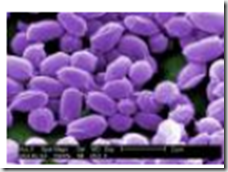
Electron micrograph (SEM) depicted spores from the Sterne strain of Bacillus anthracis bacteria. ? Credit CDC
# 8763
Based on the reports thus far, it appears that the risks to those who were potentially exposed to anthrax at a CDC lab facility in Atlanta last week are pretty low. It has been a week since the likely exposure took place, and thus far, no employees have developed symptoms.
First the statement, then I?ll have a bit more.
Media Statement
For Immediate Release: Thursday, June 19, 2014
Contact: CDC Media Relations
(404) 639-3286
CDC Lab Determines Possible Anthrax Exposures: Staff Provided Antibiotics/Monitoring
CDC announced today that approximately 75 Atlanta-based staff are being monitored or provided antibiotics because they may have been unintentionally exposed to live Bacillus anthracis (anthrax) after established safety practices were not followed.
Out of an abundance of caution, CDC is taking aggressive steps to protect the health of all involved, including providing protective courses of antibiotics for potentially exposed staff. Based on most of the potential exposure scenarios, the risk of infection is very low. Based on the review to date, CDC believes that other CDC staff, family members, and the general public are not at risk of exposure and do not need to take any protective action. Although the investigation continues, early reports show that one of its Roybal campus biosafety level 3 (BSL3) labs was preparing B. anthracis samples for research in other CDC labs at lower biosafety levels to yield new means of detecting dangerous pathogens in environmental samples. However, the lab used a procedure that did not adequately inactivate the samples.
The potentially infectious samples were moved and used for experimentation in three CDC Roybal campus laboratories not equipped to handle live B. anthracis. Workers, believing the samples were inactivated, were not wearing adequate personal protective equipment while handling the material.
Lab safety investigators also determined that, sometime between June 6 and June 13, procedures used in two of the three labs may have aerosolized the spores. Environmental sampling was done, lab and hallway areas were decontaminated and laboratories will be re-opened when safe to operate.
The unintentional exposure was discovered June 13 when the original bacterial plates were gathered for disposal and B. anthracis colonies (live bacteria) were found on the plates. These plates had appeared negative for B. anthracis at the time samples were distributed to the other CDC laboratories. The review began immediately to assess the health risk, and those workers handling the plates were immediately notified.
CDC?s guiding principles for laboratory work are to ensure the safety of all staff and the community and be as transparent as possible about our work as we conduct high-quality scientific research to protect people in this country and around the world.
CDC continues its internal review to determine why validated procedures were not used by the lab. Also, CDC has reported the incident to the Federal Select Agent Program. Given that CDC expert protocols were not followed, disciplinary action(s) will be taken as necessary. In addition, CDC will review the safety protocol again with all employees who work in this area.
It is CDC?s obligation to ensure that people feel safe and are safe in the workplace and the community as we conduct our life-saving laboratory work. We will report findings of this review and all steps we take to improve lab-safety processes as a result of this incident.
Mistakes or accidents at high biosecurity-level laboratories are admittedly rare events, but they are not completely unheard of, even at the CDC.Between 2003 and 2009, US government laboratories reported 395 incidents that involved the potential release of select agents,according to this report from CIDRAP NEWS.
For more on the contentious debate over the risk of accidental releases from labs, and the pursuit of GOF research, you may wish to revisit:
CDC Statement On Possible Lab Exposure To Anthrax
Electron micrograph (SEM) depicted spores from the Sterne strain of Bacillus anthracis bacteria. ? Credit CDC
# 8763
Based on the reports thus far, it appears that the risks to those who were potentially exposed to anthrax at a CDC lab facility in Atlanta last week are pretty low. It has been a week since the likely exposure took place, and thus far, no employees have developed symptoms.
First the statement, then I?ll have a bit more.
Media Statement
For Immediate Release: Thursday, June 19, 2014
Contact: CDC Media Relations
(404) 639-3286
CDC Lab Determines Possible Anthrax Exposures: Staff Provided Antibiotics/Monitoring
CDC announced today that approximately 75 Atlanta-based staff are being monitored or provided antibiotics because they may have been unintentionally exposed to live Bacillus anthracis (anthrax) after established safety practices were not followed.
Out of an abundance of caution, CDC is taking aggressive steps to protect the health of all involved, including providing protective courses of antibiotics for potentially exposed staff. Based on most of the potential exposure scenarios, the risk of infection is very low. Based on the review to date, CDC believes that other CDC staff, family members, and the general public are not at risk of exposure and do not need to take any protective action. Although the investigation continues, early reports show that one of its Roybal campus biosafety level 3 (BSL3) labs was preparing B. anthracis samples for research in other CDC labs at lower biosafety levels to yield new means of detecting dangerous pathogens in environmental samples. However, the lab used a procedure that did not adequately inactivate the samples.
The potentially infectious samples were moved and used for experimentation in three CDC Roybal campus laboratories not equipped to handle live B. anthracis. Workers, believing the samples were inactivated, were not wearing adequate personal protective equipment while handling the material.
Lab safety investigators also determined that, sometime between June 6 and June 13, procedures used in two of the three labs may have aerosolized the spores. Environmental sampling was done, lab and hallway areas were decontaminated and laboratories will be re-opened when safe to operate.
The unintentional exposure was discovered June 13 when the original bacterial plates were gathered for disposal and B. anthracis colonies (live bacteria) were found on the plates. These plates had appeared negative for B. anthracis at the time samples were distributed to the other CDC laboratories. The review began immediately to assess the health risk, and those workers handling the plates were immediately notified.
CDC?s guiding principles for laboratory work are to ensure the safety of all staff and the community and be as transparent as possible about our work as we conduct high-quality scientific research to protect people in this country and around the world.
CDC continues its internal review to determine why validated procedures were not used by the lab. Also, CDC has reported the incident to the Federal Select Agent Program. Given that CDC expert protocols were not followed, disciplinary action(s) will be taken as necessary. In addition, CDC will review the safety protocol again with all employees who work in this area.
It is CDC?s obligation to ensure that people feel safe and are safe in the workplace and the community as we conduct our life-saving laboratory work. We will report findings of this review and all steps we take to improve lab-safety processes as a result of this incident.
Mistakes or accidents at high biosecurity-level laboratories are admittedly rare events, but they are not completely unheard of, even at the CDC.Between 2003 and 2009, US government laboratories reported 395 incidents that involved the potential release of select agents,according to this report from CIDRAP NEWS.
Although it seems likely that this latest incident is contained, it will likely fuel existing biosecurity concerns over controversial Gain of Function (GOF) experiments; those designed to enhance the transmissibility or virulence of dangerous pathogens ? including the H5N1 virus (and most recently the 1918 pandemic virus).
While most researchers offer broad assurances on the safety of high security laboratories - as today?s incident shows ?even the most professionally run high security lab is vulnerable to human error. Last November, in BMC Medicine: Containing Laboratory Escape Of Pandemic Viruses, we looked at a report that found the risks of seeing an accidental release from one of these labs is far from zero.
For more on the contentious debate over the risk of accidental releases from labs, and the pursuit of GOF research, you may wish to revisit:
Lipsitch & Galvani: GOF Research Concerns.
Laurie Garrett On Biosecurity Reforms
H7N9: Reigniting The `Gain Of Function? Research Debate
Posted by Michael Coston at <a class="timestamp-link" href="http://afludiary.blogspot.ca/2014/06/cdc-statement-on-possible-lab-exposure.html" rel="bookmark" title="permanent link"><abbr class="published" itemprop="datePublished" title="2014-06-19T17:34:00-04:00">5:34 PM</abbr>Laurie Garrett On Biosecurity Reforms
H7N9: Reigniting The `Gain Of Function? Research Debate

