• FluTrackers.com Inc. does not provide medical advice. Information on this web site is collected from various internet resources, and the FluTrackers board of directors makes no warranty to the safety, efficacy, correctness or completeness of the information posted on this site by any author or poster. The information collated here is for instructional and/or discussion purposes only and is NOT intended to diagnose or treat any disease, illness, or other medical condition. Every individual reader or poster should seek advice from their personal physician/healthcare practitioner before considering or using any interventions that are discussed on this website. By continuing to access this website you agree to consult your personal physican before using any interventions posted on this website, and you agree to hold harmless FluTrackers.com Inc., the board of directors, the members, and all authors and posters for any effects from use of any medication, supplement, vitamin or other substance, device, intervention, etc. mentioned in posts on this website, or other internet venues referenced in posts on this website.
  • We are not asking for any donations. Do not donate to any entity who says they are raising funds for us.

USA: Eastern Equine Encephalitis 2019; 16 fatalities

Ronan Kelly

Retired 2020
BRAIN BUG Brain-swelling mosquito EEE virus kills two more bringing US death toll to nine ? as people are told to stay inside
Gemma MullinLucy Jones
24 Sep 2019, 9:25Updated: 24 Sep 2019, 9:48


Health officials confirmed James Longworth, 78, from Massachusetts, and Patricia Shaw, 77, from Connecticut both passed away after contracting the viral infection.

And US experts are now warning residents not to go out after dusk as cases of Eastern equine encephalitis reach unprecedented levels.

Patricia was the first person to die of EEE in Connecticut and the second case overall in the state this year.
...
https://www.thesun.co.uk/news/99919...-eee-virus-kills-death-toll-nine-stay-inside/

State health officials confirm 3rd Massachusetts resident has died of EEE

WCVBUpdated: 5:21 AM EDT Sep 24, 2019

BOSTON ?
A third person has died of Eastern equine encephalitis in Massachusetts this year, according to state health officials.

The Massachusetts Department of Public Health told WCVB that is has received reports about three fatalities among the 10 confirmed human cases of EEE this year.

No information was immediately available about the latest victim. A Freetown man in his 70s died of the virus last week, and a Fairhaven woman in her 50s died last month.
...
https://www.wcvb.com/article/officials-confirm-3rd-massachusetts-resident-has-died-of-eee/29196068#

At least 6 people have died in the United States from a rare mosquito-borne illness
Ben Tinker-Profile-ImageHollie Silverman
By Ben Tinker and Hollie Silverman, CNN

Updated 3:54 AM ET, Tue September 24, 2019
...
Earlier this month, the Rhode Island Department of Health announced the death of an adult in their 50s from West Warwick. It was the state's first human case since 2010 and the first fatal case since 2007, a news release said.
The east coast isn't the only area with concerns about the mosquito-borne illness.
A person in Kalamazoo County, Michigan, died from EEE in early September, a news release from Kalamazoo County Health and Community Services said.
...
https://www.cnn.com/2019/09/24/health/six-eee-deaths-united-states/index.html

State health officials urge cancellation of outdoor events, 3 Michiganders die from rare virus
Kristen Jordan Shamus, Detroit Free PressPublished 5:35 p.m. ET Sept. 17, 2019 | Updated 6:53 p.m. ET Sept. 18, 2019
...
The three people who died were all adults, and lived in Kalamazoo, Cass and Van Buren counties, said Bob Wheaton, a spokesman for the Michigan Department of Health and Human Services. The four other confirmed cases are in Kalamazoo, Berrien, and Barry counties.
...
https://www.freep.com/story/news/lo...-encephalitis-michigan-eee-deaths/2355770001/
 
Second death from Eastern equine encephalitis reported in Connecticut
By Jen Christensen, CNN Sep 24, 2019 Updated 6 min ago

A second person in Connecticut has died due to Eastern equine encephalitis, state leaders said Tuesday, bringing the total of EEE deaths in the United States so far this year to nine.


Connecticut reported its first death last week. Both individuals who died were older adults, according to the state's Department of Public Health.
...
https://www.albanyherald.com/featur...d2.html?utm_source=dlvr.it&utm_medium=twitter
 
4th EEE death confirmed in Massachusetts as total cases grow to 11, officials say

SHARE TWEETBy Christopher Gavin 5:14 PM

A fourth person has died from Eastern Equine Encephalitis virus in Massachusetts as the state?s number of confirmed human cases continues to grow, health officials said Wednesday.

A man in his 70s from Essex County, who was diagnosed with the rare mosquito-borne infection last week, passed away, the state Department of Public Health said in a statement.
...
https://www.boston.com/news/health/2019/09/25/4th-eee-death-massachusetts
 
Mass. officials now say only 3 EEE deaths confirmed, but cases grow to 12

SHARE TWEETBy Christopher Gavin 10:41 AM
Massachusetts health officials say the state has recorded three deaths from the Eastern Equine Encephalitis virus, confirming that a previously reported fourth incident was incorrect.

The mishap stems from an incorrect report filed by a hospital, DPH said in a statement Thursday.
...

https://www.boston.com/news/local-news/2019/09/27/eee-deaths-massachusetts-update
 
New eastern equine encephalitis death is 10th nationwide
Death reported in Connecticut
By Steve Almasy, CNN
Posted: 9:19 PM, October 01, 2019
Updated: 9:19 PM, October 01, 2019

James Gathany/CDC

(CNN) - A person in their 60s has died of Eastern equine encephalitis, Connecticut health officials said Tuesday.

The death is the third in Connecticut this year and brings the total of EEE deaths in four states this year to 10.

The Connecticut Department of Public Health said another person, who is in their 40s, is hospitalized with the rare virus that is transmitted by mosquitoes.
...
https://www.local10.com/health/new-eastern-equine-encephalitis-death-is-10th-nationwide
 
Calhoun County death marks fourth EEE fatality
POSTED 1:41 PM, OCTOBER 2, 2019, BY FOX 17 NEWS

LANSING, Mich. — A fourth person in Michigan has died from Eastern equine encephalitis.

The Michigan Department of Health and Human Services said an individual in Calhoun County has died from the disease, but didn’t provide any further information.

The death marks the fourth fatality caused by EEE in Michigan out of the nine confirmed human cases. There have been 27 confirmed animal cases, including the deaths of two Mexican gray wolf pups at Battle Creek’s Binder Park Zoo.
...
https://fox17online.com/2019/10/02/calhoun-county-death-marks-fourth-eee-fatality/
 
Indiana health officials report first case of EEE virus in Indiana since 1998
POSTED 7:10 PM, OCTOBER 12, 2019, BY FOX59 WEB, UPDATED AT 08:29PM, OCTOBER 12, 2019


INDIANAPOLIS, Ind. — The Centers for Disease Control and Prevention (CDC) has confirmed to Indiana health officials that a Hoosier in Elkhart County contracted eastern equine encephalitis, or EEE, a rare virus transmitted by mosquitoes and the first human case in Indiana since 1998.

The patient died as a result of the infection, health officials said.
...
https://fox59.com/2019/10/12/indian...irst-case-of-eee-virus-in-indiana-since-1998/
 
Massachusetts man dies from EEE

By Rebecca Hyman / Taunton Daily Gazette
Posted Oct 14, 2019 at 4:05 PM
TAUNTON, Mass. -- A Taunton man who contracted EEE more than a month ago has succumbed to the virus.

Family members have confirmed that Scott Mosman, a Raynham native and Bridgewater-Raynham Regional High School graduate in his 50s, died of Eastern equine encephalitis on Friday.

There have been 12 confirmed human cases of EEE in Massachusetts so far this year, according to the state Department of Public Health.
...
https://www.providencejournal.com/news/20191014/massachusetts-man-dies-from-eee


Family of 5th victim: EEE ‘destroyed his brain’
SOUTHWEST MICHIGAN
by: Leon Hendrix

Posted: Oct 14, 2019 / 11:18 PM EDT / Updated: Oct 15, 2019 / 12:22 AM EDT

EDWARDSBURG, Mich. (WOOD) — Mosquito-borne Eastern Equine Encephalitis has now killed half of the people reported to have been sickened by it this year in West Michigan.

State health officials confirmed Monday that a fifth victim, a man from Cass County, died from the illness over the weekend. So far 10 people, all from southwest Michigan, have gotten ill from EEE in 2019.

Family members confirmed that Henry Hess, 72, died early Saturday morning at a Chicago-area hospital where he had been getting treatment.
...
https://www.woodtv.com/news/southwes...oyed-his-mind/
 
Health Officials Report 6th Death In Michigan From EEE Virus

WWJ NEWS
NOVEMBER 18, 2019 - 5:16 PM

CATEGORIES: News Health Local News State
(WWJ) A sixth person has died from the mosquito-borne Eastern Equine Encephalitis virus, better known as EEE, in Michigan.

The Michigan Department of Health and Human Services, which reported the death on Monday, said the person was a Berrien County resident. No further information about the person was released.

There have been 10 cases of EEE this year in Michigan, according to MDHHS spokesperson Lynn Sutfin. She said that number includes the six fatalities.

The human cases in 2019 were in Barry, Berrien, Calhoun, Cass, Kalamazoo and Van Buren counties. In addition, EEE was confirmed in 40 animals from 16 counties: Allegan, Barry, Berrien, Calhoun, Cass, Genesee, Jackson, Kalamazoo, Kent, Lapeer, Livingston, Montcalm, Newaygo, St. Joseph, Tuscola and Van Buren.
...
https://wwjnewsradio.radio.com/articles/news/6th-death-michigan-eee-virus
 
As of December 17, 2019, CDC has received reports of 38 confirmed cases of Eastern equine encephalitis virus disease for this year, including 15 deaths. Cases have been reported from the following ten states: Alabama (1), Connecticut (4), Georgia (1), Indiana (1), Massachusetts (12), Michigan (10), New Jersey (4), North Carolina (1), Rhode Island (3), and Tennessee (1).
....
https://www.cdc.gov/easternequineencephalitis/index.html
 
[h=1]Notes from the Field: Multistate Outbreak of Eastern Equine Encephalitis Virus — United States, 2019[/h]
Weekly / January 17, 2020 / 69(2);50–51


Nicole P. Lindsey, MS[SUP]1[/SUP]; Stacey W. Martin, MS[SUP]1[/SUP]; J. Erin Staples, MD, PhD[SUP]1[/SUP]; Marc Fischer, MD[SUP]1[/SUP] (View author affiliations)
View suggested citation
Article Metrics [h=5]Altmetric:[/h]
Article has an altmetric score of 2

Twitter (3) [h=5]Citations:[/h] [h=5]Views:[/h]
Views equals page views plus PDF downloads
Metric Details
Figure
References
Related Materials
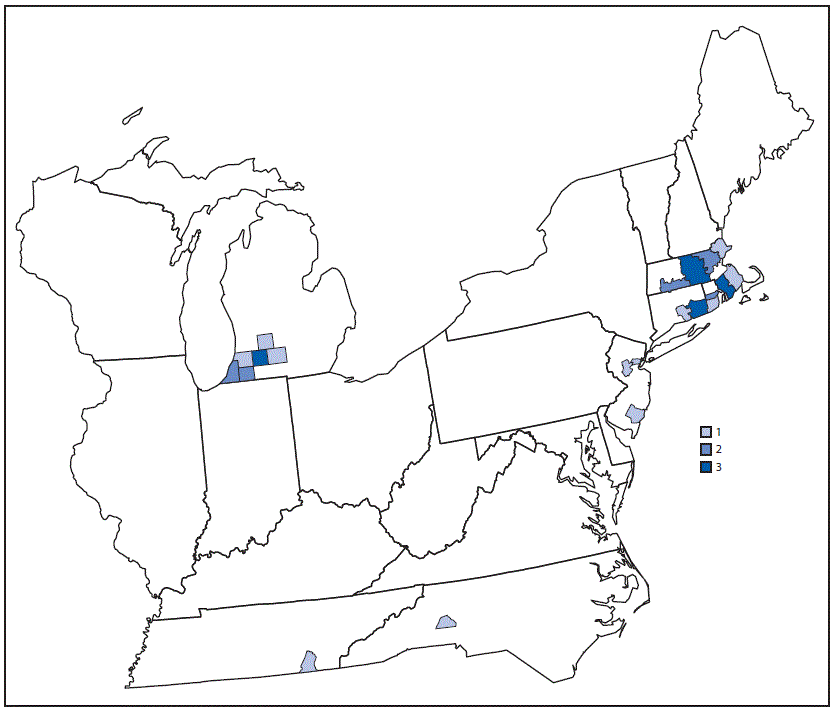
Eastern equine encephalitis virus (EEEV), a mosquito-borne alphavirus, is the cause of one of the most severe arboviral diseases in North America (1). The clinical course typically begins as a systemic febrile illness but often progresses to neurologic disease (2). EEEV neuroinvasive disease is estimated to have a 30% case-fatality rate with approximately half of survivors left with neurologic sequelae (2,3). Although veterinary EEEV vaccines are available for use in horses, there are no licensed vaccines or effective treatments for humans. During 2003–2018, an average of eight EEEV disease cases were reported annually in the United States (range = 4–21 cases) (3,4). However, as of October 15, 2019, CDC received reports of 34 cases of EEEV disease from 21 counties in seven states (Figure). Cases were reported from Massachusetts (12 cases), Michigan (10), Connecticut (four), New Jersey (three), Rhode Island (three), North Carolina (one), and Tennessee (one). Dates of illness onset ranged from June 18 to September 20, 2019. Among the 34 patients, 21 (62%) had illness onset in August; 32 (94%) had a diagnosis of encephalitis, and two (6%) had a diagnosis of meningitis. Twenty-six (76%) patients were male. The median age was 64 years (range = 5–78 years); 21 (62%) of the 34 patients were aged ≥60 years.

All 34 patients were hospitalized; 12 (35%) died. Deaths occurred a median of 12 days after illness onset (range = 4–38 days). Among the fatal cases, 10 (83%) patients were male, and the median age was 72 years (range = 58–78 years). The case-fatality ratio was highest among patients aged ≥70 years (seven of 11; 64%) and was 22% (five of 23) among patients aged <70 years.

EEEV is primarily maintained in an enzootic cycle between birds and Culiseta melanura mosquitoes, which breed in freshwater hardwood swamp environments in the eastern United States (1). Spread of EEEV to mammals typically requires mosquitoes (e.g., Aedes or Coquillettidia species) that feed on both birds and mammals (bridge vectors). Because of these complex interactions, the risk for human infection in a given year depends on multiple factors, including weather, abundance of birds and mosquitoes that can transmit the virus, human behavior, and clinical awareness and diagnostic testing practices (5).

It is not clear why more cases were reported in 2019 than in recent years. Larger outbreaks of EEEV occurred in several northeastern states in the 1930s and 1950s (6,7). These preliminary data for 2019 represent the largest number of cases reported in a single year since that time. However, changes in available diagnostic testing, populations at risk, national surveillance case definitions, and reporting systems make it difficult to compare annual case numbers before 2003.

Case counts in this report are provisional and might differ from those reported elsewhere. In areas at risk for EEEV transmission, health care providers should consider EEEV infection in the differential diagnosis of cases of aseptic meningitis and encephalitis and obtain appropriate serum or cerebrospinal fluid specimens for laboratory testing. Providers are encouraged to report suspected infections and send specimens to their state or local health department to facilitate diagnosis, increase public awareness, and potentially implement vector control to mitigate the risk for further transmission. Because human vaccines against EEEV are not available, prevention depends on community and household efforts to reduce vector populations (e.g., applying insecticides and reducing breeding sites) and personal protective measures to decrease exposure to mosquitoes (e.g., use of repellents and wearing protective clothing).

Top [h=3]Acknowledgments[/h]
Brenda Esponda-Morrison, Connecticut Department of Health; Matthew Osborne, MPH, Anthony Osinski, MPH, Massachusetts Department of Health; Kimberly Signs, DVM, Mary Beth Stobierski, DVM, Michigan Department of Health and Human Services; Kim Cervantes, MA, MPH, Mojisola Ojo, MPH, New Jersey Department of Health; Teresa Fisher, Michael Doyle, MS, North Carolina Department of Health and Human Services; Michael Gosciminski, MPH, Diane Brady, MS, Rhode Island Department of Health; Abelardo Moncayo, PhD, Tennessee Department of Health; Heather Faucett, Chattanooga-Hamilton Health Department, Tennessee.

Top

Corresponding author: Nicole P. Lindsey, nplindsey@cdc.gov, 970-221-6400.

Top
[SUP]1[/SUP]Arboviral Diseases Branch, National Center for Emerging and Zoonotic Infectious Diseases, CDC, Fort Collins, Colorado.

Top

All authors have completed and submitted the International Committee of Medical Journal Editors form for disclosure of potential conflicts of interest. No potential conflicts of interest were disclosed.

Top [h=2]References[/h]
  1. Calisher CH. Medically important arboviruses of the United States and Canada. Clin Microbiol Rev 1994;7:89–116. CrossRefexternal icon PubMedexternal icon
  2. Silverman MA, Misasi J, Smole S, et al. Eastern equine encephalitis in children, Massachusetts and New Hampshire, USA, 1970–2010. Emerg Infect Dis 2013;19:194–201. CrossRefexternal icon PubMedexternal icon
  3. Lindsey NP, Staples JE, Fischer M. Eastern equine encephalitis virus in the United States, 2003‒2016. Am J Trop Med Hyg 2018;98:1472–7. CrossRefexternal icon PubMedexternal icon
  4. CDC. Eastern equine encephalitis virus: statistics & maps. Fort Collins, CO: US Department of Health and Human Services, CDC; 2019. https://www.cdc.gov/easternequineencephalitis/tech/epi.html
  5. Getting VA. Equine encephalomyelitis in Massachusetts: an analysis of the 1938 outbreak, a follow-up of cases and a report of a mosquito survey. NEJM 1941;224:99–1006. CrossRefexternal icon PubMedexternal icon
  6. Feemster RF. Outbreak of encephalitis in man due to the Eastern virus of equine encephalomyelitis. Am J Public Health Nations Health 1938;28:1403–10. CrossRefexternal icon PubMedexternal icon
  7. Goldfield M, Sussman O. The 1959 outbreak of Eastern encephalitis in New Jersey. I. Introduction and description of outbreak. Am J Epidemiol 1968;87:1–10. CrossRefexternal icon PubMedexternal icon
Top [h=5]
Return to your place in the text - Return to your place in the text
FIGURE. Number of reported cases of Eastern equine encephalitis virus disease (N = 34), by county of residence — United States, 2019*[/h]
mm6902a4-F.gif

*As of October 15, 2019.

Top


Suggested citation for this article: Lindsey NP, Martin SW, Staples JE, Fischer M. Notes from the Field: Multistate Outbreak of Eastern Equine Encephalitis Virus — United States, 2019. MMWR Morb Mortal Wkly Rep 2020;69:50–51. DOI: http://dx.doi.org/10.15585/mmwr.mm6902a4external icon.

MMWR and Morbidity and Mortality Weekly Report are service marks of the U.S. Department of Health and Human Services.
Use of trade names and commercial sources is for identification only and does not imply endorsement by the U.S. Department of Health and Human Services.
References to non-CDC sites on the Internet are provided as a service to MMWR readers and do not constitute or imply endorsement of these organizations or their programs by CDC or the U.S. Department of Health and Human Services. CDC is not responsible for the content of pages found at these sites. URL addresses listed in MMWR were current as of the date of publication.

All HTML versions of MMWR articles are generated from final proofs through an automated process. This conversion might result in character translation or format errors in the HTML version. Users are referred to the electronic PDF version (https://www.cdc.gov/mmwr) and/or the original MMWR paper copy for printable versions of official text, figures, and tables.

Questions or messages regarding errors in formatting should be addressed to mmwrq@cdc.gov.

View Page In:pdf icon PDF [115K]
Page last reviewed: January 16, 2020
Content source: Centers for Disease Control and Prevention

https://www.cdc.gov/mmwr/volumes/69/wr/mm6902a4.htm?s_cid=mm6902a4_x
 
Back
Top Bottom