Pathfinder
Editor, Senior Moderator
The Race to Protect Endangered Condors Against Deadly Bird Flu
Avian flu vaccines hadn’t been used on birds in the U.S. until condors started succumbing to the virus last year.
BY RENE EBERSOLE
10.04.2023
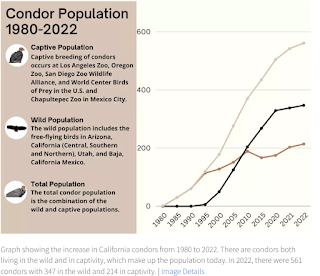
EARLY MARCH LAST YEAR, an endangered California condor — one of less than 350 of its kind surviving in the wild — perched on an Arizona cliff-face staring into space for days. It’s probably sick from lead poisoning, thought Tim Hauck, the condor program director with The Peregrine Fund, a nonprofit conservation group helping to reintroduce condors to the skies above Grand Canyon and Zion. These bald-headed scavengers — weighing up to 25 pounds with black-feathered wings spanning nearly 10 feet — often fall victim to lead exposure when they consume the flesh of cows, coyotes, and other large mammals killed by ranchers and hunters firing lead bullets. Listlessness and droopy posture are tell-tale signs. “We were like, I bet this bird’s got into something bad,” said Hauck.
His team of eight wildlife biologists stationed at Arizona’s scenic Vermillion Cliffs National Monument, 150 miles north of Flagstaff, hoped the ailing condor would glide down off its 1,000-foot sandstone ledge to visit their feeding station, where they could trap it to do a health examination. The Peregrine Fund provides supplemental food for the condors — most of which were raised in captivity and released into the wild — in part so the biologists can easily catch them for regular checkups, provide therapy for lead poisoning, vaccinate against West Nile virus, and update equipment used to track the condors’ whereabouts.
A week later, when the sick bird did finally get trapped at the feeding station, Hauck immediately noticed something he hadn’t seen before in lead-poisoned condors. Its eyes were cloudy, a condition called corneal edema. He consulted with Stephanie Lamb, a veterinarian who volunteers at Liberty Wildlife Center, a Peregrine Fund partner organization in Phoenix. He wanted to know if she thought the condor might be ill from something more worrisome than lead poisoning: highly pathogenic avian influenza, or HPAI, the virus responsible for the deaths of millions of wild birds and domestic chickens worldwide during the last two years. HPAI kills 90 to 100 percent of domestic poultry it infects, often within 48 hours, though less is known about the mortality rates for wild birds. Corneal edema, Lamb told him, was indeed on the list of symptoms.
Hauck’s team rushed the condor four-and-a-half hours south to the Liberty Wildlife Center’s quarantine for emergency care and testing. Then, as they were still waiting for the results, the situation in Vermillion Cliffs turned worse: A dead condor was spotted near a cave where she’d been nesting. The team recovered the carcass and immediately shipped it to the U.S. Fish and Wildlife Service Forensics Laboratory in Ashland, Oregon with an urgent request for an expedited necropsy. Recognizing the grave threat critically endangered California condors would face from an avian flu outbreak, the lab soon confirmed fears that the condor had succumbed to bird flu.
A wave of panic washed over Hauck and his crew. Condors are social creatures. They roost in groups and gather in hungry hoards to devour decaying animal corpses, sharing saliva and pooping everywhere. Hauck describes it as a “feeding frenzy” — ideal conditions for the disease to spread. What’s more, the virus thrives in damp, cold conditions; it had been a wet spring, and condors nest in caves, which tend to be humid and cooler than the outside air. Hauck worried that the disease, transmitted through the air and body fluids, would explode through the condor population “like wildfire.” He knew they had to contain it.
...
Working 14-hour days, climbing up cliffs, rappelling down canyons, and scouring the shores of the Colorado River by boat, they recovered dead condors almost daily. It felt like a nightmare that would never end, Hauck said. “It was a three-week period where we lost 21 birds.” Every carcass recovered tested positive for HPAI.
In less than a month, nearly 20 percent of the Southwest California condor population in Arizona and Utah had vanished. Conservationists worried that the virus would next strike condors in California. Then, as quickly as the virus flared up, it fizzled. With spring bird migration season winding down, and a return to hot, sunny days, Arizona’s condors stopped dying, and the condors in California were spared.
Recognizing that the outbreak could have been much worse — wiping out dozens more condors in multiple states, and possibly even killing animals in the captive-breeding flock kept in zoos — the U.S. Fish and Wildlife Service made a plea to the U.S. Department of Agriculture to authorize emergency use of an avian flu vaccine to inoculate condors in case of another outbreak.
...
The vaccine approved for the condors was developed in 2014, in response to the then-circulating H5N8 strain, with the idea that it would be used on commercial poultry. So that the vaccinated chickens would be distinguishable from chickens infected with H5N8, though, the scientists at Zoetis created the vaccine to protect against the H5N1 strain — a strategy that would still provide chickens with immunity, Lood said, while ensuring the virus wasn’t circulating silently. The vaccine was sold to the USDA’s vaccine bank but wasn’t used in the U.S. until wildlife managers were in sudden need of a vaccine to protect the condors against H5N1.
In May, federal biologists trapped 28 wild black vultures to be inoculated at the Carolina Raptor Center in Huntersville, North Carolina. Eight birds served as the controls, receiving no vaccine. Ten birds got half a standard dose, and a second half-dose 21 days later. The other 10 birds received just one shot, the preferred delivery for wild condors because they will need to be captured to receive their injection.
Each bird was placed in a special box designed to keep them calm and comfortable while waiting for their shot between the shoulder blades. By mid-July, there was good news: None of the black vultures showed adverse reactions, according to Blackford and Erin Katzner, founder and president of the Carolina Raptor Center, who hosted the trials. “When we get a tetanus shot, we get soreness and bruising,” Katzner said. “We didn’t see any swelling or bruising at the vaccine site for the vultures.”
The vaccine appears to be effective too: Results, which were released by FWS in August, showed 90 percent of the vultures that received two shots gained some immunity, compared to 70 percent of the single-dose birds.
With that positive news, the researchers began to administer the first shots to condors in captivity. To date, 20 of the condors have received vaccinations as part of the trial. Veterinarians are closely monitoring their health and collecting blood samples to see if they respond as well as the vultures.
...
https://undark.org/2023/10/04/condors-bird-flu/
Avian flu vaccines hadn’t been used on birds in the U.S. until condors started succumbing to the virus last year.
BY RENE EBERSOLE
10.04.2023
EARLY MARCH LAST YEAR, an endangered California condor — one of less than 350 of its kind surviving in the wild — perched on an Arizona cliff-face staring into space for days. It’s probably sick from lead poisoning, thought Tim Hauck, the condor program director with The Peregrine Fund, a nonprofit conservation group helping to reintroduce condors to the skies above Grand Canyon and Zion. These bald-headed scavengers — weighing up to 25 pounds with black-feathered wings spanning nearly 10 feet — often fall victim to lead exposure when they consume the flesh of cows, coyotes, and other large mammals killed by ranchers and hunters firing lead bullets. Listlessness and droopy posture are tell-tale signs. “We were like, I bet this bird’s got into something bad,” said Hauck.
His team of eight wildlife biologists stationed at Arizona’s scenic Vermillion Cliffs National Monument, 150 miles north of Flagstaff, hoped the ailing condor would glide down off its 1,000-foot sandstone ledge to visit their feeding station, where they could trap it to do a health examination. The Peregrine Fund provides supplemental food for the condors — most of which were raised in captivity and released into the wild — in part so the biologists can easily catch them for regular checkups, provide therapy for lead poisoning, vaccinate against West Nile virus, and update equipment used to track the condors’ whereabouts.
A week later, when the sick bird did finally get trapped at the feeding station, Hauck immediately noticed something he hadn’t seen before in lead-poisoned condors. Its eyes were cloudy, a condition called corneal edema. He consulted with Stephanie Lamb, a veterinarian who volunteers at Liberty Wildlife Center, a Peregrine Fund partner organization in Phoenix. He wanted to know if she thought the condor might be ill from something more worrisome than lead poisoning: highly pathogenic avian influenza, or HPAI, the virus responsible for the deaths of millions of wild birds and domestic chickens worldwide during the last two years. HPAI kills 90 to 100 percent of domestic poultry it infects, often within 48 hours, though less is known about the mortality rates for wild birds. Corneal edema, Lamb told him, was indeed on the list of symptoms.
Hauck’s team rushed the condor four-and-a-half hours south to the Liberty Wildlife Center’s quarantine for emergency care and testing. Then, as they were still waiting for the results, the situation in Vermillion Cliffs turned worse: A dead condor was spotted near a cave where she’d been nesting. The team recovered the carcass and immediately shipped it to the U.S. Fish and Wildlife Service Forensics Laboratory in Ashland, Oregon with an urgent request for an expedited necropsy. Recognizing the grave threat critically endangered California condors would face from an avian flu outbreak, the lab soon confirmed fears that the condor had succumbed to bird flu.
A wave of panic washed over Hauck and his crew. Condors are social creatures. They roost in groups and gather in hungry hoards to devour decaying animal corpses, sharing saliva and pooping everywhere. Hauck describes it as a “feeding frenzy” — ideal conditions for the disease to spread. What’s more, the virus thrives in damp, cold conditions; it had been a wet spring, and condors nest in caves, which tend to be humid and cooler than the outside air. Hauck worried that the disease, transmitted through the air and body fluids, would explode through the condor population “like wildfire.” He knew they had to contain it.
...
Working 14-hour days, climbing up cliffs, rappelling down canyons, and scouring the shores of the Colorado River by boat, they recovered dead condors almost daily. It felt like a nightmare that would never end, Hauck said. “It was a three-week period where we lost 21 birds.” Every carcass recovered tested positive for HPAI.
In less than a month, nearly 20 percent of the Southwest California condor population in Arizona and Utah had vanished. Conservationists worried that the virus would next strike condors in California. Then, as quickly as the virus flared up, it fizzled. With spring bird migration season winding down, and a return to hot, sunny days, Arizona’s condors stopped dying, and the condors in California were spared.
Recognizing that the outbreak could have been much worse — wiping out dozens more condors in multiple states, and possibly even killing animals in the captive-breeding flock kept in zoos — the U.S. Fish and Wildlife Service made a plea to the U.S. Department of Agriculture to authorize emergency use of an avian flu vaccine to inoculate condors in case of another outbreak.
...
The vaccine approved for the condors was developed in 2014, in response to the then-circulating H5N8 strain, with the idea that it would be used on commercial poultry. So that the vaccinated chickens would be distinguishable from chickens infected with H5N8, though, the scientists at Zoetis created the vaccine to protect against the H5N1 strain — a strategy that would still provide chickens with immunity, Lood said, while ensuring the virus wasn’t circulating silently. The vaccine was sold to the USDA’s vaccine bank but wasn’t used in the U.S. until wildlife managers were in sudden need of a vaccine to protect the condors against H5N1.
In May, federal biologists trapped 28 wild black vultures to be inoculated at the Carolina Raptor Center in Huntersville, North Carolina. Eight birds served as the controls, receiving no vaccine. Ten birds got half a standard dose, and a second half-dose 21 days later. The other 10 birds received just one shot, the preferred delivery for wild condors because they will need to be captured to receive their injection.
Each bird was placed in a special box designed to keep them calm and comfortable while waiting for their shot between the shoulder blades. By mid-July, there was good news: None of the black vultures showed adverse reactions, according to Blackford and Erin Katzner, founder and president of the Carolina Raptor Center, who hosted the trials. “When we get a tetanus shot, we get soreness and bruising,” Katzner said. “We didn’t see any swelling or bruising at the vaccine site for the vultures.”
The vaccine appears to be effective too: Results, which were released by FWS in August, showed 90 percent of the vultures that received two shots gained some immunity, compared to 70 percent of the single-dose birds.
With that positive news, the researchers began to administer the first shots to condors in captivity. To date, 20 of the condors have received vaccinations as part of the trial. Veterinarians are closely monitoring their health and collecting blood samples to see if they respond as well as the vultures.
...
https://undark.org/2023/10/04/condors-bird-flu/