• FluTrackers.com Inc. does not provide medical advice. Information on this web site is collected from various internet resources, and the FluTrackers board of directors makes no warranty to the safety, efficacy, correctness or completeness of the information posted on this site by any author or poster. The information collated here is for instructional and/or discussion purposes only and is NOT intended to diagnose or treat any disease, illness, or other medical condition. Every individual reader or poster should seek advice from their personal physician/healthcare practitioner before considering or using any interventions that are discussed on this website. By continuing to access this website you agree to consult your personal physican before using any interventions posted on this website, and you agree to hold harmless FluTrackers.com Inc., the board of directors, the members, and all authors and posters for any effects from use of any medication, supplement, vitamin or other substance, device, intervention, etc. mentioned in posts on this website, or other internet venues referenced in posts on this website.
  • We are not asking for any donations. Do not donate to any entity who says they are raising funds for us.

US - CDC reports 63 dead, 749 infected with fungal meningitis in 20 states (Update Aug 5, 2013)

Re: 7 dead, 91 sick from suspected fungal meningitis as outbreak worsens

Re: 7 dead, 91 sick from suspected fungal meningitis as outbreak worsens

Frequently Asked Questions: Multistate Meningitis Outbreak Investigation

October 6, 2012 8:00pm ET

Background
The Centers for Disease Control and Prevention (CDC) and the Food and Drug Administration (FDA) are currently coordinating a multistate investigation of fungal meningitis among patients who received an epidural steroid injection with a potentially contaminated product. Several of these patients also suffered strokes that are believed to have resulted from their infection.

How many cases have been reported?
Updates about the investigation, including case counts, are available at http://www.cdc.gov/hai/outbreaks/meningitis.html.

What is causing these infections?
The infections are caused by a fungus. At this point, the original source of the outbreak has not been determined; however, all infected patients identified thus far have received preservative-free (PF) methylprednisolone acetate (80mg/ml) from among the three lots voluntarily recalled by the New England Compounding Center in Framingham, Massachusetts, on September 26, 2012. These three lots are:

  • Methylprednisolone Acetate (PF) 80 mg/ml Injection, Lot #05212012@68, BUD 11/17/2012
  • Methylprednisolone Acetate (PF) 80 mg/ml Injection, Lot #06292012@26, BUD 12/26/2012
  • Methylprednisolone Acetate (PF) 80 mg/ml Injection, Lot #08102012@51, BUD 2/6/2013

Are patients who did not receive an injection at risk?
No. Fungal meningitis is not transmitted from person to person. These infections are associated with a potentially contaminated medication that is injected into the body.

What should patients do?

  • Find out if you received a potentially contaminated medication. If patients are concerned about which product was used in their procedure, they should first contact the physician who performed their procedure.

    The facilities who received one of the lots recalled on September 26, 2012, are actively contacting patients to find out if they are feeling well. The list of facilities that received medication from one of these three lots is available at http://www.cdc.gov/hai/outbreaks/meningitis-facilities-map.html.

  • If you have received a potentially contaminated medication, seek medical attention if you have symptoms. It is important to note that infected patients have had very mild symptoms that are only slightly worse than usual. For example, many infected patients have had slight weakness, slightly worsened back pain, or even a mild headache. Patients have had symptoms generally starting from 1 to 4 weeks after their injection.

    Patients who have had an epidural steroid injection since May 21, 2012, and have any of the following symptoms, should talk to their doctor as soon as possible:
    • New or worsening headache
    • Fever
    • Sensitivity to light
    • Stiff neck
    • New weakness or numbness in any part of your body
    • Slurred speech
    • Increased pain, redness or swelling at your injection site

What should physicians be doing?


  1. Find out if you have administered a potentially contaminated medication from New England Compounding Center. The three potentially contaminated lots are:
    • Methylprednisolone Acetate (PF) 80 mg/ml Injection, Lot #05212012@68, BUD 11/17/2012
    • Methylprednisolone Acetate (PF) 80 mg/ml Injection, Lot #06292012@26, BUD 12/26/2012
    • Methylprednisolone Acetate (PF) 80 mg/ml Injection, Lot #08102012@51, BUD 2/6/2013
  2. Contact patients who have been exposed. All patients who have received medication from one of these three lots should be immediately contacted directly (i.e. called) to determine if they are having any symptoms.

    It is important to note that infected patients have presented with mild symptoms, only slightly worse than baseline.
  3. Refer symptomatic patients for a diagnostic procedure. For patients who received epidural injection with medication from the lots listed above and have any symptoms of meningitis or basilar stroke, a diagnostic lumbar puncture (LP) should be performed, if not contraindicated. Because presenting symptoms of some patients with meningitis have been mild and not classic for meningitis (e.g., new or worsening headache without fever or neck stiffness), physicians should have a low threshold for LP.

    While CDC is only aware of infections occurring in patients who have received epidural steroid injections, patients who received other types of injection (e.g., joint injection) with potentially contaminated methylprednisolone acetate should also be contacted to assess for signs of infection (e.g., swelling, increasing pain, redness, warmth at the injection site) and should be encouraged to seek evaluation (e.g., arthrocentesis) if such symptoms exist.

    Interim instructions regarding diagnostic testing and treatment options are available at http://www.cdc.gov/HAI/outbreaks/meningitis.html.
  4. Report concerning cases to public health. Physicians should report suspected cases to their state health department.

    Clinicians are also requested to report any suspected adverse events following use of these products to FDA's MedWatch program at 1-800-332-1088 or www.fda.gov/medwatch.
Is there a role for prophylaxis?
Currently, CDC emphasizes the need for rapid clinical evaluation and diagnosis, if indicated. Prophylaxis is not recommended at this time.

Is there a role for lumbar puncture in asymptomatic patients?
At this time, CDC does not recommend performing lumbar puncture in exposed patients who are currently asymptomatic. These patients should be closely monitored for development of symptoms, with a low threshold for performing lumbar puncture if the patient should become symptomatic. The clinical investigation of patients associated with this outbreak is ongoing, and this recommendation may change as new information becomes available.

Were the three lots mentioned above only used for spinal injections?
No. These medications were used for other types of injections, including injections into the joint (e.g., knee). To date, CDC has only identified infections in patients who received epidural steroid injections with these medications. However, patients who received other types of injections with these products may also be at risk.

What states have received the potentially contaminated medication?
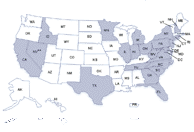
Twenty-three states have received medication from the New England Compounding Center:

  • California
  • Connecticut
  • Florida
  • Georgia
  • Idaho
  • Illinois
  • Indiana
  • Maryland
  • Michigan
  • Minnesota
  • North Carolina
  • New Hampshire
  • New Jersey
  • Nevada
  • New York
  • Ohio
  • Pennsylvania
  • Rhode Island
  • South Carolina
  • Tennessee
  • Virginia
  • Texas
  • West Virginia
The names of the facilities that have received medication from one of these lots are available at http://www.cdc.gov/hai/outbreaks/meningitis-facilities-map.html.

Are other medications from the New England Compounding Center located in Framingham, Massachusetts associated with infections?
To date, CDC has not received reports of infections linked to other products from the New England Compounding Center. However, out of an abundance of caution, CDC recommends that healthcare professional cease use of any product produced by the New England Compounding Center until further information is available.

What is fungal meningitis?
Fungal meningitis occurs when the protective membranes that cover the brain and spinal cord are infected with a fungus. Fungal meningitis can develop after a fungus spreads through the bloodstream from somewhere else in the body, as a result of the fungus being introduced directly into the central nervous system, or by direct extension from an infected body site next to the central nervous system.

Is fungal meningitis common after epidural injections?
Epidural injections are generally very safe procedures, and complications are rare. Fungal meningitis is an extremely rare type of meningitis overall, including after epidural injections. The type of epidural medication given to patients affected by this outbreak is not the same type of medication as that given to women during childbirth.

What are the symptoms of fungal meningitis?
Symptoms of fungal meningitis are similar to symptoms of other forms of meningitis; however, they often appear gradually and can be very mild at first. In addition to typical meningitis symptoms, like headache, fever, nausea, and stiffness of the neck, people with fungal meningitis may also experience confusion, dizziness, and discomfort from bright lights. Patients might have only one or two of these symptoms.

What is a compounding pharmacy? Why are these medications compounded when they are also commercially available?
Compounding pharmacies create special formulations of medications in order to fit patients’ healthcare needs. For example, they may change the dose or change the formulation of a medication from a solid to a liquid.

Where can I find updates and additional information on this outbreak?
For complete information and updates on this outbreak, visit www.cdc.gov/hai/outbreaks/meningitis/html.


Contact Us:


  • Centers for Disease Control and Prevention
    1600 Clifton Rd
    Atlanta, GA 30333
  • 800-CDC-INFO
    (800-232-4636)
    TTY: (888) 232-6348
  • New Hours of Operation
    8am-8pm ET/Monday-Friday
    Closed Holidays
  • cdcinfo@cdc.gov


http://www.cdc.gov/hai/outbreaks/clinicians/faq_meningitis_outbreak.html
 
Re: 7 dead, 91 sick from suspected fungal meningitis as outbreak worsens

Re: 7 dead, 91 sick from suspected fungal meningitis as outbreak worsens

UPDATE 2-Deadly US meningitis outbreak increases to 91 cases
Sun Oct 7, 2012 3:28pm EDT

* Most news cases in Michigan

* Thousands of patients may have received injections

By Tim Ghianni

NASHVILLE, Tenn., Oct 7 (Reuters) - U.S. health officials on Sunday reported an additional 27 cases in a fungal meningitis outbreak linked to steroid injections that has killed seven people and now affected 91 in nine states.

The U.S. Centers for Disease Control and Prevention (CDC) reported a new total of 91 cases in an update on its website, up from 64 on Saturday. Most of the new cases were reported in Michigan, where the total increased to 20 from five. Virginia's total increased to 18 from 11.

The widening outbreak has alarmed U.S. health officials and focused attention on regulations of pharmaceutical compounding companies like the one that produced the drugs, the New England Compounding Center Inc in Framingham, Massachusetts.

The company shipped 17,676 vials of the steroid methylprednisolone acetate to 76 facilities in 23 states from July through September, the Massachusetts Health Department said.

The steroid is used as a painkiller, usually for the back, and could have been injected in thousands of patients, authorities have said.

Meningitis is an infection of the membranes covering the brain and spinal cord, and affected patients started showing a variety of symptoms from one to four weeks after their injections.

The company, which was previously the subject of complaints, said it suspended its operations while an investigation proceeds and has recalled the three lots of the drug.

A compounding pharmacy takes medications from pharmaceuticals manufacturers and makes them into specific dosages and strengths for use by doctors.

Complaints against New England Compounding Center (NECC) in 2002 and 2003 about the processing of medication resulted in an agreement with government agencies in 2006 to correct deficiencies, the Massachusetts Health Department said.

LIMITED FDA AUTHORITY

In 2011, there was another inspection of the facility and no deficiencies were found. In March 2012, another complaint was made about the potency of a product used in eye surgery procedures. That investigation is continuing, the state health department said.

The U.S. Food and Drug administration has limited authority over the day-to-day operations of compounding pharmacies, which are regulated primarily by state boards that oversee the practices, licensing and certification of pharmacies and pharmacists.

Compounded products do not have to win FDA approval before they are sold, and the agency has no jurisdiction over how the products are manufactured or labeled for use. Instead, the FDA investigates cases of adulterated drugs in cooperation with state regulators.

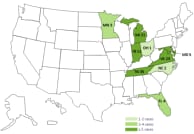
The FDA has tried to exert greater authority over compounded drug products under a section of the Food, Drug and Cosmetic Act that covers new drugs. But those efforts led to federal court challenges that resulted in two separate and conflicting rulings at the appellate level.

The nine states where cases have been reported are Florida, Indiana, Maryland, Michigan, Minnesota, North Carolina, Ohio, Tennessee and Virginia.

Tennessee, where the outbreak was first detected, accounted for most of the cases, with 32, including three deaths. Many patients there remain hospitalized, some in critical condition.

Michigan had 20 cases and two deaths. One person died in Maryland and another in Virginia, the CDC said.

Reuters had reported 65 cases on Saturday, including one additional case after the CDC published its total.

This form of meningitis is not contagious, the CDC said. Symptoms include fever, headache, nausea and neurological problems that would be consistent with deep brain stroke.

The steroid was sent to California, Connecticut, Florida, Georgia, Idaho, Illinois, Indiana, Maryland, Michigan, Minnesota, North Carolina, New Hampshire, New Jersey, Nevada, New York, Ohio, Pennsylvania, Rhode Island, South Carolina, Tennessee, Virginia, Texas and West Virginia, the CDC said.

A list of facilities that received vials from the infected lots can be found online via the website cdc.gov.:tiphat:http://www.reuters.com/article/2012/10/07/health-meningitis-idUSL1E8L723D20121007
 
Re: 7 dead, 91 sick from suspected fungal meningitis as outbreak worsens

Re: 7 dead, 91 sick from suspected fungal meningitis as outbreak worsens

Case Definitions: Multistate Outbreak Associated with Injection of Potentially Contaminated Steroid Products

October 6, 2012 8:00pm ET
1. A person with meningitis1 of sub-acute onset (1-4 weeks) following epidural injection after May 21, 2012.
2. A person with basilar stroke 1-4 weeks following epidural injection after May 21, 2012, who has not received a diagnostic lumbar puncture.
3. A person with evidence of spinal osteomyelitis or epidural abscess at the site of an epidural injection diagnosed 1-4 weeks after epidural injection after May 21, 2012.
4. A person with septic arthritis3 diagnosed 1-4 weeks following steroid joint injection after May 21, 2012.
<sup>1</sup>Clinically diagnosed meningitis meaning 1 or more of the following symptoms: headache, fever, stiff neck, or photophobiaand a CSF profile consistent with meningitis (pleocytosis +/- low glucose, elevated protein).
<sup>2</sup>These people, if possible, should have a lumbar puncture.
<sup>3</sup>Clinically diagnosed septic arthritis meaning new or worsening pain with presence of effusion or new or worsening effusion.


Contact Us:


  • Centers for Disease Control and Prevention
    1600 Clifton Rd
    Atlanta, GA 30333
  • 800-CDC-INFO
    (800-232-4636)
    TTY: (888) 232-6348
  • New Hours of Operation
    8am-8pm ET/Monday-Friday
    Closed Holidays
  • cdcinfo@cdc.gov


http://www.cdc.gov/hai/outbreaks/clinicians/casedef_multistate_outbreak.html
 
Re: 7 dead, 91 sick from suspected fungal meningitis as outbreak worsens

Re: 7 dead, 91 sick from suspected fungal meningitis as outbreak worsens

We would like to see a Spanish version of the CDC information/guidance/advisories. Thanks! :)
 
Re: 7 dead, 91 sick from suspected fungal meningitis as outbreak worsens

Re: 7 dead, 91 sick from suspected fungal meningitis as outbreak worsens

NECC has published a list of all products manufactured in their facility since January 2012. This list, a 71 page PDF, would presumably include all the products currently in circulation which NECC has "voluntarily" recalled as of Oct 6.

List of All NECC Products Manufactured since January 2012
 
Re: 7 dead, 91 sick from suspected fungal meningitis as outbreak worsens

Re: 7 dead, 91 sick from suspected fungal meningitis as outbreak worsens

Tennessee -

TDH Update on Outbreak of Infections Associated with Epidural Steroid Injections-October 7, 2012

Sunday, October 07, 2012 | 02:32 pm

NASHVILLE ? As of 2 p.m. Central time Oct. 7, 2012, the Tennessee Department of Health is aware of 32 patients with meningitis, epidural abscess or posterior stroke associated with epidural steroid injections provided at these three facilities: PCA Pain Center in Oak Ridge, Saint Thomas Outpatient Neurosurgery Center in Nashville and the Specialty Surgery Center in Crossville. The number of confirmed deaths in this situation is three.

Individuals who have had an epidural steroid injection at one of these facilities should contact their health care provider for an assessment. Tennesseans wanting to ask questions about the outbreak may contact the Tennessee Poison Control Center at 1-888-222-1222.

The symptoms of infection associated with this outbreak vary from mild to severe, and may include worsening to severe headache; fever; stiff neck; unsteadiness or falling; back pain; dizziness; slurred speech and other unusual or abnormal symptoms.

TDH will provide new information on this investigation in a media briefing on Monday, Oct. 8, at 1 p.m. Central time. Media members may participate in the briefing via telephone by calling 1-888-757-2790, passcode 781337.

The mission of the Tennessee Department of Health is to protect, promote and improve the health and prosperity of people in Tennessee. For more information about TDH services and programs, visit http://health.state.tn.us/.

https://news.tn.gov/node/9705
 
Re: US - 7 dead, 91 sick from suspected fungal meningitis as outbreak worsens

Re: US - 7 dead, 91 sick from suspected fungal meningitis as outbreak worsens

[Source: Florida Department of Health, full PDF document: (LINK). Edited.]


October 7, 2012

Rick Scott, Governor / John H. Armstrong, MD, FACS, State Surgeon General / Office of the State Surgeon General, 4052 Bald Cypress Way, Bin A00 ? Tallahassee, Florida 32399-1701, Phone: (850) 245-4444 ? Fax: (850) 922-9453 ? http://www.floridashealth.com

FOR IMMEDIATE RELEASE / Contact: DOH Communications Hue Reynolds (850) 528- 8881 or Ashley Carr (850) 688-3143

FLORIDA DEPARTMENT OF HEALTH UPDATE: NEW ENGLAND COMPOUNDING CENTER VOLUNTARY PRODUCT RECALL

~NECC, the company associated with the meningitis outbreak, has recalled its entire product line~


TALLAHASSEE- A precautionary voluntary recall of all New England Compounding Center (NECC) products distributed since January 2012 has been issued by the company, in coordination with the Food and Drug Administration (FDA).

This recall is in addition to the October 5th recall of the three contaminated lots of NECC methylprednisolone acetate used for epidural back injections.

The numbered contaminated lots are 05212012@68, 06292012@26 and 08102012@51.

These lots have been associated with a non-contagious fungal meningitis outbreak. All contaminated lots and NECC products should be returned in accordance with FDA recall procedures.

"We continue to be vigilant in our efforts to protect the health and safety of Floridians,? said State Surgeon General and Secretary of Health Dr. John Armstrong. ?We are working in collaboration with the Centers for Disease Control and Prevention (CDC), our health partners and the Department of Business and Professional Regulation (DBPR) to ensure that no NECC medications are present in any health care setting in Florida."

The CDC has expanded the timeline and scope of injection risk to include any patients known or suspected to have received back or joint injections with the suspect lots of NECC methylprednisolone acetate since May 21, 2012. If symptomatic, these patients should be evaluated immediately by their health care professional and monitored or treated as necessary.

Patients without symptoms should be evaluated by their health care professionals as soon as possible.

This meningitis cannot be spread from person to person. At this time, there has not been a case of septic arthritis related to contaminated steroid joint injections.

Florida health professional associations are also assisting with disseminating updated public health information to their members and patients.

Of the eight Florida facilities identified as having received shipments of the three contaminated steroid lots, two have stated that they have not used these medications (Interventional Rehab Center in Pensacola and North County Surgicenter in Palm Beach).

The remaining six facilities are:
  • Florida Pain Clinic, Ocala, FL
  • Marion Pain Management Center, Ocala, FL
  • Orlando Center for Outpatient Surgery, Orlando, FL
  • Pain Consultants of West Florida, Pensacola, FL
  • Surgery Center of Ocala, Ocala, FL
  • Surgical Park Center, Miami, FL
Symptoms to look for:

Infected patients have presented approximately one to four weeks following their injections with a variety of symptoms including but not limited to: fever, new or worsening headache, neck pain, nausea and/or new symptoms consistent with a stroke (including weakness on one side of the body and slurred speech). Some of these symptoms may be mild, yet should still be reported to a health care professional.


Background:

As of 2 PM October 7, the CDC lists 91 cases and seven deaths of meningitis across nine states linked to contaminated steroidal injections of methylprednisolone acetate. Four of these patients are in Florida, and all four reside in Marion County.

The Florida Department of Health and DBPR?s Devices, Drugs, and Cosmetics (DDC) program will continue to notify all Florida health care facilities and practitioners of this expanded list of NECC recalled products.

The staff of these facilities will continue contacting patients who have received these injections since May 21, 2012.

We will continue to update our websites at http://newsroom.doh.state.fl.us/ or www.myfloridalicense.com and have set up a toll-free hotline at 1-866-523-7339 for those who may have additional questions.

To view FDA?s product list as of Oct. 7, please visit: http://www.fda.gov/DRUGS/DRUGSAFETY/ucm322752.htm.

To view the CDC?s list of Florida facilities involved, please visit http://newsroom.doh.state.fl.us/wp-ontent/uploads/newsroom/2012/10/10-06-12-FLORIDA-LIST-WITH-NECC.pdf.

The Florida Department of Health works to protect, promote & improve the health of all people in Florida through integrated state, county, & community efforts.

Follow us on Twitter at @HealthyFla and on Facebook. For news story ideas, interviews, videos and more from DOH Communications visit the DOH Online Newsroom.


###


-
-------
 
Re: US - 7 dead, 91 sick from suspected fungal meningitis as outbreak worsens

Re: US - 7 dead, 91 sick from suspected fungal meningitis as outbreak worsens

Michigan -

Howell-area woman killed in Meningitis outbreak

11:00 AM, Oct. 8, 2012
...

Lillian Cary, 67, who died Sept. 30, had been treated with steroid shots for chronic back pain at Michigan Pain Specialists of Genoa Township, according to her husband, George Cary. The clinic is one of four Michigan facilities confirmed to have received shipment of the recalled steroids.

?She had been ill since the last week of August,? her husband said.

Lillian Cary initially sought treatment Sept. 7 at St. Joseph?s Mercy Hospital in Ypsilanti but was released two days later.

She was admitted again to the University of Michigan Medical Center in Ann Arbor on Sept. 21 and was initially being treated with antibiotics for a lung infection, her husband said.

?She was doing well. She was recovering and talkative through the night of the 24th,? George Cary said.

Lillian Cary suffered a stroke overnight, her husband said. After being told by doctors that her chances for survival were not greater than 15 percent, George Cary said, he and her daughter decided to remove his wife from life support and she died at 3:30 p.m. Sept. 30.

George Cary said he, too, had been treated for back pain at the Genoa Township facility and had been advised that he might have been treated with the recalled steroids.
...

Full text:
http://www.livingstondaily.com/arti...s-brighton?odyssey=tab|topnews|text|Frontpage
 
Eighth death reported in meningitis outbreak
01:15 PM ET

The Centers for Disease Control said Monday that the number of people infected with meningitis related to steroid injections has gone from 91 to 105. The death toll has risen from seven to eight.

Patients in nine states contracted the deadly fungal meningitis after being injected in their spine with a preservative-free steroid called methylprednisolone acetate that was contaminated by a fungus. The steroid is used to treat pain and inflammation.

What is meningitis?

The New England Compounding Center (NECC), the Massachusetts-based pharmacy that made the contaminated injections, voluntarily recalled three lots of the injected steroid last week.:tiphat:http://news.blogs.cnn.com/2012/10/08/eighth-death-reported-in-meningitis-outbreak/
 
Re: US - 8 dead, 105 sick from suspected fungal meningitis as outbreak worsens

Re: US - 8 dead, 105 sick from suspected fungal meningitis as outbreak worsens

The number of people infected with a rare type of meningitis tied to contaminated steroid injections has climbed to 105, federal health officials said Monday. Eight people have died.
The drugs were given starting May 21, much earlier than previously suspected, officials with the Centers for Disease Control and Prevention said. Infections and deaths have been reported in nine states.
Cases have been identified in nine states and health officials fear the numbers will continue to rise as doctors check patients for the symptoms. Doctors and patients alike may not know to look for the unusual infection, which can take weeks to develop after an injection....:tiphat:
http://vitals.nbcnews.com/_news/201...tis-toll-reaches-105-8-dead?lite?ocid=twitter
 
Re: US - 8 dead, 105 sick from suspected fungal meningitis as outbreak worsens

Re: US - 8 dead, 105 sick from suspected fungal meningitis as outbreak worsens

US health officials enlist police in growing meningitis scare

/.. .In Ohio, health officials said Monday they are mobilizing community resources, including sheriff's offices, to check on patients who have received the injections
.

"If that means knocking on doors, then that's what they will do," said Beth Bickford, executive director at the Association of Ohio Health Commissioners, in a statement Monday. . :tiphat: http://www.reuters.com/article/2012/10/08/usa-health-meningitis-idUSL1E8L8AEQ20121008
 
Re: US - 8 dead, 105 sick from suspected fungal meningitis as outbreak worsens

Re: US - 8 dead, 105 sick from suspected fungal meningitis as outbreak worsens

By SYDNEY LUPKIN and KATIE MOISSE (@katiemoisse)
Oct. 8, 2012
Health officials estimate that 13,000 people may have been exposed to contaminated lots of an epidural steroid that has been linked to a rare fungal meningitis that has infected 105 people across nine states, killing eight of them. Fourteen new cases and one new death have been reported since yesterday.

Although the number of cases has increased, the outbreak does not include any new states. The number of people with fungal meningitis, which is not spread person-to-person, has grown by 64 percent since Friday....
http://abcnews.go.com/Health/fungal...5-cases-deaths/story?id=17424832#.UHMlbE3peek
 
Re: US - 8 dead, 105 sick from suspected fungal meningitis as outbreak worsens

Re: US - 8 dead, 105 sick from suspected fungal meningitis as outbreak worsens

New notice on the CDC page:

"CDC is aware that New England Compounding Center has voluntarily expanded its recall to include all products currently in circulation that were compounded at and distributed from its facility in Framingham, Massachusetts.

CDC's guidance to patients has not changed as a result of this voluntary recall. Patients who feel ill and are concerned about whether they received a medication from NECC should contact their physicians.

Clinicians should actively contact patients who have received medicines associated with three lots of preservative-free methylprednisolone acetate (80mg/ml) recalled on September 26. The potentially contaminated injections were given starting May 21, 2012."
 
Re: US - 8 dead, 105 sick from suspected fungal meningitis as outbreak worsens

Re: US - 8 dead, 105 sick from suspected fungal meningitis as outbreak worsens

New notice on the CDC page:

"CDC is aware that New England Compounding Center has voluntarily expanded its recall to include all products currently in circulation that were compounded at and distributed from its facility in Framingham, Massachusetts.

CDC's guidance to patients has not changed as a result of this voluntary recall. Patients who feel ill and are concerned about whether they received a medication from NECC should contact their physicians.

Clinicians should actively contact patients who have received medicines associated with three lots of preservative-free methylprednisolone acetate (80mg/ml) recalled on September 26. The potentially contaminated injections were given starting May 21, 2012."

Thanks Catbird!

Here is entire page with embedded links:

Multistate Meningitis Outbreak Investigation

October 7, 2012 7:30 PM EDT

  • CDC is aware that New England Compounding Center has voluntarily expanded its recall to include all products currently in circulation that were compounded at and distributed from its facility in Framingham, Massachusetts.
  • CDC's guidance to patients has not changed as a result of this voluntary recall. Patients who feel ill and are concerned about whether they received a medication from NECC should contact their physicians.
  • Clinicians should actively contact patients who have received medicines associated with three lots of preservative-free methylprednisolone acetate (80mg/ml) recalled on September 26. The potentially contaminated injections were given starting May 21, 2012. Symptoms that should prompt diagnostic evaluation include: fever, new or worsening headache, neck stiffness, sensitivity to light, new weakness or numbness, increasing pain, redness or swelling of the injection site.


Summary:
CDC is coordinating a multistate investigation of meningitis among patients who received epidural steroid injections (medication injected into the spine). Several of these patients have had strokes related to the meningitis. In several patients, the meningitis was found to be caused by a fungus that is common in the environment but rarely causes meningitis. This form of meningitis is not contagious. The source of the fungus has not yet been identified, and the cause of infections in the other patients is still being assessed.


Clinician & Patient Guidance


Additional Federal Agencies Involved: FDA


General Information:
Is the source of the outbreak known?
CDC is investigating medications and products that are associated with this outbreak of meningitis. At this point, there is not enough evidence to determine the original source of the outbreak, however there is a link to an injectable steroid medication. The lots of medication that were given to patients have been recalled by the manufacturer.
What are the states that received the implicated product?
California, Connecticut, Florida, Georgia, Idaho, Illinois, Indiana, Maryland, Michigan, Minnesota, North Carolina, New Hampshire, New Jersey, Nevada, New York, Ohio, Pennsylvania, Rhode Island, South Carolina, Tennessee, Virginia, Texas, and West Virginia
What is meningitis?
Meningitis refers to inflammation of the protective membranes covering the brain and spinal cord known as the meninges. The inflammation is usually caused by an infection frequently with a bacteria or virus, but meningitis can also be caused by less common pathogens such as fungi. The severity of illness and the treatment for meningitis differ depending on the cause. Thus, it is important to know the specific cause of meningitis.
What is fungal meningitis?
Fungal meningitis occurs when the protective membranes that cover the brain and spinal cord are infected with a fungus. Fungal meningitis can develop after a fungus spreads through the bloodstream from somewhere else in the body, as a result of the fungus being introduced directly into the central nervous system, or by direct extension from an infected body site next to the central nervous system.
Is fungal meningitis common after epidural injections?
Epidural injections are generally very safe procedures, and complications are rare. Fungal meningitis is an extremely rare cause of meningitis overall, including after epidural injections. The type of epidural medication given to patients affected by this outbreak is not the same type of medication as that given to women during childbirth.
What are the symptoms of fungal meningitis?
Symptoms of fungal meningitis are similar to symptoms of other forms of meningitis, however they often appear more gradually and can be very mild at first. In addition to typical meningitis symptoms, like headache, fever, nausea, and stiffness of the neck, people with fungal meningitis may also experience confusion, dizziness, and discomfort from bright lights. Patients might just have one or two of these symptoms.


At-A-Glance


Current Case Count Map:
Click to view case count map.


Current State Facilities Map:
Click to view facilities map.


Contact Us:


  • Centers for Disease Control and Prevention
    1600 Clifton Rd
    Atlanta, GA 30333
  • 800-CDC-INFO
    (800-232-4636)
    TTY: (888) 232-6348
  • New Hours of Operation
    8am-8pm ET/Monday-Friday
    Closed Holidays
  • cdcinfo@cdc.gov


http://www.cdc.gov/HAI/outbreaks/meningitis.html
 
Re: US - 8 dead, 105 sick from suspected fungal meningitis as outbreak worsens

Re: US - 8 dead, 105 sick from suspected fungal meningitis as outbreak worsens

This is the first estimate of potential exposure that I've seen.

"Fungal meningitis exposure may reach 13,000"

"The number of people infected with a rare type of meningitis tied to contaminated steroid injections has climbed to 105, federal health officials said Monday. Eight people have died.

The drugs were given starting May 21, much earlier than previously suspected, officials with the Centers for Disease Control and Prevention said. Infections and deaths have been reported in nine states. As many as 13,000 patients may have been exposed to the potentially contaminated drugs recalled from a Massachusetts compounding pharmacy, officials added."
 
Re: US - 8 dead, 105 sick from suspected fungal meningitis as outbreak worsens

Re: US - 8 dead, 105 sick from suspected fungal meningitis as outbreak worsens

This is an official
CDC HEALTH ADVISORY

Distributed via Health Alert Network
October 8, 2012, 13:10 ET (1:10 PM ET)
CDCHAN-00328-2012-10-08-ADV-N

Update: Multistate Outbreak of Meningitis and Stroke Associated with Potentially Contaminated Steroid Medication


Summary
The Centers for Disease Control and Prevention (CDC) and the Food and Drug Administration (FDA) continue to work closely with state public health departments on a multistate investigation of fungal meningitis among patients who received an epidural steroid injection. Some of these patients also suffered strokes that may have resulted from their infection. These cases are associated with a potentially contaminated steroid medication prepared by New England Compounding Center (NECC), located in Framingham, Mass. This HAN notice provides updated information about the investigation (including a change in the case definition*), laboratory findings, an expanded voluntary recall of products, and recommendations for clinicians


Background
CDC, in collaboration with FDA, state public health departments, and state boards of pharmacy, has been investigating an ongoing outbreak of meningitis associated with a potentially contaminated steroid medication, preservative-free methylprednisolone acetate (80mg/ml) prepared by New England Compounding Center, located in Framingham, Mass. CDC and state public health departments are actively coordinating outreach to patients who have been exposed to this potentially contaminated medication.
As of October 8, 2012, a total of 105 cases, including 8 deaths, have been reported in 9 states: Florida (4 cases), Indiana (11 cases), Maryland (5 cases, including 1 death), Michigan (21 cases, including 2 deaths), Minnesota (3 cases), North Carolina (2 cases), Ohio (1 case), Tennessee (35 cases, including 4 deaths), and Virginia (23 cases, including 1 death). Fungus has been identified in specimens obtained from at least nine patients, one of whom also had Propionibacterium acnes, of unclear clinical significance, isolated from a post-mortem central nervous system specimen. In addition to an Aspergillus spp. isolated from a Tennessee patient, the fungus Exserohilum rostratum was identified in other patients, indicating the possibility of infections caused by multiple organisms. Fungal meningitis is not transmitted from person to person.
The clinical presentation of infected patients remains consistent with the prior report: onset of symptoms is typically 1 to 4 weeks following injection with a variety of symptoms, including fever, new or worsening headache, nausea, and new neurological deficit (consistent with deep brain stroke). Some of these patients? symptoms were very mild in nature. Cerebrospinal fluid (CSF) obtained from these patients has typically shown elevated white cell count (with a predominance of neutrophils), low glucose, and elevated protein. As of October 8, no infections resulting from injection into a peripheral joint space have been reported.


Product Recall
On September 25, 2012, the New England Compounding Center located in Framingham, MA voluntarily recalled the following lots of methylprednisolone acetate (PF) 80mg/ml:
  • Methylprednisolone Acetate (PF) 80 mg/ml Injection, Lot #05212012@68, BUD 11/17/2012
  • Methylprednisolone Acetate (PF) 80 mg/ml Injection, Lot #06292012@26, BUD 12/26/2012
  • Methylprednisolone Acetate (PF) 80 mg/ml Injection, Lot #08102012@51, BUD 2/6/2013
All infections detected as of October 8 have occurred after injections with methylprednisolone acetate products from one of these lots. At this time, there is no evidence of infection related to other NECC products.
The FDA investigation into the NECC facility is ongoing. On October 5, FDA reported observing ?fungal contamination by direct microscopic examination of foreign matter taken from a sealed vial of methylprednisolone acetate collected from the New England Compounding Center.? Further analysis is ongoing. On October 6, NECC expanded its previous recalls to include all products currently in circulation that were compounded at and distributed from its facility in Framingham, Mass. More information about this recall is available at the FDA website.


Recommendations

  • Physicians should contact (by phone or in person) any patient who had an injection (e.g., spinal, joint) after May 21, 2012, using any of the following three recalled lots of preservative-free methylprednisolone acetate (80mg/ml) produced by NECC, to determine if they are having symptoms:
    • Methylprednisolone Acetate (PF) 80mg/ml Injection, Lot# 05212012@68, BUD 11/17/2012
    • Methylprednisolone Acetate (PF) 80mg/ml Injection, Lot#06292012@26, BUD 12/26/2012
    • Methylprednisolone Acetate (PF) 80mg/ml Injection, Lot# 08102012@51, BUD 2/6/2013
Symptoms that should prompt diagnostic evaluation include: fever, new or worsening headache, neck stiffness, sensitivity to light, new weakness or numbness, increasing pain, redness or swelling at injection site. Some of the symptoms of patients who have ultimately been diagnosed with meningitis have been mild and not classic for meningitis (e.g., new or worsening headache without fever or neck stiffness).

*Case Definition (note: the initial date for an epidural/joint steroid injection has been revised from July 1, 2012, to May 21, 2012).
1. A person with meningitis1 of sub-acute onset (1-4 weeks) following epidural injection after May 21, 2012.
2. A person with basilar stroke 1-4 weeks following epidural injection after May 21, 20122, who has not received a diagnostic lumbar puncture.
3. A person with evidence of spinal osteomyelitis or epidural abscess at the site of an epidural injection diagnosed 1-4 weeks after epidural injection after May 21, 2012.
4. A person with septic arthritis3 diagnosed 1-4 weeks following steroid joint injection after May 21, 2012.
_________
1Clinically diagnosed meningitis meaning one or more of the following symptoms: headache, fever, stiff neck, or photophobia and a CSF profile consistent with meningitis (pleocytosis +/- low glucose, elevated protein).
2These people, if possible, should have a lumbar puncture.
3Clinically diagnosed septic arthritis meaning new or worsening pain with presence of effusion or new or worsening effusion.
Additional Information

The Centers for Disease Control and Prevention (CDC) protects people's health and safety by preventing and controlling diseases and injuries; enhances health decisions by providing credible information on critical health issues; and promotes healthy living through strong partnerships with local, national, and international organizations.

Additional Resources


http://emergency.cdc.gov/HAN/han00328.asp
 
Re: US - 8 dead, 105 sick from suspected fungal meningitis as outbreak worsens

Re: US - 8 dead, 105 sick from suspected fungal meningitis as outbreak worsens

October 8, 2012 7:17 PM

Finding meningitis victims before it's too late

ByJonathan LaPook
...
Dr. William Schaffner, who has been tracking the outbreak at the Vanderbilt University Hospital in Nashville, Tenn., said the sooner they find the infected, the better the odds of recovery.

"Whether each and every vial was contaminated is not known. But we have an increasing number of patients who are being infected," he said.
...
The Centers for Disease Control believes the majority will not get sick; Dr. Schaffner agrees.

"If there is a silver lining, it's that apparently many people were inoculated but the attack rate is very small," he said. "It's really about 1 percent or less. We hope that that continues."
...
The typical incubation period is one to four weeks, but it is unclear how long patients who received the steroid injections will need to wait before they are considered out of the woods.

It's also difficult to predict how many of the patients exposed to the vials will get sick, since doctors don't have a lot of experience dealing with meningitis victims with normal immune systems; usually patients get meningitis after having already compromised immune systems, whether it be from AIDS, cancer or another illness.

Full text:
http://www.cbsnews.com/8301-18563_162-57528341/finding-meningitis-victims-before-its-too-late/
 
Re: US - 8 dead, 105 sick from suspected fungal meningitis as outbreak worsens

Re: US - 8 dead, 105 sick from suspected fungal meningitis as outbreak worsens

Saint Thomas Hospital
4220 Harding Road
Nashville, TN 37205

Do you have concerns about meningitis?


<IFRAME height=225 src="http://www.youtube.com/embed/OwuX1C9k1RQ" frameBorder=0 width=400></IFRAME>


Page Last Updated: 10/8/12 4:00pm CST
Saint Thomas Hospital was NOT affected by the meningitis outbreak that involved some patients at the Outpatient Neurosurgery Center, which has been closed since September 20. Saint Thomas Hospital patients and prospective patients should NOT be concerned. If you are interested in the national outbreak that involved the Outpatient Neurosurgery Center, please read on.

The Saint Thomas Outpatient Neurosurgery Center is working with Saint Thomas Hospital, the State of Tennessee Health Department, the Centers for Disease Control and Prevention and the Food and Drug Administration to identify the source of a cluster of meningitis first discovered at the Center.

Saint Thomas Hospital is currently treating 25 patients associated with an outbreak of rare fungal meningitis first discovered at the Saint Thomas Outpatient Neurosurgical Center.

Information For Patients

If you received an epidural steroid injection at the Saint Thomas Outpatient Neurosurgery Center between July 1, 2012 and September 20, 2012, and have not already spoken with a representative of the Center, please call 615-341-3425. Some patients receiving the procedure during the time specified have developed a rare form of meningitis. The Centers for Disease Control and Prevention (CDC) is coordinating a multi-state investigation of meningitis among patients who have received epidural steroid injections using a specific and commonly used steroid. Some of these patients have also had strokes that are believed to have resulted from their infection. This form of meningitis is not transmitted from person to person and the specific cause for the illness is not yet known.

We want to make sure that you are not having any problems related to your procedure. If you had an epidural steroid injection at the Saint Thomas Outpatient Neurosurgery Center and are experiencing any of the following symptoms, please contact us immediately or come directly to the Saint Thomas Hospital Emergency Department.


The Tennessee Department of Health is encouraging patients who recieved an injection between July 1 and September 20 to continute to follow up with their physicians. If you did did recieve an epidural steroid injection within this window, please look for the following primary symptoms, in order of importance:
  • Headache
  • Fever
  • Nausea
  • Dizziness/unsteadiness
  • Worsening lower back pain
  • Weakness or numbness
  • Slurred speech
  • Sensitivity to Light
  • Difficulty waking
  • Stiff Neck
Our utmost concern is your well-being. Please contact us at 615-341-3425 if you are experiencing symptoms or have questions.


Facts About the Meningitis Outbreak
  • The CDC has identified 105 cases of fungal meningitis in nine states.
  • Of the 105 cases, eight patients have died as a result of the outbreak.

    • Four in Tennessee
    • Two in Michigan
    • One in Maryland
    • One in Virginia
  • The medication was produced at the New England Compounding Center in Massachusetts and the facility has recalled all batches of the medication. In addition, the facility voluntary closed and surrendered their pharmacy license.
  • The Food and Drug Administration is advising clinicians to discontinue the use of any materials associated with the New England Compounding Center (NECC) facility until further notice.
  • The Tennessee Department of Health says evidence points to this being a product issue. "There was no significant lapse in processes at any of the Tennessee clinics or centers who were impacted by the contaminated steroid."
  • The suspected medication responsible for the outbreak has been shipped to 23 states.
  • Seventy-five (75) centers across these 23 states have been confirmed as having received the steroid, according to the CDC and FDA.
  • The Tennessee Department of Health has identified a medication known as methylprednisolone acetate as a prime suspect in this outbreak, though the investigation is ongoing.
  • This form of meningitis is non-communicable, or cannot be passed from person to person.
  • Patient conditions range between stable to critical.
  • In Tennessee, patients have been exposed to methylprednisolone acetate in three facilities: the Saint Thomas Outpatient Neurosurgical Center in Nashville, the Specialty Surgery Center in Crossville and the PCA Pain Center in Oak Ridge.
  • Saint Thomas Hospital is currently treating 20 patients associated with an outbreak of rare fungal meningitis first discovered at the Saint Thomas Outpatient Neurosurgical Center.
  • As of Wednesday night, Oct. 3, the Saint Thomas emergency department screened more than 40 patients.
  • It is important to know that this type of meningitis is severe. If you have received an epidural steroid injection between July 1, 2012 and Sept. 20, 2012 at the Saint Thomas Outpatient Neurosurgical Center and are experiencing symptoms, please see a physician or visit the Saint Thomas Hospital Emergency Room at 4220 Harding Road in Nashville.
  • For patient inquiries, please contact the Saint Thomas Outpatient Neurosurgery Center at (615) 341-3425.
Additional Resources For Information
For updates from the Tennessee Department of Health, please visit www.tn.gov/health. For media inquiries, please contact Woody McMillin at (615) 714-3446 or woody.mcmillin@tn.gov.For information from the Centers for Disease Control and Prevention, please visit www.cdc.gov/meningitis/index.html. For media inquiries to the CDC, please contact Curtis Allen at (404) 639-3286 or media@cdc.gov.

Media advisories from the Centers for Disease Control and Prevention can be found at www.cdc.gov/media/archives.htm

Media Contact Information
If you are a member of the media requesting additional information, please contact the Saint Thomas Health communications office at 615-284-6839.
Robert Latham, M.D. is the Chief of Medicine, Medical Administrator for the Hospitalist Program and Director of Infectious Diseases Program at Saint Thomas Hospital in Nashville, Tenn.

http://www.stthomas.org/meningitis
 
Re: US - 8 dead, 105 sick from suspected fungal meningitis as outbreak worsens

Re: US - 8 dead, 105 sick from suspected fungal meningitis as outbreak worsens

Ninth person reported killed in meningitis outbreak
October 8, 2012, 11:44 PM


As many as 13,000 people received steroid shots suspected in a U.S. meningitis outbreak, health officials said Monday. But it's not clear how many are in danger.

Officials don't how many of the shots may have been contaminated with meningitis-causing fungus tied to the outbreak. And the figure includes not only those who got them in the back for pain - who are most at risk - but also those who got the shots in other places, like knees and shoulders.

Those injected in joints are not believed to be at risk for fungal meningitis, said Curtis Allen, a spokesman for the Centers for Disease Control and Prevention. He said there was no breakdown available of how many had the shots in the back or in joints... :tiphat: http://www.cbsnews.com/8301-201_162-57528389/ninth-person-reported-killed-in-meningitis-outbreak/
 
Back
Top