• FluTrackers.com Inc. does not provide medical advice. Information on this web site is collected from various internet resources, and the FluTrackers board of directors makes no warranty to the safety, efficacy, correctness or completeness of the information posted on this site by any author or poster. The information collated here is for instructional and/or discussion purposes only and is NOT intended to diagnose or treat any disease, illness, or other medical condition. Every individual reader or poster should seek advice from their personal physician/healthcare practitioner before considering or using any interventions that are discussed on this website. By continuing to access this website you agree to consult your personal physican before using any interventions posted on this website, and you agree to hold harmless FluTrackers.com Inc., the board of directors, the members, and all authors and posters for any effects from use of any medication, supplement, vitamin or other substance, device, intervention, etc. mentioned in posts on this website, or other internet venues referenced in posts on this website.
  • We are not asking for any donations. Do not donate to any entity who says they are raising funds for us.

"Unusual number" of seal deaths off Maine coast linked to bird flu

Shiloh

Editor, Senior Moderator
Source: https://www.cbsnews.com/boston/news/maine-seal-deaths-bird-flu/


"Unusual number" of seal deaths off Maine coast linked to bird flu
boston

July 5, 2022 / 2:04 PM / AP

PORTLAND, Maine — An unusual number of seals are becoming stranded and dying off Maine this summer, and avian influenza is to blame, the federal government said Tuesday.

The U.S. Department of Agriculture has confirmed that samples from four Maine seals tested positive for the virus. The animals all died or required euthanasia, the National Oceanic and Atmospheric Administration said.

Marine mammal rescuers started to notice an unusually high number of seal strandings in June, and then the USDA conducted the tests, NOAA said in a statement. The rate of dead seal strandings in Maine is about three times the normal rate for the summer and is close to 60, the agency said.

The USDA is notifying the Centers for Disease Control and Prevention and state animal and public health officials about the deaths, which came after a bird flu outbreak that led to the deaths of tens of millions of chickens and turkeys on farms. The virus is capable of jumping to mammals, though it rarely affects humans...
 
Source: https://www.wmtw.com/article/feds-investigate-unusual-seal-deaths-maine-avian-flu/40668013#

Feds investigate 'unusual' seal deaths in Maine linked to avian flu
More than 150 seals have stranded themselves since June
WMTW Updated: 2:11 PM EDT Jul 20, 2022

PORTLAND, Maine —

The deaths of dozens of seals off the coast of Maine have been deemed an “unusual mortality event,” sparking a federal investigation into strandings that appear linked to avian influenza.

The seal strandings began in June and 159 have been reported through Tuesday, the National Oceanic and Atmospheric Administration said. Most of the seals were found dead.

NOAA gave the strandings, which have affected harbor and gray seals, the “unusual” designation on Friday. That authorizes a federal investigation to try to determine the cause and minimize deaths.

The U.S. Department of Agriculture has already confirmed that samples from four stranded seals tested positive for avian flu, which has been found in more than 40 states since it was detected in winter 2021...
 
Closure of 2022 Maine Pinniped Unusual Mortality Event


January 16, 2024

The Unusual Mortality Event involving stranded harbor and gray seals along the coast of Maine has ended.

Feature Story |
New England/Mid-Atlantic
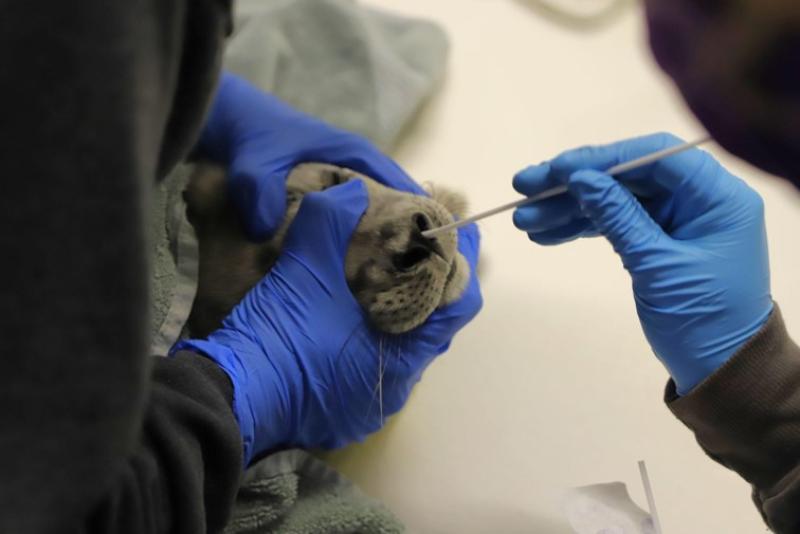
HPAI-Testing-Marine-Mammals-of-Maine.jpg

Marine Mammals of Maine take nasal swabs from a harbor seal for HPAI testing. Credit: Marine Mammals of Maine

NOAA Fisheries has declared the 2022 Maine Pinniped Unusual Mortality Event over. This determination is based on analysis of stranding data and recommendations from the Unusual Mortality Event Investigative Team and the Working Group on Marine Mammal Unusual Mortality Events. The UME occurred from June 20 to July 20, 2022. It involved a total of 181 seals including 143 harbor seals, 28 gray seals, and 10 seals of unidentified species.

Findings of the Investigation

image.png - Click image for larger version  Name:	image.png Views:	1 Size:	158.4 KB ID:	984428

Stranding Network partners prepare to necropsy a seal to look for indications of highly pathogenic avian influenza. Credit: Marine Mammals of Maine

The 2022 Maine Pinniped UME was due to spillover events of the highly pathogenic avian influenza H5N1 virus from infected wild birds to harbor and gray seals. An ongoing highly pathogenic avian influenza H5N1 global outbreak in domestic and wild birds and wild mammals began in 2021. Highly pathogenic avian influenza is a zoonotic disease with the potential to spread between animals and people. Highly pathogenic avian influenza H5N1 was detected in 58 percent of seals (19 out of 33) tested in Maine. Live stranded seals showed signs of respiratory and neurological disease including nasal congestion, coughing, unresponsiveness, and seizures.

Post-Unusual Mortality Event Monitoring

The UME was confined to Maine, and the last known positive seal case was detected on July 14, 2022. The Stranding Network conducted significant post-UME monitoring of seals for highly pathogenic avian influenza in the year following the event. They did not detect additional spillover events in seals, evidence of seal to seal transmission, or any positive seal cases even though highly pathogenic avian influenza still circulates in wild bird populations.

Scientists plan to continue post-UME monitoring of harbor and gray seals in Maine. Sampling will focus on swab collection (oral, nasal, ocular, and rectal) from live to moderately decomposed seals, and necropsy from limited cases of euthanized or fresh dead seals. Swabs will also be collected opportunistically from seal strandings in New Hampshire through North Carolina. Scientists will also collect samples from wild seals during capture-and-release health assessments or tagging work. Post-UME swab testing is being supported by Tufts University.

...
https://www.fisheries.noaa.gov/feat...genic avian,spread between animals and people.
 
Back
Top