• FluTrackers.com Inc. does not provide medical advice. Information on this web site is collected from various internet resources, and the FluTrackers board of directors makes no warranty to the safety, efficacy, correctness or completeness of the information posted on this site by any author or poster. The information collated here is for instructional and/or discussion purposes only and is NOT intended to diagnose or treat any disease, illness, or other medical condition. Every individual reader or poster should seek advice from their personal physician/healthcare practitioner before considering or using any interventions that are discussed on this website. By continuing to access this website you agree to consult your personal physican before using any interventions posted on this website, and you agree to hold harmless FluTrackers.com Inc., the board of directors, the members, and all authors and posters for any effects from use of any medication, supplement, vitamin or other substance, device, intervention, etc. mentioned in posts on this website, or other internet venues referenced in posts on this website.
  • We are not asking for any donations. Do not donate to any entity who says they are raising funds for us.

Undiagnosed Hemorrhagic Disease - China: (shandong), Request For Information

HenryN

Retired
UNDIAGNOSED HEMORRHAGIC DISEASE - CHINA: (SHANDONG), REQUEST FOR INFORMATION
****************************************************************************
A ProMED-mail post
<http://www.promedmail.org>
ProMED-mail is a program of the
International Society for Infectious Diseases
<http://www.isid.org>

Date: 27 Jul 2008
From: Stephen O. Cunnion
<scunnion@potomacinstitute.org>


I received the following email from Chuck Dolejs of the International
Association of Emergency Managers regarding a Sound of Hope web page
(<http://en.epochtimes.com/n2/china/strange-disease-kills-three-in-china-1742.html>)
updated [26 Jul 2008]. Has this outbreak been verified by authorities?

"China reported that approximately 20 days ago, a man suddenly died
from an unidentified disease in Wanjiakou Village, Xiaoguan Town,
Wendeng City, Shandong Province. His entire body turned dark purple,
and he bled from his mouth, nostrils, ears, and eyes just as he died.
Shortly after the man died, 2 other men who been in contact with him,
died showing the same symptoms. Villagers who had left the village to
work said "3 people died 10 days ago. 6 or 7 more are being treated in
the Wendeng Central Hospital. People have been to the area to
investigate, but they are unable to classify the disease." Most people
outside of the village do not know about the illness. Their families
do not want people who have left the village to return.

"Reporters from Sound of Hope Radio Network (SOH) interviewed local
residents and staff from a health clinic. What follows are
transcripts from the recorded interviews. A male villager verified
that the disease broke out in the northern section of Wanjiakou
Village, and spread rather quickly. The SOH reporter then phoned the
Department of Health and Prevention of Contagious Diseases in Wendeng
City and Yantai City, Shandong Province using numbers published on
the official web sites. However, he was unable to talk with anyone,
as the line was either filled with static or the call was routed to a
wrong number announcement." [The actual details of the interviews are
available at the URL link provided above - Mod.MPP]

--
Stephen O. Cunnion, MD, PhD, MPH
Medical Director, National Security Health Policy Center
The Potomac Institute for Policy Studies
901 N. Stuart Street, Suite 200
Arlington, VA 22203
<scunnion@potomacinstitute.org>

[ProMED-mail would like to thank Dr. Stephen Cunnion for sending on
this information. As a reminder, it was he who sent ProMED-mail the
1st report on an outbreak of "atypical pneumonia" in Guangdong, China,
on 10 Feb 2003 that we posted and was the 1st public notification of
the early outbreaks of what was later named Severe Acute Respiratory
Sydrome (SARS) (see ProMED-mail posting Pneumonia - China
(Guangdong): RFI 20030210.0357 for this report).

Using the database of the Global Infectious Disease and Epidemiology
Network (GIDEON <http://gideononline.com>) to see possible etiologies
for a hemorrhagic fever syndrome in China, the most likely diagnosis
would be Old World hantavirus infection (57 percent probability),
followed by _Streptococcus suis_ infection (40 percent), leptospirosis
(1.8 percent) and Crimean-Congo hemorrhagic fever (CCHF -- less than
one percent probability).

According to the GIDEON database, hantaviruses are endemic in 28 of
the 32 provinces, with most cases occurring in the eastern and
northeastern provinces (where Shandong is located). Hantaan virus is
endemic to Hubei, Heilongjiang, Jiangxi, Jilin and Shanxi. (Fang LQ,
Li CY, Yang H, Wu XM, Yang H, Chen HX, Li XW, Cao WC [Using geographic
information system to study the association between epidemic areas and
main animal hosts of hemorrhagic fever with renal syndrome in China.]
Zhonghua Liu Xing Bing Xue Za Zhi 2004 Nov ;25(11):929-33.

- 52.2 percent of infections in Hubei are caused by Hantaan virus,
and 31.5 percent by Seoul virus.
- Most infections in Shandong provin
ce are caused by Seoul virus. (Wang ZQ, Wang YL, Fu JH, Zhao L, Sun
CY, Zhang XQ, Zhang YX, Fan SZ, Wang ND [Molecular analysis of
hantavirus isolated from Shandong province]. Zhonghua Shi Yan He Lin
Chuang Bing Du Xue Za Zhi 2003 Jun ;17(2):121-3.)
- Seoul virus was identified in humans and rodents (_Rattus
norvegicus_ and _Mus musculus_) in Beijing during 2003 to 2005. (Zuo
SQ, Zhang PH, Jiang JF, Zhan L, Wu XM, Zhao WJ, Wang RM, Tang F, Dun
Z, Cao WC. Seoul virus in patients and rodents from Beijing, China. Am
J Trop Med Hyg 2008 May ;78(5):833-7.

A new Puumala virus subtype, most closely related to strains from
Japan and South Korea, has been isolated from bank voles in Northeast
China. (2007 publication) (Tang LH, Zhang QF, Xiu MH, Gu GW, Bo S,
Yang XD, Liang MF, Li DX [Identification of a new Puumala hantavirus
subtype in rodents from China] Bing Du Xue Bao 2007 Jul ;23(4):320-5.
The abstract does not give any information about human infection by it.

ProMED-mail has reported on hantavirus outbreaks in China earlier this
year in Inner Mongolia (see Hantavirus infection - Taiwan ex China
(Inner Mongolia) 20080119.0249), and in prior years (see references
below)

According to the GIDEON database, CCHF has been reported from the
southwestern desert region in Xinjiang province and is referred to as
Xinjiang fever. Hence it would be a significant geographic change
were this outbreak to be due to CCHF. There is also mention that 10
to 20 percent of sheep, goats and cattle in Sichuan are seropositive
-- so movement of livestock from the southwest to other provinces may
very well move the disease geographically.

One should not forget the earlier major outbreaks of _Streptococcus
suis_ in China in 2005. A recurrence of the problem is possible.

It is noteworthy that according to the question and answer part of
the referred media report, there is mention that the cases to date
have been in predominantly in men, suggesting that exposure may well
be occupational, which places both hantavirus infection and
_Streptococcus suis_ as leading possibilities for the etiologic agent
for this outbreak. The outbreak is occurring in a rural zone where
there is a high likelihood of exposure of males to rodents and to the
porcine population during usual occupational activities in an
agricultural zone.

ProMED-mail would greatly appreciate more information from
knowledgeable sources in the region on this as yet unsubstantiated
report of a cluster of hemorrhagic-like illnesses with fatalities in
Shandong Province.

For a map of China with geographic divisions see
<http://www.lib.utexas.edu/maps/middle_east_and_asia/china_pol01.jpg>.
Of note, Shanjong province is contiguously north of Jiangsu province,
where there was an outbreak of 'epidemic hemorrhagic fever' in 2007,
which while the etiologic agent was not mentioned, was felt to most
likely be due to an Old World hantavirus infection (see prior
ProMED-mail postings Epidemic hemorrhagic fever - China
(Jiangsu) 20070113.0179 and Epidemic hemorrhagic fever - China
(Jiangsu) (02) 20070116.0206).

The interactive HealthMap/ProMED map of China can be accessed at
<http://healthmap.org/promed?v=36.5,103.9,4>
This map provides links to other recent ProMED-mail postings on events
occurring in China and neighboring countries. - Mod.MPP]

[Seoul virus occurs worldwide and is unlikely to be associated with a
localized outbreak in China. Puumala virus is prevalent throughout
northern Europe and middle Asia and is usually responsible for only
mild forms of hemorragic fever with renal syndrome (HFRS). - Mod.CP]

[see also:
Hantavirus infection - Taiwan ex China (Inner Mongolia) 20080119.0249
2007
----
Streptococcus suis, human - China (Guangdong) 20070726.2411
Streptococcus suis - China (Hong Kong) 20070517.1573
Streptococcus suis - China (Hong Kong)(02) 20070527.1707
Epidemic hemorrhagic fever - China (Jiangsu) 20070113.0179
Epidemic hemorrhagic fever - China (Jiangsu) (02) 20070116.0206
2006
----
Streptococcus suis, porcine, human, 2005 - China (... 20060411.1082
2005
----
Hemorrhagic fever - China (Inner Mongolia) 20050701.1863
Streptococcus suis, human - China (Hong Kong) 20050728.2196
Streptococcus suis, porcine, human - China 20050730.2217
Streptococcus suis, porcine, human - China (20) 20051024.3099
Streptococcus suis, porcine, human - China (Sichuan) (02) 20050728.2194
Streptococcus suis, porcine, human - China (Sichuan) 20050727.2179
2000
----
Hantavirus infection - China (Chongqing) (02) 20001121.2020
Hantavirus infection - China (Chongqing): alert 20001117.2008
Hantavirus infection - China: background 20001118.2015
Hantavirus infection - China: background (02) 20001126.2056
Hantavirus infection - China: background (03) 20001206.2127
1999
----
Strep. suis, human infection - China (Hong Kong) 19991009.1810
1998
----
Hantavirus infection - China (Hong Kong) 19980412.0670
Hemorrhagic fever, epidemic warning - China 19980905.1782
1997
----
Hemorrhagic fever with renal syndrome - S.E. Asia 19970408.0743]
...............................mpp/ejp/jw
 
Re: Undiagnosed Hemorrhagic Disease - China: (shandong), Request For Information

location:

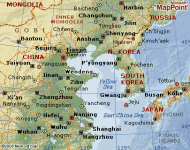
wendeng.gif

Interesting that it's beside the Yellow Sea - major migratory bird stopover.

.
 
Re: Undiagnosed Hemorrhagic Disease - China: (shandong), Request For Information

An unidentified disease has shown up in Wanjiakou Village, Xiaoguan Town, Wendeng City, Shandong Province. Shown here is the location of Wending City in Shandong Province.


In mid-July, sources in mainland China reported that approximately 20 days ago, a man suddenly died from an unidentified disease in Wanjiakou Village, Xiaoguan Town, Wendeng City, Shandong Province. His entire body turned dark purple, and he bled from his mouth, nostrils, ears, and eyes just as he died.

Shortly after the man died, two other men who been in contact with him, died showing the same symptoms. Villagers who had left the village to work said, “Three people died 10 days ago. Six or seven more are being treated in the Wendeng Central Hospital. People have been to the area to investigate, but they are unable to classify the disease.”

It is possible that the Chinese regime is not allowing news about the situation to be known. Most people outside of the village do not know about the illness. Their families do not want people who have left the village to return.

Reporters from Sound of Hope Radio Network (SOH) interviewed local
residents and staff from a health clinic. What follows are transcripts from the recorded interviews.

A male villager verified that the disease broke out in the northern section of Wanjiakou Village, and spread rather quickly.

SOH: Do you know that an unidentified disease has hit the village?

Villager: Yes, yes.

SOH: We heard that three people have died, is that correct?

Villager: Yes. We are afraid to return to our village.

SOH: Do you know if any others have died of the disease? Can the disease be controlled?

Villager: It spread rather quickly. It has affected only men so far. No women have suffered from it. No one in my family has the disease. My family lives in the south end of the village, and the disease has been found in the northern part of the village.

A reporter then called the Xiaoguan Town Hygiene Agency. A male physician denied that a contagious disease has been spreading. He said there was some influenza. When the reporter asked why several people had died, the physician became evasive.

Physician: That was appendicitis. It is not contagious, I mean this disease.

SOH: What was the final diagnosis for this disease?

Physical: It’s an aseptic infection. There is no contagious disease.

SOH: No disease?

Physician: The public is causing others to panic.

SOH: So, no one has died. Is that right?

Physical: There were people who died. You won’t understand even if I tell you. You need to know only one thing—there is no contagious disease.

SOH: How many people have died then? If it’s not contagious, why has more than one person died?

Physician: I’m not sure how many people have died. I am unable to answer your questions.

The SOH reporter then phoned the Department of Health and Prevention of Contagious Diseases in Wendeng City and Yantai City, Shandong Province using numbers published on the official web sites. However, he was unable to talk with anyone, as the line was either filled with static or the call was routed to a wrong number announcement.

Last Updated
Jul 26, 2008

Strange Disease Kills Three in China

By Wu Wei and Fu Ming
Sound of Hope

http://en.epochtimes.com/n2/china/strange-disease-kills-three-in-china-1742.html
 
Re: Undiagnosed Hemorrhagic Disease - China: (shandong), Request For Information

Commentary

Mystery Fatal Hemorrhagic Disease in Shandong China
Recombinomics Commentary 03:05
July 28, 2008

"China reported that approximately 20 days ago, a man suddenly died from an unidentified disease in Wanjiakou Village, Xiaoguan Town, Wendeng City, Shandong Province. His entire body turned dark purple, and he bled from his mouth, nostrils, ears, and eyes just as he died.

Shortly after the man died, 2 other men who been in contact with him, died showing the same symptoms. Villagers who had left the village to work said "3 people died 10 days ago. 6 or 7 more are being treated in the Wendeng Central Hospital. People have been to the area to investigate, but they are unable to classify the disease."

The above comments from ProMED describe a contagious hemorrhagic disease in China. There are some similarities with an outbreak that began in Sichuan province at this time in 2005. The symptoms were very similar and matched symptoms linked to the 1918 pandemic. The Sichuan outbreak had linkages to swine and was said to be linked to a common swine bacterium that had turned more virulent. However, the time and location of the earlier outbreak raised concerns of linkage to H5N1, which can cause the same symptoms.

Similarly, the current outbreak in Wendeng is on the west side of the Yellow Sea (see satellite map). North and South Korea are on the east side, where H5N1 has been suspected or confirmed.

More information on the current outbreak would be useful

.
 
Re: Undiagnosed Hemorrhagic Disease - China: (shandong), Request For Information

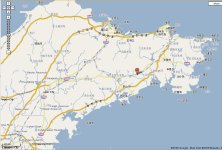
Approximate location of Wanjiakou N 37 02 00, E 121 44 3

Wanjiakou.jpg
 
Re: Undiagnosed Hemorrhagic Disease - China: (shandong), Request For Information

<TABLE class=lan18 cellSpacing=0 cellPadding=0 width="97%" align=center border=0><TBODY><TR><TD class=hei22 vAlign=bottom height=25>Olympic co-host city dismisses rumor of epidemic outbreak
</TD></TR><TR><TD bgColor=#ffffff height=4></TD></TR></TBODY></TABLE><TABLE cellSpacing=0 cellPadding=0 width="50%" align=center border=0><TBODY><TR><TD height=8></TD></TR></TBODY></TABLE><TABLE cellSpacing=0 cellPadding=0 width="97%" align=center border=0><TBODY><TR><TD width="48%">www.chinaview.cn
space.gif
2008-07-17 19:58:03
</TD><TD class=hui12 align=middle width="26%"> </TD><TD class=hui12 align=middle width="12%">
space.gif
space.gif
Print</TD></TR></TBODY></TABLE><TABLE cellSpacing=0 cellPadding=0 width="80%" border=0><TBODY><TR><TD height=20></TD></TR></TBODY></TABLE><TABLE class=lt14 cellSpacing=0 cellPadding=0 width="97%" align=center border=0><TBODY><TR><TD class=lt14>


Special report: 2008 Olympic Games

QINGDAO, Shandong Province, July 17 (Xinhua) -- Olympic co-host city Qingdao on Thursday shrugged off a rumor of an ongoing epidemic outbreak in the coastal resort, saying it was groundless.
An overseas website recently carried a story saying Qingdao, the sailing venue of the Beijing Olympics in eastern China's Shandong Province, was experiencing a mysterious epidemic which experts suspected as Epidemic Cerebrospinal Meningitis (ECM), but a local health official said the story was untrue.
The ECM, an acute infectious disease caused by meningococcus, had obvious seasonal variation and usually peaked in Winter and Spring, from November to April, the official said.
Its incidence usually began to decline in May and fell to the lowest level in the period from July to October, he said.
"An outbreak in July as claimed in the report is against the natural development rule of the disease," he said.
He said the city reported 9,278 cases of infectious diseases so far this year, a decline of 19.93 percent year on year, and among these cases, only two were ECM, with no such report since July.
The city reported three ECM cases in the same period of last year, he added.
Meanwhile, the city's 657 public health monitoring stations had found no dramatic increase of high fever cases as of July 16, he said.
There was no "scare" at all among local residents because of the so-called "sharp increases of patients and deaths" as claimed in the website story, the official said. He also said the city was transparent in epidemic information disclosure. He promised, however, the city would continue to regularly publicize epidemic information and protect people's rights to know.

</TD></TR></TBODY></TABLE>

http://news.xinhuanet.com/english/2008-07/17/content_8563811.htm
 
Re: Undiagnosed Hemorrhagic Disease - China: (shandong), Request For Information

Both the S. suis outbreak and the PRRS outbreak seem to be being accepted at face value even though they were unprecedented in their novelty for markedly increased virulence and samples were not made available for international confirmation. The same seems to be holding true for the continuing swine problem in Vietnam where 'blue ear' disease seems to be relatively easily diagnosed with a seeming lack of detailed international lab study. PRRS historically has been linked with other pathogens such as influenza but it is difficult to find if comprehensive testing is being done for this persistent problem....

http://www.pubmedcentral.nih.gov/articlerender.fcgi?artid=1434494

Streptococcal Toxic Shock Syndrome Caused by Streptococcus suis Serotype 2

Jiaqi Tang,#1* Changjun Wang,#1 Youjun Feng,#2,10 Weizhong Yang,#3 Huaidong Song,#4,9 Zhihai Chen,#5 Hongjie Yu,#3 Xiuzhen Pan,1 Xiaojun Zhou,6 Huaru Wang,1 Bo Wu,6 Haili Wang,1 Huamei Zhao,1 Ying Lin,7 Jianhua Yue,1 Zhenqiang Wu,7 Xiaowei He,7 Feng Gao,2 Abdul Hamid Khan,2,10 Jian Wang,8 Guo-Ping Zhao,9 Yu Wang,3* Xiaoning Wang,7* Zhu Chen,4,9 and George F Gao2*

1Department of Epidemiology, Research Institute for Medicine of Nanjing Command, Nanjing, China , 2Center for Molecular Immunology and State Key Laboratory of Microbial Resources, Institute of Microbiology, Chinese Academy of Sciences, Beijing, China , 3Chinese Center for Disease Control and Prevention (China CDC), Beijing, China , 4State Key Laboratory of Medical Genomics, Ruijin Hospital Affiliated to Medical School of Shanghai Jiao-Tong University, Shanghai, China , 5Beijing Ditan Hospital, Beijing, China , 6Department of Pathology, Jinling Hospital of Nanjing, Nanjing, China , 7School of Biosciences and Bioengineering, South China University of Technology, Guangzhou, China , 8Beijing Genomics Institute, Chinese Academy of Sciences, Beijing, China , 9Chinese National Human Genome Center, Shanghai, China , 10Graduate School, Chinese Academy of Sciences, Beijing, China

""To our knowledge, this is the first description of a large-scale STSS outbreak among humans caused by a non-GAS pathogen, S. suis 2. The molecular mechanisms in the pathogen and the host underlying the outbreaks should be addressed in future studies.""

""The work was supported by the Ministry of Science and Technology (MOST), China, and the National Natural Science Foundation of China.""


Emergence of Fatal PRRSV Variants: Unparalleled Outbreaks of Atypical PRRS in China and Molecular Dissection of the Unique Hallmark

Kegong Tian,1* Xiuling Yu,1 Tiezhu Zhao,1 Youjun Feng,2,3 Zhen Cao,1 Chuanbin Wang,1 Yan Hu, 1 Xizhao Chen,1 Dongmei Hu,1 Xinsheng Tian,2,3 Di Liu,2 Shuo Zhang,1 Xiaoyu Deng,1 Yinqiao Ding,1 Lu Yang,1 Yunxia Zhang, 1,4 Haixia Xiao, 2,3 Mingming Qiao,1,4 Bin Wang,1,4 Lili Hou,1,4 Xiaoying Wang,1 Xinyan Yang,1 Liping Kang,1 Ming Sun, 1 Ping Jin,1 Shujuan Wang,2,4 Yoshihiro Kitamura,2,5 Jinghua Yan,2 and George F. Gao2,5 *
1China Animal Disease Control Center, Beijing, China
2Center for Molecular Immunology, Institute of Microbiology, Chinese Academy of Sciences, Beijing, China
3Graduate University, Chinese Academy of Sciences, Beijing, China
4College of Veterinary Medicine, China Agricultural University, Beijing, China

""Here, we describe for the first time an unprecedented outbreak of highly pathogenic PRRS in China in 2006, which spread to more than 10 provinces (autonomous cities or regions) and infected over 2,000,000 pigs, resulting in about 400,000 fatal cases""

"All work on autopsy samples as well as the following immunohistochemistry experiments were conducted by the China Animal Disease Control Center (CADC) in a bio-safety level 3 (BSL-3) facility."
 
Re: Undiagnosed Hemorrhagic Disease - China: (shandong), Request For Information

Health ministry scotches rumor of meningitis in Qingdao

Xinhua
Updated: 2008-07-18 21:28


BEIJING -- Foreign media reports about an outbreak of Epidemic Cerebrospinal Meningitis (ECM) in Olympic co-host city Qingdao were groundless, a health official said here Friday.
Qingdao, a coastal resort in eastern Shandong Province and the Olympic sailing venue, had reported no ECM cases since the beginning of July, Liang Dongming, deputy director of the emergency response office under the Health Ministry, told a press conference on Friday.
<TABLE cellSpacing=0 cellPadding=1 width=244 align=left bgColor=#c1cddb border=0><TBODY><TR><TD><TABLE cellSpacing=0 cellPadding=5 width=242 align=left bgColor=#fffde8 border=0><TBODY><TR><TD colSpan=3>Related readings:
00e04c44261a09eadc2719.gif
Olympic co-host city dismisses rumor of epidemic
00e04c44261a09eadc271a.gif
Qingdao Olympic regatta venue cleared of green algae

</TD></TR></TBODY></TABLE></TD></TR></TBODY></TABLE>According to the ministry's investigation, the city's 657 public health monitoring stations found no ECM cases in July, he said. "In fact, between January to June, Qingdao saw a decline in ECM case numbers compared with the same period last year," he said.
The city has reported two ECM cases this year, while three were reported during the same period last year.
Some overseas websites carried stories saying Qingdao was experiencing a mysterious epidemic which experts suspected was ECM.
ECM, an acute infectious disease caused by meningococcus, has obvious seasonal variation and usually peaks November to April, an official with the Qingdao health bureau has said.
Its incidence usually begins to decline in May and falls to the lowest level in the period from July to October, he said.
"An outbreak in July is against the natural development rule of the disease," he said.
Liang said that to ensure a healthy Olympics, all the co-host cities including Hong Kong have beefed up epidemic monitoring work. So far no unusual infectious disease outbreaks have been reported.

http://www.chinadaily.com.cn/olympics/2008-07/18/content_6859979.htm

<!--/enpcontent-->
 
Re: Undiagnosed Hemorrhagic Disease - China: (shandong), Request For Information

Translation from Chinese of same interview

http://translate.google.com/transla...tml/8/609.shtml&sl=zh-CN&tl=en&hl=en&ie=UTF-8

Shandong Wendeng City, a village of 10,000 mouth disease <center><table style="border-collapse: collapse;" bgcolor="#edf0f5" border="0" bordercolor="#111111" cellpadding="0" cellspacing="0" width="100%"><tbody><tr><form name="theForm"></form><td style="line-height: 1.4; font-size: 12px; color: rgb(0, 0, 0); font-family: 宋体;" width="620">
文章出处: 发布时间:2008-07-23 作者:​
The article Source: Published :2008-07-23 Author: </td></tr></tbody></table></center><table style="border-collapse: collapse;" id="AutoNumber2" border="0" bordercolor="#111111" cellspacing="1" height="108" width="100%"><tbody><tr><td style="line-height: 18px; font-size: 12px;" height="105" width="15">
</td><td style="font-size: 15px; line-height: 18px;" height="105" width="590"><table style="border-collapse: collapse;" id="AutoNumber1" border="0" bordercolor="#000000" cellspacing="1" height="100" width="100%"><tbody><tr><td style="font-size: 15px; line-height: 18px;" height="7" width="100%">
</td></tr><tr><td style="font-size: 15px; line-height: 18px;" height="18" width="100%">
【宇明网】​
[-] That the net </td></tr><tr><td style="font-size: 15px; line-height: 200%; text-indent: 22pt;" height="18" width="100%">
7月中旬大陆人士传来消息说:山东省文登市小观镇万家口村20天前,村里1人突发一种怪病,浑身紫红色,七孔流血死亡。​
In mid-July came news that the mainland: Xingwen Shandong board the small city of 10,000 population town of the village 20 days ago, the village one of a sudden disease, every purple, seven holes bloody death.
紧接着和死者接触过的2人也同样症状死亡。​
Immediately after the deceased and two were in contact with the same symptoms died.
据本村在外上班的人讲:?10天前已3人死亡,6、7个在文登中心医院,说上级已经来人察看,不知是什么病。?现在可能消息已被封锁,在外边的也不知村里现在的情况,家人也不让他们回去。​
According to village outside of work: "10 days ago, three people were killed and six or seven in Tangerang Hospital Center, said that their superiors have来人see, I do not know what disease." News may now have been blocked in the outside The village do not know the present situation, nor let them go back to their families.
人们在议论是不是瘟疫。​
People in the debate is not the plague.
就此记者采访了当地居民及卫生防疫站。​
This reporter had an interview with local residents and the sanitation and epidemic prevention station.
一位男性村民证实了此事,说病传染的很快,在外面打工的人都不敢回家。​
A male villagers confirmed the matter, said the disease spread quickly, the outside workers who are afraid to go home.
此病发生在这个村的北部。​
This disease occurred in the northern village.
记者:现在村里不是发生一种怪病吗?​
Reporter: Now the village is not an abnormal occurrence? ?
请问你知不知道这件事?​
Will Do you know this matter ?
男:对,对。​
M: right, right.
记者:现在不是有人死亡了吗?​
Reporter: Now that some people are dead? ?
好像已经死了三个人了是吧?​
Seems to have killed three people the right ?
男:对。​
M: Yes.
现在都不敢回去了。​
Now are afraid to go back to the.
记者:现在都不敢回去了?​
Reporter: now are afraid to go back to the ?
是不是死的人更多了?​
Is not the death of more ?
控制的了吗,这个病?​
It has control of this illness ?
男:传的挺快的。​
M: The Biography Ting fast.
传的一般都是男的,女的没有得这个病的。​
Chuan is the general male, not a woman this disease.
没事,俺家没有。​
OK, Anjia not.
俺这边属于南边,传的一般是北边传的。​
I belong to the south side, the general Chuan Chuan is the north.
随后记者又采访了文登市小观镇卫生院。​
Subsequently reporter interviewed a small city of Tangerang town hospital.
一位男性医生否认有传染病的发生,说只是流行性感染。​
A male doctor denied the occurrence of infectious diseases, said only pandemic infection.
当记者问到如果不是传染病为什么死了好几个人时,他不予正面回答。​
When a reporter asked why infectious diseases, if not several people dead, he is not a positive answer.
医生:那是盲肠炎,没有传染性,这个病。​
Doctor: It was appendicitis, not infectious, the disease.
记者:最后没给诊断是什么病啊?​
Reporter: No to the final diagnosis of what is ah ?
医生:无菌性感染呐,没有这个病啊。​
Doctor: aseptic infection Na, ah do not have this disease.
记者:没有这个病啊?​
Reporter: there is no such disease ah ?
医生:是老百姓自己造成的恐慌。​
Doctor: the people themselves is causing panic.
记者:就是也没死人是吗?​
Reporter: that it is no dead ?
医生:人是死了。​
Doctor: people are dead.
说你也不懂啊,你就知道一条就行,它不是传染病。​
That you do not know, ah, you know that on a trip, it is not infectious diseases.
记者:死了几个人啊?​
Reporter: Several people died ah ?
如果不是传染病的话,不是死了好几个人吗?​
If it is not infectious diseases, not several people dead? ?
医生:死了几个人我也不清楚,你问这么些,我甭告诉你。​
Doctor: Several people died I do not know, you ask Zheme Xie, I Beng tell you.
记者又拨打了官方网站上公布的文登市及烟台市卫生防疫部门的电话,但得到的不是噪音干扰,就是被告知电话号码错误。​
Call reporter posted on the official website of Wendeng City and Yantai City sanitation and epidemic prevention departments of the telephone, but the noise is not interference, was informed that the wrong phone number.
</td></tr><tr><td style="font-size: 15px; color: rgb(255, 255, 255); line-height: 18px;" height="45" width="100%">
</td></tr></tbody></table></td></tr></tbody></table>
 
Re: Undiagnosed Hemorrhagic Disease - China: (shandong), Request For Information

so the call right now is that this hemorrhagic mystery disease is ecm?
 
Re: Undiagnosed Hemorrhagic Disease - China: (shandong), Request For Information

so the call right now is that this hemorrhagic mystery disease is ecm?
#13:
"BEIJING -- Foreign media reports about an outbreak of Epidemic Cerebrospinal Meningitis (ECM) in Olympic co-host city Qingdao were groundless, a health official said here Friday ..."

#12:
"... large scale STSS outbreak among humans, Atypical PRRS in pigs ..."
 
Re: Undiagnosed Hemorrhagic Disease - China: (shandong), Request For Information

Frankly, I don't know why nobody from the health sector stressed MORE the WHO public relations for an deny, or aknowledgement of this fantomatic hemorrhagic illness in China.
___
#1:
"Promed
UNDIAGNOSED HEMORRHAGIC DISEASE - CHINA: (SHANDONG), REQUEST FOR INFORMATION"
 
Re: Undiagnosed Hemorrhagic Disease - China: (shandong), Request For Information

There is a small possibility that this is a <i>Streptococcus suis</i> pathogen case report.

Shandong and Sichuan (2005/1998) have some elements in common, including pig farming and feed production operations.

"Streptococcus suis is a zoonotic microbe that can exist in pigs without causing illness but can occasionally cause disease. Serotype 2 is a dominant pathogenic serotype (1). Types 2 and 5 have been isolated from purulent lesions in the lungs and other extramammary sites in cattle, sheep, and goats (2). Infection may cause death in weaning piglets as well as growing pigs (3). The bacterium is isolated from an increasingly wide range of mammalian species, including horses, dogs, cats, and birds (4).

Sporadic cases of S. suis infection may occur in humans, the most common clinical manifestations included purulent meningitis, septicemia, arthritis, and endocarditis; some infections lead to sequelae such as deafness and ataxia (5?7). To date, ≈200 human cases have been reported in areas of intensive pig rearing (the Netherlands, Denmark) or areas where large quantities of pork are eaten (Hong Kong, Thailand, Vietnam) (8). Most reported cases of human S. suis infections were associated with contact with pigs or pork products (5). Human S. suis infections do not normally cause major outbreaks.

On July 11, 2005, a local hospital in Ziyang Prefecture of Sichuan Province reported a suspected case of hemorrhagic fever with renal syndrome. The patient was a 46-year-old male farmer with acute onset of high fever, lethargy, vomiting, and generalized purpura. The day before illness onset, the farmer slaughtered a pig that had died of an unknown cause. The farmer rapidly lapsed into coma. On further investigation, we identified 4 other patients with similar circumstances in the same hospital and more patients from other hospitals in the area. S. suis was isolated from blood cultures in some of these cases. We began an investigation of this outbreak to describe its epidemiologic, clinical, and microbiologic characteristics."

See patient photo: http://www.cdc.gov/ncidod/EID/vol12no06/images/05-1194_4t.jpg

Quoted material from the sister publication to the one Kent cited above,
Human Streptococcus suis Outbreak, Sichuan, China.
http://www.cdc.gov/ncidod/EID/vol12no06/05-1194.htm

Article above is cited in the correction to Kent's article:
http://www.pubmedcentral.nih.gov/articlerender.fcgi?artid=1564294

See also:

Invasive Disease and Toxic Shock due to Zoonotic Streptococcus suis: An Emerging Infection in the East? Shiranee Sriskandan* and Josh D Slater.
PLoS Med. 2006 May; 3(5): e187.

Prevalence of Streptococcus suis Genotypes in Wild Boars of Northwestern Germany. Appl Environ Microbiol. 2007 February; 73(3): 711?717.
http://www.pubmedcentral.nih.gov/articlerender.fcgi?artid=1800741&rendertype=abstract

Epidemiology and reported symptoms are consistent with *possible* cases of Strep suis in humans, spread by poor hospital worker hygiene OR contagious outbreak in swine spread to local pork farm operations workers. Note that the 2005 Sichuan case reports mention that multiple patients in the same hospital were discovered to have this condition (Strep suis Type 2, possibly toxic shock-like syndrome, TSLS).

However, I also stand firm on previous comments that certain news sources deliberately manipulate casual information reports out of China for political purposes. The timing of these reports within weeks of the start of the Olympics is not coincidental. The Chinese government did NOT cover up it's medical reports of the Sichuan Strep suis human cases in 2005.

The Chinese government monitors this website. Let us see how they respond to this thread.
 
Re: Undiagnosed Hemorrhagic Disease - China: (shandong), Request For Information

Thanks Oracle, I'm interested in the continuing elucidation of the STSS problem. The problem with lack of trust and transparency is certainly not limited to China. The US has multiple transparency problems. My point is more that the attribution of significant biological infectious events is often not successful if it is only done by one country. The point you make with people who would want to discredit the Chinese govt is one example. Cold war ideologies hindered many of these types of investigations. The WHO IHR was established to help deal with these. When China wouldn't let WHO or MSF or Institue Pasteur or US CDC help with the investigations of significant pathogens while an ongoing H5N1 problem was brewing doesn't lead to trust and confidence in these diagnoses.

When a paper comes out on PRRS causing a huge problem in China and Vietnam and doesn't address influenza testing when influenza is known to be a significant swine problem on its own (with there being documented H5N1 positive cases in China) as well as a complicating factor with PRRS this also does not instill confidence. But China is certainly not alone in this lack of comprehensive testing.

I wouldn't want to attribute any mystery disease to H5N1 without adequate lab analysis. But I think only a higher level of international cooperation will give us a better picture of what is going on as well as how to deal with it....
 
Re: Undiagnosed Hemorrhagic Disease - China: (shandong), Request For Information

Kent:

Read this:
http://www.pubmedcentral.nih.gov/articlerender.fcgi?artid=1929146&rendertype=abstract

Evolution of the core and pan-genome of Streptococcus: positive selection, recombination, and genome composition. Genome Biol. 2007; 8(5): R71.

Noted: August 11, 2005 People's Daily, On-line edition. Short article on outbreak, noting case number.

http://english.peopledaily.com.cn/200508/11/eng20050811_201687.html

"The epidemic broke out in late June, first in Ziyang and Neijiang, and later spread to 10 cities including Jianyang and Chengdu, capital city of Sichuan. By August 2, 205 people in the province had contracted the disease, and 37 had died of it."

Seasonal timing: farrowing in mid-to-late summer heat has been correlated with poor pig condition and infectious disease susceptibility in sows and piglets.
 
Back
Top