

Gert van der Hoek
In Memoriam - Editor, Senior Moderator
4 January 2018
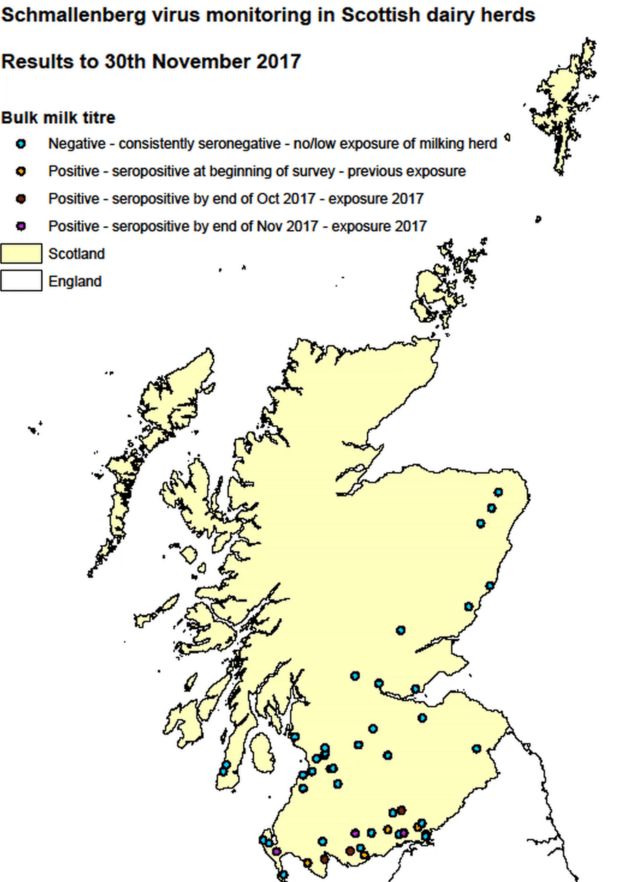
Vets have found signs that a disease which can cause stillbirths or birth defects in livestock spread across southern Scotland in autumn last year.
Schmallenberg virus (SBV) was confirmed in lambs in two flocks near the border with England last March.
Now results revealed by SAC Consulting veterinary services suggest there was "active transmission" later in 2017.
Farmers concerned about the risk of SBV have been advised to contact a vet in the first instance.
The virus was first detected in the UK in southern England in January 2012.
It is spread by midges and can cause brain and limb deformities in lambs and calves, but does not affect humans.
Cases in southern Scotland last year prompted monitoring of milk samples from 50 dairy herds across the country throughout the autumn for initial signs of infection.
READ MORE
Vets have found signs that a disease which can cause stillbirths or birth defects in livestock spread across southern Scotland in autumn last year.
Schmallenberg virus (SBV) was confirmed in lambs in two flocks near the border with England last March.
Now results revealed by SAC Consulting veterinary services suggest there was "active transmission" later in 2017.
Farmers concerned about the risk of SBV have been advised to contact a vet in the first instance.
The virus was first detected in the UK in southern England in January 2012.
It is spread by midges and can cause brain and limb deformities in lambs and calves, but does not affect humans.
Cases in southern Scotland last year prompted monitoring of milk samples from 50 dairy herds across the country throughout the autumn for initial signs of infection.
READ MORE