
• FluTrackers.com Inc. does not provide medical advice. Information on this web site is collected from various internet resources, and the FluTrackers board of directors makes no warranty to the safety, efficacy, correctness or completeness of the information posted on this site by any author or poster. The information collated here is for instructional and/or discussion purposes only and is NOT intended to diagnose or treat any disease, illness, or other medical condition. Every individual reader or poster should seek advice from their personal physician/healthcare practitioner before considering or using any interventions that are discussed on this website. By continuing to access this website you agree to consult your personal physican before using any interventions posted on this website, and you agree to hold harmless FluTrackers.com Inc., the board of directors, the members, and all authors and posters for any effects from use of any medication, supplement, vitamin or other substance, device, intervention, etc. mentioned in posts on this website, or other internet venues referenced in posts on this website.
  • We are not asking for any donations. Do not donate to any entity who says they are raising funds for us.

UK - BMJ study:increased risk of narcolepsy after vaccination with ASO3 adjuvanted pandemic A/H1N1 2009 vaccine indicates a causal association & HPA p

sharon sanders

Editor-in-Chief & President
Risk of narcolepsy in children and young people receiving AS03 adjuvanted pandemic A/H1N1 2009 influenza vaccine: retrospective analysis

BMJ 2013; 346 doi: http://dx.doi.org/10.1136/bmj.f794 (Published 26 February 2013)
Cite this as: BMJ 2013;346:f794

Abstract
Objective To evaluate the risk of narcolepsy in children and adolescents in England targeted for vaccination with ASO3 adjuvanted pandemic A/H1N1 2009 vaccine (Pandemrix) from October 2009.

Design Retrospective analysis. Clinical information and results of sleep tests were extracted from hospital notes between August 2011 and February 2012 and reviewed by an expert panel to confirm the diagnosis. Vaccination and clinical histories were obtained from general practitioners.

Setting Sleep centres and paediatric neurology centres in England.

Participants Children and young people aged 4-18 with onset of narcolepsy from January 2008.

Main outcome measures The odds of vaccination in those with narcolepsy compared with the age matched English population after adjustment for clinical conditions that were indications for vaccination. The incidence of narcolepsy within six months of vaccination compared with the incidence outside this period measured with the self controlled cases series method.

Results Case notes for 245 children and young people were reviewed; 75 had narcolepsy (56 with cataplexy) and onset after 1 January 2008. Eleven had been vaccinated before onset; seven within six months. In those with a diagnosis by July 2011 the odds ratio was 14.4 (95% confidence interval 4.3 to 48.5) for vaccination at any time before onset and 16.2 (3.1 to 84.5) for vaccination within six months before onset. The relative incidence from the self controlled cases series analysis in those with a diagnosis by July 2011 with onset from October 2008 to December 2010 was 9.9 (2.1 to 47.9). The attributable risk was estimated as between 1 in 57 500 and 1 in 52 000 doses.

Conclusion: The increased risk of narcolepsy after vaccination with ASO3 adjuvanted pandemic A/H1N1 2009 vaccine indicates a causal association, consistent with findings from Finland. Because of variable delay in diagnosis, however, the risk might be overestimated by more rapid referral of vaccinated children.

http://www.bmj.com/content/346/bmj.f794
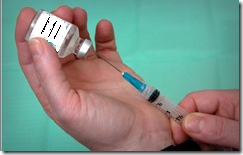
 
Re: UK - BMJ study:increased risk of narcolepsy after vaccination with ASO3 adjuvanted pandemic A/H1N1 2009 vaccine indicates a causal association

Re: UK - BMJ study:increased risk of narcolepsy after vaccination with ASO3 adjuvanted pandemic A/H1N1 2009 vaccine indicates a causal association

hat tip Jason Gale


Glaxo’s Swine-Flu Vaccine Linked to Narcolepsy in U.K. Children
2013-02-26 23:30:00.3 GMT


By Makiko Kitamura
Feb. 27 (Bloomberg) -- GlaxoSmithKline Plc’s Pandemrix
swine-flu vaccine was associated with an increased risk of
narcolepsy in U.K. children for the first time in a study that
supports similar findings in Finland and Sweden.
Among 75 children between the ages of 4 and 18 diagnosed
with narcolepsy, 11 had been vaccinated with Pandemrix before
symptoms began, seven of them within six months, scientists at
the U.K. Health Protection Agency found. The study was published
today in the British Medical Journal.

more...


http://www.bloomberg.com/news/2013-...lu-shot-linked-to-narcolepsy-in-u-k-kids.html
 
Re: UK - BMJ study:increased risk of narcolepsy after vaccination with ASO3 adjuvanted pandemic A/H1N1 2009 vaccine indicates a causal association

Re: UK - BMJ study:increased risk of narcolepsy after vaccination with ASO3 adjuvanted pandemic A/H1N1 2009 vaccine indicates a causal association

HPA press release in response to this study:

Pandemic flu vaccination linked to narcolepsy in UK children
27 February 2013

Health Protection Agency (HPA) scientists have found evidence of an association between Pandemrix flu vaccination and narcolepsy in children in England, according to the findings of a study published in the British Medical Journal. These findings are consistent with previous studies from Finland and Sweden which identified a similar association.


In collaboration with researchers from Papworth and Addenbrooke?s hospitals in Cambridge, the study looked at 75 children aged between four and 18 who were diagnosed with narcolepsy from January 2008 and who attended sleep centres across England. Eleven of these children had been vaccinated with Pandemrix before their symptoms began, seven of these within six months. This suggests a risk of narcolepsy following vaccination with Pandemrix of around one in every 55,000 doses of the vaccine.

The Pandemrix vaccine was recommended for use in children at risk of serious complications from influenza during the pandemic flu outbreak in 2009/10. It was also used occasionally in children during the 2010/11 flu season. Since July 2011 the use of Pandemrix in people under the age of 20 across Europe has been restricted.

Although prior to this study, there was no evidence to suggest an association in the UK, on the basis of the findings from Finland the HPA launched an in depth study in February 2011 with narcolepsy experts across England. This investigated whether there was evidence of an association between narcolepsy and Pandemrix as used in the UK.

Lead author Professor Liz Miller, a consultant epidemiologist with the HPA, said: "These findings suggest there is an increased risk in children of narcolepsy after Pandemrix vaccination and this is consistent with findings from studies in other European countries. However, this risk may be overestimated by more rapid referral of vaccinated cases. Long term follow up of people exposed to Pandemrix is needed before we can fully establish the extent of the association.

?Our findings have implications for the future licensing and use of adjuvanted pandemic vaccines. Further studies to assess the possible risk associated with other vaccines used in the pandemic, including those with and without adjuvants, are also needed to inform the use of such vaccines in the event of a future pandemic.?

Study co-author Dr John Shneerson, consultant physician from the Respiratory Support and Sleep Centre at Papworth Hospital in Cambridge, said: ?Narcolepsy is thought to be due to a loss of function of a small group of cells in one of the sleep centres in the brain, as a result of an abnormal reaction of the body?s immune system. Pandemrix may have triggered an immune reaction against the sleep centre cells in those children who were genetically predisposed to develop narcolepsy. This study has been important in helping to shed light on the mechanism of how narcolepsy can develop.?

Narcolepsy is a chronic neurological disorder caused by the brain's inability to control sleep, particularly REM (dream) sleep. It leads to excessive daytime sleepiness usually accompanied by sudden episodes of muscle weakness triggered by strong emotions such as laughter ? this is known as cataplexy. Narcolepsy has a genetic component but this has to be triggered by other factors in order for the condition to appear. 20,000 people in the UK are through to have narcolepsy - drug treatment and lifestyle measures are usually effective in relieving the symptoms.

Ends

Notes to editors

Miller et al. Risk of narcolepsy in children and young people receiving an AS03 adjuvanted pandemic AH1N1 (2009) influenza vaccine: retrospective analysis. (2013). British Medical Journal. http://www.bmj.com/cgi/doi/10.1136/bmj.f794
The Health Protection Agency is an independent UK organisation that was set up by the government in 2003 to protect the public from threats to their health from infectious diseases and environmental hazards. In April 2013 the Health Protection Agency will become part of a new organisation called Public Health England, an executive agency of the Department of Health. To find out more, visit our website: www.hpa.org.uk or follow us on Twitter @HPAuk.
For more information please contact the national HPA press office at Colindale on 0208 327 7901 or email colindale-pressoffice@hpa.org.uk. Out of hours the duty press officer can be contacted on 0208 200 4400.
Last reviewed: 26 February 2013


http://www.hpa.org.uk/webw/HPAweb&HPAwebStandard/HPAweb_C/1317138232381
 
Re: UK - BMJ study:increased risk of narcolepsy after vaccination with ASO3 adjuvanted pandemic A/H1N1 2009 vaccine indicates a causal association & HPA press release

HPA: Pandemrix Vaccine Linked To Childhood Narcolepsy In England


image_thumb%25255B1%25255D.png


# 6971

Pandemrix was the adjuvanted pandemic H1N1 flu shot developed by GlaxoSmithKline (GSK) and distributed to more than 30 countries beginning in the fall of 2009. This vaccine included a squalene-based component called AS03, used as a adjuvant.

Adjuvants are additives that are used to increase the immune response to a vaccine. Their use can allow the `stretching? of the vaccine supply, as shots can contain a smaller amount of antigens.

While they have been used in Europe and in Canada, adjuvanted flu vaccines have not been licensed for use in the United States.
Roughly a year after the vaccine was deployed, we began to see reports of an unusual rise in the number of children in Finland (a country where Pandemrix was used) diagnosed with a rare neurological disorder called narcolepsy.

For early coverage of this story, you may wish to revisit Finland Suspends Use of Pandemrix Vaccine andEMA To Review Pandemrix Vaccine, both of which I wrote in August of 2010.

Despite some conflicting and incomplete data the European Medicines Agency issued a statement in July of 2011 recommending:


In persons under 20 years of age Pandemrix to be used only in the absence of seasonal trivalent influenza vaccines, following link to very rare cases of narcolepsy in young people.

Finland also convened a Narcolepsy Task Force (see Finland: Task Force Report On Pandemrix-Narcolepsy Link) that confirmed an association ? as yet unexplained ? between receipt of the vaccine and an increase in narcolepsy in children between the ages of 4 and 19.

In September of 2012, the ECDC released a 164 page technical report called Narcolepsy In Association With Pandemic Influenza Vaccination in which the summaryfound:

The case?control study confirms an association between vaccination with Pandemrix? and an increased risk of narcolepsy in children and adolescents (5 to 19 years of age) in Sweden and Finland that originally reported on this issue (signalling countries). No such association was found in adults in these two countries.

Fast forward to yesterday, and we have a press release from the HPA on a study ? just published in the BMJ - that has also found a link between the Pandemrix vaccine and childhood narcolepsy in the UK.

First a link to the study, then some excerpts from the HPA release.


Risk of narcolepsy in children and young people receiving AS03 adjuvanted pandemic A/H1N1 2009 influenza vaccine: retrospective analysis

<cite><abbr>BMJ </abbr>2013; 346 doi: http://dx.doi.org/10.1136/bmj.f794 (Published 26 February 2013)</cite>
Cite this as: <abbr>BMJ</abbr> 2013;346:f794

Conclusion The increased risk of narcolepsy after vaccination with ASO3 adjuvanted pandemic A/H1N1 2009 vaccine indicates a causal association, consistent with findings from Finland. Because of variable delay in diagnosis, however, the risk might be overestimated by more rapid referral of vaccinated children.
(Continue . . . )
While unproven, the authors raise the possibility that the adjuvanted vaccine ? rather than directly causing narcolepsy ? might have accelerated the process in children who would eventually have gone on to develop the disorder.

A significant dip in the `background rate? of narcolepsy over the next few years in countries that saw a spike after 2009 ASO3 vaccination would help give this theory more weight.
A paucity of safety trials on children, and the public?s memories of the 1976 Swine Flu vaccine debacle, led the HHS to decide not to allow adjuvants in the pandemic flu vaccines deployed in the United States, despite urging by the global community.


The HPA has put together the following summary.

Pandemic flu vaccination linked to narcolepsy in UK children


27 February 2013

Health Protection Agency (HPA) scientists have found evidence of an association between Pandemrix flu vaccination and narcolepsy in children in England, according to the findings of a study published in the British Medical Journal. These findings are consistent with previous studies from Finland and Sweden which identified a similar association.

In collaboration with researchers from Papworth and Addenbrooke?s hospitals in Cambridge, the study looked at 75 children aged between four and 18 who were diagnosed with narcolepsy from January 2008 and who attended sleep centres across England. Eleven of these children had been vaccinated with Pandemrix before their symptoms began, seven of these within six months. This suggests a risk of narcolepsy following vaccination with Pandemrix of around one in every 55,000 doses of the vaccine.
The Pandemrix vaccine was recommended for use in children at risk of serious complications from influenza during the pandemic flu outbreak in 2009/10. It was also used occasionally in children during the 2010/11 flu season. Since July 2011 the use of Pandemrix in people under the age of 20 across Europe has been restricted.

Although prior to this study, there was no evidence to suggest an association in the UK, on the basis of the findings from Finland the HPA launched an in depth study in February 2011 with narcolepsy experts across England. This investigated whether there was evidence of an association between narcolepsy and Pandemrix as used in the UK.

Lead author Professor Liz Miller, a consultant epidemiologist with the HPA, said: "These findings suggest there is an increased risk in children of narcolepsy after Pandemrix vaccination and this is consistent with findings from studies in other European countries. However, this risk may be overestimated by more rapid referral of vaccinated cases. Long term follow up of people exposed to Pandemrix is needed before we can fully establish the extent of the association.

?Our findings have implications for the future licensing and use of adjuvanted pandemic vaccines. Further studies to assess the possible risk associated with other vaccines used in the pandemic, including those with and without adjuvants, are also needed to inform the use of such vaccines in the event of a future pandemic.?

Study co-author Dr John Shneerson, consultant physician from the Respiratory Support and Sleep Centre at Papworth Hospital in Cambridge, said: ?Narcolepsy is thought to be due to a loss of function of a small group of cells in one of the sleep centres in the brain, as a result of an abnormal reaction of the body?s immune system. Pandemrix may have triggered an immune reaction against the sleep centre cells in those children who were genetically predisposed to develop narcolepsy. This study has been important in helping to shed light on the mechanism of how narcolepsy can develop.?

Narcolepsy is a chronic neurological disorder caused by the brain's inability to control sleep, particularly REM (dream) sleep. It leads to excessive daytime sleepiness usually accompanied by sudden episodes of muscle weakness triggered by strong emotions such as laughter ? this is known as cataplexy. Narcolepsy has a genetic component but this has to be triggered by other factors in order for the condition to appear. 20,000 people in the UK are through to have narcolepsy - drug treatment and lifestyle measures are usually effective in relieving the symptoms.
Ends
The exact mechanism behind this Pandemrix-Narcolepsy link remains a medical mystery. Our understanding of this neurological disorder is very limited, as well.

The absolute risk of a child developing narcolepsy from the Pandemrix flu shot appears appears to be about 1 in 55,000. The authors warn that:


`Our findings have implications for the future licensing and use of adjuvanted pandemic vaccines?.
While a handful of countries had reported increases in post-vaccination narcolepsy, the link between the AS03 adjuvanted vaccine and childhood narcolepsy in the UK has not, until now, been quantified.

This study found the increased risk was similar to that previously reported from Finland.

Posted by Michael Coston at <a class="timestamp-link" href="http://afludiary.blogspot.com/2013/02/hpa-pandemrix-vaccine-linked-to.html" rel="bookmark" title="permanent link"><abbr class="published" title="2013-02-27T08:10:00-05:00">8:10 AM</abbr>
 
Re: UK - BMJ study:increased risk of narcolepsy after vaccination with ASO3 adjuvanted pandemic A/H1N1 2009 vaccine indicates a causal association & HPA press release

Comment: in view of these findings, I would hope that additional epidemiological work is carried out to rule out any increase in other known autoimmune diseases in pandemrix vaccinated children such as diabetes, thyroiditis, and jeuvenile arthritis. These autoimmune diseases can have a slow onset where symptoms do not manifest severely enough to be detected for some months or years, but if a signal exists, it should be noticeable by now.
 
Back
Top Bottom