

sharon sanders
Editor-in-Chief & President
Saturday, April 16, 2016
UCLA: Unraveling The Genetic Evolution Of Zika
[TABLE="class: tr-caption-container, align: center, cellpadding: 0, cellspacing: 0"]
[TR]
[TD] [/TD]
[/TD]
[/TR]
[TR]
[TD="class: tr-caption"]Zika Time Line - Credit WHO[/TD]
[/TR]
[/TABLE]
# 11,277
One of the big mysteries surrounding the Zika virus is why, after causing almost no concern for decades in Africa and Asia, it has suddenly morphed into a major public health crisis.
While the answer is unknown, there appear to be three major theories:
But # 3 appears to be in the lead right now, as Dr. Peter Hotez - dean of the National School of Tropical Medicine at Baylor College of Medicine - wrote in the New York Times a week ago:
In early December of 2015, in Paper: Zika Adaptations To Humans Helped Spark Global Spread, we looked at a study - yet to be peer reviewed - by researchers at the University of Sao Paulo and the Pasteur Institute of Dakar (Senegal) who wrote they had uncovered genetic changes in the Zika virus that occurred after the virus reached the South Pacific in 2007, that may make it better adapted to human physiology.
http://afludiary.blogspot.com/2016/0...lution-of.html
hat tip Michael Coston
UCLA: Unraveling The Genetic Evolution Of Zika
[TABLE="class: tr-caption-container, align: center, cellpadding: 0, cellspacing: 0"]
[TR]
[TD]
 [/TD]
[/TD][/TR]
[TR]
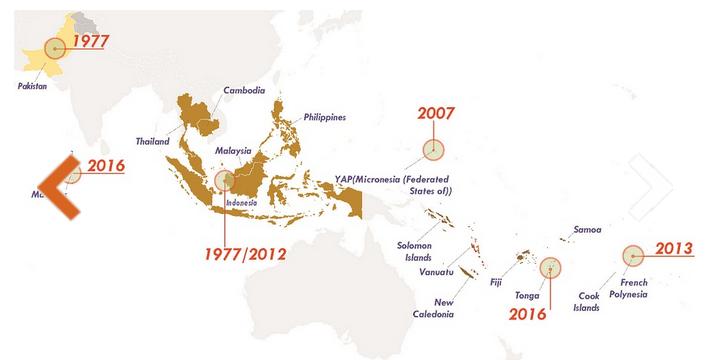
[TD="class: tr-caption"]Zika Time Line - Credit WHO[/TD]
[/TR]
[/TABLE]
# 11,277
One of the big mysteries surrounding the Zika virus is why, after causing almost no concern for decades in Africa and Asia, it has suddenly morphed into a major public health crisis.
While the answer is unknown, there appear to be three major theories:
- The virus was always neurotropic and teratogenic, but it occurred so infrequently, and in such underdeveloped regions of Africa, that nobody noticed
- The virus has migrated to new regions where differentenvironmental factors, and access to an immunologically naive population, have allowed it to flourish
- The virus has mutated into a more pathogenic or more easily transmitted strain in recent years during its trek across the Pacific
But # 3 appears to be in the lead right now, as Dr. Peter Hotez - dean of the National School of Tropical Medicine at Baylor College of Medicine - wrote in the New York Times a week ago:
There are many theories for Zika?s rapid rise, but the most plausible is that the virus mutated from an African to a pandemic strain a decade or more ago and then spread east across the Pacific from Micronesia and French Polynesia, until it struck Brazil.
You'll find a contrarian view offered up earlier this week by Dr. Vince Racaniello in his Virology Blog (Zika virus, like all other viruses, is mutating), but a lot of scientists are clearly focused on the mutation angle.In early December of 2015, in Paper: Zika Adaptations To Humans Helped Spark Global Spread, we looked at a study - yet to be peer reviewed - by researchers at the University of Sao Paulo and the Pasteur Institute of Dakar (Senegal) who wrote they had uncovered genetic changes in the Zika virus that occurred after the virus reached the South Pacific in 2007, that may make it better adapted to human physiology.
I highlighted the word `may', because there is a huge difference between spotting genetic changes and figuring out what (if anything) they do.
Other expert speculation over a possible `mutation explanation' for Zika's emergence include:- The Harvard University School of Public Health ran an article called Zika virus in Brazil may be mutated strain
- The New Scientist report called Did Zika?s recent mutations let it explode as a global threat?
- The EID Journal: Zika's Evolution And Spread To The Western Hemisphere
A recent notable exception, the Chikungunya virus appears to have benefited from a mutation in the middle of the last decade that allowed it to spread more efficiently by the Aedes Albopictus mosquito (see A Single Mutation in Chikungunya Virus Affects Vector Specificity and Epidemic Potential).
Adding to the `mutation' side of the debate, we have a new study by researchers from the University of California (LA) and the Chinese Academy of Medical Sciences & Peking Union Medical College - appearing Friday in the journal Cell Host & Microbe - that compared the genetic structure of 41 strains of the Zika virus, and found substantial DNA changes have occurred over the years. While these researchers cannot currently tie these genetic changes to recently observed changes in the virus's behavior, they hope their line of research will eventually lead to better answers.
First a link to the article, then some excerpts from the press release. Commentary
From Mosquitos to Humans: Genetic Evolution of Zika Virus
Lulan Wang[SUP]10[/SUP], Stephanie G. Valderramos[SUP]10[/SUP],Aiping Wu, Songying Ouyang, Chunfeng Li,Patricia Brasil,Myrna Bonaldo,Thomas Coates,Karin Nielsen-Saines,Taijiao Jiang
 ,Roghiyh Aliyari,Genhong Cheng[SUP] 10[/SUP]Co-first author
Publication stage: In Press Corrected Proof
DOI: http://dx.doi.org/10.1016/j.chom.2016.04.006
Initially isolated in 1947, Zika virus (ZIKV) has recently emerged as a significant public health concern. Sequence analysis of all 41 known ZIKV RNA open reading frames to date indicates that ZIKV has undergone significant changes in both protein and nucleotide sequences during the past half century.
From the UCLA press release. From Mosquitos to Humans: Genetic Evolution of Zika Virus
Lulan Wang[SUP]10[/SUP], Stephanie G. Valderramos[SUP]10[/SUP],Aiping Wu, Songying Ouyang, Chunfeng Li,Patricia Brasil,Myrna Bonaldo,Thomas Coates,Karin Nielsen-Saines,Taijiao Jiang
,Roghiyh Aliyari,Genhong Cheng[SUP] 10[/SUP]Co-first authorPublication stage: In Press Corrected Proof
DOI: http://dx.doi.org/10.1016/j.chom.2016.04.006
Initially isolated in 1947, Zika virus (ZIKV) has recently emerged as a significant public health concern. Sequence analysis of all 41 known ZIKV RNA open reading frames to date indicates that ZIKV has undergone significant changes in both protein and nucleotide sequences during the past half century.
Study traces how a largely unfamiliar pathogen led to a global epidemic
Elaine Schmidt | April 15, 2016
How does a formerly innocuous and obscure virus like Zika transform itself into a feared pathogen inflicting a devastating impact on global health?
A new UCLA study suggests that the virus possesses the ability to mutate rapidly, allowing the current outbreak to spread swiftly around the world. The Cell Press journal, Cell Host & Microbe,published the findings today in its advance online edition.
?The Zika virus has undergone significant genetic changes in the past 70 years,? explained senior author Genhong Cheng, a professor of microbiology, immunology and molecular genetics at the David Geffen School of Medicine at UCLA. ?By tracing its genetic mutations, we aimed to understand how the virus is transmitted from person to person and how it causes different types of disease.?
How does a formerly innocuous and obscure virus like Zika transform itself into a feared pathogen inflicting a devastating impact on global health?
A new UCLA study suggests that the virus possesses the ability to mutate rapidly, allowing the current outbreak to spread swiftly around the world. The Cell Press journal, Cell Host & Microbe,published the findings today in its advance online edition.
?The Zika virus has undergone significant genetic changes in the past 70 years,? explained senior author Genhong Cheng, a professor of microbiology, immunology and molecular genetics at the David Geffen School of Medicine at UCLA. ?By tracing its genetic mutations, we aimed to understand how the virus is transmitted from person to person and how it causes different types of disease.?
(SNIP)
In sequencing the virus, the team identified substantial DNA changes between the strains, showing a major split between the Asian and African lineages, as well as the human and mosquito versions.
?We suspect these mutations could help the virus replicate more efficiently, evade the body?s immune response or invade new tissues that provide a safe harbor for it to spread,? said co-author Lulan Wang, a graduate student researcher in Cheng?s laboratory.
Additional study findings include:
In sequencing the virus, the team identified substantial DNA changes between the strains, showing a major split between the Asian and African lineages, as well as the human and mosquito versions.
?We suspect these mutations could help the virus replicate more efficiently, evade the body?s immune response or invade new tissues that provide a safe harbor for it to spread,? said co-author Lulan Wang, a graduate student researcher in Cheng?s laboratory.
Additional study findings include:
- All contemporary human Zika strains share a genetic sequence more similar to the 1966 Malaysian strain than the 1968 Nigerian strain. This implies the strains causing the current human outbreak evolved from the Asian lineage.
- All human strains in the current epidemic resemble the 2013 French Polynesian strain more closely than the 2007 Micronesia strain, suggesting that the two strains evolved from a common viral ancestor.
- A key viral protein varied the most between the Asian human strain and the African mosquito strain, indicating a possible structural change in the virus.
?Our results have raised new questions about the evolution of the Zika virus, and highlight that a lot more research is needed to understand the relationship between the virus and human disease,? Cheng said.
Posted by Michael Coston at 7:46 AMhttp://afludiary.blogspot.com/2016/0...lution-of.html
hat tip Michael Coston