• FluTrackers.com Inc. does not provide medical advice. Information on this web site is collected from various internet resources, and the FluTrackers board of directors makes no warranty to the safety, efficacy, correctness or completeness of the information posted on this site by any author or poster. The information collated here is for instructional and/or discussion purposes only and is NOT intended to diagnose or treat any disease, illness, or other medical condition. Every individual reader or poster should seek advice from their personal physician/healthcare practitioner before considering or using any interventions that are discussed on this website. By continuing to access this website you agree to consult your personal physican before using any interventions posted on this website, and you agree to hold harmless FluTrackers.com Inc., the board of directors, the members, and all authors and posters for any effects from use of any medication, supplement, vitamin or other substance, device, intervention, etc. mentioned in posts on this website, or other internet venues referenced in posts on this website.
  • We are not asking for any donations. Do not donate to any entity who says they are raising funds for us.

Tracking World Wide Virulence of Swine Flu

Post cytokine storm / organ failure / cyanosis related stories here......

Post cytokine storm / organ failure / cyanosis related stories here......

http://news.asiaone.com/News/Latest+News/Health/Story/A1Story20090825-163197.html
Virus may have infected 140,000, says Liow
Tue, Aug 25, 2009
The New Straits Times

PUTRAJAYA, Malaysia: More than 140,000 Malaysians could have been infected with influenza A (H1N1).

Health Minister Datuk Seri Liow Tiong Lai said this was based on the number of confirmed cases reported by the ministry since May.

"We have more than 7,000 confirmed cases. To determine the number of cases in the community, the number of confirmed cases is multiplied by 20," he told media editors and reporters in a two-hour dialogue on the influenza A (H1N1) situation in Malaysia.

The meeting was also to get feedback from the media on the problems they encountered, the complaints received from the public and what was happening on the ground.


He said there were thousands of Malaysians infected with the disease but the majority recovered while some in the vulnerable group suffered complications and needed to be hospitalised.

Expressing sadness at the 69 deaths so far, he said 70 per cent of those who died had co-morbid conditions such as heart disease, hypertension and low-immunity while 27 per cent came late for treatment.

"We also had many people who suffered co-morbid conditions, confirmed positive for influenza A (H1N1) but returned home well after being treated in hospitals."

He cited a case where an elderly man confirmed positive had to be in ICU for 25 days but recovered and returned home.

Liow also rapped some general practitioners for not adhering to the ministry's guidelines on who to treat with the anti-viral drug, Tamiflu, also known as Oseltamivir, which resulted in some victims dying.

Citing the latest death reported, he said, a 38-year-old teacher had sought treatment at a private clinic on Aug 13 for fever and cough which she had for two days.

"The rapid test done revealed that she was positive for influenza A but the doctor just treated her with medication for her cough and fever without prescribing Tamiflu despite her being obese and falling in the vulnerable category."

Five days later, he added, the teacher suffered breathing difficulty and cyanosis (a blue discolouration of the skin and mucous membranes) and initially sought treatment at a private hospital before being transferred to Kuala Lumpur Hospital.

He said a throat swab was done on Aug 18 before the teacher was put on Tamiflu but her condition worsened and she died the following day due to pneumonia and acute respiratory distress syndrome. She was confirmed positive on Aug 20.


"If the general practitioner had strictly adhered to our guidelines and put her on Tamiflu, she may not have died," said Liow, adding he would meet doctors in the private sector this week to discuss the issue. -NST
 
Re: Tracking World Wide Virulence of Swine Flu

Malaysia

Three-year-old is 70th H1N1 fatality

KUALA LUMPUR, Aug 25 – A three-year-old child has died of Influenza A(H1N1), raising to 70 the death toll from the disease in the country.

Director-General of Health Tan Sri Dr Mohd Ismail Merican said today the child died on Aug 18 of encephalitis with cerebral odema and multi-organ failure.

He also said that 52 new cases of Influenza-like illness (ILI) were admitted to hospitals while 162 ILI patients were discharged, leaving 1,354 ILI patients still under treatment in 82 hospitals nationwide.

Dr Mohd Ismail said in a statement that treatment was first administered to the child on Aug 12 after suffering from fits and cough for two days. However, the following day, the child's condition worsened, requiring admission to the intensive care unit and treatment with the anti-viral drug, Tamiflu, he said.

http://www.themalaysianinsider.com.my/index.php/malaysia/36005-three-year-old-is-70th-h1n1-fatality-
 
Re: Tracking World Wide Virulence of Swine Flu

A man in his 50s is seriously ill in Wellington Hospital's intensive care unit with complications from swine flu.

The man, who is believed to have had no prior underlying health problems, was admitted on Friday and was in a "serious but stable" condition last night, Capital and Coast District Health Board said.

The Dominion Post understands he is in an induced coma and on dialysis for kidney failure.

Twenty-seven New Zealanders with the virus have died and the Health Ministry confirmed swine flu was the primary cause of death in 16 cases so far.

The coroner is investigating the deaths of another 11 people suspected to have the virus.


http://www.stuff.co.nz/dominion-post...with-swine-flu

.....
 
Re: Tracking World Wide Virulence of Swine Flu

From Argentina

google translated

A Medanitos girl died of H1N1

Influenza virus H1N1 in the morning yesterday had its first fatal victim. This is a small 8 year old who entered last week from the town of Medanitos, north of Fiambalá Tinogasta in the department.

Initial studies confirmed that the girl had died of Influenza A. However, from the Ministry of Health of the Nation requested that an autopsy the body of the child.

Mario Marcolli, CEO of Children's Hospital Eva Perón, where the patient died, confirmed publicly that it would be the first case of H1N1 virus encephalitis.

Encephalitis is inflammation of the brain, usually caused by infection of a variety of germs and bacteria, fungi and viruses. However, with the exception of viruses, encephalitis is usually only one more symptom within the clinical picture of the disease.

She also emphasized that, in the time that the pandemic is ravaging much of the world, in Catamarca was the second case that presented difficulties.

Earlier in the pediatric hospital regarding the province, had attended a child with diabetes who had been infected by Influenza A. Despite suffering an underlying condition, attention was quite complicated but responded well to treatment.

"With regard to this girl, who died, were taken all preventive measures for more than a week, when admitted to hospital. He performed all the analysis to the possibility that it was the flu. Two members of his family were interned under control, Fiambalá Hospital. We continue with prevention, establishing compliance with national and international standards. It is important that the family remains alert, "said Marcolli.

Meanwhile, Ricardo Seco Assistive director of child health center, confirmed yesterday, through Radio Ancasti, the death of the youngest of 8 years. The director stressed that the time of admission, she had a fever, headache and convulsions. In this situation, he conducted the relevant studies, including lumbar puncture, he said.

"She came in with a respiratory illness in intensive care. She died this morning of yesterday. We have the report of the Ministry of Health of the Province and confirmed that it was the H1N1 virus. She was admitted for a fever and a lot of important headache. We began to study what could be possible causes, "the director Seco.

In this regard, he remarked that every patient is taken with this feature as a suspect, whom he should practice the necessary studies to confirm or exclude the case of Influenza A.

"It is the first confirmed case and the first death in a pediatric unit. There inpatients clinical suspects so far have had good progress," he said.
He also noted that the virus is circulating a significant and should further strengthen all measures. According to Seco, the population must take all necessary precautions "not to get too carried away" in terms of biosecurity measures such as use of chinstrap, washing hands and follow the instructions of healthcare staff.

Since the COE Influenza yesterday issued no part nor provided epidemiological information.

http://www.noapress.com.ar/notas_noa.php?id_nota=12230
 
Re: WHO warns of severe form of swine flu

Re: WHO warns of severe form of swine flu

It seems to be pretty much similarities about lung pneumonia, and other symptoms (from the posted Snowy's thread link text informations), in which some doctors analisy descriptions seems to point to a possibility of stil a same agent but with diferent severity cases manifesting (descriptions in pandemic 1918 spring and fall wave):


The Snowy's thread link:
http://www.flutrackers.com/forum/showthread.php?t=12911&highlight=excess+mortality
Disease Pattern just Previous to 1918 Pandemic

Snowy's POST #13:

INFLAMMATORY DISEASES OF THE RESPIRATORY TRACT (BRONCHITIS, INFLUENZA, BRONCHOPNEUMONIA, LOBAR PNEUMONIA)

PART XII
CERTAIN CLINICAL ASPECTS

(EXCERPT - sympt./pneumonias species/throat/...):

...

The pneumonia of this period was carefully studied by a special commission of medical officers working at Camp Travis, Tex.<sup>2</sup><sup> </sup>They noted the presence at the time of an "epidemic of coryza, laryngitis, and mild bronchitis" in both the civil and military population of San Antonio.

The report of the commission states that clinically the pneumonias studied could be divided into three groups:
Bronchopneumonia, associated as a rule but not invariably with a recent measles attack;
(2) lobar pneumonia, giving the familiar signs and symptoms of that disease and sometimes following measles;
(3) a group showing clinically and anatomically a combination of groups 1 and 2.

The description of the bronchopneumonia found there is of especial interest not only because it was the unusual feature of the outbreak, but because it is of value in comparing it with the bronchopneumonia of later waves.

The cases at San Antonio were nearly all associated with the hemolytic streptococcus, though nearly half of them showed the presence of the Pfeiffer bacillus as well.

Onset was gradual and without definite chill or sudden elevation of temperature, whether occurring during the course of measles or only after an interval of several weeks. The temperature rarely exceeded 104° F., and was frequently irregular even in the absence of empyema. The pulse rate was not extremely rapid even in cases near death. Respiration, too, was not extremely rapid but was characterized by extreme respiratory difficulty.

Cyanosis was constant even in early cases.<sup>a</sup>

The cough was troublesome and the sputum varied in character, though not showing the tenacious rusty type, typical of lobar pneumonia. Pain was usually marked and was associated with the frequency of pleural infection. When noted, consolidation was usually at the base.

Râles, musical, squeaking, or moist, were usually heard throughout the chest. In some cases characteristic signs of consolidation in a certain area persisted for a few days and then entirely disappeared. In uncomplicated bronchopneumonia, wide areas of dullness and tubular breathing were never observed. When such signs were found there was invariably a concurrent lobar pneumonia. Empyema complicated about one-half of the cases studied and its fatality was at least 50 per cent.

The lobar pneumonia studied showed the presence of pneumococci, the epidemic types being demonstrated in two-thirds of the cases. In the series showing combined lesions both pneumococci and streptococci usually were demonstrated.


During the 1918 spring epidemic, pneumonia was for the first time attributed to antecedent influenza in any considerable number of cases, although the diagnosis previously had been made.
_____________________________________________________________________________________________________________________________________

The clinical types of pneumonia seen in March and April corresponded well with those seen in the camps showing a high death rate during the winter months.
_________________________________________________________________________________________________
<sup>a</sup>Other observers have stated that cyanosis on admission for measles characterized cases that developed pneumonia later.
<hr size="1" noshade="noshade">

At this time the camps were much more generally affected. Empyema was still common and the mortality was generally associated with this complication. A small number of cases of a new type of the disease was seen for the first time during this outbreak.

A patient with an attack of typical influenza of two or three days’ duration would, after a day or two of normal temperature, develop acute pneumonic symptoms and die within 48 hours. This was the fulminant type of influenzal pneumonia familiar in the fall outbreak.

The proportion of cases recorded as lobar in type was lower in the spring than in the winter and the case fatality of pneumonia was higher.<sup>78,</sup><sup>79</sup>

<sup>
</sup>

During the period of lower incidence of respiratory infections following the spring outbreak and lasting throughout the summer, this increased case fatality of pneumonia cases persisted and even increased as is seen in the monthly tables. The increase culminated in the month of September, 1918, with the violent outbreak of the most severe influenza wave, which first showed its great virulence in the northeastern camps.

The percentage of influenza cases developing pneumonia at this time varied in different localities. The maximum figures were about 25 per cent. The usual case fatality at this time was around 30 per cent.

Though the disease, as seen in different camps, varied somewhat in its clinical manifestations due to the various factors that have been discussed, the general characteristics of the complication were very constant.

Few observers were able to distinguish clinically with any definiteness in the early stages of the disease between cases which showed later lobar lesions and cases of bronchopneumonia.

The following condensed description of influenzal pneumonia of the most fatal type is drawn largely from a series of studies made at the Walter Reed General Hospital, D. C.<sup>82,86</sup>
<sup>
</sup>

The onset of the pneumonic complication occurred either after two or three days of normal temperature following an attack of influenza, or it developed gradually without there being an afebrile interval. In the former group the onset was often characterized by chill and sudden rise of temperature.

The severity of the disease was correlated with the amount of lung involvement, unilateral cases doing much better than those with both lungs affected. Fulminant cases with severe toxemia showed rapid involvement of the entire lung.


In nonfatal cases, usually presenting a unilateral lesion, the temperature ranged from 100° to 103° F.

The pulse was characteristically slow; the blood pressure low, the systolic figure often below 100 mm.; respiration was only slightly accelerated. Nonfatal cases usually recovered after an illness of about a week and defervescence was by crisis in some series, by lysis in others. In cases with bilateral lesions the cyanosis was more marked, even to an indigo blue color, the temperature ranged somewhat higher than in the unilateral cases and often showed variations paralleling the advance and recession of the pulmonary lesion as shown by the X ray or by physical signs.

Cough was frequent and exhausting; the sputum, blood tinged or mucopurulent. In the more toxic cases, terminating fatally, the color of the patient from the first was either that of an intense cyanosis or a muddy, claylike pallor. The pallor was of particularly bad prognostic import. Nervous symptoms appeared early, restessness and delirium being marked.

<hr size="1" noshade="noshade">
The respiration became very rapid and dyspnea was pronounced. Physical signs of irregular consolidation and of edema filled the entire chest. The temperature ranged to 105° F. or higher, and death occurred in from three days to a week.


It is evident that these groups were not clean-cut and that all degrees of varying severity intervened. Inasmuch as such a proportion of severe pneumonia has in the past seldom been associated with influenza, it is important to record in somewhat greater detail the peculiarities of this outbreak.


The first point to strike the observer was the universal occurrence of cyanosis. This condition appearing in an apparently uncomplicated case of influenza, if of a degree at all marked, usually presaged the onset of pulmonary inflammation. Whether due to toxic changes in the composition of the blood or to mechanical interference with oxygenation by the exudate in the lungs, the intensity of the cyanosis was, in general, an index to the severity of the case.


In milder cases of influenza, a peculiar shade of "pink cyanosis" was observed, an erythematous flush of an unusual shade. The well-established case of pneumonia showed a shade that was usually described as heliotrope, and in the most asthenic group, usually associated with coma vigil, a muddy clay-colored pallor prevailed.


In some series of cases the tendency to hemorrhages from the mucous membranes was very notable. Epistaxis, which occurred in 10 per cent or more of the cases, was of all degrees, but often severe, recurrent, and debilitating in the extreme. Purpura, intestinal, and renal hemorrhages also occurred.


Of respiratory symptoms proper it may be said that these differed relatively little from the respiratory symptoms of the usual pneumonias. Pleuritic pain was frequent, cough was distressing, and frequently there was so much expectoration as to make resorting to narcotic relief seem dangerous.


The character of the sputum varied from the tenacious rusty expectoration of typical lobar pneumonia, through varying degrees of mucopus, and frothy blood-stained material to the profuse pink froth in the mouth and nose which characterized the fulminant cases.

The typical rusty sputum was rare, but the presence of some amount of blood was the rule.

From the beginning the physical signs were confusing. Typical signs of consolidation were seldom found, and then late.

After some experience with these cases most observers concluded that the diagnosis of pulmonary involvement was better made from the general course and symptomatology than from physical signs. Here, too, the X-ray examination proved very valuable, as was stated above. The early signs of pneumonia were confined to the presence of fine scattered râles, and as these râles were found in many apparently uncomplicated influenza cases their significance was not clear. As the involvement proceeded, dullness became evident on percussion, and breath sounds, voice, and fremitus were diminished, thus suggesting fluid in the pleura. Areas of tympany were also observed. After several days the confluence, or extension of consolidated areas, often produced typical signs of consolidation.


Pleuritic friction was often heard.


The heart action was slow in proportion to the temperature, and right-sided dilatation was not the rule even in severe and fatal cases. Low blood pressure was noted, in some cases the systolic blood pressure falling as low as 80 mm. without a necessarily fatal issue.
<hr size="1" noshade="noshade">
The temperature was very variable, usually of a fairly continous type, but in some cases remissions with sweating were frequent even without suppurative complications. The leucocyte counts were also variable, some fatal cases showing no change from the initial leucopenia. In others a marked polynucleosis supervened. Pneumococcus cases showed this rise earlier than did cases infected with streptococci. Blood cultures were positive in a relatively small proportion of cases, and pneumococcus infection gave the great majority of the positive results.

Toxic nephritis, varying in degree, occurred in nearly every case.

...
 
Re: Georgia: Suspect Cases

Re: Georgia: Suspect Cases

The facility where I work (a psychiatric residential facility) has had several unit shutdowns due to H1N1 but none of the cases filled with up to 20 kids have been identified by the CDC, nor will they ever be.

So far, my co-worker (who caught the virus at work) and her son are recovering, as am I (still major back issues from pain, as well as dry cough).

WHat I find intersting STILL is that despite the huge outbreak here in Bryan and Chatham Counties there is near a mention of it in the papers.

Schools, churches, offices still full of people who have NO FEVER but still present with symtoms, likely continuing its spread.

Also of note is that one of my patients who had the virus told me that his arms began to turn blue. Does anyone know if cyanosis can be present n one very localized area? I've never heard of such a thing. He also mentioned difficulties breathing.
 
Re: Tracking World Wide Virulence of Swine Flu

The numbers are cumulative numbers, most of the time.

Looking at the numbers , relatively low, 1 thing is striking: 54% of the swineflu patients in ICU are "young and healthy".

Update september 3, 2009

Summary
􀂃
In the last week reported that 7 patients because of laboratory confirmed infection of New Influenza A (H1N1) were included in the hospital. There were no deaths.
􀂃
In total, to September 2 included 65 patients in the hospital, including 2 patients deceased. In 63% of the included patients had underlying medical problems.
􀂃
The breakdown of the number of hospital admissions per day is an increase.
􀂃
The age distribution of patients listed for a new laboratory-confirmed infection with Influenza A (H1N1) shows that relatively many people are under 30 years.
􀂃
Last week there were 3 patients included in the Intensive Care. A total of 13 patients included (were) in Intensive Care. Nine of these patients had required mechanical ventilation. The age distribution of these patients ranges between 0 and 59 years. 46% of these patients had an underlying disease.
􀂃
In the Netherlands, found no resistance of New Influenza A (H1N1) to oseltamivir and zanamivir.
􀂃
The number of patients with flu-like symptoms that are reported in general is still low. The incidence of influenza-like illness in the past week was 4.3 per 10,000 inhabitants.
􀂃
Within the Nursing Infectious Diseases Surveillance Network (SNIV) is the last weeks no increase in the incidence of influenza-like illness among nursing home residents.
􀂃
In the week ending on Wednesday, August 26, 2009 in the total mortality of the CBS to see no increase.

Conclusion: There is no evidence that the spread of New Influenza A (H1N1) in the Netherlands among the general population has increased over the past week.

More here, including graphs:

http://www.rivm.nl/cib/binaries/H1N1overzicht_03092009_tcm92-61018.pdf
 
Post cytokine storm / organ failure / cyanosis related stories here......

Post cytokine storm / organ failure / cyanosis related stories here......

Child Disability Information

By Thomas C. Weiss - Sep 5, 2009 12:47:50 PM


The H1N1 flu has been on the minds of all people in America; as of August eighth, the majority of the children who have died because of this form of the flu have had an underlying illness or developmental disability, according to the Centers for Disease Control and Prevention (CDC).

Doctors are warning that a focus must be placed on children with special needs who exhibit flu-like symptoms. Out of the group of thirty-six children between the ages of two months and seventeen years who have died due to the flu, two-thirds of them experienced a chronic illness or a form of developmental disability that included muscular dystrophy, cerebral palsy, a developmental delay, cardiac issues, or respiratory problems.

Children, or anyone, who has an underlying condition, needs to be seen by a health care professional if they get a fever, it could make the difference between becoming severely ill or recovering. Receiving treatment within forty-eight hours has the potential to make a large difference in speeding the person?s recovery. Children who have developmental disabilities will be first in consideration for the flu vaccine as it becomes available.

The flu vaccine could become available in the middle of October, which is rapidly approaching. Overall, nearly five-hundred people in America from all age groups have died from the H1N1 flu to date. It is unknown if the H1N1 flu pandemic will impact children more than a regular flu season at this time. Approximately fifty to one-hundred children die from the flu every year.

There is not a whole lot that is known about how this form of the H1N1 flu may affect children. In past pandemics and with the seasonal flu it is known that children, particularly those under the age of five and children who have high-risk medical conditions, are at an increased risk of flu-related complications. Children younger than age five have a risk of complications that is highest among children who are less than two years old. Young children are less likely to present with typical flu symptoms such as a fever and cough, while infants can present with both fever and lethargy; they may also not have a cough or additional respiratory symptoms or signs.

Flu-associated deaths among children are uncommon, but do happen with seasonal flu. Some of these deaths are associated with co-infection between the flu and Staphylococcus aureus, methicillin resistant S. aureaus (MRSA) in particular. The symptoms of severe disease can include:

* Apnea
* Dyspnea
* Cyanosis
* Tachypnea
* Dehydration
* Extreme irritability
* Altered mental status

Some children are at a higher risk for complications from flu infection. Children with chronic neurological or neuromuscular condition are a portion of the population who are at a higher risk, as are infants younger than six months of age. Children with immune suppression, chronic kidney disease, heart disease, HIV/AIDS, asthma, diabetes, lung problems, sickle cell disease, on long-term aspirin therapy for chronic disorders are as well. Children with any condition which affects their respiratory function to include neurologic conditions such as intellectual and developmental disabilities, cerebral palsy, seizure disorders, spinal cord injuries, metabolic conditions, or neuromuscular disorders are also at a higher risk due to the H1N1 or the seasonal flu.

Children with poor nutritional and fluid intake due to prolonged vomiting and diarrhea, children with underlying metabolic disorders such as medium-chain acyl-CoA deydrogenase (MCAD) deficiency and are unable to tolerate prolonged periods of fasting are at higher risk from the flu. Children with either metabolic or neurological disabilities might not have the ability to tell others about the symptoms they are experiencing, or if their symptoms are getting worse ? a delay in identifying the flu can lead to additional complications. Children who are HIV positive and are not taking antiretroviral medication can have a more severe experience of the flu, hospitalization, as well as bacterial complications.

The CDC has stated that aspirin or aspirin-containing products such as Pepto-Bismol should not be given to children suspected of having either the seasonal or H1N1 flu because of the risk of Reye syndrome. To relieve the fever, other anti-pyretic medications like acetaminophen or NSAID?s are what they are recommending. Children under the age of four years should not be given over-the-counter medications without first speaking to a health care provider.

The CDC is also saying that both parents and caretakers need to make sure that children?s vaccines are up to date. Parents of children with disabilities and chronic conditions who require medications are encouraged to continue their child?s medications. The CDC recommends that adults with flu-like symptoms stay at home until at least twenty-four hours after they are free of fever (100 degree F , 37.8 degrees C), or signs of a fever, without the use of fever-reducing medications.


http://www.disabled-world.com/disability/children/children-disabilities-flu.php
 
Re: Tracking World Wide Virulence of Swine Flu

More chances of dying if you catch swine flu in Gujarat!
Paul John & Radha Sharma, TNN 11 September 2009, 03:05am IST

AHMEDABAD: Data put up on the Union ministry of health and family welfare website clearly shows that Gujarat has the highest swine flu death rate
in the country. One in every 10 H1N1 positive patient dies in Gujarat. Gujarat?s death rate is 10.94% as against the national average of just 2.66 per cent.
One of the main reasons being cited is many patients in Gujarat prefer to get treatment in private hospitals, rather than public hospitals which are better equipped to detect swine flu cases. Because of the delay in diagnosis, most private hospitals have referred swine flu cases to public hospitals at an advanced stage.

Questions are also being raised about the efficacy of networking of public healthcare system with other hospitals. Most deaths are in cases treated in private hospitals for severe lower respiratory tract infection for four to five days. Tamiflu was administered after precious time was lost. ?Individuals should come launching awareness campaigns with private doctors to enhance clinical judgment about H1N1 and start Tamiflu early,? he said.

?We will have to suspect H1N1 in every person with even slight flu symptoms and give treatment in time,? says infectious diseases specialist Dr Atul Patel.

Principal health secretary Ravi Saxena says the government is trying to tackle the issue of delayed diagnosis in private hospitals. ?We are launching awareness campaigns with private doctors to enhance clinical judgment about H1N1 and start Tamiflu early,? he said.
http://timesofindia.indiatimes.com/...-swine-flu-in-Gujarat/articleshow/4997092.cms
 
Re: Cases of H1N1 Identified at 2 SD Colleges

Re: Cases of H1N1 Identified at 2 SD Colleges

methemoglobinemia
When excessive hemoglobin in the blood is converted to another chemical that cannot deliver oxygen to tissues, called methemoglobin.
(Blue baby syndrome) due to high nitrate levels in drinking water:

The South Dakota case involved an infant who experienced several episodes of cyanosis after her mother stopped breast-feeding and began feeding her powdered formula that was reconstituted with water from the family's private well. At 8 weeks of age, the infant became acutely ill with symptoms of vomiting, diarrhea, and severe cyanosis. Her parents rushed her to a local physician who administered oxygen for several minutes. When the infant's color did not improve, the family was referred to a hospital 33 miles away. The infant stopped breathing on the way to the hospital and could not be resuscitated. The nitrate-N concentration in a water sample collected from the family's well after her death was 150 mg/L.
http://www.thefreelibrary.com/Blue+Babies+and+Nitrate+Contaminated+Well+Water-a065640291

The Big Sioux aquifer , which is at or near land surface in eastern South Dakota, has had incidences of nitrate-nitrogen
concentrations above the 10 milligrams per liter regulatory limit established for public-water supplies. Several water supplies that draw water from the Big Sioux aquifer have been impacted by nitrate contamination. These include two rural water systems and several municipalities: Brookings-Deuel Rural Water System, Sioux Rural Water System, Alcester, Aurora, Elkton, and Fairview. Some pesticides have also been detected in the Big Sioux aquifer , but nearly all have been detected at concentrations below limits set in drinking-water regulations or health advisories. Research regarding the impacts of agriculture on shallow ground water is ongoing in South Dakota.
http://www.northern.edu/NATSource/WATER/Contam1.htm
 
Re: Tracking World Wide Virulence of Swine Flu

Over 67 pc victims of H1N1 had risk factors
TNN 13 September 2009, 05:33am IST

PUNE: District collector Chandrakant Dalvi on Saturday said that of the 40 deaths reported in the district due to H1N1 influenza, 27 (67.5%) had
risk factors like hypertension, diabetes, central nervous system (CNS) disorders and heart diseases. Five of them had a history of hypertension. He also said that delayed diagnosis and treatment were the key factors in some of the deaths.

Dalvi appealed people who have either hypertension, diabetes, CNS disorders or heart diseases to take due care and approach screening centres in case of symptoms like coughing, sneezing and cold. "Four people who died had history of diabetes melitus and central nervous system (CNS) disorders while three others had history of heart diseases and obesity. Three patients were very old while two cases were of liver disorders," said Dalvi.

Elaborating on delayed diagnosis and treatment, Dalvi said that if the patient does not show any signs of recovery even after 48 hours of showing flu-like symptoms, it is advisable to visit the screening centre for a second opinion. Dalvi said that all general practitioners will again be given instructions to refer H1N1 symptomatic cases to designated centres immediately. He informed that the state health department has conducted a training camp for general practitioners at each tehsil in the district.

Dispelling fears of rapid spread of the virus in schools, Dalvi said there is no panic at the school level in the city as well as rural areas. All the schools and colleges in the rural areas have now been asked to screen students on a daily basis. The screening will be conducted by class teachers at the beginning of the class.

He said, "No private laboratory in the city has been given permission to conduct tests for H1N1 influenza. According to instructions issued by the central government, the private laboratories in the city cannot conduct swab tests."

Total deaths - 40

5 - hypertension

4 each - Diabetes meltus and CNS disorders

3 each - Heart disease, Obesity, Extreeme ages

2 each - Liver disorder, HIV AIDS

1 - pregnancy
http://timesofindia.indiatimes.com/...H1N1-had-risk-factors/articleshow/5004331.cms

Ro's notes: The three oldest fatalities in Pune were aged 70, 60 and 54 which to my mind is pushing it to be called "Extreeme ages". At least one patient had diabetes and hypertension, but it seems possible that these conditions may be counted twice thus inflating the overall number of patients with underlying conditions.
 
Re: Tracking World Wide Virulence of Swine Flu

[Reminder: Don't forget to carry your stories here, if they pertain, thanks]

http://www.ksfy.com/news/local/59396792.html
Tennessee
Death Of Young Boy In TN Raises Questions About H1N1 Swine Flu
By KSFY News

Story Updated: Sep 15, 2009 at 6:14 PM CDT

According to the CDC more than a million americans have contracted H1N1 Swine Flu. Fewer than 600 have died. But the recent death of a healthy young boy in Tennessee has raised some concerns about the virus and kids. ABC'S David Muir filed this story.

It all began on a Friday. 5 year old Max Gomez began to get sick. His mother told the Tennessean newspaper, the next morning, her son woke up with a fever and that his temperature peaked at just over 102 degrees.

His parents suspected routine illness, an ear infection, or sore throat. Keeping him home from church to be safe. And doctors say a 102-degree fever is not in itself a red flag.

The next day,Sunday,that fever was gone and his parents told the newspaper he seemed better. But then on Monday, the boy's fever returned with the chills.

The mother took her son to a health clinic where even the doctor reportedly didn't note anything out of the ordinary but that evening at 6pm when the boy's fatigue became worrisome his parents took him to the hospital and less than three hours later, he died.

So sudden, so rare. And the parents said their boy had always been healthy. One doctor said, "Most of the children who are dying have an underlying medical condition, this is a very very rare situation."

With such a fast, and frightening timeline, could the parents, or doctors, have done anything differently? Should the boy have been given Tamiflu-- or other flu medications?

Right now, the CDC only recommends the drugs for children YOUNGER than five. Doctors simply calling for rest, fluids, and for parents to keep careful watch. Which is what these parents did.

And what about that *second* fever? can we learn anything from that? ABC News Medical Editor Dr. Richard Besser says a return fever could be a sign of a bacterial infection that could have set in on top of the flu which in rare cases, can be deadly, even if you take all the right steps.
 
Re: Tracking World Wide Virulence of Swine Flu

Intensive care adult patients with severe respiratory failure caused by Influenza A (H1N1)v in Spain

Critical Care 2009, 13:R148doi:10.1186/cc8044


Published: 11 September 2009

Abstract (provisional)

Introduction
Patients with influenza A (H1N1)v infection have developed rapidly progressive lower respiratory tract disease resulting in respiratory failure. We describe the clinical and epidemiologic characteristics of the first 32 persons reported to be admitted to the intensive care unit (ICU) due to influenza A (H1N1)v infection in Spain.

Methods
We used medical chart reviews to collect data on ICU adult patients reported in a standardized form. Influenza A (H1N1)v infection was confirmed in specimens using real-time reverse transcriptase-polymerase-chain-reaction (RT PCR) assay.

Results
Illness onset of the 32 patients occurred between June 23 and July 31, 2009. The median age was 36 years (IQR = 31 - 52). Ten (31.2%) were obese, 2 (6.3%) pregnant and 16 (50%) had pre-existing medical complications. Twenty-nine (90.6%) had primary viral pneumonitis, 2 (6.3%) exacerbation of structural respiratory disease and 1 (3.1%) secondary bacterial pneumonia. Twenty-four patients (75.0%) developed multiorgan dysfunction, 7 (21.9%) received renal replacement techniques and 24 (75.0%) required mechanical ventilation. Six patients died within 28 days, with two additional late deaths. Oseltamivir administration delay ranged from 2 to 8 days after illness onset, 31.2% received high-dose (300mg/day), and treatment duration ranged from 5 to 10 days (mean 8.0 + 3.3).

Conclusions
Over a 5-week period, influenza A (H1N1)v infection led to ICU admission in 32 adult patients, with frequently observed severe hypoxemia and a relatively high case-fatality rate. Clinicians should be aware of pulmonary complications of influenza A (H1N1)v infection, particularly in pregnant and young obese but previously healthy persons.

The complete article is available as a provisional PDF. The fully formatted PDF and HTML versions are in production.
 
Re: Tracking World Wide Virulence of Swine Flu

HAEMORRHAGIC PNEUMONIA DIED OF THE SECOND HUNGARIAN VICTIMS OF THE H1N1 (UPDATED)

Release date: 2009th September 24

Budapest - Haemorrhagic pneumonia was in the 34-year-old man who died on Wednesday, and the autopsy revealed that the H1N1 virus was the organization. He was a second victim of the disease in Hungary.

The end of next week or the week following the start from the beginning of the A/H1N1 virus vaccine administered in Hungary.

This is the health minister said on Thursday kormányszóvivői leaflet.

Tamás Székely, the man was apparently healthy, last visited the area three weeks ago, a doctor in a trivial injury. The recent period has not been abroad.

He stressed that the young man's death is also very bad news, because it does not belong to any of the WHO published by risk groups.

Response to a question stated that there is no epidemic in Hungary, 205 patients are known, but the infections may be more, but not everyone turns to the doctor.

The autopsy showed the young man to the virus. The ÁNTSZ stated that he lived in Southern Transdanubia, were healthy. There was a fever, sick, and did not belong to any of the risk groups.

http://vasnepe.hu/belfoldi/20090924_uj_virus_halal_magyarorszagon&sl=hu&tl=en


google translated

Healthy young Hungarian was the second victim-H1N1

2009 09. 24th,

A Southern Transdanubia the H1N1 virus in healthy young Hungarian second victim.

The 34 year-old man fell dead on Wednesday, three weeks ago, there was nothing wrong and was not abroad in recent times.

The first victim, a 41-year-old suffering from heart and lung Hungarian man. The Minister of Health that there are currently 205 Hungarian H1N1 patient, can the authorities, but the actual number of infections is much greater.


Another death occurred in Hungary, a new type of flu - said on Thursday the ÁNTSZ. The victim, a young man living in Southern Transdanubia, who were healthy, had no history of risk groups was not. The autopsy confirmed that the outbreak of the H1N1 virus. The epidemiological investigation is ongoing - ÁNTSZ wrote in a statement.

Tamas Szekely Minister of Health told a press conference in the afternoon: the 34-year-old man died unexpectedly in Tolna County home Wednesday. The coroner's autopsy of Justice requested. Then it was found that pneumonia was bleeding - one of the most common complication is the H1N1.

The samples were taken after the diagnosis, so it was found that H1N1 virus-infected man. According to the minister of a better man because of an injury three weeks ago saw the GP, but it was not okay. The ÁNTSZ examine the man's family and the duties involved in health care workers. The health minister said: The current information indicates that the man had not been abroad recently.

Szekely said, is not yet an epidemic in Hungary. To date, 205 patient can, but the Minister of H1N1 infections is probably at least an order of magnitude higher, because many people do not go tüneteikkel doctor.

The young Hungarian H1N1 second victim. The first victim's death on 22 July announced a national chief medical officer Ferenc Falus, the 41 year-old Hungarian man died a few days earlier, also due to the H1N1 virus. The man in the street Latvian poorly, suffered heart and lung disease, and only later was found during the autopsy that was infected.

http://www.origo.hu/itthon/20090924-antsz-h1n1.html&sl=hu&tl=en
 
Re: Tracking World Wide Virulence of Swine Flu

Analysis of fatalities in Maharashtra India:

Doctors have held that patients who were started on Tamiflu within 28 hours of onset of symptoms have had a better chance of recovery. Gokhale said that an analysis of 95 deaths on the basis of the time lag between the onset of disease and the date of admission showed that most had turned for help only on the fourth day. "Four deaths occurred on the same day as onset of symptom, 10 after two days, 14 after three days, 26 after four days,'' she said. Eleven deaths occurred after five days of onset of symptoms, nine after six days, 11 after seven days and 14 after eight days.


Snipped from;
http://timesofindia.indiatimes.com/...y-braces-for-2nd-wave/articleshow/5069818.cms
 
Re: Tracking World Wide Virulence of Swine Flu

Vietnam - 2 recent deaths:

excerpt: <meta name="Title" content=""> <meta name="Keywords" content=""> <meta http-equiv="Content-Type" content="text/html; charset=utf-8"> <meta name="ProgId" content="Word.Document"> <meta name="Generator" content="Microsoft Word 10"> <meta name="Originator" content="Microsoft Word 10"> <link rel="File-List" href="file:///Users/Sheila/Library/Preferences/Microsoft/Clipboard/msoclip1/01/clip_clip_filelist.xml"> <!--[if gte mso 9]><xml> <w:WordDocument> <w:Zoom>0</w:Zoom> <w:DisplayHorizontalDrawingGridEvery>0</w:DisplayHorizontalDrawingGridEvery> <w:DisplayVerticalDrawingGridEvery>0</w:DisplayVerticalDrawingGridEvery> <w:UseMarginsForDrawingGridOrigin/> </w:WordDocument> </xml><![endif]--> <style> <!-- /* Font Definitions */ @font-face {font-family:Geneva; panose-1:0 2 11 5 3 3 4 4 4 2; mso-font-charset:0; mso-generic-font-family:auto; mso-font-pitch:variable; mso-font-signature:50331648 0 0 0 1 0;} /* Style Definitions */ p.MsoNormal, li.MsoNormal, div.MsoNormal {mso-style-parent:""; margin:0in; margin-bottom:.0001pt; mso-pagination:widow-orphan; font-size:12.0pt; font-family:Geneva;} @page Section1 {size:8.5in 11.0in; margin:1.0in 1.25in 1.0in 1.25in; mso-header-margin:.5in; mso-footer-margin:.5in; mso-paper-source:0;} div.Section1 {page:Section1;} --> </style> <!--StartFragment-->
<meta name="Title" content=""><meta name="Keywords" content=""> <meta http-equiv="Content-Type" content="text/html; charset=utf-8"> <meta name="ProgId" content="Word.Document"> <meta name="Generator" content="Microsoft Word 10"> <meta name="Originator" content="Microsoft Word 10"> <!--[if gte mso 9]><xml> <w:WordDocument> <w:Zoom>0</w:Zoom> <w:DisplayHorizontalDrawingGridEvery>0</w:DisplayHorizontalDrawingGridEvery> <w:DisplayVerticalDrawingGridEvery>0</w:DisplayVerticalDrawingGridEvery> <w:UseMarginsForDrawingGridOrigin/> </w:WordDocument> </xml><![endif]--> <style> <!-- /* Font Definitions */ @font-face {font-family:Geneva; panose-1:0 2 11 5 3 3 4 4 4 2; mso-font-charset:0; mso-generic-font-family:auto; mso-font-pitch:variable; mso-font-signature:50331648 0 0 0 1 0;} /* Style Definitions */ p.MsoNormal, li.MsoNormal, div.MsoNormal {mso-style-parent:""; margin:0in; margin-bottom:.0001pt; mso-pagination:widow-orphan; font-size:12.0pt; font-family:Geneva;} @page Section1 {size:8.5in 11.0in; margin:1.0in 1.25in 1.0in 1.25in; mso-header-margin:.5in; mso-footer-margin:.5in; mso-paper-source:0;} div.Section1 {page:Section1;} -->*</style>...a 36-year-old female patient in Ben Tre...<!--EndFragment--> Run the disease on two tenths [10/2] with symptoms of mild fever, headache, cough, self-treatment at home, but the symptoms are not reduced, to 4 / 10, patients find it difficult to breathe, is the home to visit and enter Nguyen Dinh Chieu Hospital. Patients treated with Tamiflu after admission, sampling tests.<o:p></o:p>
<o:p></o:p>
However, the evolutions severe disease, patients die at 8:30 am on 5 / 10.

and

... <meta content="" name="Title"> <meta content="" name="Keywords"> <meta content="text/html; charset=utf-8" http-equiv="Content-Type"> <meta content="Word.Document" name="ProgId"> <meta content="Microsoft Word 10" name="Generator"> <meta content="Microsoft Word 10" name="Originator"> <link href="file:///Users/Sheila/Library/Preferences/Microsoft/Clipboard/msoclip1/01/clip_clip_filelist.xml" rel="File-List"> <style> <!-- /* Font Definitions */ @font-face {font-family:Geneva; panose-1:0 2 11 5 3 3 4 4 4 2; mso-font-charset:0; mso-generic-font-family:auto; mso-font-pitch:variable; mso-font-signature:50331648 0 0 0 1 0;} /* Style Definitions */ p.MsoNormal, li.MsoNormal, div.MsoNormal {mso-style-parent:""; margin:0in; margin-bottom:.0001pt; mso-pagination:widow-orphan; font-size:12.0pt; font-family:Geneva;} @page Section1 {size:8.5in 11.0in; margin:1.0in 1.25in 1.0in 1.25in; mso-header-margin:.5in; mso-footer-margin:.5in; mso-paper-source:0;} div.Section1 {page:Section1;} --> </style> and a 19-year-old male patient in Bac Giang,...
<meta content="" name="Title"> <meta content="" name="Keywords"> <meta content="text/html; charset=utf-8" http-equiv="Content-Type"> <meta content="Word.Document" name="ProgId"> <meta content="Microsoft Word 10" name="Generator"> <meta content="Microsoft Word 10" name="Originator"> <link href="file:///Users/Sheila/Library/Preferences/Microsoft/Clipboard/msoclip1/01/clip_clip_filelist.xml" rel="File-List"> <style> <!-- /* Font Definitions */ @font-face {font-family:Geneva; panose-1:0 2 11 5 3 3 4 4 4 2; mso-font-charset:0; mso-generic-font-family:auto; mso-font-pitch:variable; mso-font-signature:50331648 0 0 0 1 0;} /* Style Definitions */ p.MsoNormal, li.MsoNormal, div.MsoNormal {mso-style-parent:""; margin:0in; margin-bottom:.0001pt; mso-pagination:widow-orphan; font-size:12.0pt; font-family:Geneva;} @page Section1 {size:8.5in 11.0in; margin:1.0in 1.25in 1.0in 1.25in; mso-header-margin:.5in; mso-footer-margin:.5in; mso-paper-source:0;} div.Section1 {page:Section1;} --> </style> Disease patients starting on four tenths [10/4] with symptoms of cough, fever.<o:p></o:p>
<o:p></o:p>
5 / 10, to visit patients at Hospital of Bac Giang, the next day to be scientific treatment of active, Bach Mai Hospital with symptoms of high fever 39 degrees C, cough, sore throat, body depression. Severe disease evolutions, to 12:30 on 7 / 10, patient death.

http://www.flutrackers.com/forum/showthread.php?p=303338#post303338
<!--EndFragment-->
 
Re: Tracking World Wide Virulence of Swine Flu

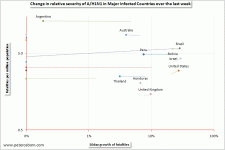
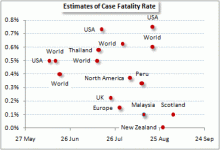
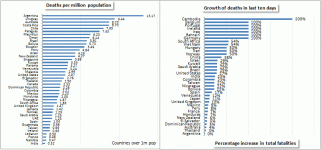
I will post these because I like picture pages and because folks are looking for trends. I do not know the methodology or the sources that are used but as long as they are consistent I find the trend plots useful. There are several at the link.
Liam
http://www.peterosborn.com/Reports/pandemic.htm
_severity.gif

_cfr.gif

_Country-ranking.gif
 
Re: Suspected A/H1N1 flu deaths probed - Two More Die From Swine Flu

Re: Suspected A/H1N1 flu deaths probed - Two More Die From Swine Flu

Source: http://www.trinidadexpress.com/index.pl/article_news?id=161544906

Family relives victim's ordeal
Richard Charan Editor South Bureau

Friday, October 16th 2009

Vishraj Maharaj is one of the confirmed victims of the H1N1 Influenza virus-a man who moved from healthy to heart failure within six days.

Maharaj, a 30-year-old truck driver and used-car businessman, died at 7.30 p.m. on Tuesday in the Intensive Care Unit of the San Fernando General Hospital (SFGH).

He was a non-smoker who drank no alcohol and had no history of serious illness.

But in his final days, family said, Maharaj's trembling body was wracked with pain, his lungs collapsed, he bled through the mouth and nose, and was kept alive by a ventilator until a third heart attack killed him.

The death certificate gave the cause of death as broncho-pneumonia.

Maharaj's relatives said yesterday they were never told he was being treated for swine flu.

At least 20 family members were allowed to see him shortly before he died. They said they were allowed into the ICU two at a time, sharing two masks and aprons.

On Wednesday, the SFGH took a decision to restrict access to the facility's ICU to only hospital staff wearing protective gear.

Maharaj's sister, brother, niece and nephew have also fallen ill and suspect they have contracted the virus. Only the nephew is in hospital. The others intend being at Maharaj's funeral today.


Health officials promised to visit the family to test them for the virus.

On Wednesday, Maharaj's home at Realize Road, Barrackpore, was sprayed with a chemical by Health Ministry officials.

Maharaj was one of two people whose deaths from the virus was announced in a press conference by Health Minister Jerry Narace on Wednesday. The identity of the dead were not disclosed by Narace, citing patient confidentiality.

However, yesterday, Maharaj's family insisted that the details of how Maharaj died must get out. It would be, they said, the ultimate public service message for citizens.

Maharaj sister, Pamela Jaganath, 36, said it was last Wednesday that he fell ill while at work at a trucking company at Preysal, Couva.

She said, "He had body aches, pains, fever, a sore throat, the cold. Our brother had to go to his workplace to pick him up because he was shaking, unable to move properly."

That night, she said, Maharaj was taken to a private doctor in Penal, given medication and sent home.

When his condition did not improve, Maharaj was taken back to the doctor, who administered the same treatment and diagnosed him as having a bad case of the flu.

Maharaj fought the illness at home until Monday.

Jaganath said, "He got up about 3 a.m. and filled the water tanks. By 5 a.m., he could not even walk. He asked my mom for help. He said he could not breathe."

At 8.30 a.m. Monday, Maharaj was taken to the Princes Town District Hospital.

One of his sisters said, "They put him on a ventilator. But they could not revive him. He stayed there until 1 p.m. before they took him to the San Fernando General Hospital."

She added, "I reached there to see him hook up (on all the machines), froth coming from his mouth, gasping for breath, doctors all around."

By 9 p.m., doctors were telling the family that Maharaj's condition was grim.

Jaganath said, "Even then, doctors were saying they could not understand how a healthy strong man like this could reach this stage, and begin bleeding internally."

On Tuesday morning, Jaganath said she was given a prescription by a hospital doctor to purchase a drug called flucloxacillin at a Port of Spain pharmacy that could help Maharaj. She said, "We felt good. Here was our chance to save his life. We never found the drug."

At 4 p.m. Tuesday, the family learnt that Maharaj's heart had stopped twice.

Jaganath said, "The doctor came out, told us his third heart failure would be the end. We were asked to come in to see him in twos. We wore an apron and a mask which we all shared, and no gloves. It was not a sight."

The family was told that health officials would come to the home yesterday to test for the swine flu. They had not come up to late yesterday.

Maharaj was unmarried and lived with his mother. He was one of 11 siblings.
 
Re: Tracking World Wide Virulence of Swine Flu

Japan

New flu killed four people in three days, "nothing has worked full Tami?"

2009/10/16 12:47​
2009/10/16 12:47

"Terebiuotchi" yesterday (October 15) in Yokohama, a five-year-old boy died from pandemic flu. 3日間で4-16歳の4人が亡くなり、死者は27人になった。 4-16 years old in three days killed four people, were 27 people dead. 厚労省によると、集団感染の発生は前週の1.5倍、休校・学級閉鎖は6476施設に及んだという。 According to the ministry, the incidence of infection in the population is 1.5 times the previous week, closed down in 6476 that lasted for more classes.

Was noted that the Yokohama 5-year-old boy, was drinking Tamiflu to four times. 10月12日に発熱、翌日A型陽性と出たためタミフルを投与。 Sun fever October 12, the day came positive for A-type treated with Tamiflu. しかし呼吸困難など病状は悪化、別の病院で3回タミフルを投与したが改善しなかったという。 And difficulty in breathing, but his condition worsened, not improved by another doctor that was administered three times Tamiflu.
Vaccination ...

厚労省は、急性脳症が重症化するのは5-9歳に多いとしていたが、今回は死因も急性脳症ではなく、重症肺炎と急性心筋炎とされている。 Ministry of acute encephalopathy is a severe and often had 5-9 years old, this is not the cause of acute encephalopathy, and has severe pneumonia and acute myocarditis. なぜタミフルが効かなかったかは定かでないという。 What it turned out that Tamiflu not sure why.

森本さやかの解説では、この男児はぜんそくの持病があり、呼吸障害が早くから出た。 Sayaka Morimoto explanations, this boy has a chronic disease of asthma, respiratory failure came early. タミフルを2回投与した段階で、発熱は37.6度とたいしたことはなかったが、人工呼吸器を装着する状態だったという。 At a dose of Tamiflu 2, fever was 37.6 degrees, but no big deal, that was a condition attached to a ventilator. 「タミフルが効かなかったのかな」と。 "What turned out that the Tamiflu" and.

小倉智昭が、「タミフルへの耐性が考えられるのか」 The Ogura Tomoaki, "How likely are resistant to Tamiflu"

東京医科大学の松本哲哉教授は、「この場合は発熱の翌日には息が苦しいという状態なので、感染はもっと早かった可能性がある」という。 Tokyo Medical University professor Tetsuya Matsumoto said, "In this case the next day because of fever and difficulty breathing condition that, early in infection may be more" he said.
-snip-

http://translate.googleusercontent....le.com&usg=ALkJrhioMFQwbpH2lyaGl8V91PvXtBVZtQ
 
Back
Top