• FluTrackers.com Inc. does not provide medical advice. Information on this web site is collected from various internet resources, and the FluTrackers board of directors makes no warranty to the safety, efficacy, correctness or completeness of the information posted on this site by any author or poster. The information collated here is for instructional and/or discussion purposes only and is NOT intended to diagnose or treat any disease, illness, or other medical condition. Every individual reader or poster should seek advice from their personal physician/healthcare practitioner before considering or using any interventions that are discussed on this website. By continuing to access this website you agree to consult your personal physican before using any interventions posted on this website, and you agree to hold harmless FluTrackers.com Inc., the board of directors, the members, and all authors and posters for any effects from use of any medication, supplement, vitamin or other substance, device, intervention, etc. mentioned in posts on this website, or other internet venues referenced in posts on this website.
  • We are not asking for any donations. Do not donate to any entity who says they are raising funds for us.

Thuya occidentalis- tree of life gelly

Mingus

Well-known member
thuyacanada.JPG


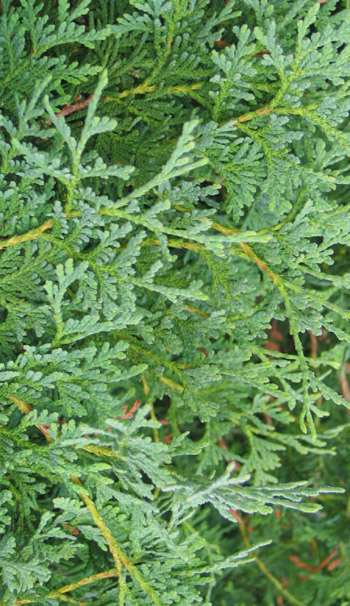
The thuya occidentalis which is commonly called white cedar is one of the most common tree of backyard in North-America.
You know that tree that smell like "vicks".

It is also the first North-American tree that came to France in 1534.

The main problem that face the firsts French-explorer that came to north-america (canada of that time) was the scurvy.
Their diet made of dryed meat and salted fish was extremely poor in antioxidant and vitamin C.
Scurvy was cause by this lack of antioxidant and vitamin C.

So, on their trip around the world, fresh fruits, citrus and vegetables was important and was also easy to find in tropical location.

That was not the case in northern north-america.

Almost half of the Jacques-Cartier's crew died in the first winter in Canada in theirs boat in the middle of the St-Lawrence.

As many of us prepare to "quarantine" maybe for at least 3mounth (a season), it is extremmely important to rely on a strong and easy to find source on antioxidant and vitamin C to complete an impoverished diet.

At the end on their trip, the aboriginal peoples learn to the first-european their "trick" to survived such a hard winter in this frozen country.

Amerindians teach them to drink infusion of thuya occidentalis and some frozen cranberry they where keeping with them.

All of theses newcommers that drink theses decoction recover well.

Jacques-Cartier bring back this "Tree of life" to the garden of the King of France where it keep that name until now.

The name of the tree was not lost but is infusion property was forgotten when
, 75 years after this adventure, Samuel-De-Champlain came again in Canada. They experience the same "bad sick hard winter".

Again, the amerindians give them their knowledge about how to stay in good health with a reduced diet.

________________________________________________________________

At this time of the year the new year sprout-leaves are very tender and less bitter!

Here is a recipe of a
Thuya occidentalis-Tree of life gelly that is very good

- 3 cup (300g) of new year sprout-leaves of white cedar(Thuya occidentalis)
- 2 cup boiling water
- juice of 2 citrus
- 3 1/2 cup of sugar
- 1/2 bottle of liquide pectine

Blend the new year sprout-leaves with the juice of 2 citrus and boil them for 15min
Filter and keep at least 2 cup of liquid

Add sugar

boil for 10 min, stir well

Add pectin and boil 1 min more

Remove what is floating to keep it clean

Put in sterilized jar and canned-it.

That's it, you have at home the Amerindians trick to stay home healty for a long, long, long winter.:cool:

Thuja_occidentalis_006_350.jpg
 
Last edited:
Re: Thuya occidentalis- tree of life gelly

The Anishinabeg who originally lived along the Atlantic coast began a westward migration along the St. Lawrence River in about 900 AD. They were searching for "an island in the shape of a turtle" and the "food that grows on water" described by one of the Seven Prophets. Some traveled far ahead and might have founded new tribes or were absorbed into other tribes along with their knowledge. Still others chose to stop along the way and founded villages along the St. Lawrence River. As a result the people were scattered from the Atlantic, along the St. Lawrence River, around the Great Lakes, north to Hudson Bay, into the prairies of the West, and into the Rocky Mountains.
cartier.jpg
Six hundred years later King Francis I of France commissioned Jacques Cartier to explore this area to determine if there were exploitable resources to add to the wealth of France. During his second voyage to the New World in 1535, Cartier's ship became trapped in the ice of the St. Lawrence River near what is now Quebec. His crew of 110 men ran out of fresh provisions and became very ill with scurvy. Twenty-five men died before the local natives, probably the descendants of the Anishinabe (see The Seventh Fire) came to their aid. Amazed that the light-skinned men in the big boat did not know how to maintain their health, they served the men a brew extracted from needles and bark of the Canadian pine trees. Twenty five men had already died and the rest of the crew, too weak to bury them, had tossed them overboard into the snow and ice that held the ship fast. Fearful of its contents and skeptical that the savage could know more than they, the healthier crewmembers refused to drink the concoction. Only those near death tried the herbal tea and within days they were well. Then all of the crew drank of the miraculous potion and regained their health. Even other chronic maladies were healed. Cartier described the incident in his book about the voyage, Voyage aux Canada. This, the second discovery of the miracle of the pines, lay dormant and unrecognized by the professors and doctors of Western Civilization for over four hundred years.


In the 1950's, Jacques Masquelier, a French biochemist on an assignment as Visiting Professor at the University of Quebec, discovered Cartier's amazing account and recognized that the medicine of the native people must have been rich in bioflavonoids.

Professor Masquelier began a search for the active ingredients, proanthocyanidins. and found a rich source in the bark of the French maritime pine tree along the Atlantic Ocean from Bordeaux to the Spanish border.

In 1969, Professor Masquelier began working for Horphag Research Ltd. to document its amazing health-giving qualities and non-toxicity, and to find safe methods of extraction. The US Patent office granted Horphag Research Patent No. 4,698,360 in 1987 for Pycnogenol as a therapeutic agent that acts as a scavenger of free radicals.

The traditional knowledge remains among some of the original people who had first discovered the miracle of the pine. In 1996, a holy man of the Cree in Saskatchewan told me of the secret his grandfather had told him. It was to be used to bring health to the people who had diabetes and other diseases. The secret medicine was made of a tea brewed from pine needles. The first discoverers had not entirely forgotten. Perhaps it will be remembered, that the miracle of the pines was a gift to all people and it was discovered by the First Nations, the Native American people, probably the Anishinabe, known today as the Ojibwe, Potawatomi, and Ottawa.


http://www.the7thfire.com/PycDiscovery.htm
 
Re: Thuya occidentalis- tree of life gelly

Fearful of its contents and skeptical that the savage could know more than they, the healthier crewmembers refused to drink the concoction. Only those near death tried the herbal tea and within days they were well. Then all of the crew drank of the miraculous potion and regained their health. Even other chronic maladies were healed. Cartier described the incident in his book about the voyage, Voyage aux Canada.

(...) recognized that the medicine of the native people must have been rich in bioflavonoids.


In your article, Snowy, they talk about pine neddles.
But articles I haved read talk about various coniferious leaves and it is tought that Thuyas where the main ingredient.
The thuyas bringed back by Jacques Cartier for the King of France's garden has been called "Arbre de vie" (Tree of life).

http://nature.jardin.free.fr/arbre/ft_thuja_occ.html

http://www.territoire.org/FRANCAIS/CREAF/HERBIER/cedre.html

Thuya occidentalis, Arbor Vitae
White cedar, Swamp Cedar
DESCRIPTION

Cet arbre magnifique, appelé "Arbor Vitae" (l'arbre de vie) au 16ème siècle par les colons français à la suite de Jacques Cartier, en raison de ses vertus curatives, est généralement touffu et dense, et d’une taille modérée qui dépasse rarement vingt mètres de hauteur. D’une apparence rassurante, en raison de son ramage épais, souple et protecteur, le cèdre, arbre aromatique par excellence, est le compagnon du sapin et du mélèze. (...)
Souvenons-nous qu’au temps de Jacques Cartier, la mortalité des premiers colons et des explorateurs français, exposés au scorbut, a été grandement diminuée par les tisanes de Cèdre mélangé avec de l’épinette que préparèrent les populations autochtones, d’où son nom, “arbre de vie”.


Machine Translated

DESCRIPTION

This splendid tree, called “Arbor Vitae” (the tree of life) at the 16th century by the French colonists following Jacques Cartier, because of its healing virtues, is generally bulky and dense, and of a moderate size which seldom exceeds twenty meters height. Of a reassuring appearance, because of its thick warbling, flexible and protective, the cedar, aromatic tree par excellence, is the companion of the fir tree and larch. (...)
Remember that at the time of Jacques Cartier, the mortality of the first colonists and the French explorers, exposed to the scurvy, was largely decreased by herb teas of Cedar mixed with virginal which the populations autochtones prepared, from where its name, “tree of life”


http://www.cfl.scf.rncan.gc.ca/IMFEC-IDECF/arbreshotes/coniferes/thuya.html
Some 800 years old Thuyas haved been found in northern Québec.

Repartition era
thu_airrep_blanc.jpg
 
Re: Thuya occidentalis- tree of life gelly

http://www.scielo.br/scielo.php?script=sci_arttext&pid=S0100-879X2004000200015

Brazilian Journal of Medical and Biological Research
Evidence that medicinal plant products can affect radiolabeling of RBC in the context of clinical nuclear medicine has come to light only recently, and a number of researchers have turned their attention to in vitro testing of the drug with labeled RBC (6,7). Some studies on the effect of natural products (Thuya occidentalis, Nicotiana tabacum, Paullinia cupana, Brassica oleracea L. var. botrytis, Fucus vesiculosus) on RBC labeling have shown that this action could be due to the redox properties of the extract (T. occidentalis, N. tabacum, P. cupana, B. oleracea L. var. botrytis, F. vesiculosus) (8-12).

Also
Oliveira JF, Braga ACC, Ávila AS, Fonseca LMB, Gutfilen B & Bernardo-Filho M (1997). Effect of Thuya occidentalis on the labeling of red blood cells and plasma proteins with technetium-99m. Yale Journal of Biology and Medicine, 69: 489-494.

FELZENSZWALB, I. ; O, V. J. . Genotoxic evaluation of the effect of Thuya occidentalys tinctures. Revista Brasileira de Biologia, São Carlos, SP, Brasil, v. 61, n. 2, p. 329-332, 2001.

FELZENSZWALB, I. . Ausência de Mutagenicidade de Thuya Occidentalis. In: IX Reunião da FESBE, 1994. Livro de resumos. Caxambú. p. 285-285.

Strangely, Brazil seem to do more research on this than we did in North-America.
 
Re: Thuya occidentalis- tree of life gelly

Just to clarify, white cedar or eastern white cedar (Thuya occidentalis) grows on the Atlantic side of the US. There are many kinds of cedars that grow in North America.

On the Pacific side, the cedars we have are the incense cedar (Libocedrus decurrens), the western red cedar (Thuja plicata), and the Port-Orford-cedar (Chamaecyparis lawsoniana). Incense cedar is in the cypress family.Please new people, don't be makin' up brews with unknown cedars (or any other plant) unless you do more research. I don't know if our western cedars are good or not -- for anything more than the ritual cleansing smoke -- but if you imbibe or ingest something, you'd best know what it is. :rolleyes: I know for most that I'm preaching to the choir... I just had'ta say it.

:)
 
Re: Thuya occidentalis- tree of life gelly

Your, right Mellie, be careful before trying to eat extract from any miss-known species.

That said, the white cedar(thuya occidentalis) gelly is an ancient recipe that has been almost forgoten and is on the way to be more and more popular here in Quebec.

Many local gastronomic restaurant served it with hunting's meal.
Some amerindian community (huron's community near québec-city) doing commerce with it also.
In few family, some old grand-mothers remember it.
So I'm not afraid of it.

Refer yourself to the repartition map above.
This tree is also sold as ornemental household tree too.

Be sure of the real identity of your tree before eat or drink anything.

Ming
 
Re: Thuya occidentalis- tree of life gelly

Thank you Snowy,

I was waiting for this kind of confirmation coming from real natives.
 
Re: Thuya occidentalis- tree of life gelly

On an Alaskan medicinal plants site (http://altmed.creighton.edu/AKNative/MEDICINAL%20PLANTS.htm),
I found:

sprucetip.jpg
<LAYER visibility="hide">
Scientific Name: Picea glauca
Common Name(s): White spruce

Spruce pitch or sap placed on wounds for healing, to stop bleeding, and to prevent infection; heated pitch brough relief to burns, sore muscles, and tooth aches; tea from the bark was used for relief of symptoms with cold, flu, and sore throat; spruce needle tea was used for stomach ailments and kidney problems; juice squeezed from the new spruce tips at the tree top or end of the branches was used to relieve sore eyes.
---------------------------------------------------

Snowy & Mingus - do you know if this white Spruce has similar properties?

.

</LAYER><!--webbot bot="PhotoAlbum" i-checksum="56189" endspan -->
 
Re: Thuya occidentalis- tree of life gelly

I dont find reference quickly here but I know similar recepy exist that use smoot new light green neddles (when they first grow in early june) of white spruce instead of thuyas leafs.

There is also the old "spruce beer" that is in fact a bubbled soft drink.
There is some little local company here that produce an authenthic one. You really feel to drink a real spruce with this. (remembered me my childhood)

In their site they claimed that this beverage was invented by the American army during the american revolution (around 1776) and they used it as a vitaminic beverage that fight against scurvy and keep the troops healthy! (They say it was in fact the George Washington's troop ! :whistle: )

But it is a commercial site so the information could be biased.
The site look nice with a funny fifties style. :D
http://www.breuvagesmarco.com/
 
Re: Thuya occidentalis- tree of life gelly

Snowy do you have others info about theses drink ? ( Sitting Bull, Riel, Mao )

From Wikkipedia
Amrita
From Wikipedia, the free encyclopedia
Jump to: navigation, search

In Hindu mythology and Buddhist mythology, Amrita is the drink of the gods, which grants them immortality. The word itself literally means "without death"

In Yogic Philosophy (see yoga) amrita is a fluid that can flow from the pineal gland down the throat in deep states of meditation. It is considered quite a boon: some yogic texts say that one drop is enough to conquer death. Amrita means immortal soul, one who has drank Amrit (the potion of immortality) It is also a common first name in India and Nepal, as the masculine "Amrit" and the feminine "Amrita."

After the Prayala Deluge at the beginning of the present the gods lost there immortality. The Gods were in danger of losing there ruling over the demons. They decided to go to Vishnu, the preserver for guidance. Vishnu said that if they churned the sea of milk, they might produce amrita, the drink of the Gods, which could make them strong and immortal. So Vishnu took the form of Kurma, the turtle avatar. He has four arms, two to support his great shell. Kurma sat on the bottom of the sea floor and gods placed a mountain, Mount Mandra on Kurma shell, and used it as a churning rod.
 
Re: Thuya occidentalis- tree of life gelly

Please be careful using thuja.

The foliage of thuja is rich in Vitamin C and is believed to be the annedda which cured the scurvy of Jacques Cartier and his party in the winter of 1535?1536.[4] Due to the neurotoxic compound thujone, internal use can be harmful and is not recommended.
http://en.wikipedia.org/wiki/Thuja_occidentalis

Thujone is a ketone and a monoterpene that exists in two stereoisomeric forms: (+)-3-thujone or α-thujone and (−)-3-thujone or β-thujone. It has a menthol odor. Even though it is best known for being a chemical in absinthe, recent tests show absinthe contains only small quantities of thujone, and may or may not be responsible for absinthe's reported psychedelic effects. Thujone acts on GABA and 5-HT3 receptors[1] in the brain and exhibits slight psychoactive response[citation needed]. In many countries the amount of thujone allowed in food or drink products is regulated[citation needed].

Thujone is found in a number of plants, such as arborvitae (genus Thuja, hence the derivation of the name), Nootka Cypress, some junipers, mugwort, common sage, tansy and wormwood, most notably grand wormwood (Artemisia absinthium), usually as a mix of isomers in a 1:2 ratio. It is also found in various species of mentha (mint).

Please read more here:
http://en.wikipedia.org/wiki/Thujone
 
Re: Thuya occidentalis- tree of life gelly

Mousehound is correct be very careful of thuja. Pine needles however, make a dandy and not bad tasting tea. The tase is rather weak. They too are a source of vitamin C.
 
Back
Top Bottom