

Pathfinder
Editor, Senior Moderator
CITY OF AUSTIN
FOR IMMEDIATE RELEASE
Release Date: Feb. 27, 2015
Contact: Patricia Fraga 512-974-2969 Email
CITY CONTINUES INVESTIGATION INTO RABIES EXPOSURE AT ZILKER PARK
City asks the public to report any contact with the infected dog.

The City of Austin continues to ask the public to report any contact with a 9- to 10-month-old black-and-white Border Collie mix that was off-leash near the sand volleyball courts Feb. 8 at Zilker Park. The dog was later determined to have rabies.
To report a possible human contact with the infected dog call Health and Human Services Disease Surveillance Program at (512) 972-5555; for potential animal contact, call Austin Animal Services at 3-1-1.
Exposure to the dog occurred between 4:30 and 6 p.m. Feb. 8. The City continues to ask anyone who was at the park during this time period and think their dogs had nose-to- nose contact with the infected dog to call 3-1-1 immediately to report the incident, and to follow up with their dog?s veterinarian for evaluation whether a rabies vaccine booster is recommended.
Austin Animal Services and the Austin /Travis County Health and Human Services Department provided this update as of noon today, Feb. 27:
The rabies incubation period in animals and humans vary. On average, it takes 3-8 weeks following exposure for an animal or human to develop signs of rabies. During this time the virus travels from the initial exposure site to the spinal cord and brain. From the brain, the virus travels to the saliva glands and the saliva. Rabies may be prevented following an exposure through one or more post-exposure rabies vaccinations.
First symptoms of rabies in animals can include change in personality, depression, fever and loss of appetite. Advance signs progress within days to nervous system abnormalities such as:
The City of Austin conducts free rabies vaccination events several times a year. The next clinic is from 8 a.m. to noon May 16 at Richard Moya Park, 10001 Burleson Road.
For more information about pet rabies prevention, call 3-1-1.
http://www.austintexas.gov/news/city...re-zilker-park
----------------------------------------------------------------------------------------------------------------
CITY OF AUSTIn
FOR IMMEDIATE RELEASE
Release Date: Mar. 04, 2015
Contact: Patricia Fraga 512-974-2969 Email
OFFICIALS ASK PUBLIC FOR ASSISTANCE WITH IDENTIFYING YOUNG CHILD POTENTIALLY EXPOSED TO RABIES
State and City officials are asking public assistance in identifying a young boy who was seen playing with a rabid dog in Zilker Park on Feb. 8.
In partnership with the Texas Department of State Health Services, the City continues to search for an elementary school-aged boy with pale skin who was accompanied by two Caucasian women who visited Zilker Park?s off-leash area near the sand volleyball courts from 4:30 to 6 p.m. during the dog?s infectious period.
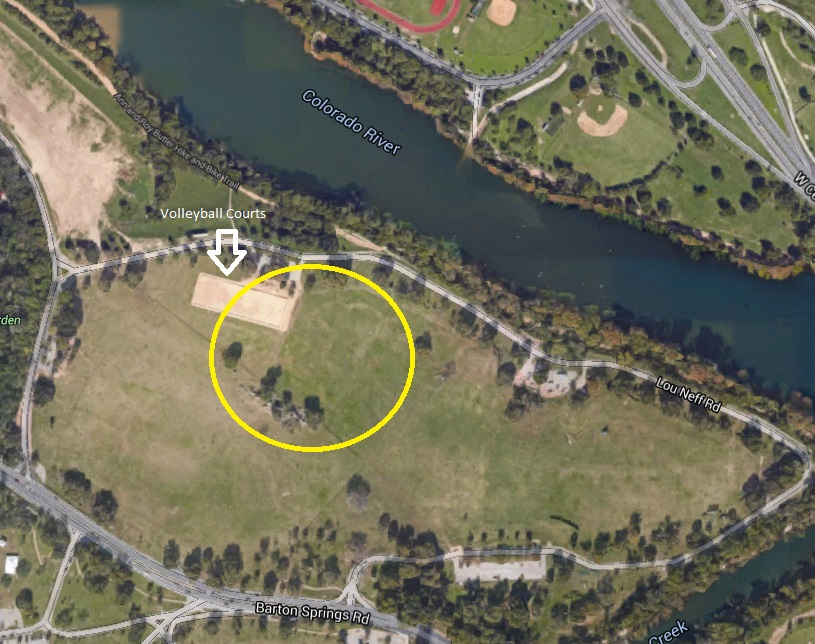
The boy was observed playing fetch for approximately 15 minutes with the black-and-white Border Collie mix. The three appeared to be speaking a language other than Spanish or English. It?s unclear if they are residents of Austin.
The City seeks any photos/video from the public taken in this area of Zilker Park during this timeframe and potentially shows a family that matches this description.
Photos can be sent toanimal.protection@austintexas.gov or the public can call 3-1-1 to report additional information.
The 9- to 10-month-old dog was off-leash near the sand volleyball courts. The dog was later determined to have rabies.
To report a possible human contact with the infected dog call Health and Human Services Disease Surveillance Program at (512) 972-5555; for potential animal contact, call Austin Animal Services at 3-1-1.
If you think your pet was exposed, contact 3-1-1 to report the incident and follow up with your dog?s veterinarian for evaluation whether a rabies vaccine booster is recommended.
Rabies virus is shed through the oral fluids of an infectious animal. Rabies is transmitted only when the virus is introduced into a bite wound, open cuts in skin, or onto mucous membranes such as mouth, nostrils or eyes.
The rabies incubation period in animals and humans vary. On average, it takes 3-8 weeks following exposure for an animal or human to develop signs of rabies. During this time the virus travels from the initial exposure site to the spinal cord and brain. From the brain, the virus travels to the saliva glands and the saliva. Rabies may be prevented following an exposure through one or more post-exposure rabies vaccinations.
First symptoms of rabies in animals can include change in personality, depression, fever and loss of appetite. Advance signs progress within days to nervous system abnormalities such as:
For more information about pet rabies prevention, call 3-1-1.
Download and post our Rabies prevention flier, here.
http://www.austintexas.gov/news/offi...exposed-rabies
FOR IMMEDIATE RELEASE
Release Date: Feb. 27, 2015
Contact: Patricia Fraga 512-974-2969 Email
CITY CONTINUES INVESTIGATION INTO RABIES EXPOSURE AT ZILKER PARK
City asks the public to report any contact with the infected dog.
The City of Austin continues to ask the public to report any contact with a 9- to 10-month-old black-and-white Border Collie mix that was off-leash near the sand volleyball courts Feb. 8 at Zilker Park. The dog was later determined to have rabies.
To report a possible human contact with the infected dog call Health and Human Services Disease Surveillance Program at (512) 972-5555; for potential animal contact, call Austin Animal Services at 3-1-1.
Exposure to the dog occurred between 4:30 and 6 p.m. Feb. 8. The City continues to ask anyone who was at the park during this time period and think their dogs had nose-to- nose contact with the infected dog to call 3-1-1 immediately to report the incident, and to follow up with their dog?s veterinarian for evaluation whether a rabies vaccine booster is recommended.
Austin Animal Services and the Austin /Travis County Health and Human Services Department provided this update as of noon today, Feb. 27:
- Six people, including the dog?s owner, have or will be starting treatment for rabies exposure. Others exposed to the dog were two friends of the pet owner and three workers at a restaurant.
- Eight dogs have been determined to have had contact with the infected animal. Seven of these are in confined to their own homes/yards for 45 days for observation and State law forbids any contact with other animals during the time period. The other dog is quarantined at the Austin Animal Center.
- Officials are looking for an elementary-aged, blond-haired Caucasian boy that was observed playing with the dog.
The rabies incubation period in animals and humans vary. On average, it takes 3-8 weeks following exposure for an animal or human to develop signs of rabies. During this time the virus travels from the initial exposure site to the spinal cord and brain. From the brain, the virus travels to the saliva glands and the saliva. Rabies may be prevented following an exposure through one or more post-exposure rabies vaccinations.
First symptoms of rabies in animals can include change in personality, depression, fever and loss of appetite. Advance signs progress within days to nervous system abnormalities such as:
- Abnormal behavior, aggression, and/or self-mutilation.
- Cranial nerve (dropped jaw, tongue incoordination, difficulty swallowing, excessive salivation).
- Ataxia (wobbly, weakness, paralysis, seizures)
The City of Austin conducts free rabies vaccination events several times a year. The next clinic is from 8 a.m. to noon May 16 at Richard Moya Park, 10001 Burleson Road.
For more information about pet rabies prevention, call 3-1-1.
http://www.austintexas.gov/news/city...re-zilker-park
----------------------------------------------------------------------------------------------------------------
CITY OF AUSTIn
FOR IMMEDIATE RELEASE
Release Date: Mar. 04, 2015
Contact: Patricia Fraga 512-974-2969 Email
OFFICIALS ASK PUBLIC FOR ASSISTANCE WITH IDENTIFYING YOUNG CHILD POTENTIALLY EXPOSED TO RABIES
State and City officials are asking public assistance in identifying a young boy who was seen playing with a rabid dog in Zilker Park on Feb. 8.
In partnership with the Texas Department of State Health Services, the City continues to search for an elementary school-aged boy with pale skin who was accompanied by two Caucasian women who visited Zilker Park?s off-leash area near the sand volleyball courts from 4:30 to 6 p.m. during the dog?s infectious period.
The boy was observed playing fetch for approximately 15 minutes with the black-and-white Border Collie mix. The three appeared to be speaking a language other than Spanish or English. It?s unclear if they are residents of Austin.
The City seeks any photos/video from the public taken in this area of Zilker Park during this timeframe and potentially shows a family that matches this description.
Photos can be sent toanimal.protection@austintexas.gov or the public can call 3-1-1 to report additional information.
The 9- to 10-month-old dog was off-leash near the sand volleyball courts. The dog was later determined to have rabies.
To report a possible human contact with the infected dog call Health and Human Services Disease Surveillance Program at (512) 972-5555; for potential animal contact, call Austin Animal Services at 3-1-1.
If you think your pet was exposed, contact 3-1-1 to report the incident and follow up with your dog?s veterinarian for evaluation whether a rabies vaccine booster is recommended.
Rabies virus is shed through the oral fluids of an infectious animal. Rabies is transmitted only when the virus is introduced into a bite wound, open cuts in skin, or onto mucous membranes such as mouth, nostrils or eyes.
The rabies incubation period in animals and humans vary. On average, it takes 3-8 weeks following exposure for an animal or human to develop signs of rabies. During this time the virus travels from the initial exposure site to the spinal cord and brain. From the brain, the virus travels to the saliva glands and the saliva. Rabies may be prevented following an exposure through one or more post-exposure rabies vaccinations.
First symptoms of rabies in animals can include change in personality, depression, fever and loss of appetite. Advance signs progress within days to nervous system abnormalities such as:
- Abnormal behavior, aggression, and/or self-mutilation.
- Cranial nerve (dropped jaw, tongue incoordination, difficulty swallowing, excessive salivation).
- Ataxia (wobbly, weakness, paralysis, seizures)
For more information about pet rabies prevention, call 3-1-1.
Download and post our Rabies prevention flier, here.
http://www.austintexas.gov/news/offi...exposed-rabies