Michael Coston
Editor, Senior Moderator
Taiwan: H5N1 Infected Chicken Dumping Incident Investigated

Credit https://www.miaoli.gov.tw/
#19,032
As long-time flu watchers, one of the `unofficial' signs we look for are reports of the illegal `midnight dumping' of sick or dead livestock (mostly poultry and pigs) into rivers, lakes, or ditches.
A genuinely bad idea, as some viruses (HPAI, ASF, etc.) can remain viable in the environment (under the right conditions) for weeks or even months (see Proc. Royal Society B: Influenza A Viruses Remain Viable For Months In Northern Wetlands - USGS).
Water supplies can become contaminated, and insect vectors (see Nature Sci Rpts: Detection of H5N1 HPAI virus RNA in filth flies collected from California farms in 2024), birds, or small mammals may spread the disease even further.
But people are often afraid to report unusual poultry deaths in their backyard flock - or even larger operations - for fear that authorities will come and cull the rest of their birds (see Vietnam: Dozens Of Sacks Of H5N6 Infected Chickens Dumped on Nghe An Beach).
During China's ASF (African Swine Fever) outbreak in 2018-2019, we saw so many pigs dumped into rivers, that they began floating up on Taiwan's beaches (see Taiwan BAPHIQ: Ramping Up Patrols For `Sea Drift' & Abandoned Pig Carcasses).
Famously, in 2013 (see Shanghai Govt.: Thousands Of Dead Pigs Retrieved From River) - we saw reports of as many as 3,000 pig carcasses dumped in the Huangpu river - a tributary of the Yangtze - that provides many of the 23 million residents of Shanghai with their drinking water.
Due to government crackdowns (and many governments paying compensation to affected farmers), reports of clandestine dumping of livestock have diminished in recent years, but today we have a report from Taiwan of just such an incident from the Miaoli County government.
The local authorities are taking this seriously, and if identified, the offender could be fined NT$1 Million (roughly $32,000 USD).
While Taiwan pays farmers partial compensation for losses due to HPAI H5N1 - as we've seen in South Korea - payments can be denied (and fines imposed) if the farms failed to follow strict biosecurity rules.
I've posted the full (translated) statement from the Miaoli County website below. I'll have a bit more after the break.
H5N1 was detected in chicken carcasses found in Houlong. The county magistrate ordered a thorough investigation and a maximum fine of NT$1 million to be imposed on the perpetrators.
Person in charge: Zhang, Technician, Animal Protection and Quarantine Department, Animal Protection and Disease Control Center
Contact number: 037-320049 ext. 124
Last published on: 115-01-28 16:11
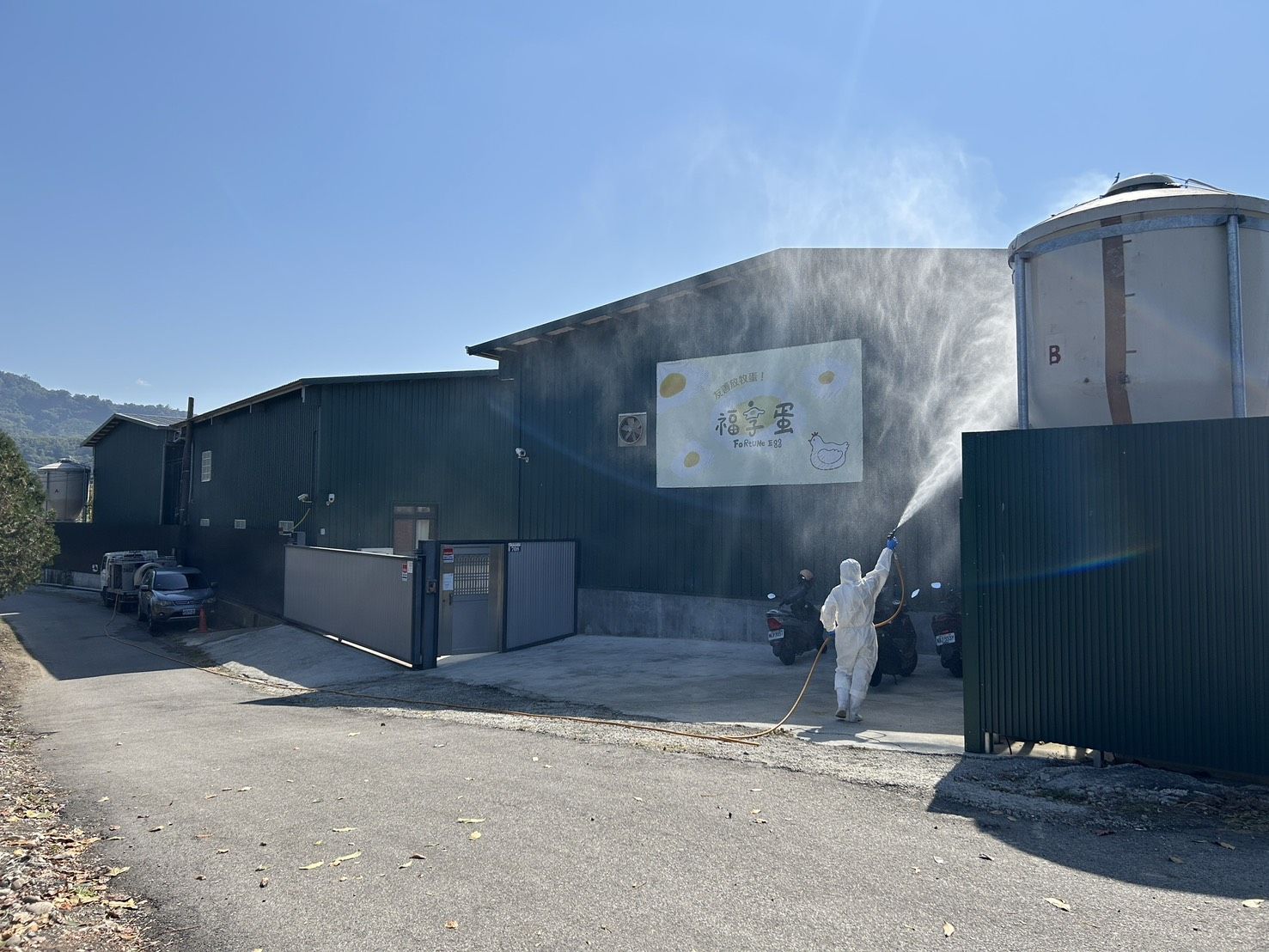
On January 26, the Miaoli County Animal Protection and Disease Control Center received a report that 235 chicken carcasses had been found abandoned in the Waipu drainage ditch in Houlong Township. Samples were immediately taken and sent for testing upon receiving the report. The carcasses were subsequently disposed of by a rendering plant, and a thorough disinfection of the surrounding environment was carried out. Health inspections of poultry farms within a 3-kilometer radius were also initiated.
On January 28, the Animal Protection and Disease Control Center received notification from the Veterinary Research Institute that the dead chickens had been diagnosed with H5N1 subtype highly pathogenic avian influenza. County Magistrate Chung Tung-chin took this matter very seriously, instructing a thorough investigation of the person responsible for abandoning the chicken carcasses and imposing the maximum penalty of NT$1 million for violating the Animal Infectious Disease Prevention and Control Act. At the same time, strict disease prevention measures were implemented to comprehensively prevent any potential outbreaks.
The Animal Disease Control Center stated that after receiving a report from the public on the 26th, it immediately activated its epidemic prevention response mechanism and completed measures including on-site inventory of designated facilities for disposal, sampling and testing, and comprehensive disinfection of the surrounding area. On the 27th, it continued to conduct health visits to 10 poultry farms within a 3-kilometer radius, and the results showed that the chickens were in good health. At the same time, it assisted in disinfecting the area around the farms and guided the operators to strengthen the disinfection of the farms and vehicles, and implement self-epidemic prevention and biosecurity management. On the 28th, it continued to complete the sampling and testing of poultry farms within a 3-kilometer radius.
The Miaoli County Government stated that the illegal disposal of diseased and dead poultry is suspected of violating Article 12 of the Animal Infectious Disease Prevention and Control Act. The authorities have traced the perpetrators and have identified poultry farms in the Taichung area. They are in close contact with relevant authorities in Taichung.
Upon learning that unscrupulous businesses were disregarding regulations by abandoning diseased and dead chickens, ignoring disease prevention efforts, and challenging public authority, County Magistrate Chung Tung-chin immediately instructed the relevant authorities to thoroughly investigate the perpetrators in accordance with the law and impose a maximum fine of NT$1 million in accordance with relevant regulations. He emphasized that the cases should be handled strictly and without leniency to ensure the integrity of the disease prevention system and public safety.
(Continue . . . )
Hopefully this is an isolated incident, and not the start of a dangerous new trend. But poultry farmers around the globe do seem to be having a harder time keeping the virus out of the hen house since last summer.
Three weeks ago, in South Korea MAFRA: Special Quarantine Measures Implemented for one Month to Prevent the Spread of HPAI, we saw a tacit admission from the South Korean government that even farms that follow strict biosecurity procedures were still susceptible to infection from the current `highly infectious' HPAI H5 virus.
While most commercial poultry operations should already know and understand their obligations to maintain strict biosecurity due to avian influenza, there are more than 11 million backyard poultry flocks in the United States alone, and tens of millions more in Europe and Asia.
So far, roughly 200 backyard flocks have been infected since September of last year in the United States, and we've seen at least one death `linked to contact with backyard or wild birds'.
Last October, in UF/IFAS Extension: What Backyard Flock Owners Need to Know about Bird Flu (Influenza H5N1), we looked at two H5N1 related publications; one for backyard poultry owners, and another for consumers of poultry products and milk.
Hopefully backyard flock owners are taking these recommendations seriously, because the last thing we need is to give this virus any kind of helping hand.
https://afludiary.blogspot.com/2026/01/taiwan-h5n1-infected-chicken-dumping.html
Credit https://www.miaoli.gov.tw/
#19,032
As long-time flu watchers, one of the `unofficial' signs we look for are reports of the illegal `midnight dumping' of sick or dead livestock (mostly poultry and pigs) into rivers, lakes, or ditches.
A genuinely bad idea, as some viruses (HPAI, ASF, etc.) can remain viable in the environment (under the right conditions) for weeks or even months (see Proc. Royal Society B: Influenza A Viruses Remain Viable For Months In Northern Wetlands - USGS).
Water supplies can become contaminated, and insect vectors (see Nature Sci Rpts: Detection of H5N1 HPAI virus RNA in filth flies collected from California farms in 2024), birds, or small mammals may spread the disease even further.
But people are often afraid to report unusual poultry deaths in their backyard flock - or even larger operations - for fear that authorities will come and cull the rest of their birds (see Vietnam: Dozens Of Sacks Of H5N6 Infected Chickens Dumped on Nghe An Beach).
During China's ASF (African Swine Fever) outbreak in 2018-2019, we saw so many pigs dumped into rivers, that they began floating up on Taiwan's beaches (see Taiwan BAPHIQ: Ramping Up Patrols For `Sea Drift' & Abandoned Pig Carcasses).
Famously, in 2013 (see Shanghai Govt.: Thousands Of Dead Pigs Retrieved From River) - we saw reports of as many as 3,000 pig carcasses dumped in the Huangpu river - a tributary of the Yangtze - that provides many of the 23 million residents of Shanghai with their drinking water.
Due to government crackdowns (and many governments paying compensation to affected farmers), reports of clandestine dumping of livestock have diminished in recent years, but today we have a report from Taiwan of just such an incident from the Miaoli County government.
The local authorities are taking this seriously, and if identified, the offender could be fined NT$1 Million (roughly $32,000 USD).
While Taiwan pays farmers partial compensation for losses due to HPAI H5N1 - as we've seen in South Korea - payments can be denied (and fines imposed) if the farms failed to follow strict biosecurity rules.
I've posted the full (translated) statement from the Miaoli County website below. I'll have a bit more after the break.
H5N1 was detected in chicken carcasses found in Houlong. The county magistrate ordered a thorough investigation and a maximum fine of NT$1 million to be imposed on the perpetrators.
Person in charge: Zhang, Technician, Animal Protection and Quarantine Department, Animal Protection and Disease Control Center
Contact number: 037-320049 ext. 124
Last published on: 115-01-28 16:11
On January 26, the Miaoli County Animal Protection and Disease Control Center received a report that 235 chicken carcasses had been found abandoned in the Waipu drainage ditch in Houlong Township. Samples were immediately taken and sent for testing upon receiving the report. The carcasses were subsequently disposed of by a rendering plant, and a thorough disinfection of the surrounding environment was carried out. Health inspections of poultry farms within a 3-kilometer radius were also initiated.
On January 28, the Animal Protection and Disease Control Center received notification from the Veterinary Research Institute that the dead chickens had been diagnosed with H5N1 subtype highly pathogenic avian influenza. County Magistrate Chung Tung-chin took this matter very seriously, instructing a thorough investigation of the person responsible for abandoning the chicken carcasses and imposing the maximum penalty of NT$1 million for violating the Animal Infectious Disease Prevention and Control Act. At the same time, strict disease prevention measures were implemented to comprehensively prevent any potential outbreaks.
The Animal Disease Control Center stated that after receiving a report from the public on the 26th, it immediately activated its epidemic prevention response mechanism and completed measures including on-site inventory of designated facilities for disposal, sampling and testing, and comprehensive disinfection of the surrounding area. On the 27th, it continued to conduct health visits to 10 poultry farms within a 3-kilometer radius, and the results showed that the chickens were in good health. At the same time, it assisted in disinfecting the area around the farms and guided the operators to strengthen the disinfection of the farms and vehicles, and implement self-epidemic prevention and biosecurity management. On the 28th, it continued to complete the sampling and testing of poultry farms within a 3-kilometer radius.
The Miaoli County Government stated that the illegal disposal of diseased and dead poultry is suspected of violating Article 12 of the Animal Infectious Disease Prevention and Control Act. The authorities have traced the perpetrators and have identified poultry farms in the Taichung area. They are in close contact with relevant authorities in Taichung.
Upon learning that unscrupulous businesses were disregarding regulations by abandoning diseased and dead chickens, ignoring disease prevention efforts, and challenging public authority, County Magistrate Chung Tung-chin immediately instructed the relevant authorities to thoroughly investigate the perpetrators in accordance with the law and impose a maximum fine of NT$1 million in accordance with relevant regulations. He emphasized that the cases should be handled strictly and without leniency to ensure the integrity of the disease prevention system and public safety.
(Continue . . . )
Hopefully this is an isolated incident, and not the start of a dangerous new trend. But poultry farmers around the globe do seem to be having a harder time keeping the virus out of the hen house since last summer.
Three weeks ago, in South Korea MAFRA: Special Quarantine Measures Implemented for one Month to Prevent the Spread of HPAI, we saw a tacit admission from the South Korean government that even farms that follow strict biosecurity procedures were still susceptible to infection from the current `highly infectious' HPAI H5 virus.
While most commercial poultry operations should already know and understand their obligations to maintain strict biosecurity due to avian influenza, there are more than 11 million backyard poultry flocks in the United States alone, and tens of millions more in Europe and Asia.
So far, roughly 200 backyard flocks have been infected since September of last year in the United States, and we've seen at least one death `linked to contact with backyard or wild birds'.
Last October, in UF/IFAS Extension: What Backyard Flock Owners Need to Know about Bird Flu (Influenza H5N1), we looked at two H5N1 related publications; one for backyard poultry owners, and another for consumers of poultry products and milk.
As bad as HPAI has become in recent months, it has the potential to become much worse.
Hopefully backyard flock owners are taking these recommendations seriously, because the last thing we need is to give this virus any kind of helping hand.
https://afludiary.blogspot.com/2026/01/taiwan-h5n1-infected-chicken-dumping.html
Last edited: