• FluTrackers.com Inc. does not provide medical advice. Information on this web site is collected from various internet resources, and the FluTrackers board of directors makes no warranty to the safety, efficacy, correctness or completeness of the information posted on this site by any author or poster. The information collated here is for instructional and/or discussion purposes only and is NOT intended to diagnose or treat any disease, illness, or other medical condition. Every individual reader or poster should seek advice from their personal physician/healthcare practitioner before considering or using any interventions that are discussed on this website. By continuing to access this website you agree to consult your personal physican before using any interventions posted on this website, and you agree to hold harmless FluTrackers.com Inc., the board of directors, the members, and all authors and posters for any effects from use of any medication, supplement, vitamin or other substance, device, intervention, etc. mentioned in posts on this website, or other internet venues referenced in posts on this website.
  • We are not asking for any donations. Do not donate to any entity who says they are raising funds for us.

Switzerland - A Swiss woman infected with Ebola is repatriated from Nigeria

Pathfinder

Editor, Senior Moderator
---------------------------------------------------------------------------
Translation Google

Ebola patient is being brought to Switzerland

Keystone-SDA
Bern ,October 26, 2026 - 10:09

The Swiss woman infected with the Ebola virus in Nigeria is being transferred to Switzerland for treatment. She was flown out of the Nigerian capital, Abuja, on Monday morning, Nigerian Health Minister Muhammad Ali Pate announced on X.

The patient's condition had improved significantly. She was stable, conscious, and responsive. Her lab results had also returned to near normal, Pate wrote.

The woman and her husband were also flown out of the country. He continues to show no symptoms. Despite her improved condition, the patient may still be contagious. Therefore, strict protective measures are being observed. The Nigerian Minister of Health promised further information on Monday afternoon, after the patient and her husband had arrived safely at their destination.

The Federal Office of Public Health (BAG) did not initially confirm the information when contacted by the Keystone-SDA news agency.

Since 2019, Switzerland has had two reference hospitals equipped for the treatment of diseases such as Ebola: the University Hospital Zurich (USZ) and the University Hospital Geneva (HUG).

To date, two people who contracted Ebola in Africa have been treated in Switzerland. In 1995, a Swiss anthropologist was treated in Switzerland after contracting Ebola while working with monkeys in Africa. In 2014, a Cuban doctor was admitted to Geneva University Hospital (HUG). He had contracted the virus during a relief mission in Sierra Leone and was part of a medical team fighting the Ebola epidemic in West Africa. Both patients survived, according to the Federal Office of Public Health (FOPH).
--------------------------------------------------------
A Swiss woman infected with Ebola is repatriated from Nigeria

A Swiss woman infected with the Ebola virus in Nigeria was repatriated to Switzerland on Monday for treatment. She left Abuja by plane Monday morning, the Nigerian health minister said.

This content was published on October 26, 2026 - 10:34

(Keystone-ATS) The patient's condition has improved significantly, Muhammad Ali Pate wrote on X. She was stable, conscious, and responsive, and her test results were approaching normal levels. Her husband, who remains asymptomatic, is with her. A risk of contagion persists, necessitating strict protective measures.

When contacted by Keystone-ATS, the Federal Office of Public Health (FOPH) initially did not confirm this information. The university hospitals in Zurich and Geneva are equipped to treat Ebola. Two people infected in Africa have already been treated in Switzerland, in 1995 and 2014. Both survived.


 
Translation Google

Published October 26, 2026, 2:37 PM

Repatriated from Nigeria:

The Swiss patient with Ebola has arrived in Zurich.

The first Nigerian patient with Ebola has been evacuated to Switzerland. Two hospitals are ready to receive her for treatment.


by Justin Arber

A Swiss woman infected with the Ebola virus during a trip to Uganda was repatriated from Nigeria on Monday. The Rega air ambulance carrying her landed in Zurich at 1:29 p.m., according to Flightradar24. The patient had been receiving treatment at a private clinic in Nigeria. With her condition having significantly improved, authorities authorized her transfer to Switzerland for continued treatment.

Her condition has improved significantly
"I confirm that the patient was evacuated to Switzerland this morning with my agreement," Nigerian Health Minister Muhammad Ali Pate told X.

The patient's condition had significantly improved before her departure. "She was stable, conscious, responsive, and her medical test results were returning to near-initial values," the minister stated. As the Swiss woman was still considered potentially contagious, her transfer required strict health protocols.

Her husband shows no symptoms
According to SRF , the patient is the wife of an employee at the Swiss embassy in Abuja. After her infection was confirmed on October 20, her husband was placed in isolation. He was also repatriated on Monday aboard a Rega air ambulance and is still asymptomatic. The Federal Department of Foreign Affairs (FDFA) is expected to release further information this afternoon.

In Switzerland, the university hospitals of Zurich and Geneva have been equipped to treat Ebola patients since 2019. Zurich University Hospital confirmed to Keystone-ATS on Monday that it would be admitting a person suspected of being infected. As reported by the Tages-Anzeiger , the patient will be cared for in a specialized isolation unit by trained staff. The hospital assures that other patients and employees are not at risk.

-------------------------------------------------------------------------
Zurich University Hospital admits person suspected of having Ebola

The University Hospital Zurich is treating the person in a special isolation ward. It is one of two national centers for the treatment of Ebola cases.

Published today at 1:59 PM

The University Hospital Zurich (USZ) admitted a person suspected of having Ebola on Monday. The hospital confirmed this in response to a query from Keystone-SDA. The USZ did not confirm whether this was the Swiss woman who was evacuated from Nigeria .

The person is being cared for in a special isolation ward for highly infectious diseases. The designated ward meets all requirements for safe isolation and care, the University Hospital Zurich (USZ) announced.

Staff directly or indirectly involved in patient care have been trained for their tasks. For other staff members, nothing will change in their daily work routine. The hospital also emphasized that there is no danger to regular patients or visitors.

The University Hospital Zurich (USZ), along with the Geneva University Hospitals (HUG), is one of two national centers of excellence for the treatment of Ebola. Commissioned by the federal government and the cantons, the two hospitals provide specialized isolation facilities for the whole of Switzerland.


Translation Google
1793041842217.webp​

A person with Ebola being treated at Geneva University Hospitals​

Publication date:
October 26, 2026

A person infected with the Ebola virus in Bundibugyo was repatriated from Nigeria by REGA (Swiss Air-Rescue) and admitted to Geneva University Hospitals (HUG) on October 26. Their husband, a close contact, is in isolation at Zurich University Hospital (USZ). Both are Swiss nationals. Both hospitals are prepared for such situations. The safety of staff and other patients is guaranteed. According to the Federal Office of Public Health (FOPH), there is no risk to the Swiss population.

The two people were repatriated to Switzerland by REGA. Their transport and hospital care follow the recommendations of the health authorities, in particular the public health directorate (DSP) of the cantonal medical officer, based on national and international scientific protocols aimed at preventing any exposure to the virus.

The patient hospitalized at HUG is receiving specialized care. Their health is stable. They will remain in isolation for as long as their condition and health requirements necessitate it.

Ebola is a serious viral infectious disease. The virus is transmitted through close contact with a person showing symptoms or with an infected animal, particularly via bodily fluids.

The Federal Office of Public Health (FOPH) is constantly assessing the risks and coordinating closely with the two hospitals and the relevant cantonal authorities. It considers the probability of infection and spread within the Swiss population related to the ongoing epidemic in the Democratic Republic of Congo to be very low.

Since 2019, the Geneva University Hospitals (HUG) and the Zurich University Hospital (USZ) have been the two reference hospitals in Switzerland for the treatment of diseases such as Ebola. They have suitable isolation units and trained medical staff.

Additional information

FAQ - Ebola virus disease

 
1793113047690.webp

Press release
Published on 26 October 2026

Ebola case and close contact being treated in Switzerland​

Bern, 26.10.2026 — A woman infected with Ebola is currently being treated at Geneva University Hospital (HUG). Her husband, identified as a close contact, is in isolation at Zurich University Hospital (USZ). Both individuals arrived in Switzerland today (Monday) on a medical evacuation flight from Nigeria. The HUG and the USZ are equipped to deal with such cases and can manage the individuals concerned while at the same time ensuring the safety both of staff and of all other patients. This situation does not pose any risk to the population in Switzerland.
The Federal Office of Public Health (FOPH) is aware that a person infected with the Bundibugyo ebolavirus is currently undergoing treatment at Geneva University Hospital (HUG). Her husband has been placed in isolation at Zurich University Hospital (USZ). The couple, both Swiss citizens, were repatriated from Nigeria on a medical evacuation flight. The HUG and the USZ are prepared for such cases and can manage the two individuals concerned while at the same time ensuring the safety both of staff and of all other patients. This situation does not pose any risk to public health in Switzerland.

The FOPH is liaising closely both with the University Hospitals in Geneva and Zurich, and with the cantonal authorities responsible.

Since 2019, two reference hospitals in Switzerland – the University Hospitals of Geneva and Zurich – have been equipped to treat patients with diseases such as Ebola. Both hospitals have the necessary infrastructure (isolation wards) and trained medical staff to care for patients with such infections.

Ebola virus disease is a serious illness that can be transmitted through close contact with a symptomatic person or with an infected animal.

In a telephone conversation, Federal Councillor Elisabeth Baume-Schneider personally expressed her appreciation to Nigeria’s Minister of Health, Muhammad Ali Pate. She expressed her gratitude to the doctors and other healthcare professionals for the excellent care provided to the two Swiss nationals in Nigeria, as well as the Nigerian authorities and the WHO for their close cooperation which helped make the repatriation possible.

Further information​

FOPH website information on Ebola virus disease (available in French / German / Italian)


Translation Google​


How Geneva is caring for a patient with Ebola


A Swiss woman infected with the virus has been hospitalized at the Cantonal Hospital since Monday. Volunteer staff, enhanced protective measures, and a negative pressure room: a special protocol has been activated.

Aurélie Toninato
Published today at 6:40 AM

In short:

Rega's PIU airtight bubble allows for the safe transport of highly infectious patients.
Geneva was chosen for its cutting-edge expertise in managing emerging diseases.
Trained and volunteer caregivers intervene in teams of five with full protection.

A flurry of activity has gripped Geneva University Hospitals (HUG): since Monday, the institution has been treating a patient infected with the Ebola virus, which has been ravaging the Democratic Republic of Congo (DRC) for the past five months. This is only the second time the Geneva hospital has admitted a confirmed Ebola case. The first patient was in 2014, when a Cuban doctor infected in Sierra Leone was treated in Geneva and subsequently recovered. How does one transfer to Switzerland and then treat, within a public hospital, a person carrying a highly contagious and dangerous virus?

Transport: air ambulance and airtight bubble

On Monday, October 26, a Rega air ambulance took off from Nigeria carrying a very unusual cargo: two passengers enclosed in chemically sealed bubbles . In the first bubble was a 42-year-old Swiss woman infected with Ebola, the wife of an employee of the Swiss embassy in Nigeria. She had recently traveled to Uganda, but the exact origin of her infection remains to be determined. In the second bubble was her husband, asymptomatic but considered a close contact.

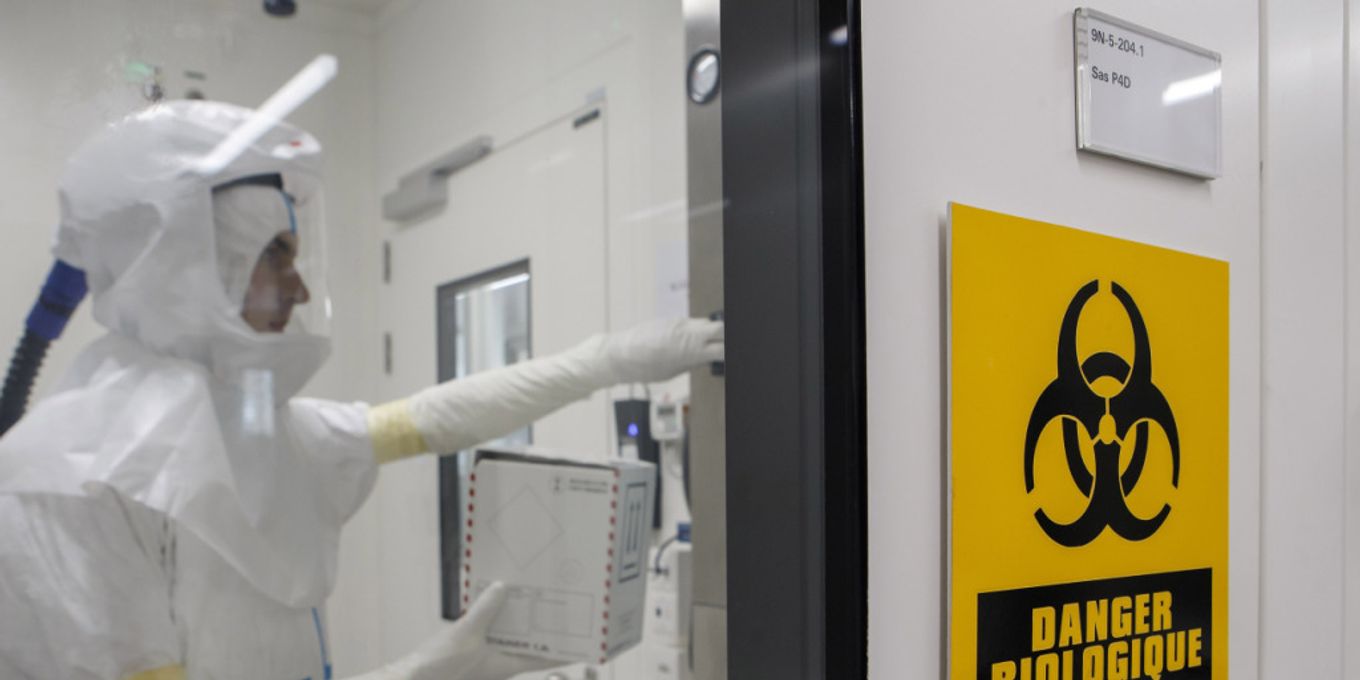
Developed by Rega in 2015, this isolation system, the PIU, allows for the transport of highly infectious individuals. "Once the patient is inside the PIU, it remains sealed until they are handed over to the specialists at the destination hospital," explains Professor Roland Albrecht, Chief Medical Officer of Rega and a member of the management team. "Gloves are integrated into the outer shell, allowing the crew to treat the patient. The exhaust air is filtered, and the medical equipment cables are connected from the outside via airtight seals."

This avoids the need for protective equipment and complete disinfection of the aircraft. More than 100 people have already been transported this way, mostly Covid cases, but also tuberculosis patients and immunocompromised individuals before or after a transplant, the chief physician added.

After landing in Zurich, the husband was placed in preventive isolation at the university hospital of the same canton (USZ) and his wife was airlifted to the roof of the HUG, again by Rega and still in her bubble.

Hospitalization: why in Geneva?

The repatriation aims to allow this patient to receive appropriate care. The choice of hospital was decided by the Federal Department of Foreign Affairs (FDFA), the Federal Office of Public Health ( FOPH ), the cantons and the institutions concerned, according to several criteria, explains the Department of Health and Mobility (DSM): the clinical condition, the availability of specialized care units and the operational capacity of the teams.

In Switzerland, only the Geneva University Hospitals (HUG) and the Zurich University Hospital (USZ) are equipped to receive people suspected of having contracted or confirmed Ebola, with isolation units and trained staff, explains Benoit Carpentier, spokesperson for HUG. Geneva also has extensive expertise in this area, with the Center for Emerging Viral Diseases and the experience of professionals in managing Ebola in humanitarian contexts.

Hospitalization: volunteer caregivers and isolation

The Swiss woman's condition is stable, according to the DSM. She is isolated in a negative pressure room, designed to limit the spread of infectious agents.

Benoit Carpentier explains that the healthcare workers involved are specifically trained and volunteer their time, that they wear special protective equipment and work in teams of five. “Two people enter the room to provide care. Three others supervise their colleagues' donning and doffing of personal protective equipment and the management of medical waste.” This waste is placed in hermetically sealed containers and then collected by a specialized company.

Care: no specific treatment

The patient is infected with Bundibugyo, a strain of the Ebola virus for which no vaccine or specific treatment is currently approved. "Therefore, the management of severe cases relies on intensive care and supportive care," emphasizes the spokesperson for the Geneva University Hospitals (HUG). The patient's care includes treatments such as hydration, correction of electrolyte imbalances, and management of complications. She will remain in isolation for as long as her condition and health requirements necessitate it, the DSM further specifies. The Cuban doctor treated in 2014 remained hospitalized in Geneva for sixteen days.

What criteria will allow a patient to leave isolation? The spokesperson explains that lifting isolation is based on several clinical and microbiological criteria. “The patient must show clear clinical improvement, and virological tests must demonstrate that the virus is no longer detectable in relevant samples. The decision is made on a case-by-case basis by infectious disease specialists, in collaboration with public health authorities.” On average, how long does an Ebola patient remain hospitalized? “The length of hospitalization varies considerably depending on the severity of the illness and the response to treatment. It is generally measured in weeks rather than days.”

Risks: what level of safety for the population of Geneva?

The DSM (Directorate of Medical Sciences) seeks to reassure the public: "The repatriation to Switzerland of a person known to be carrying the virus is organized under the strictest safety conditions. Such a situation presents no danger to the general population or to healthcare professionals." The tone is the same at the FOPH (Federal Office of Public Health).

The cantonal medical service (SMC) adds that the teams are trained. A full-scale simulation exercise dedicated to Ebola was even organized last year to test the management, the coordination between partners and the systems, including the Rega bubble.

Outlook: Are further repatriations expected?

In the DRC, the epidemic continues . Should we expect more hospitalizations in Geneva? The Geneva University Hospitals (HUG) indicate they can only admit one Ebola patient at a time. At this stage, the Medical Service of Geneva (SMC) adds, no further patient arrivals are planned.

To date, two people infected with Ebola in Africa have been successfully treated in Switzerland, in 1995 and 2014. The HUG have received care for several high-risk contacts, some with symptoms, but only two cases of confirmed infection.

What you need to know about Ebola

How is Ebola transmitted? The virus can be transmitted to humans through close contact with the bodily fluids (blood, secretions, etc.) of infected animals, including bats and monkeys, or by ingesting contaminated fruit, for example. It is transmitted from human to human through direct contact, via a skin lesion or mucous membrane, with the bodily fluids of a sick or deceased person, or with surfaces contaminated by these fluids. Infected individuals can transmit the disease as soon as symptoms appear; those who have a severe form of the disease and have died are the most contagious. According to the Federal Office of Public Health (FOPH), there is no evidence to suggest transmission via aerosols.

Several virus species : The disease is caused by viruses, of which there are five species. Bundibugyo Ebolavirus is responsible for the current epidemic in the DRC. It is less well-known than Zaire virus, which was responsible for most previous epidemics.

What are the symptoms? The incubation period varies from 2 to 21 days, explains the DSM. Symptoms include high fever, fatigue, malaise, muscle aches, headache and sore throat, vomiting, diarrhea, or abdominal pain. The infection can sometimes develop into a severe form with bleeding, vital organ failure, or cardiorespiratory shock. The mortality rate varies between 0 and 90% depending on the virus species.

Is there a vaccine? A vaccine has been approved for the Zaire species, but there is no approved vaccine or treatment for other species, such as Bundibugyo. Management of severe cases therefore relies on intensive care and supportive treatments.

Where is the disease occurring? It is mainly present in sub-Saharan Africa. For the past five months, the DRC has been gripped by its seventeenth epidemic, the deadliest ever recorded in the country – nearly 9,700 confirmed cases and 4,700 deaths, according to the WHO. Imported cases have been detected in Uganda, Kenya, and one in Nigeria.

What are the risks in Europe? The only risk of introduction into Europe comes from infected individuals returning from affected areas, according to the DSM. "However, imported cases remain rare. The probability of virus transmission in Europe is considered very low thanks to the rapid identification and isolation of cases, as well as control measures."

 
Back
Top Bottom