

Pathfinder
Editor, Senior Moderator
Translation Google
Wallis Posted thursday at 9:22 p.m.
Six cases of Q fever diagnosed in Haut-Valais
Six cases of Q fever have been diagnosed in Haut-Valais after the discovery of an outbreak of animal infection in the Brig region. The patients were infected with a bacteria transmitted by goats.
“The cantonal doctor recommends vulnerable people in the region between Visp and Brig to consult their doctor in the event of symptoms suggestive of the flu”, indicates Thursday the canton on its website. He also recommends that pregnant women take a blood test even in the absence of symptoms, as a precautionary principle.
In addition to the usual hygiene measures, additional measures have been ordered in order to reduce the risk of transmission to humans as much as possible, notes the canton. The focus of infection in the herd in Brig is now under control, but some people may have been exposed before the measures ordered by the cantonal veterinarian were put in place.
Infection by contact with animals
Q fever is caused by the bacterium Coxiella burnetii which can be carried through the air over relatively long distances. Human beings become infected mainly by breathing it, or by direct contact with animals, in particular during childbirth or an abortion.
The infection is not transmitted from human to human, specifies the canton. Most do not develop symptoms other than mild flu or remain symptom-free. As a rule, the disease heals spontaneously without leaving sequelae.
https://www.rts.ch/info/regions/valais/13906880-six-cas-de-fievre-q-diagnostiques-en-hautvalais.html
------------------------------------------------------------------
News 30.03.2023 Public Health Service
Six cases of Q fever diagnosed in Haut-Valais
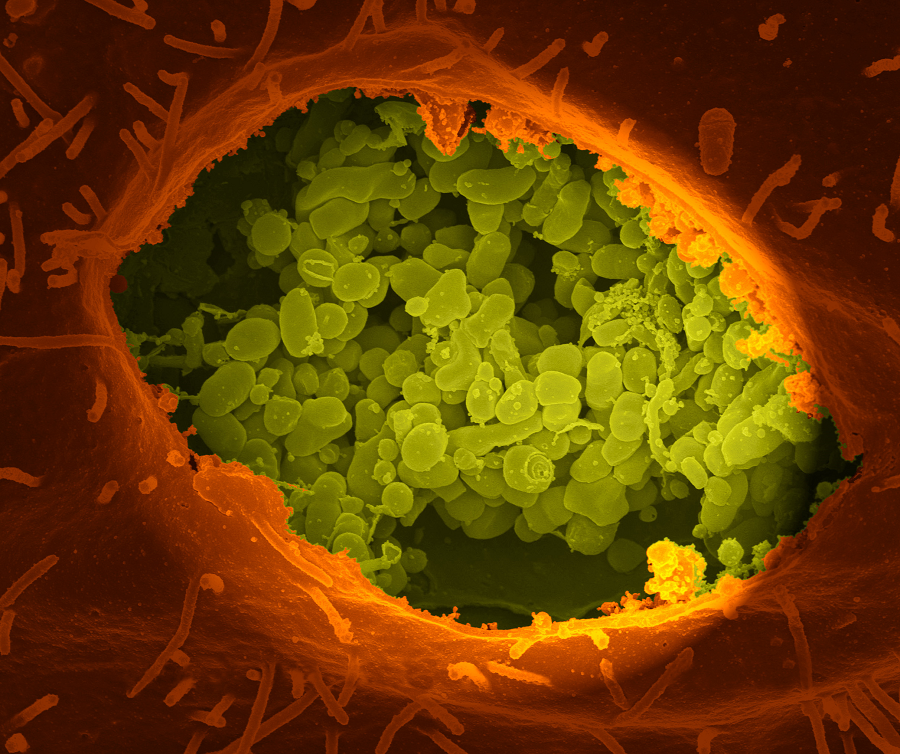
Due to a local outbreak of Q fever, the cantonal doctor recommends vulnerable people in the region between Visp and Brig to consult their doctor in the event of flu-like symptoms. He also recommends that pregnant women in this region take a blood test even in the absence of symptoms, as a precautionary principle.
Recently, six cases of Q fever were diagnosed in Haut-Valais following the discovery of an outbreak of animal infection in the Brig region. This infection was detected as part of regular monitoring of causes of abortion in a herd of 11 goats, in which many animals were affected. In addition to the usual hygiene measures, additional measures have been ordered in order to reduce the risk of transmission to humans as much as possible. This animal outbreak is now under control, but some people may have been exposed before the measures ordered by the cantonal veterinarian were put in place.
In people with weakened immune systems and in those with valvulopathy (heart disease), the infection may not heal on its own and become chronic. They are therefore advised, in the event of flu-like symptoms, to look for this infection by a blood test with their doctor, in order to be able to benefit from an early antibiotic treatment.
Due to the risk of miscarriage if the infection is acquired during pregnancy, it is also recommended that pregnant women take a blood test with their doctor, even if there are no symptoms, in order to benefit from treatment. antibiotic if necessary.
Q fever is a bacterial infection excreted by affected animals during abortions and which can then be transmitted to humans. The infection is not transmitted from person to person. The bacterium Coxiella burnetii can be carried through the air over relatively long distances and inhaled by people. Most do not develop symptoms other than mild flu or remain symptom-free. As a rule, the disease heals spontaneously without leaving sequelae.
In animals, coxiellosis is notifiable. Veterinarians and laboratories must report these cases and suspicious signs to the cantonal veterinarian. The infection is often inapparent and causes sporadic cases of late abortions in sheep, goats and more rarely in cows. The number of cases observed in Valais has fluctuated between 0 and 5 cases per year in recent years, but it has increased significantly since 2022 due to improved diagnostic methods. Affected animals usually recover well from this disease.
https://www.vs.ch/web/communication..._p_lifecycle=0&p_p_state=normal&p_p_mode=view
Wallis Posted thursday at 9:22 p.m.
Six cases of Q fever diagnosed in Haut-Valais
Six cases of Q fever have been diagnosed in Haut-Valais after the discovery of an outbreak of animal infection in the Brig region. The patients were infected with a bacteria transmitted by goats.
“The cantonal doctor recommends vulnerable people in the region between Visp and Brig to consult their doctor in the event of symptoms suggestive of the flu”, indicates Thursday the canton on its website. He also recommends that pregnant women take a blood test even in the absence of symptoms, as a precautionary principle.
In addition to the usual hygiene measures, additional measures have been ordered in order to reduce the risk of transmission to humans as much as possible, notes the canton. The focus of infection in the herd in Brig is now under control, but some people may have been exposed before the measures ordered by the cantonal veterinarian were put in place.
Infection by contact with animals
Q fever is caused by the bacterium Coxiella burnetii which can be carried through the air over relatively long distances. Human beings become infected mainly by breathing it, or by direct contact with animals, in particular during childbirth or an abortion.
The infection is not transmitted from human to human, specifies the canton. Most do not develop symptoms other than mild flu or remain symptom-free. As a rule, the disease heals spontaneously without leaving sequelae.
https://www.rts.ch/info/regions/valais/13906880-six-cas-de-fievre-q-diagnostiques-en-hautvalais.html
------------------------------------------------------------------
News 30.03.2023 Public Health Service
Six cases of Q fever diagnosed in Haut-Valais
Due to a local outbreak of Q fever, the cantonal doctor recommends vulnerable people in the region between Visp and Brig to consult their doctor in the event of flu-like symptoms. He also recommends that pregnant women in this region take a blood test even in the absence of symptoms, as a precautionary principle.
Recently, six cases of Q fever were diagnosed in Haut-Valais following the discovery of an outbreak of animal infection in the Brig region. This infection was detected as part of regular monitoring of causes of abortion in a herd of 11 goats, in which many animals were affected. In addition to the usual hygiene measures, additional measures have been ordered in order to reduce the risk of transmission to humans as much as possible. This animal outbreak is now under control, but some people may have been exposed before the measures ordered by the cantonal veterinarian were put in place.
In people with weakened immune systems and in those with valvulopathy (heart disease), the infection may not heal on its own and become chronic. They are therefore advised, in the event of flu-like symptoms, to look for this infection by a blood test with their doctor, in order to be able to benefit from an early antibiotic treatment.
Due to the risk of miscarriage if the infection is acquired during pregnancy, it is also recommended that pregnant women take a blood test with their doctor, even if there are no symptoms, in order to benefit from treatment. antibiotic if necessary.
Q fever is a bacterial infection excreted by affected animals during abortions and which can then be transmitted to humans. The infection is not transmitted from person to person. The bacterium Coxiella burnetii can be carried through the air over relatively long distances and inhaled by people. Most do not develop symptoms other than mild flu or remain symptom-free. As a rule, the disease heals spontaneously without leaving sequelae.
In animals, coxiellosis is notifiable. Veterinarians and laboratories must report these cases and suspicious signs to the cantonal veterinarian. The infection is often inapparent and causes sporadic cases of late abortions in sheep, goats and more rarely in cows. The number of cases observed in Valais has fluctuated between 0 and 5 cases per year in recent years, but it has increased significantly since 2022 due to improved diagnostic methods. Affected animals usually recover well from this disease.
https://www.vs.ch/web/communication..._p_lifecycle=0&p_p_state=normal&p_p_mode=view