

Michael Coston
Editor, Senior Moderator
Svalbard: HPAI H5N5 Detected In Arctic Foxes
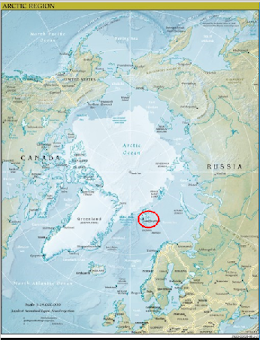
Location of Svalbard in the Arctic Ocean
#18,825
While H5N1 clade 2.3.4.4b is currently the dominant HPAI strain around the globe, older clades (2.3.2.1a in India and 2.3.2.1e in Cambodia) continue to circulate and occasionally spill over into humans.
Additionally, China has reported > 90 human infections with a different subtype; H5N6 (clade 2.3.4.4x), and we've been closely watching the spread of HPAI H5N5 in both Eastern Canada, and Northern Europe. 
In the summer of 2022, the Norwegian Veterinary Institute reported both H5N1 and H5N5 for the first time in wild birds on Svalbard, which lies above the Arctic circle (see More HPAI (H5N5 & H5N1) Detected In Arctic (Svalbard).
Since then we've been tracking a small - but growing - number of spillovers of H5N5 to mammals in both Europe and Canada, including seals in the UK, domestic cats in Iceland, and raccoons (and other small mammals) in Canada.
Last summer, in Cell Reports: Multiple Transatlantic Incursions of HPAI clade 2.3.4.4b A(H5N5) Virus into North America and Spillover to Mammals, researchers reported finding the mammalian adaptive E627K mutation in a number of samples.
While HPAI H5N5 doesn't currently appear likely to overtake or supplant H5N1, we've seen several abrupt dominant subtype changes (H1N1-> H5N8 -> H5N1) occur over the past 20 years.
With influenza, the only constant is change.
All of which brings us to the following (translated) report, published yesterday by the Norwegian Veterinary Institute, which reports on H5N5 infections in Arctic foxes on Svalbard.
Avian influenza detected in arctic foxes in Svalbard
Published 04.08.2025
The Norwegian Veterinary Institute has detected highly pathogenic avian influenza virus in four arctic fox pups from an area near the Russian settlement of Barentsburg on Svalbard. This is the first time the virus has been detected in arctic foxes in Norway.
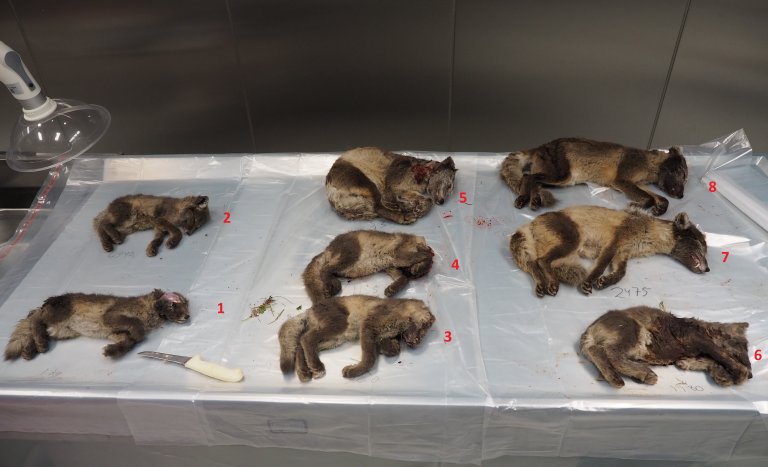
Arctic foxes from Svalbard have been studied at the Norwegian Veterinary Institute. Photo: Ingunn Ruud, Norwegian Veterinary Institute
At the end of July 2025, the Governor of Svalbard received a report of several sick mountain foxes near the Russian settlement of Barentsburg. Three sick pups were initially observed, and two of these were euthanized for animal welfare reasons. Due to the proximity to Barentsburg and increased rabies vigilance, the rest of the litter was euthanized. Of the three remaining pups, one was sick. In addition, three adult mountain foxes near the den were euthanized.
H5N5 is circulating in the highlands
The arctic foxes were sent to the Veterinary Institute in Ås for testing for rabies and avian influenza viruses. The analyses showed that all the foxes were negative for rabies virus, while four arctic fox pups were positive for highly pathogenic avian influenza virus. The virus detected is of the subtype H5N5, a subtype that circulates in the high north and has caused cases of disease in both wild birds and mammals in the Nordic countries, Iceland and the United Kingdom in recent years. The subtype was detected in a walrus in Svalbard in 2023.
On the mainland, the H5N5 subtype has been detected in Nordland and Finnmark in June and July, with the last case being in a black-backed deer in Vadsø at the end of July. There have been no detections of H5N5 in mammals in Norway this year, but the subtype was detected in otters in Tromsø in October and December 2024, and in red foxes in Kvænangen in February 2024.
Infection pressure when eating infected birds
Arctic foxes can become infected with avian influenza through direct contact with sick or dead animals. Foxes are scavengers that are exposed to high infection pressure when they eat infected birds. Studies of red foxes on the mainland indicate that foxes do not have the ability to infect each other. Whole-genome sequencing of the viruses from arctic fox pups will be carried out to investigate whether there are signs of mammalian adaptation in the viruses.
May resemble rabies infection
Highly pathogenic avian influenza virus can cause clinical signs of brain disease and are similar to those seen in rabies infection. Neurological signs such as circling gait, tilted head position, paralysis and decreased shyness towards humans are common. Both highly pathogenic avian influenza and rabies are serious diseases that can infect humans, and it is therefore important to avoid contact with sick animals. If the population of Svalbard observes sick animals with or without neurological symptoms, it is important that the findings are reported to the Governor.
Report any suspicions to the Norwegian Food Safety Authority
If there is suspicion of infection with avian influenza in birds and other animals, the Norwegian Food Safety Authority must be notified . The Veterinary Institute is the national reference laboratory for avian influenza and has PCR diagnostics and whole genome sequencing available for the detection and characterization of avian influenza viruses.
Privately practicing veterinarians: Avian influenza in mammals | Norwegian Food Safety Authority
Although HPAI H5 is primarily regarded as a respiratory virus, two years ago (see Cell: The Neuropathogenesis of HPAI H5Nx Viruses in Mammalian Species Including Humans) researchers warned that ` . . . highly pathogenic avian influenza (HPAI) H5Nx viruses can cause neurological complications in many mammalian species, including humans'.
While clinical details on cases are often limited, we've already seen a small number of human infections reported as presenting with severe neurological involvement, including:
Vietnam: Ho Chi Minh DOH Reports A Rare H5N1 Encephalitis Case In a Child
Clinical Features of the First Critical Case of Acute Encephalitis Caused by Avian Influenza A (H5N6) Virus
CJ ID & MM: Case Study Of A Neurotropic H5N1 Infection - Canada
A sobering reminder that the next global health crisis may not play out like the last one, or the ones that came before. As epidemiologists like to say:
“If you’ve seen one pandemic . . . you’ve seen one pandemic.”
https://afludiary.blogspot.com/2025/08/svalbard-hpai-h5n5-detected-in-arctic.html
Location of Svalbard in the Arctic Ocean
#18,825
While H5N1 clade 2.3.4.4b is currently the dominant HPAI strain around the globe, older clades (2.3.2.1a in India and 2.3.2.1e in Cambodia) continue to circulate and occasionally spill over into humans.
Additionally, China has reported > 90 human infections with a different subtype; H5N6 (clade 2.3.4.4x), and we've been closely watching the spread of HPAI H5N5 in both Eastern Canada, and Northern Europe.
In the summer of 2022, the Norwegian Veterinary Institute reported both H5N1 and H5N5 for the first time in wild birds on Svalbard, which lies above the Arctic circle (see More HPAI (H5N5 & H5N1) Detected In Arctic (Svalbard).
Since then we've been tracking a small - but growing - number of spillovers of H5N5 to mammals in both Europe and Canada, including seals in the UK, domestic cats in Iceland, and raccoons (and other small mammals) in Canada.
Last summer, in Cell Reports: Multiple Transatlantic Incursions of HPAI clade 2.3.4.4b A(H5N5) Virus into North America and Spillover to Mammals, researchers reported finding the mammalian adaptive E627K mutation in a number of samples.
While HPAI H5N5 doesn't currently appear likely to overtake or supplant H5N1, we've seen several abrupt dominant subtype changes (H1N1-> H5N8 -> H5N1) occur over the past 20 years.
With influenza, the only constant is change.
All of which brings us to the following (translated) report, published yesterday by the Norwegian Veterinary Institute, which reports on H5N5 infections in Arctic foxes on Svalbard.
Avian influenza detected in arctic foxes in Svalbard
Published 04.08.2025
The Norwegian Veterinary Institute has detected highly pathogenic avian influenza virus in four arctic fox pups from an area near the Russian settlement of Barentsburg on Svalbard. This is the first time the virus has been detected in arctic foxes in Norway.
Arctic foxes from Svalbard have been studied at the Norwegian Veterinary Institute. Photo: Ingunn Ruud, Norwegian Veterinary Institute
At the end of July 2025, the Governor of Svalbard received a report of several sick mountain foxes near the Russian settlement of Barentsburg. Three sick pups were initially observed, and two of these were euthanized for animal welfare reasons. Due to the proximity to Barentsburg and increased rabies vigilance, the rest of the litter was euthanized. Of the three remaining pups, one was sick. In addition, three adult mountain foxes near the den were euthanized.
H5N5 is circulating in the highlands
The arctic foxes were sent to the Veterinary Institute in Ås for testing for rabies and avian influenza viruses. The analyses showed that all the foxes were negative for rabies virus, while four arctic fox pups were positive for highly pathogenic avian influenza virus. The virus detected is of the subtype H5N5, a subtype that circulates in the high north and has caused cases of disease in both wild birds and mammals in the Nordic countries, Iceland and the United Kingdom in recent years. The subtype was detected in a walrus in Svalbard in 2023.
On the mainland, the H5N5 subtype has been detected in Nordland and Finnmark in June and July, with the last case being in a black-backed deer in Vadsø at the end of July. There have been no detections of H5N5 in mammals in Norway this year, but the subtype was detected in otters in Tromsø in October and December 2024, and in red foxes in Kvænangen in February 2024.
Infection pressure when eating infected birds
Arctic foxes can become infected with avian influenza through direct contact with sick or dead animals. Foxes are scavengers that are exposed to high infection pressure when they eat infected birds. Studies of red foxes on the mainland indicate that foxes do not have the ability to infect each other. Whole-genome sequencing of the viruses from arctic fox pups will be carried out to investigate whether there are signs of mammalian adaptation in the viruses.
May resemble rabies infection
Highly pathogenic avian influenza virus can cause clinical signs of brain disease and are similar to those seen in rabies infection. Neurological signs such as circling gait, tilted head position, paralysis and decreased shyness towards humans are common. Both highly pathogenic avian influenza and rabies are serious diseases that can infect humans, and it is therefore important to avoid contact with sick animals. If the population of Svalbard observes sick animals with or without neurological symptoms, it is important that the findings are reported to the Governor.
Report any suspicions to the Norwegian Food Safety Authority
If there is suspicion of infection with avian influenza in birds and other animals, the Norwegian Food Safety Authority must be notified . The Veterinary Institute is the national reference laboratory for avian influenza and has PCR diagnostics and whole genome sequencing available for the detection and characterization of avian influenza viruses.
Privately practicing veterinarians: Avian influenza in mammals | Norwegian Food Safety Authority
Although HPAI H5 is primarily regarded as a respiratory virus, two years ago (see Cell: The Neuropathogenesis of HPAI H5Nx Viruses in Mammalian Species Including Humans) researchers warned that ` . . . highly pathogenic avian influenza (HPAI) H5Nx viruses can cause neurological complications in many mammalian species, including humans'.
While clinical details on cases are often limited, we've already seen a small number of human infections reported as presenting with severe neurological involvement, including:
Vietnam: Ho Chi Minh DOH Reports A Rare H5N1 Encephalitis Case In a Child
Clinical Features of the First Critical Case of Acute Encephalitis Caused by Avian Influenza A (H5N6) Virus
CJ ID & MM: Case Study Of A Neurotropic H5N1 Infection - Canada
A sobering reminder that the next global health crisis may not play out like the last one, or the ones that came before. As epidemiologists like to say:
“If you’ve seen one pandemic . . . you’ve seen one pandemic.”
https://afludiary.blogspot.com/2025/08/svalbard-hpai-h5n5-detected-in-arctic.html
