

Pathfinder
Editor, Senior Moderator
Suriname
/https://en.wikipedia.org/wiki/Suriname--------------------------------------------------------------
BREAKING: H5 avian influenza confirmed amid increased chicken mortality in Suriname
Amanda Palis by Amanda Palis Saturday, 19 Sep 2026 - 3:32 pm in General
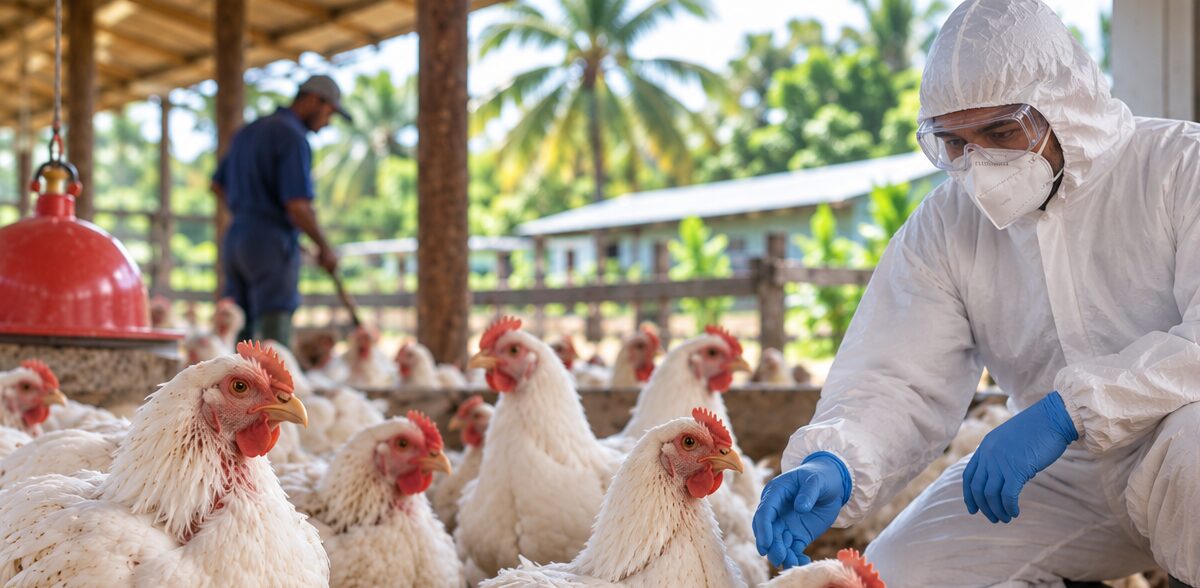
Tests into the sharply increased mortality among broiler chickens in Suriname have found samples positive for influenza A, type H5. This was announced by the Ministry of Landbouw, Veeteelt en Visserij (LVV, Agriculture, Livestock and Fisheries). Further testing must still determine which specific variant is involved and whether it concerns a highly or low pathogenic form of avian influenza.
The investigation was prompted by a notable increase in mortality among broiler chickens over the past week. According to the authorities, exceptionally high losses were observed at a poultry farm in Wanica with approximately 6,000 chickens. More than half of the animals are said to have died by now.
...
The Veterinaire Dienst (Veterinary Service) examined samples together with the Bureau voor Openbare Gezondheidszorg (BOG, Bureau of Public Health). According to Dr Karg, deputy director of the Veterinaire Dienst, it has now been confirmed that several samples tested positive for influenza A, type H5.
It is not yet known whether this concerns a highly pathogenic or low pathogenic variant. Additional laboratory testing abroad is required for this.
...
BREAKING: H5 avian influenza confirmed amid increased chicken mortality in Suriname - KEY NEWS SURINAME
In Suriname, the H5 avian influenza virus has been detected at a poultry farm in Wanica following exceptionally high chicken mortality. The investigation into the...
 keynews.sr
Translation Google
Bird flu detected in poultry in Suriname; chicken remains safe with proper preparation
Ryaen La RoseSeptember 19, 2026 at 18:483 minute read
The Ministry of Agriculture, Livestock and Fisheries (LVV) has confirmed influenza A of type H5, also known as avian flu, in poultry in Suriname. The infection came to light following exceptionally high mortality among broiler chickens at a poultry farm in Wanica. According to the LVV, consumers do not need to stop eating chicken, as long as the meat is properly prepared.
There were approximately 6,000 chickens present at the farm in question. More than half of them reportedly died within a week and a half. The high mortality rate prompted the LVV to conduct an investigation.
Deputy Director Gianna Karg, head of the Veterinary Service at LVV, says that the presence of influenza A type H5 was confirmed on Thursday evening. Additional testing abroad should provide more clarity regarding the infection.
The ministry has meanwhile activated a contingency plan to combat the disease. The measures are intended to ensure that the infection remains confined to a single location as much as possible and does not spread further. District commissioners, the Suriname Police Force (KPS), and other involved services are among those enlisted in the approach.
No human infection detected.
According to Karg, the human samples examined so far have tested negative. Based on the current research results, there are therefore no indications that the virus has been transmitted to humans.
Protocols are being drawn up for persons who have been in contact with infected poultry. The Ministry of Health, Welfare and Labour and the Public Health Bureau (BOG) are providing support in this regard, including personal protective equipment and technical assistance.
According to Karg, swift intervention is necessary to prevent further spread. As a virus spreads further, the risk of mutations can also increase.
Measures in Commewijne as well.
Because chickens from the company in question were transported from Wanica to Commewijne, among other places, checks are being carried out there as well. A team is being sent to the district to investigate the situation and take measures where necessary. A cluster of ministries is now working together to bring the outbreak under control.
Controls have also been tightened at Suriname's eastern border. Minister of Agriculture, Livestock and Fisheries Mike Noersalim says that the risk of animal products entering the country from French Guiana is being taken into account. The LVV therefore intends to exercise extra surveillance regarding the import and potential spread of animal diseases.
Noersalim says that Suriname has previously taken preventive measures against bird flu. For example, hatching eggs from the Netherlands were banned when bird flu occurred there.
Poultry farmers must report high mortality immediately.
The LVV calls on poultry farmers to report abnormally high mortality among their animals immediately. According to the ministry, increased mortality does not automatically mean that bird flu is present. Heat stress and other poultry diseases can also lead to mortality.
Staff from the Directorate of Livestock Farming are being deployed to support farms in the area in detecting sick animals and tightening biosecurity measures.
Chicken can be eaten as normal.
According to Edmund Rozenblad, advisor to the Minister of Agriculture, Livestock and Fisheries, consumers can continue to eat chicken as normal. However, the meat must be properly prepared in accordance with the usual food safety regulations.
Raw or undercooked chicken should not be tasted. When chicken is thoroughly cooked, fried, or otherwise sufficiently heated, the virus is rendered harmless by the heat, according to the LVV explanation.
“A panic situation must not arise among consumers,” said Rozenblad. According to him, the greatest risk currently lies with the poultry sector. A further outbreak could cause significant losses for poultry farmers and have consequences for local production. The LVV continues to monitor the situation and asks poultry farmers to remain alert and report any abnormal mortality immediately.

