

Sally Furniss
Well-known member
Stranger Than Fiction: Vignettes of San Diego History
http://www.sandiegohistory.org/stranger/flu.htm
In the fall of 1918 a popular limerick could be heard in the City of San Diego:
I had a little bird,
Its name was Enza.
I opened the window,
And in-flu-enza.
In the months following the end of World War I, the "Spanish Influenza" swept the world, infecting a billion people and killing 20 million. In San Diego the scourge reached epidemic proportions in November and December of 1918. There were 4,392 cases that year out of a population of about 70,000; 324 people died.
The disease baffled doctors but city health officers recommended the standard precautions--quarantine and gauze masks. On December 5, 1918, the City Council imposed a general quarantine that closed schools, theaters, and churches, and banned all public gatherings. Days later the councilmen passed another ordinance "requiring the universal use of gauze masks within the City of San Diego." Soon San Diegans had another rhyme:
Obey the laws
And wear the gauze.
Protect your jaws
From septic paws.
The councilmen required masks of 4-ply surgical gauze fastened over the mouth and nose by strings tied behind the head. In a pinch, 6-ply cheesecloth was acceptable. The gauze was thought to prevent the spread of the flu bacilli. (Years later, English doctors would discover that viruses caused influenza.)
The law was not popular. Men cut holes in the masks to smoke cigars and cigarettes. Women wore the masks as haremlike veils, hanging loose over the chin. Some cynics created masks with an extended snout, like a pig. Libertarians charged that the gauze was unconstitutional.
arrest record
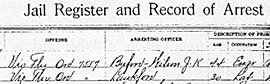
Citizens that ignored the ordinances risked a hundred dollar fine and thirty days in jail. But the police enforced the laws randomly and most of the 524 people arrested escaped with a five dollar fine.
Then, the flu disappeared as quickly and as mysteriously as it had arrived. After peaking in December, with 2,039 cases and 188 deaths in that month alone, the disease receded. According to city health officers, most of the credit was due to those 4-ply gauze masks.
http://www.sandiegohistory.org/stranger/flu.htm
In the fall of 1918 a popular limerick could be heard in the City of San Diego:
I had a little bird,
Its name was Enza.
I opened the window,
And in-flu-enza.
In the months following the end of World War I, the "Spanish Influenza" swept the world, infecting a billion people and killing 20 million. In San Diego the scourge reached epidemic proportions in November and December of 1918. There were 4,392 cases that year out of a population of about 70,000; 324 people died.
The disease baffled doctors but city health officers recommended the standard precautions--quarantine and gauze masks. On December 5, 1918, the City Council imposed a general quarantine that closed schools, theaters, and churches, and banned all public gatherings. Days later the councilmen passed another ordinance "requiring the universal use of gauze masks within the City of San Diego." Soon San Diegans had another rhyme:
Obey the laws
And wear the gauze.
Protect your jaws
From septic paws.
The councilmen required masks of 4-ply surgical gauze fastened over the mouth and nose by strings tied behind the head. In a pinch, 6-ply cheesecloth was acceptable. The gauze was thought to prevent the spread of the flu bacilli. (Years later, English doctors would discover that viruses caused influenza.)
The law was not popular. Men cut holes in the masks to smoke cigars and cigarettes. Women wore the masks as haremlike veils, hanging loose over the chin. Some cynics created masks with an extended snout, like a pig. Libertarians charged that the gauze was unconstitutional.
arrest record
Citizens that ignored the ordinances risked a hundred dollar fine and thirty days in jail. But the police enforced the laws randomly and most of the 524 people arrested escaped with a five dollar fine.
Then, the flu disappeared as quickly and as mysteriously as it had arrived. After peaking in December, with 2,039 cases and 188 deaths in that month alone, the disease receded. According to city health officers, most of the credit was due to those 4-ply gauze masks.