

Gert van der Hoek
In Memoriam - Editor, Senior Moderator
Background
West Nile virus (WNV) is a zoonotic pathogen transmitted from birds to mammals, in particular humans and horses, by Culex mosquitoes. WNV lineages 1 and 2 have been described to affect humans, in whom the majority of infections are asymptomatic; 20?40% of cases develop West Nile fever (WNF), which presents as influenza-like symptoms after an incubation period of 3?15 days. West Nile neuroinvasive disease (WNND)?which can present as meningitis, encephalitis or acute flaccid paralysis?develops in less than 1% of cases. WNND has a highly variable clinical course, but is often associated with considerable long-term morbidity. Approximately two-thirds of those with paralysis continue to experience significant weakness in the affected limbs [1]. Treatment is supportive, and after the acute phase recovery long-lasting immunity is conferred. Nevertheless, sequelae are frequent, especially after WNND, and are also possible after WNF. The most frequent physical, psychological and functional sequelae are, respectively, muscle weakness, memory loss and difficulty doing activities of daily living. The WNND fatality rate is around 10%. Several risk factors have been identified for both WNND and death, with advanced age, male sex and underlying medical conditions being the most common ones. There is no WNV vaccine for humans [2].
The first WNV infection cases in Europe were detected in humans and horses in the 1950s and 1960s. Lineage 1 was the only one circulating in Europe until 2004, when type 2 lineage was identified in Hungary, after which it spread into other countries. Since 2010, a geographical expansion with marked seasonality has been observed. Currently, lineage 2 is responsible for the majority of human cases in Europe [3-5]. From 2010 to 2019, locally acquired human cases were detected every year in the European Union/European Economic Area (EU/EAA), with two large outbreaks in 2010 (391 cases, mainly affecting Greece with 262 cases) and 2018 (1,615 cases throughout the EU/EAA). The notification rate for locally acquired WNV infections in the EU/EEA was almost eight times higher in 2018 compared with 2017 [6]. During the 2020 season, EU/EEA and EU-neighbouring countries reported 336 locally acquired human cases of WNV infection [7].
In Spain, WNV was first documented in the early 1980s, in a retrospective study of sera from the population of Catalonia [8]. Since 2010, equid outbreaks and wild bird cases have been reported in Andalusia, Extremadura, Castilla-La Mancha, Castilla y Le?n and Catalonia. The first human case of WNND infection was retrospectively detected in a person who stayed in Badajoz in 2004 [9]. In 2010, two human cases were detected in Andalusia. In 2016, a considerable increase in equid outbreaks was observed (73 outbreaks), and three human cases of WNND were identified in people who had visited municipalities of Seville. From 2017 to 2020, WNV activity was low, with few equid outbreaks (13 in 2017, nine in 2018 and, in 2019, four in Andaluc?a, one in Extremadura and one in Catalonia) and none in humans. Before 2020, nearly all WNV strains detected in Spain were lineage 1, with the exception of one strain of lineage 2 that was detected in a goshawk in Lleida in 2017, as well as an exceptional finding of a new lineage in mosquitoes in 2006 [10,11].
Outbreak detection
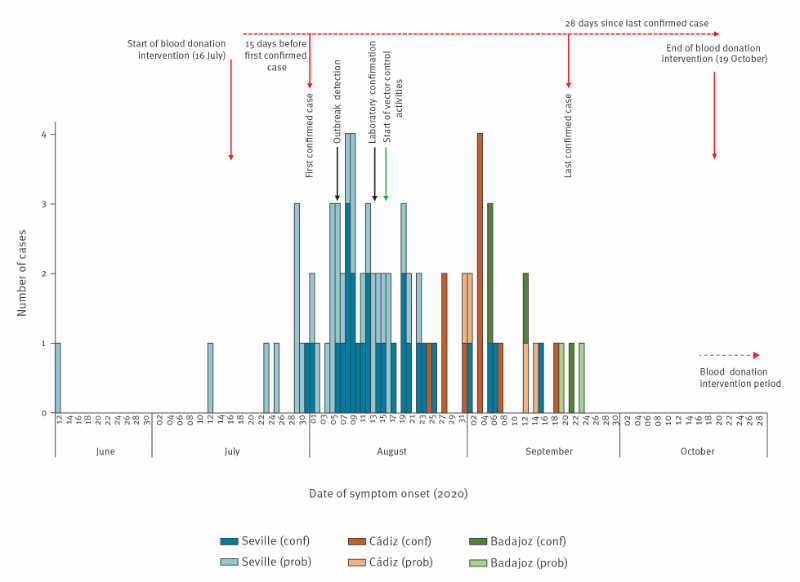
In August 2020, a series of five human cases with WNND presenting as lymphocytic meningoencephalitis were identified in two neighbouring municipalities of Seville province, Andalusia. Simultaneously, four WNV outbreaks were reported in equid holdings in Andalusia. The first human cases were laboratory confirmed on 13 August (Figure 1). As this was an unprecedented situation, the National Epidemiological Surveillance Network and the Coordinating Centre of Health Alerts and Emergencies (CCAES) were informed and regional authorities implemented control measures in their territories. One month later, on 11 September, human WNND cases were also identified in C?diz, and then in Badajoz on 22 September.
Given the large number of cases notified in the 2020 season, we aimed to analyse the epidemiological data, to document the measures taken and to perform a risk assessment to obtain recommendations for further public health measures.
West Nile virus (WNV) is a zoonotic pathogen transmitted from birds to mammals, in particular humans and horses, by Culex mosquitoes. WNV lineages 1 and 2 have been described to affect humans, in whom the majority of infections are asymptomatic; 20?40% of cases develop West Nile fever (WNF), which presents as influenza-like symptoms after an incubation period of 3?15 days. West Nile neuroinvasive disease (WNND)?which can present as meningitis, encephalitis or acute flaccid paralysis?develops in less than 1% of cases. WNND has a highly variable clinical course, but is often associated with considerable long-term morbidity. Approximately two-thirds of those with paralysis continue to experience significant weakness in the affected limbs [1]. Treatment is supportive, and after the acute phase recovery long-lasting immunity is conferred. Nevertheless, sequelae are frequent, especially after WNND, and are also possible after WNF. The most frequent physical, psychological and functional sequelae are, respectively, muscle weakness, memory loss and difficulty doing activities of daily living. The WNND fatality rate is around 10%. Several risk factors have been identified for both WNND and death, with advanced age, male sex and underlying medical conditions being the most common ones. There is no WNV vaccine for humans [2].
The first WNV infection cases in Europe were detected in humans and horses in the 1950s and 1960s. Lineage 1 was the only one circulating in Europe until 2004, when type 2 lineage was identified in Hungary, after which it spread into other countries. Since 2010, a geographical expansion with marked seasonality has been observed. Currently, lineage 2 is responsible for the majority of human cases in Europe [3-5]. From 2010 to 2019, locally acquired human cases were detected every year in the European Union/European Economic Area (EU/EAA), with two large outbreaks in 2010 (391 cases, mainly affecting Greece with 262 cases) and 2018 (1,615 cases throughout the EU/EAA). The notification rate for locally acquired WNV infections in the EU/EEA was almost eight times higher in 2018 compared with 2017 [6]. During the 2020 season, EU/EEA and EU-neighbouring countries reported 336 locally acquired human cases of WNV infection [7].
In Spain, WNV was first documented in the early 1980s, in a retrospective study of sera from the population of Catalonia [8]. Since 2010, equid outbreaks and wild bird cases have been reported in Andalusia, Extremadura, Castilla-La Mancha, Castilla y Le?n and Catalonia. The first human case of WNND infection was retrospectively detected in a person who stayed in Badajoz in 2004 [9]. In 2010, two human cases were detected in Andalusia. In 2016, a considerable increase in equid outbreaks was observed (73 outbreaks), and three human cases of WNND were identified in people who had visited municipalities of Seville. From 2017 to 2020, WNV activity was low, with few equid outbreaks (13 in 2017, nine in 2018 and, in 2019, four in Andaluc?a, one in Extremadura and one in Catalonia) and none in humans. Before 2020, nearly all WNV strains detected in Spain were lineage 1, with the exception of one strain of lineage 2 that was detected in a goshawk in Lleida in 2017, as well as an exceptional finding of a new lineage in mosquitoes in 2006 [10,11].
Outbreak detection
In August 2020, a series of five human cases with WNND presenting as lymphocytic meningoencephalitis were identified in two neighbouring municipalities of Seville province, Andalusia. Simultaneously, four WNV outbreaks were reported in equid holdings in Andalusia. The first human cases were laboratory confirmed on 13 August (Figure 1). As this was an unprecedented situation, the National Epidemiological Surveillance Network and the Coordinating Centre of Health Alerts and Emergencies (CCAES) were informed and regional authorities implemented control measures in their territories. One month later, on 11 September, human WNND cases were also identified in C?diz, and then in Badajoz on 22 September.
Given the large number of cases notified in the 2020 season, we aimed to analyse the epidemiological data, to document the measures taken and to perform a risk assessment to obtain recommendations for further public health measures.